Older cats hide. They have favourite napping spots, sunny windowsills, the wardrobe shelf they've claimed since they were six. None of that is unusual on its own. What gets a lot of NZ owners thinking is when an older cat starts hiding more than they used to, in new spots, or for longer stretches than feels right. That shift is usually telling you something. Sometimes it's small and seasonal, sometimes it's worth looking at more closely.
Here's a friendly look at what hiding can mean in a senior cat, how to tell normal from worth-checking, and the practical things you can do at home to make life easier. We're not a clinic, so anything new, anything that's getting worse, or anything that affects how your cat eats, drinks, moves or toilets is worth a chat with your clinic.
Quick answer
Cats hide when they want to feel safe, when they're tired, when something hurts, or when their world has changed. In senior cats, the most common reasons for new or extra hiding are pain (especially joints), feeling cold or unwell, environmental change, sensory decline, or cognitive change. The clearer signal isn't usually the hiding itself, it's whether it comes with changes to eating, drinking, toileting or how they move. If something else has shifted alongside the hiding, get it checked.
What Hiding Usually Means in an Older Cat
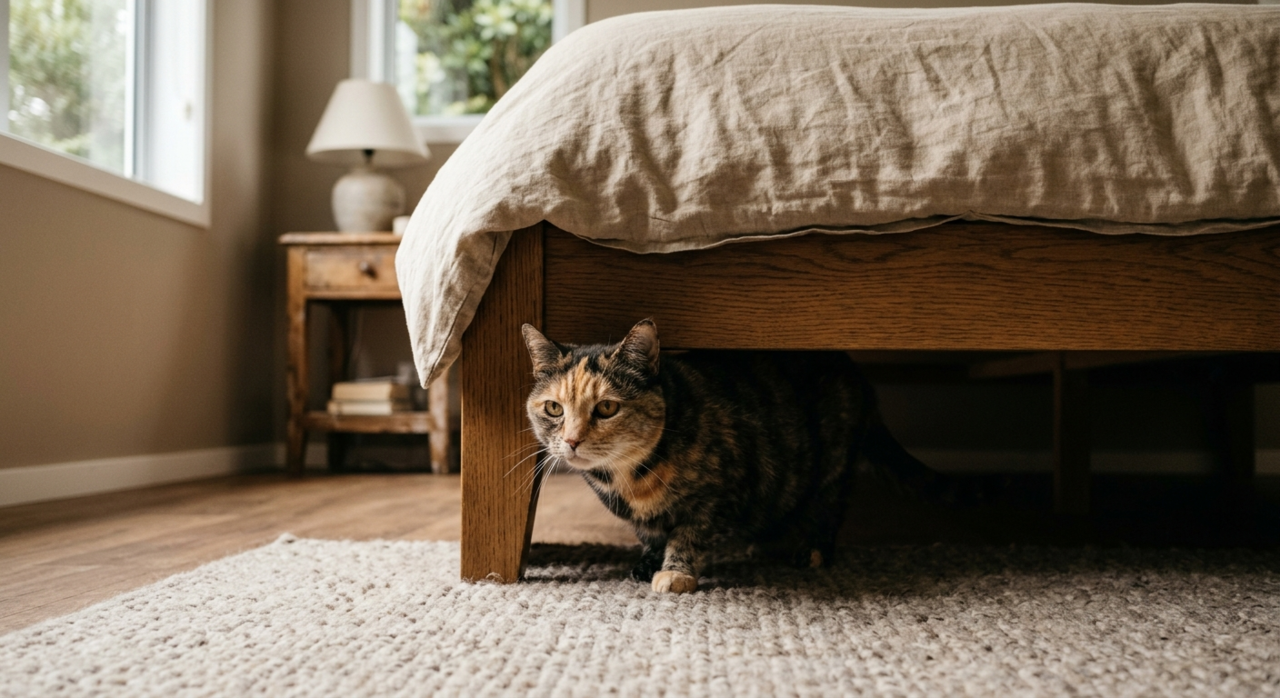
Cats are wired to hide when they need to feel safe. In a senior cat, the reasons for needing safety often shift. Here are the most common things hiding tends to be saying.
"I'm sore"
Joint pain is the most common quiet reason older cats start hiding. It's easier to lie still in a small dark spot than to be up and around feeling stiff.
Cues alongside it: hesitating before jumping, sleeping in lower spots, less self-grooming on the back end.
"I'm not feeling great"
Cats hide more when they're under the weather. It's a natural protective instinct that goes back to the wild: show as little as possible until you feel better.
Cues alongside it: off food, low energy, drinking more or less than usual, hairier coat or watery eyes.
"I'm cold"
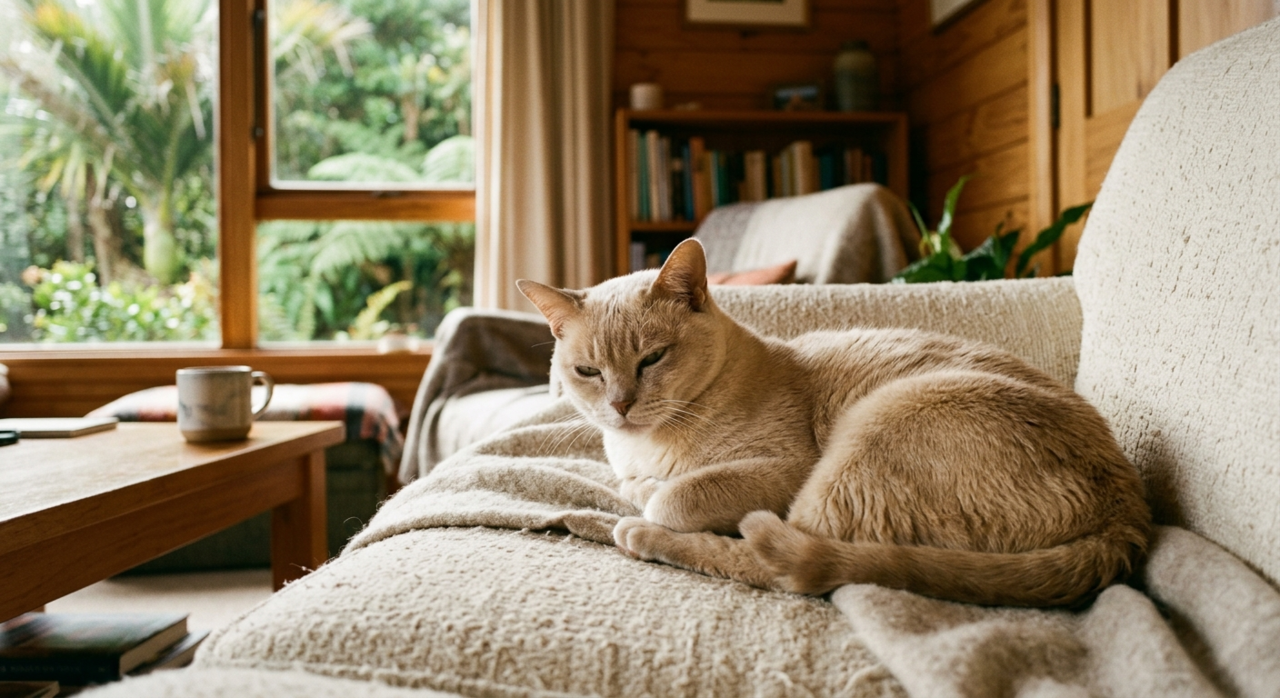
Older cats lose heat more easily and often go looking for warmth in tucked-away spots: under blankets, behind couches, in the airing cupboard.
Cues alongside it: hiding in warmer parts of the house, curling up smaller, paws and ears feeling cool.
"Something has changed"
Cats are sensitive to disruption. A new pet, a new baby, builders in the house, furniture rearranging, or even a change in routine can prompt extra hiding while they adjust.
Cues alongside it: the timing lines up with a known change, eating still mostly normal once they emerge.
"I can't see or hear as well"
Vision and hearing decline gradually in senior cats. A cat who can't see or hear as well as they used to can feel less confident in open rooms, and gravitate to safer, more enclosed spots.
Cues alongside it: being startled by approach, bumping into things in low light, vocalising more loudly.
"I'm a bit confused"
Some older cats develop cognitive changes that make familiar rooms feel less familiar. Hiding can be part of that: finding a small, predictable space and staying with it.
Cues alongside it: yowling at odd times, getting lost in the house, changes in litter tray habits.
Normal Hiding vs Worth Checking
Most cats have hidey-spots they love and that's just being a cat. The line between cat-being-a-cat and something to look at more closely usually comes down to what else has changed alongside the hiding.
Probably normal
- Always had a favourite spot, still does
- Sleeps a bit more in winter, comes out for meals and routines
- New spot but it's a warm one (sunny windowsill, near a heater)
- Hides during a known disruption then comes back out within a day or two
- Eating, drinking and toileting all look normal
- Happy to be touched, settles back in once you find them
Worth a closer look
- Hiding for long stretches, including through meals
- Skipping food more than once or twice
- Drinking noticeably more or less than usual
- Litter tray habits have changed (frequency, accidents, straining)
- Visible weight loss you can feel through the spine
- Doesn't want to be touched, flinches, vocalises when handled
- The hiding is new and there's no obvious environmental reason
- Coat looking flatter, more matted on the back end, or eyes/nose runny
If anything in the right column applies, that's worth raising with your clinic. The hiding itself probably isn't the problem. It's a clue pointing at something else.
What to Do at Home First
Before anything else, give your cat the practical things that help most senior cats settle. If hiding is mostly about wanting to feel safe, the answer is to make safe spots feel even safer.
Better hidey-spots, in better places
A cave-style bed in a quiet, warm part of the house gives an older cat the enclosed feel they're after, without them needing to disappear behind the couch.
Move resources closer
If your cat hides upstairs but food, water and the tray are downstairs, they're forced to choose. Adding a second water bowl, a small food dish, or even a tray on the same level often helps.
Keep the routine familiar
Older cats really like predictability. Same meal times, same handling style, same household rhythm. If something changed recently, give the routine a few days to bed back in.
Calm cues for anxious cats
A pheromone diffuser in the main living area can help cats who are hiding because they feel uneasy. It's not a cure but it's a quiet steady support.
Don't drag them out
Tempting as it is to coax them out, dragging an older cat from their safe spot tends to make things worse. Sit nearby, talk to them, offer a treat at arm's reach. Let them come to you.
Note what you're seeing
How long the hiding lasts, when it started, what's around it (cold morning, visitor, new pet) and whether eating/drinking/toilet habits have changed. That information is gold for your clinic if you do need to go in.
Comfortable Hiding Spots They'll Want to Use
If you can offer them a hiding spot that's better than under the couch, most senior cats will take it. Cave beds, calming-style donut beds and tunnels all work well.
Place at least one in the main living area so they have a quiet retreat without having to leave you. A second one in the bedroom is a popular setup with senior cats.
If Joint Discomfort Is Behind the Hiding
Joint stiffness is often the quiet thing behind extra hiding in senior cats. A daily joint supplement is the most popular at-home support and works best when given consistently every day.
Give it 4 to 6 weeks of daily use before judging whether it's helping. Many of these are great with Autodeliver for that reason. Joint Care for Senior Cats goes deeper.
If It's About Feeling Anxious or Unsettled
Pheromone diffusers, calming beds and a calm household routine all help cats who are hiding because something feels off rather than because something hurts.
Run the diffuser in the main living area, not the room they're hiding in. The aim is to make the rest of the house feel safer to come back to.
When to Get It Checked
The hiding itself is rarely the issue. What you're really watching for is what's happening alongside it. Reach out to your clinic if you notice:
- Hiding for long stretches and skipping meals
- Visible weight loss in a senior cat
- Litter tray accidents, straining, or any change in toileting habits
- Drinking noticeably more or less than usual
- Vocalising in pain, flinching when touched, or limping
- Sneezing, watery eyes, or snuffly breathing that isn't clearing up
- Sudden changes in behaviour with no clear environmental reason
- Yowling at night, getting lost in familiar rooms, or other signs of confusion
For more on the subtle shifts that come with age, the blog 6 Subtle Signs Your Cat Is Entering Their Senior Years is a useful companion read.
Frequently Asked Questions
How much hiding is normal for a senior cat?
Most older cats sleep around 16 hours a day and have favourite quiet spots they use a lot. That's normal. The change to watch for is hiding more, in new spots, or for longer than they used to, especially if eating, drinking or toileting has shifted at the same time.
My cat is hiding more in winter: is that normal?
Often, yes. Older cats feel cold more easily and look for warm, enclosed spots. As long as they're still eating well, drinking, using the tray normally and happy when you find them, a winter shift in hiding spots usually isn't a worry. Our blog Cold Weather and Senior Cats covers what to watch for.
Should I leave my cat alone when they're hiding?
Generally yes. Don't drag them out. Sit nearby, talk to them gently, offer food or a treat at arm's length, and let them come to you. Forcing them out tends to make hiding worse next time.
Can hiding be a sign of pain?
Yes, very often. Cats are quiet about pain and hiding is a common quiet sign. Joint pain is the most common cause in older cats. Look for hesitating before jumping, sleeping in lower spots, less self-grooming, and any flinch when handled around the back or hips.
Could hiding be cognitive decline?
It can be part of the picture. Cognitive change in senior cats often shows up alongside other things like yowling at odd times, getting lost in the house, or changed litter tray habits. The blog Feline Cognitive Dysfunction goes through it in plain language.
How long is too long for a cat to hide?
If your cat hasn't eaten, drunk water or used the tray for around 24 hours, that's worth raising with your clinic. A cat who hides through meals more than once or twice has usually got a reason.
What if my cat used to be social and now hides all the time?
That's a meaningful change and worth getting checked. Sudden personality shifts in senior cats often have a reason behind them: pain, illness, sensory decline or cognitive change. Your clinic can help work through what's most likely.
Should I worry if my cat hides when visitors come?
Most cats do, and most senior cats do it more. As long as they come back out within a few hours of the visitors leaving and life carries on as normal, it's just personal preference.
Comfortable Spots and Senior Cat Support
Find cave beds, calming supports, joint supplements and senior cat essentials in one place. Save with Autodeliver on supplements and food, and enjoy everyday member pricing as part of Pet Perks.
SHOP THE WINTER HUB