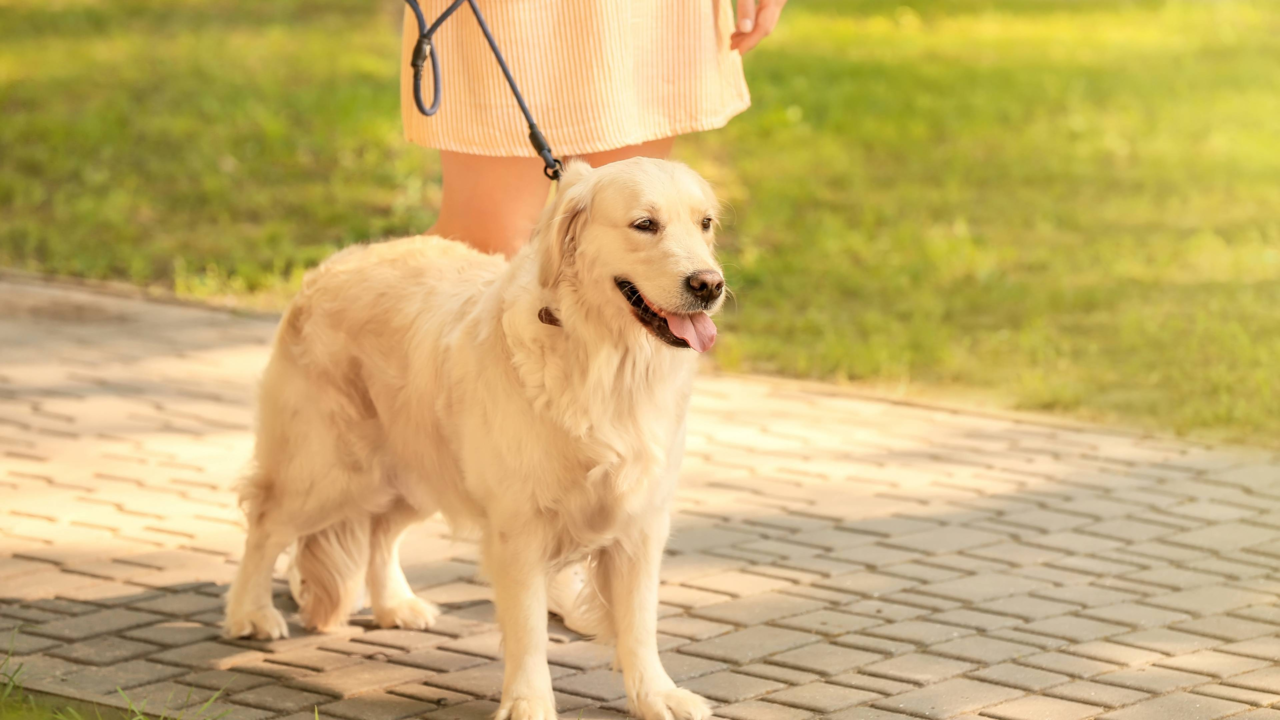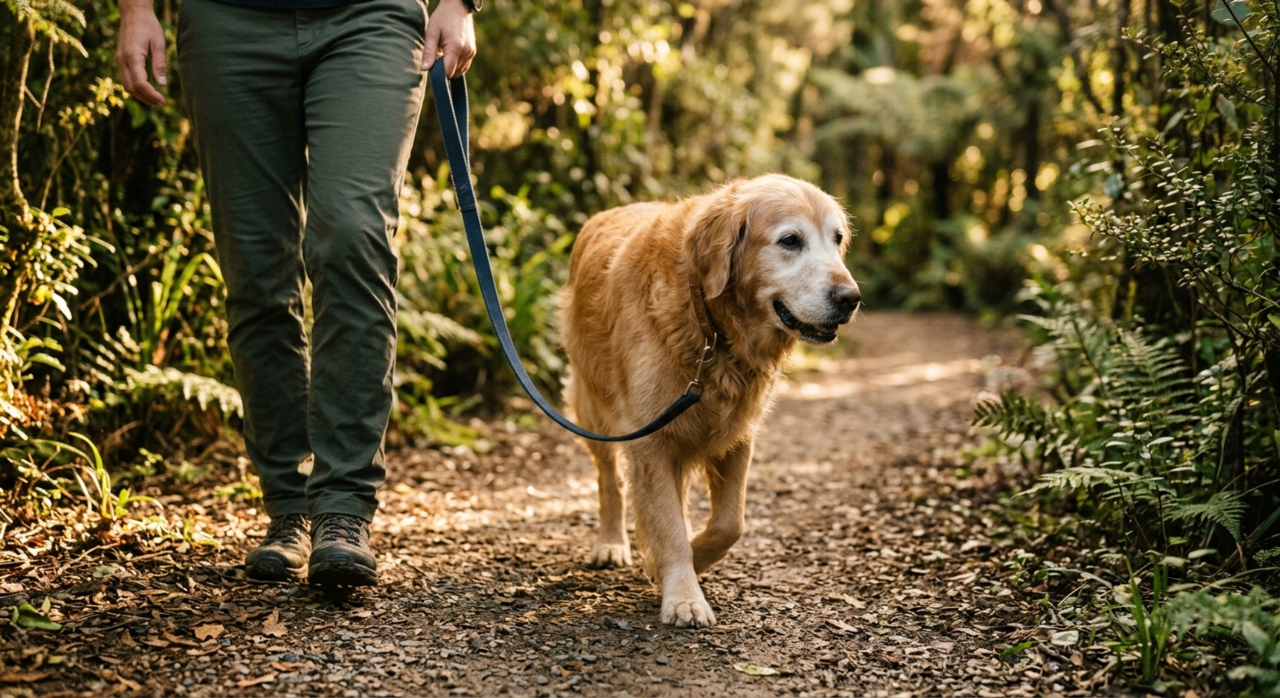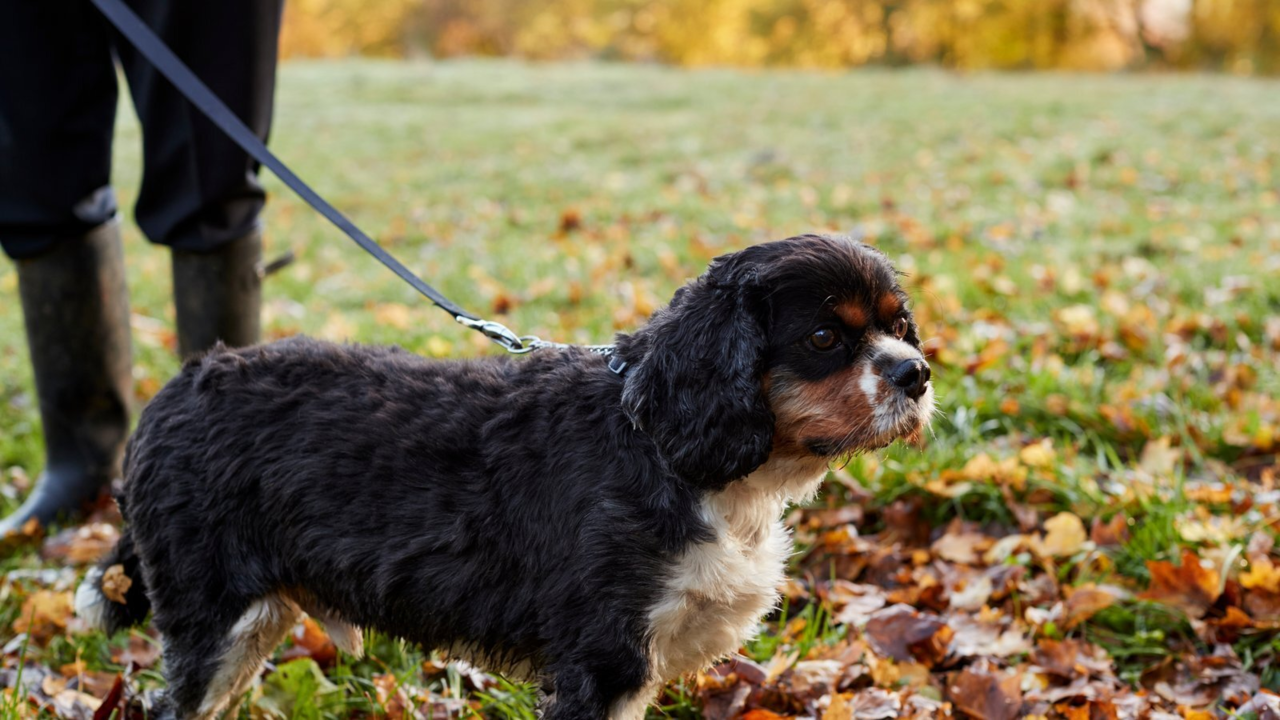
Older dogs still love their walks, but winter changes the maths. Stiff joints take longer to warm up, thinner coats let the cold in faster, and short days mean a lot of walking happens in the dark. The good news is that a few small adjustments keep the daily walk something your senior dog looks forward to right through the cooler months.
This is a practical, NZ-focused guide to keeping winter walks short, sweet and comfortable for older dogs, from how to time and pace the walk to the gear that makes a real difference.
Quick Answer
In winter, keep walks with your senior dog shorter and more frequent rather than one long outing. Walk during the warmest, brightest part of the day where you can, let stiff joints warm up with a slow start, and keep the pace comfortable for them rather than for you. A warm coat helps older dogs hold their body heat, a light or reflective gear keeps you both visible in the dark, and paw balm protects pads from cold, wet footpaths. Watch for signs they have had enough and be ready to turn for home early.
Why Winter Walks Are Different for Older Dogs
Senior dogs feel the cold more than younger ones, and the reasons stack up quickly in winter. Understanding what changes makes it easier to adjust the walk without cutting it out altogether.
Joints warm up slower
Ageing joints stiffen in the cold and take longer to loosen. A slow, gentle start matters far more than it did in their younger years.
Less protection from the cold
Thinner coats, less body fat and slower circulation mean older dogs lose heat faster and feel chills that a young dog would shrug off.
Shorter, darker days
Many winter walks happen at dawn or dusk. A slower senior dog is harder for drivers and cyclists to spot, so visibility becomes a safety priority.
Short, Sweet and Comfortable: Adjusting the Walk
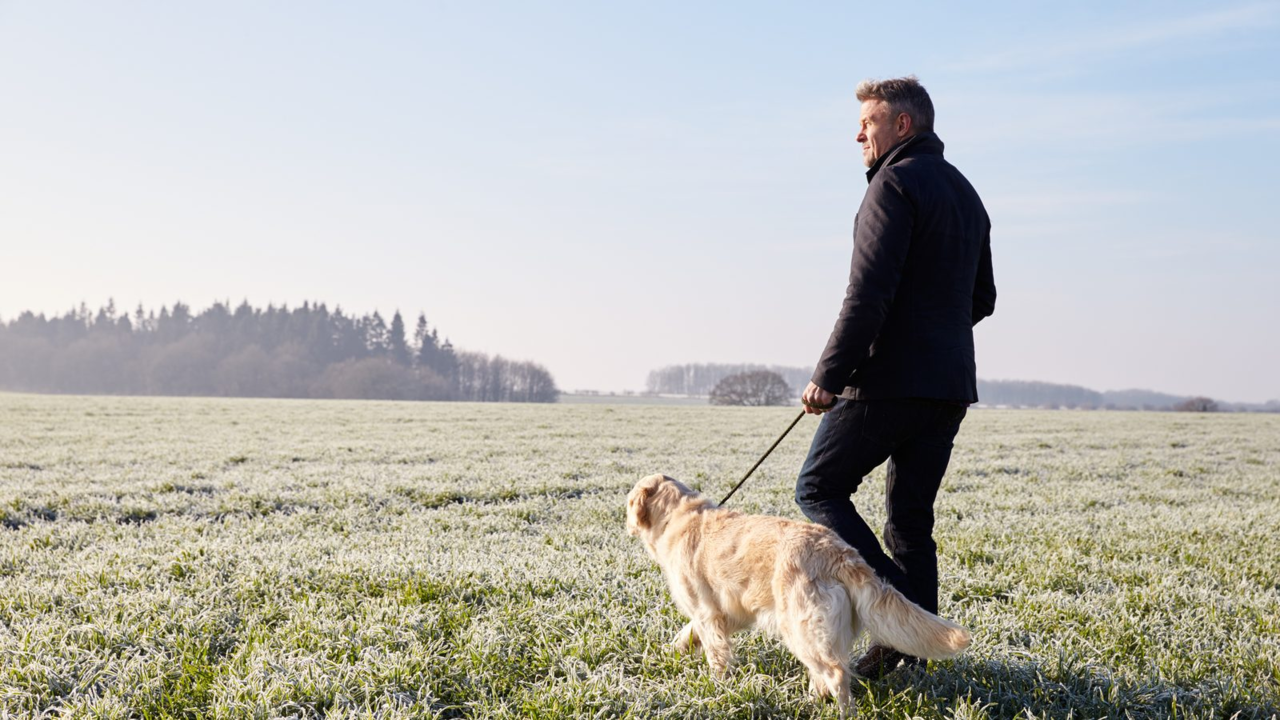
The aim in winter is little and often. A few shorter walks keep your dog moving and their mind engaged without asking stiff joints to work in the cold for too long.
Warm up before you head out
Let your dog move around inside for a few minutes first, or start the walk at a gentle amble. A slow warm-up eases stiff joints into action and lowers the chance of a strain.
Time it for daylight and warmth
Where your day allows, aim for the middle of the day when it is brightest and a little warmer. If early or late walks are unavoidable, lean on lights and reflective gear.
Go shorter and more often
Swap one long walk for two or three shorter ones. Your dog still gets their exercise and sniffing time without spending a long stretch out in the cold.
Walk at their pace
Let your senior dog set the speed. Plenty of stops to sniff are good for them, and a relaxed pace is far kinder on older joints than being hurried along.
Mind the ground
Wet leaves, slick footpaths and puddles are harder for an older dog to manage. Stick to even, familiar routes and give slippery patches a wide berth.
Warm down when you get home
Dry your dog off well, especially their belly, legs and paws, and let them settle somewhere warm and draught-free to rest. A gentle cool-down helps joints recover before the next outing.
Warm Coats for Older Dogs
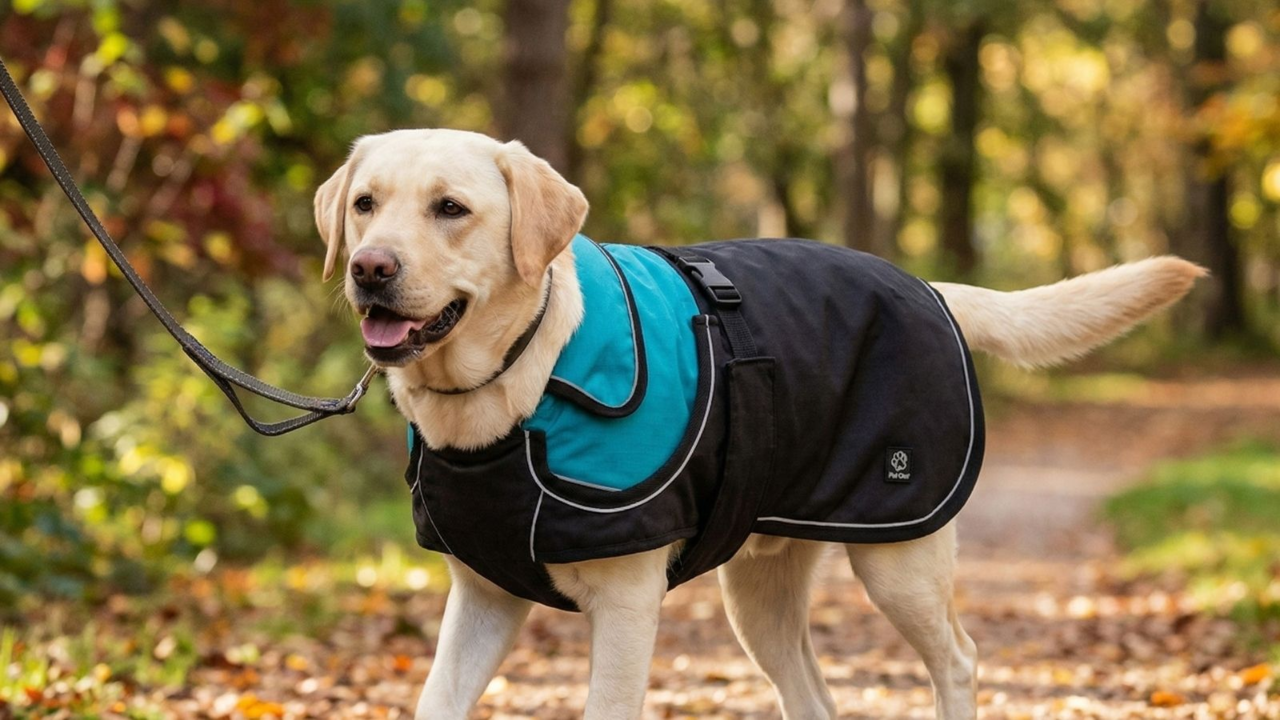
A good coat helps a senior dog hold onto body heat that they would otherwise lose quickly, which keeps them comfortable enough to enjoy the walk. Look for a snug, easy-on fit that covers the chest and back without restricting their stride. Waterproof options are worth it for our wetter NZ winters.
Be Seen in Low Light
With so many winter walks happening in the dark, being visible keeps you both safe. A clip-on light or a light-up collar makes a slower senior dog easy to spot from a distance, and it helps you keep an eye on them too.
Protect Cold, Wet Paws
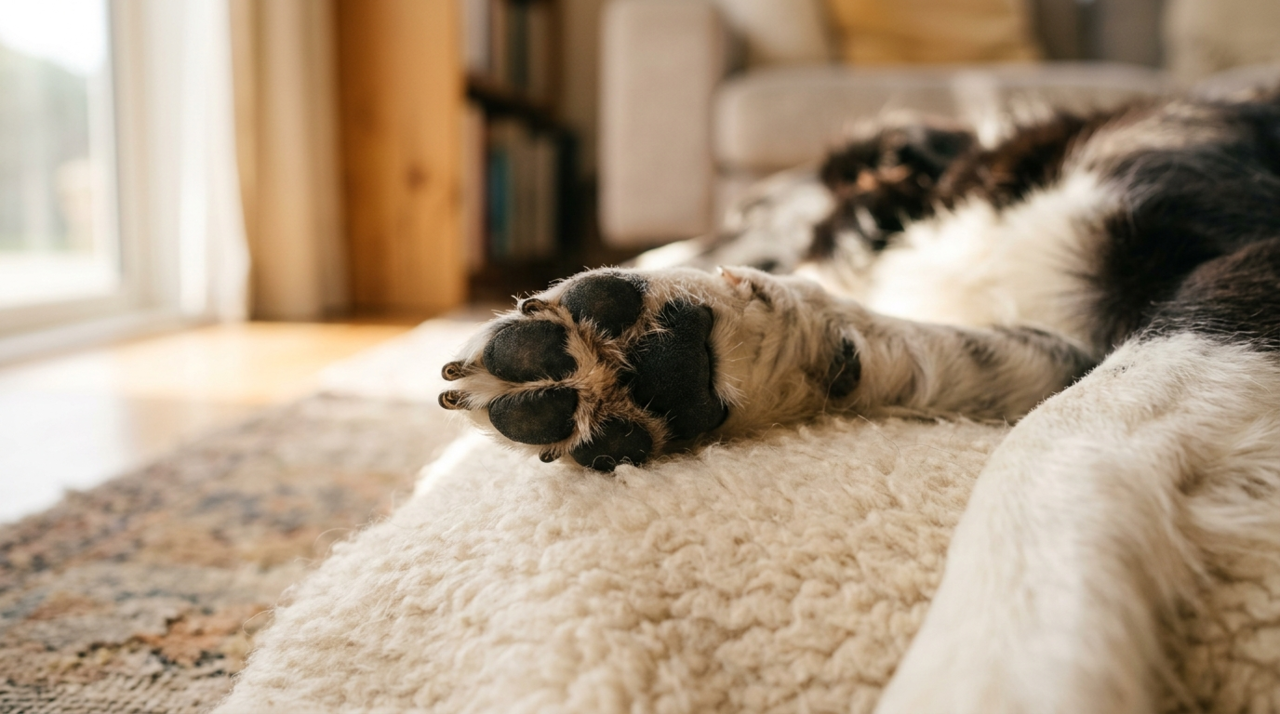
Cold footpaths and constant wet can leave pads dry, cracked or sore, and older dogs are more prone to it. A paw balm before the walk adds a protective layer, and a little afterwards helps soothe and condition the pads.
A Little Extra Support
A well-fitted harness gives you a gentle, steady way to guide an older dog over kerbs, steps and slippery patches without putting pressure on their neck. Front-clip and chest-plate styles spread the load comfortably and make it easy to lend a hand when they need it.
Supporting Stiff Joints Through Winter
Cold weather often makes existing joint stiffness more noticeable, so winter is a good time to keep up a joint-support routine. Daily supplements with ingredients like green-lipped mussel, glucosamine and omega oils are a popular way to support mobility in older dogs alongside gentle, regular movement.
Keep it consistent
Joint supplements work best taken daily over time rather than now and then. Setting them up on Autodeliver is an easy way to make sure you never run out mid-winter.
Reading Your Dog's Comfort
Your senior dog will tell you when they have had enough, so keep an eye on them and be happy to cut a walk short. It is always better to head home a little early than to push on.
Signs it is time to turn for home
- Shivering, or a tucked, hunched posture.
- Slowing right down, lagging behind or wanting to stop.
- Lifting or licking at paws, or hesitating on cold, wet ground.
- Looking back toward home or planting their feet.
- Stiffness that seems to get worse rather than easing as they move.
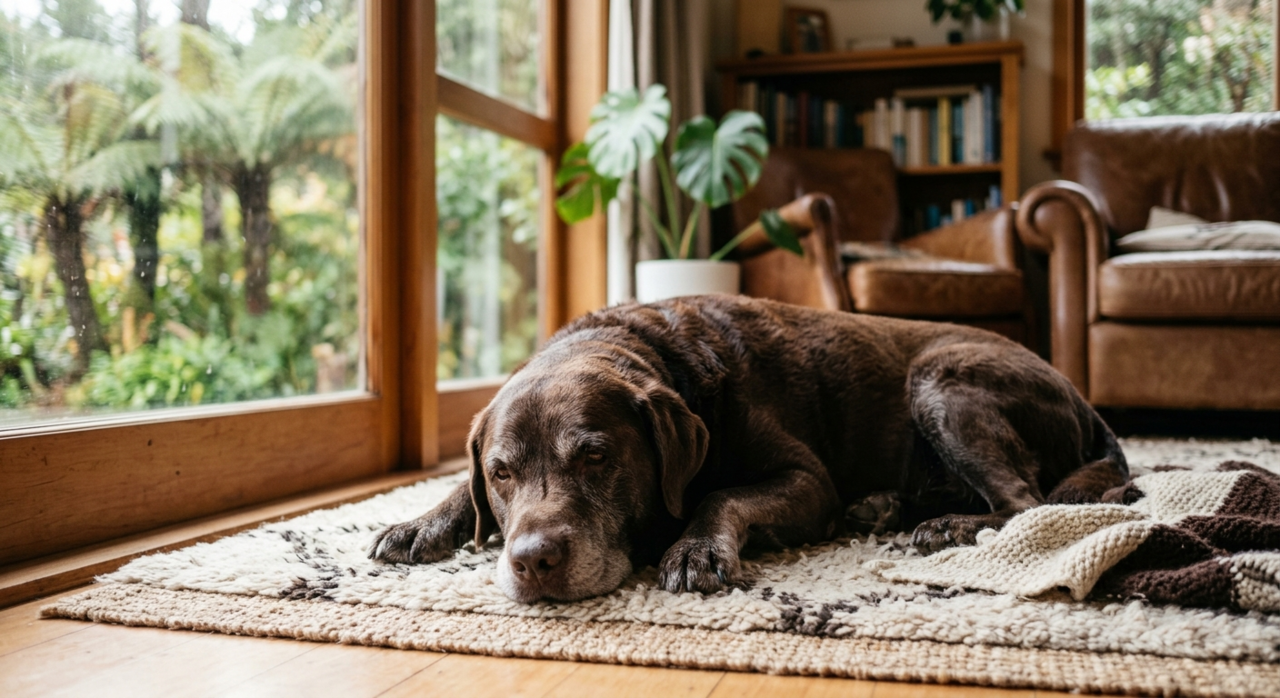
On truly miserable days, it is fine to skip the walk and keep your dog moving indoors instead. Gentle indoor games and low-impact activity keep older bodies limber without the chill.
Winter Walking Gear at Petdirect
From warm, waterproof coats and clip-on lights to paw balms, supportive harnesses and joint supplements, find everything your senior dog needs for comfortable winter walks. Save on the regulars with Autodeliver, and enjoy everyday member pricing as part of Pet Perks.
SHOP WINTER WALKING GEARFrequently Asked Questions
How long should I walk my senior dog in winter?
Keep it shorter and more frequent. Two or three brief walks are usually kinder than one long outing, and they let your dog stay active without spending too long out in the cold. Let their comfort and energy guide the length.
Do older dogs really need a coat?
Many do. Senior dogs lose body heat faster thanks to thinner coats, less body fat and slower circulation, so a warm, well-fitted coat helps them stay comfortable on cold-weather walks. Small, thin-coated and very lean dogs feel the benefit most.
Should I still walk my senior dog on very cold days?
Gentle daily movement is good for older joints, but on truly cold or wet days a couple of short walks or some indoor activity can be a better choice. Watch your dog for signs they are uncomfortable and adjust to suit them.
How do I protect my dog's paws in winter?
A paw balm applied before the walk adds a protective barrier against cold, wet footpaths, and a little afterwards helps soothe and condition the pads. Dry the paws well when you get home and check for cracks or soreness.
What is the best time of day to walk an older dog in winter?
Where your routine allows, the middle of the day is usually brightest and a little warmer. If you can only walk early or late, use a light or reflective gear so you are both easy to see in the dark.
How can I tell if my senior dog is too cold on a walk?
Shivering, a hunched or tucked posture, slowing right down, lifting paws off the ground or looking back toward home are all signs they have had enough. When you see them, turn for home and warm your dog up.