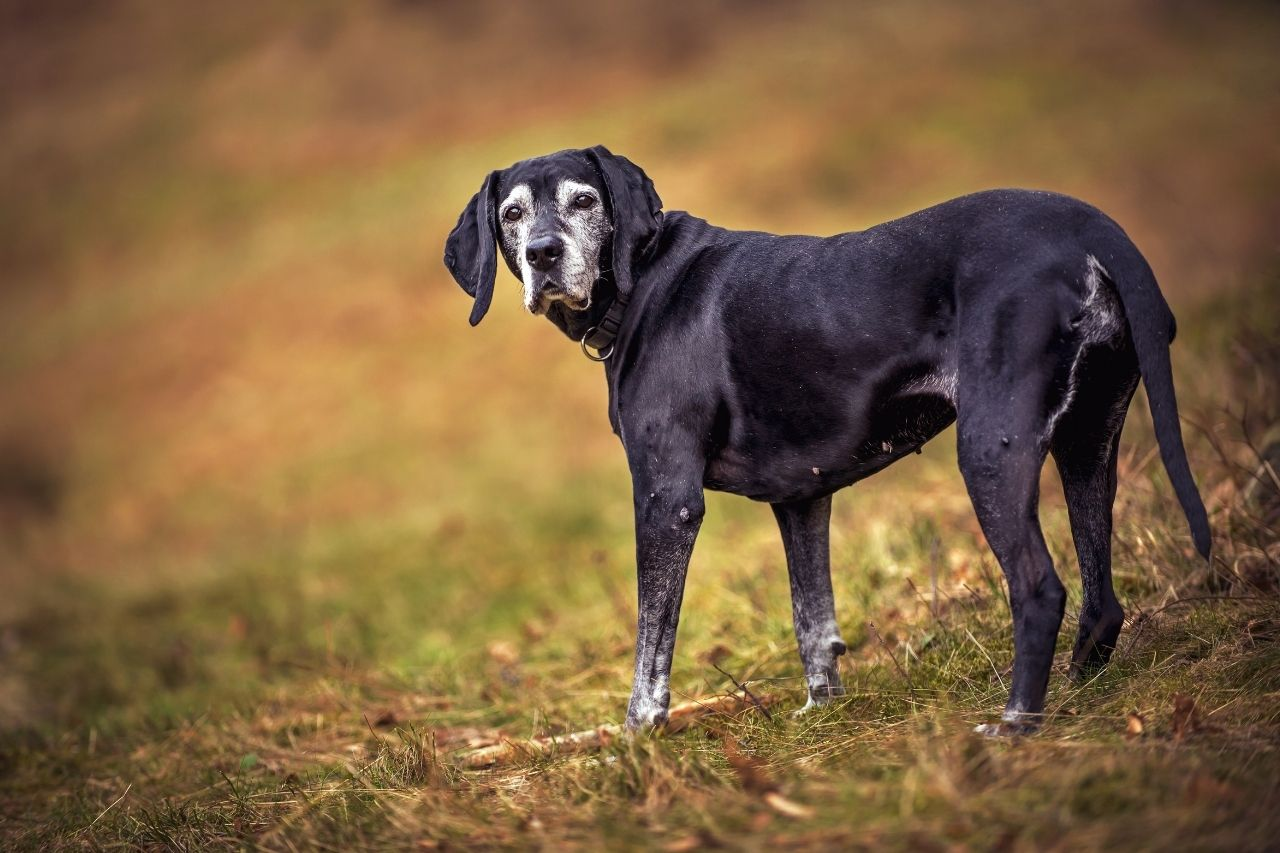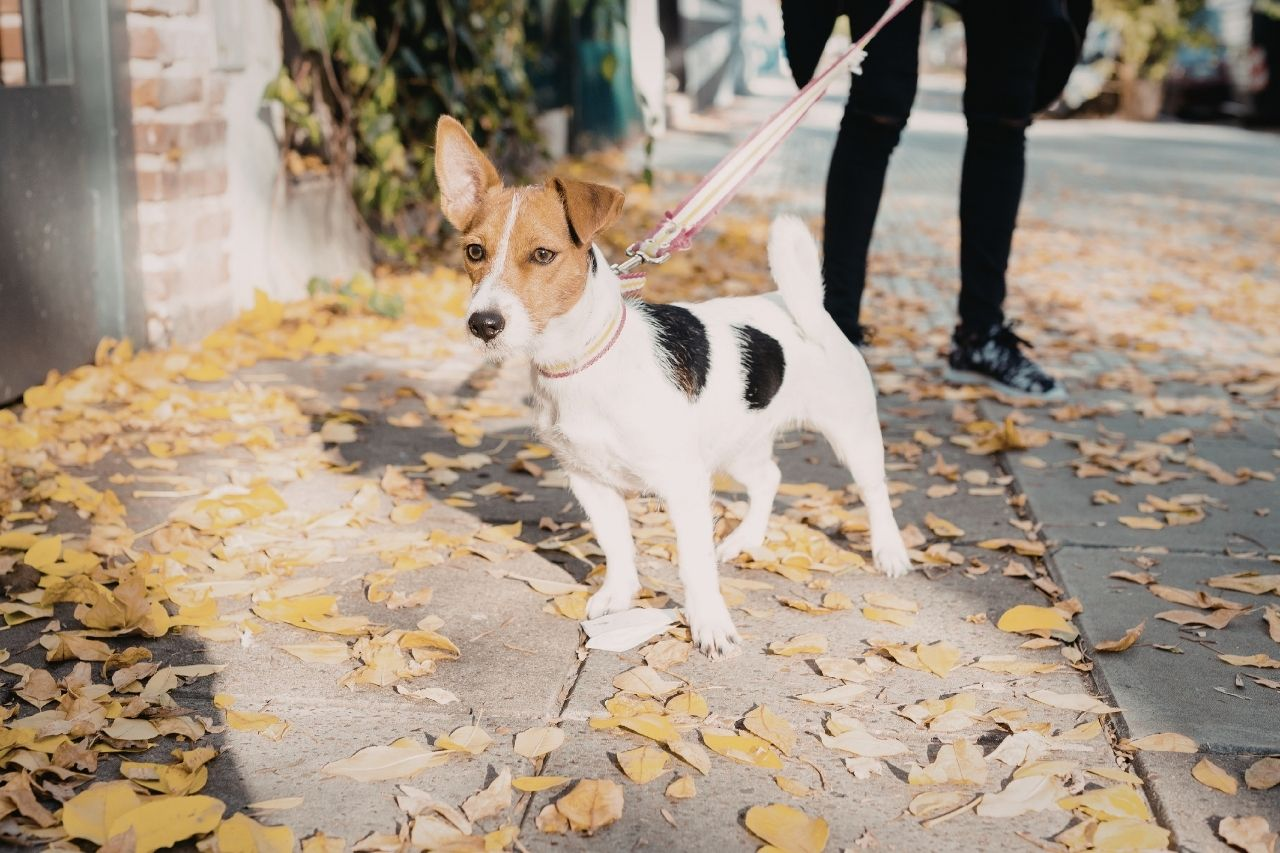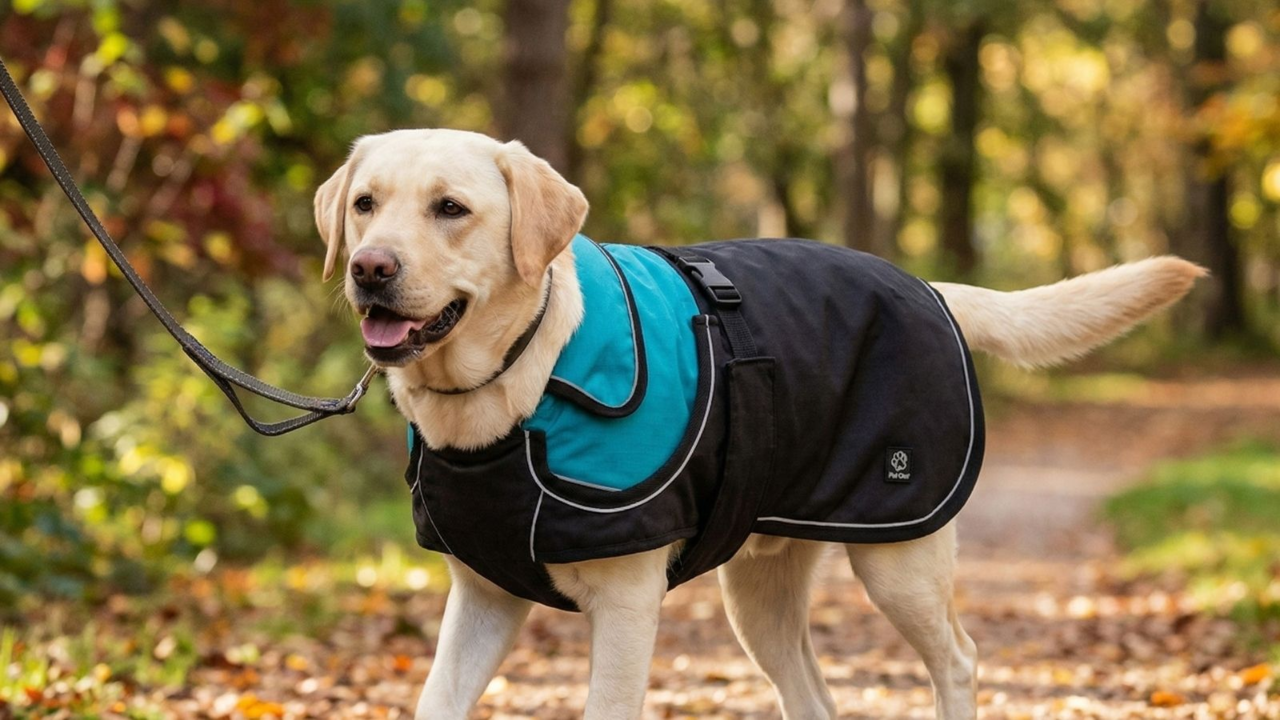
As dogs get older, they feel the cold more than they used to. A leaner body, a thinner coat, slower circulation, and stiffer joints all mean an older dog can shiver on a morning that a younger one would shrug off. A good winter coat is one of the simplest ways to keep your senior comfortable, but the right coat for an older dog is a little different from picking one for a bouncy youngster.
This guide walks through what actually matters when choosing a winter coat for a senior dog, how to measure for a proper fit, and a few warm options to suit different needs.
Quick answer: choose a senior dog's winter coat for warmth, easy on and off, and a snug but gentle fit. Look for a soft lining, good chest and belly coverage, a design you can fasten without asking your dog to lift their legs or twist, and reflective detail for darker winter walks. Measure your dog's back length, chest girth, and neck before you buy, and size up if your dog is between sizes or stiff in the joints.
Why senior dogs need a coat more than younger dogs
Puppies and young adults generate plenty of body heat and rarely stay still for long. Older dogs are different in a few ways that make a coat genuinely useful rather than just cute.
- Less natural insulation. Many seniors lose muscle and body fat as they age, and their coat often thins, so they hold less warmth.
- Slower circulation. Older bodies are slower to warm up and slower to recover once chilled.
- Stiffer joints. Cold mornings can make arthritic joints feel tighter and sorer. Keeping the back and hips warm helps your dog move more comfortably.
- Lower activity. A gentle amble does not build the heat a brisk run would, so your dog stays cool for longer on a walk.
What to look for in a senior dog's winter coat
Easy on and off
This is the big one for older dogs. A coat your dog has to step into, or that needs legs lifted and twisted, can be uncomfortable for stiff joints and stressful for both of you. Look for designs that drape over the back and fasten underneath, with wide hook-and-loop or buckle closures rather than fiddly clips.
Genuine warmth and coverage
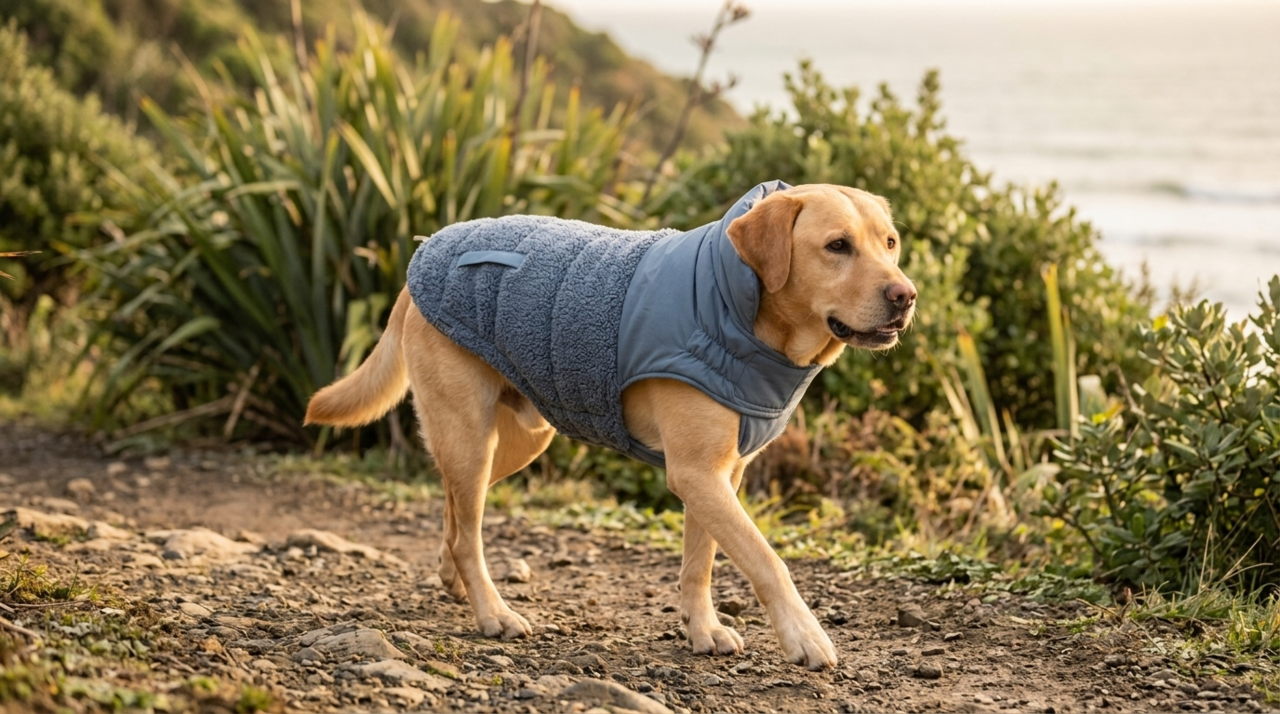
For warmth, you want a soft fleece or padded lining and coverage that reaches from the base of the neck to the base of the tail, ideally wrapping a little under the belly. The belly and chest lose heat quickly, so coverage there makes a real difference for a senior.
A snug, gentle fit
A coat that is too loose lets cold air in and can catch on things, while one that is too tight restricts movement. You are aiming for snug but not stretched, with nothing rubbing at the armpits or pulling at the neck.
Weatherproofing for NZ winters
Much of a Kiwi winter is wet rather than freezing. A water-resistant or waterproof outer keeps your dog dry on drizzly walks, which matters because a damp coat chills a dog fast. Some dogs are best served by a warm coat for cold dry days and a waterproof one for wet days.
Visibility for dark walks
Winter means more walks in low light. Reflective trims or panels help drivers and cyclists spot your dog, which is worth having on at least one of your coats.
How to measure your senior dog
Getting the fit right matters more than the brand. Grab a soft tape measure and take three measurements while your dog is standing.
| Measurement | Where to measure | Why it matters |
|---|---|---|
| Back length | From the base of the neck (where a collar sits) to the base of the tail | Sets the overall coat length and coverage |
| Chest girth | Around the widest part of the chest, just behind the front legs | The most important number for a comfortable fit |
| Neck girth | Around the base of the neck where a collar sits | Stops the coat being tight or gaping at the neck |
Compare your numbers to each brand's own size chart, since sizing varies between makers. If your dog falls between two sizes, or has stiff joints or a deep chest, size up for easier dressing and a more relaxed fit.
Warm coats and layers to consider
Padded and insulated coats for cold days
For the coldest, driest mornings, a padded coat with good back and belly coverage gives the most warmth. These suit early walks and seniors who really feel the chill.
Waterproof coats for wet walks
For drizzly Kiwi days, a water-resistant outer keeps your dog dry so they do not get chilled. A reversible or fleece-lined waterproof gives you warmth and weather protection in one.
Soft sweaters and hoodies for layering and indoors
A knit sweater or hoodie is gentle to put on and lovely for chilly evenings indoors, or as a light layer under a coat on the coldest days. The pull-on styles are easy for dogs who do not like fuss.
Reflective coats for darker mornings and evenings
For walks in low light, a coat with reflective detail keeps your senior visible and safe.
Helping your senior settle into a coat
Introduce it indoors first
Let your dog sniff the coat, then pop it on for a few minutes at home with a treat or two so it feels like a good thing, not a strange one.
Dress them gently
Drape rather than push. For stiff dogs, avoid styles that need legs threaded through tight holes, and fasten on the back or side where you can reach easily.
Check the fit while moving
Watch your dog walk in the coat. It should not slip, gape, or rub, and your dog should be able to toilet without the coat getting in the way.
Keep it dry and clean
Swap a damp coat for a dry one when you get home, and keep a spare so there is always a warm option ready to go.
Frequently asked questions
Does my senior dog really need a coat if they have a thick coat already?
Even fluffy breeds can feel the cold as they age, especially on wet days or long, slow walks. Watch for shivering, a tucked posture, or reluctance to head outside. If you see those signs, a coat will help.
Should I size up for an arthritic dog?
Often yes. A slightly roomier coat in an easy-on style is kinder to stiff joints and simpler to put on without asking your dog to twist or lift their legs.
Can my dog wear a coat indoors?
A light sweater indoors is fine for a chilly senior, and many older dogs enjoy the extra warmth on cold evenings. Just check it is not too tight and take it off if your dog seems too warm.
How many coats does my dog need?
Two covers most situations: a warm padded coat for cold dry days and a waterproof one for wet days. A soft sweater for indoors or layering is a nice extra.