Cats are quietly expressive if you know where to look. An older cat feels the cold more than they used to, and they rarely make a fuss about it. Instead they tell you in small ways: where they choose to sleep, how tightly they curl, how quickly they settle, and how keen they are to move on a chilly morning.
Learning to read those signals is one of the kindest things you can do for a senior cat in winter. It lets you add warmth and comfort before they are truly cold, rather than after. This is a gentle guide to what a comfortable senior cat looks like, the signs they are feeling the chill, and the simple changes that keep them cosy through the cold months.
Quick answer
A comfortable senior cat rests in a loose, relaxed posture, stretches out in warmer spots, and moves about their day without much hesitation. A cat feeling the cold curls up tight with paws and tail tucked, seeks out heat, hunches or perches to stay off cold floors, and grows slower to get going. Watch the trend over a few weeks rather than a single cold morning. The kindest responses are warm, low, easy-to-reach resting spots, gentle heat they can choose, and cosy layers near where they already like to sleep.
What a comfortable senior cat looks like
Before you can spot the signs of a cat feeling the cold, it helps to know their relaxed baseline. A settled, comfortable cat gives off a very particular ease, and it is worth picturing so the changes stand out.
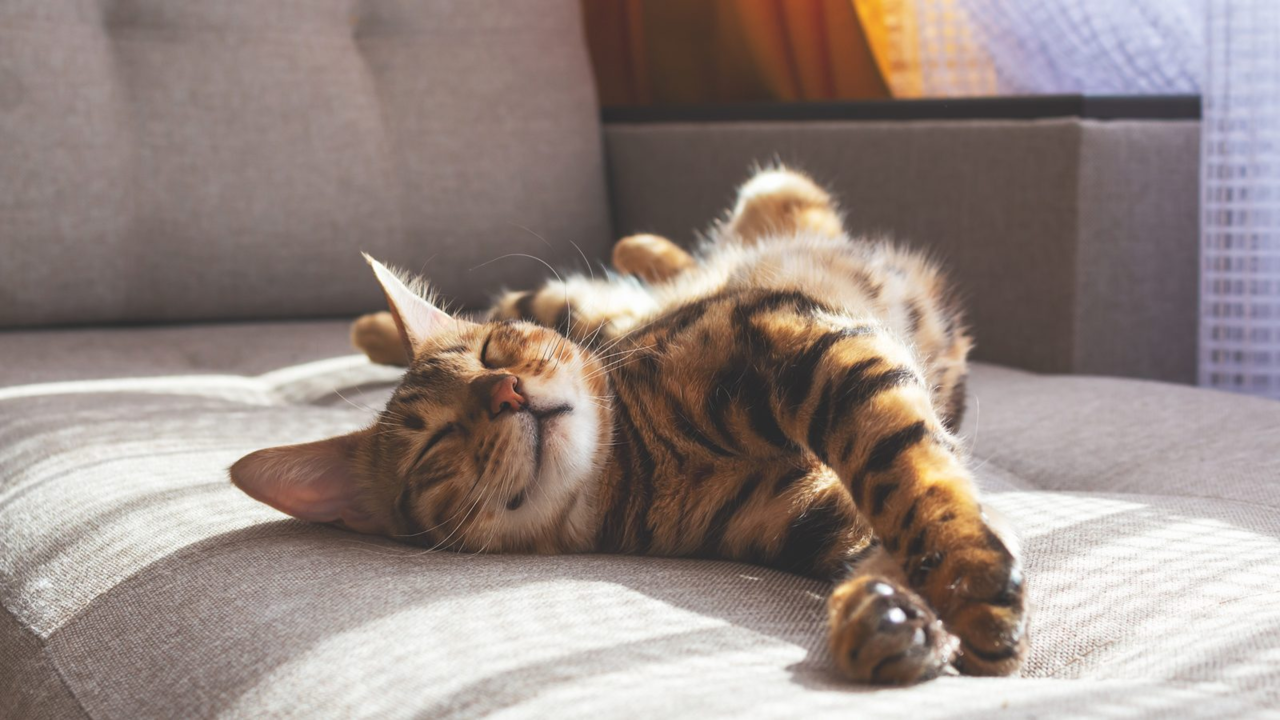
Loose, open resting
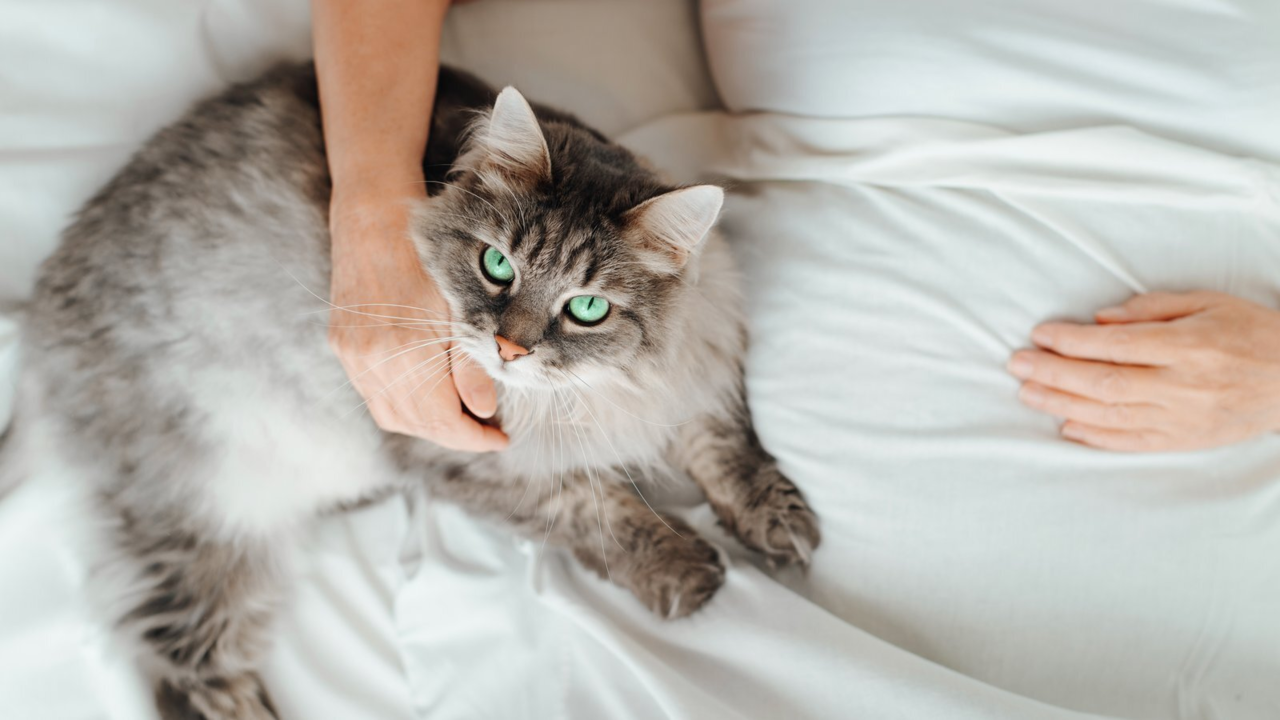
A comfortable cat often rests loosely, paws relaxed, sometimes sprawled or lying on their side. They do not need to hold themselves tightly to trap heat.
An easy stretch
They wake, stretch out fully and get moving without a long pause. The stretch is fluid rather than careful, and they settle again just as easily.
Their usual spots
They choose their normal perches and pathways, hop up where they always have, and move around the home as freely as they did in the warmer months.
Signs your senior cat is feeling the cold
Cats are subtle about discomfort, so the cold usually shows up as small shifts in habit rather than anything obvious. You know your cat better than anyone, and these are the changes owners tend to notice once winter sets in.
Curling up tight
A tight ball with paws tucked under and tail wrapped over the nose is a cat conserving heat. The tighter and more constant the curl, the cooler they are feeling.
Seeking out warmth
Following the sun around the house, pressing against the heat pump, or claiming your lap more than usual are all signs they are hunting for extra warmth.
Hunching and perching
Sitting hunched with feet gathered in, or choosing raised, dry perches over a cold hard floor, helps a cat keep their body heat off the chill beneath them.
Slower to get going
A longer pause before rising, a stiffer first stretch, and hesitating before a jump they used to make easily all show up more in the cold.
Resting more, roaming less
Longer naps and less wandering are normal in winter, but a marked drop in movement or a cat who stays tucked away most of the day is worth noting.
Retreating to hide
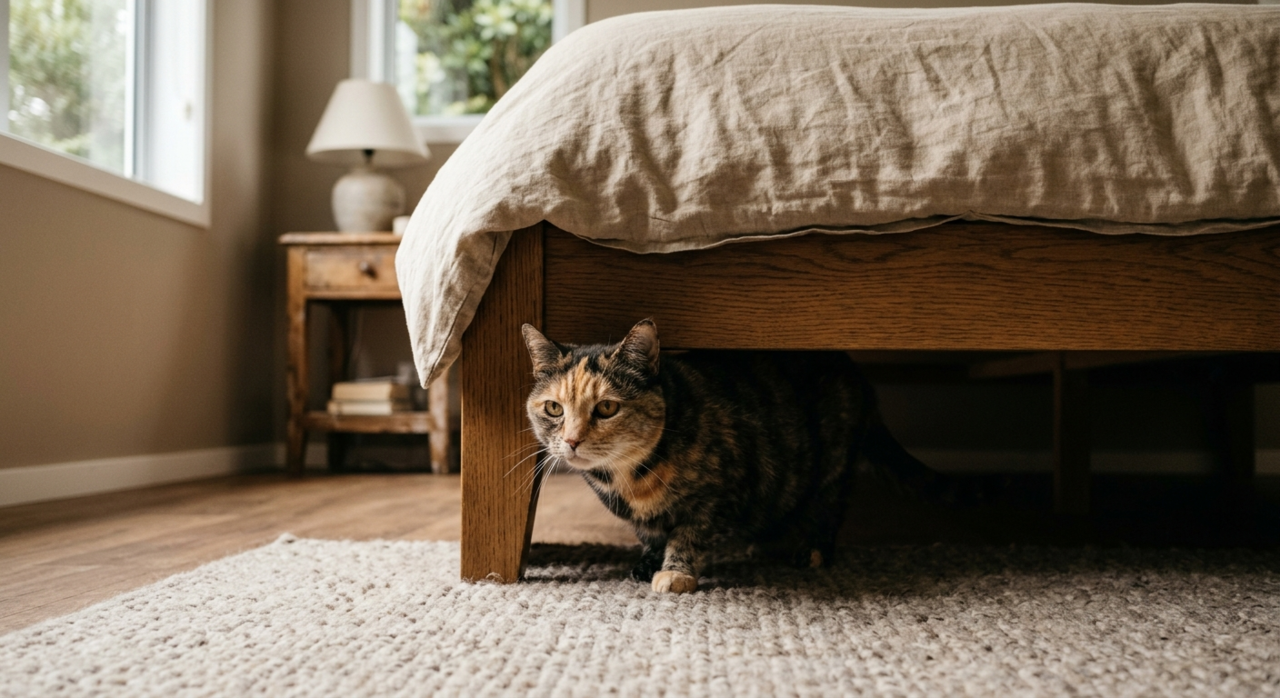
Choosing enclosed, out-of-the-way spots can simply be warmth-seeking, but a cat who hides away far more than usual is telling you something has shifted.
Read the trend, not the moment
One cold morning tells you little on its own. What matters is the pattern over a few weeks. If your cat is gradually seeking more warmth and resting more as the temperature drops, that is ordinary winter behaviour you can support. A sudden change, or one that comes with eating less or hiding away, is worth a closer look.
Telling cold apart from something more
Most winter changes are simply an older cat responding sensibly to the chill. Now and then, though, the same signs can point to something beyond the cold, such as the joint stiffness that becomes more common with age. Because cats hide discomfort so well, it helps to know which changes are worth paying attention to.
When to look a little closer
Keep a closer eye on your cat, and read our cold weather guide for senior cats, if alongside the usual winter cosiness you notice any of these:
- A clear drop in jumping, or struggling with places they used to reach with ease
- Limping, obvious stiffness that does not ease once they warm up, or flinching when touched
- Grooming less, a matted or unkempt coat, or trouble getting in and out of the litter tray
- Eating less, drinking more, or losing weight
- Hiding away or becoming withdrawn far more than a little extra winter napping
- Any change that comes on quickly rather than gradually
Warm, easy-to-reach resting spots
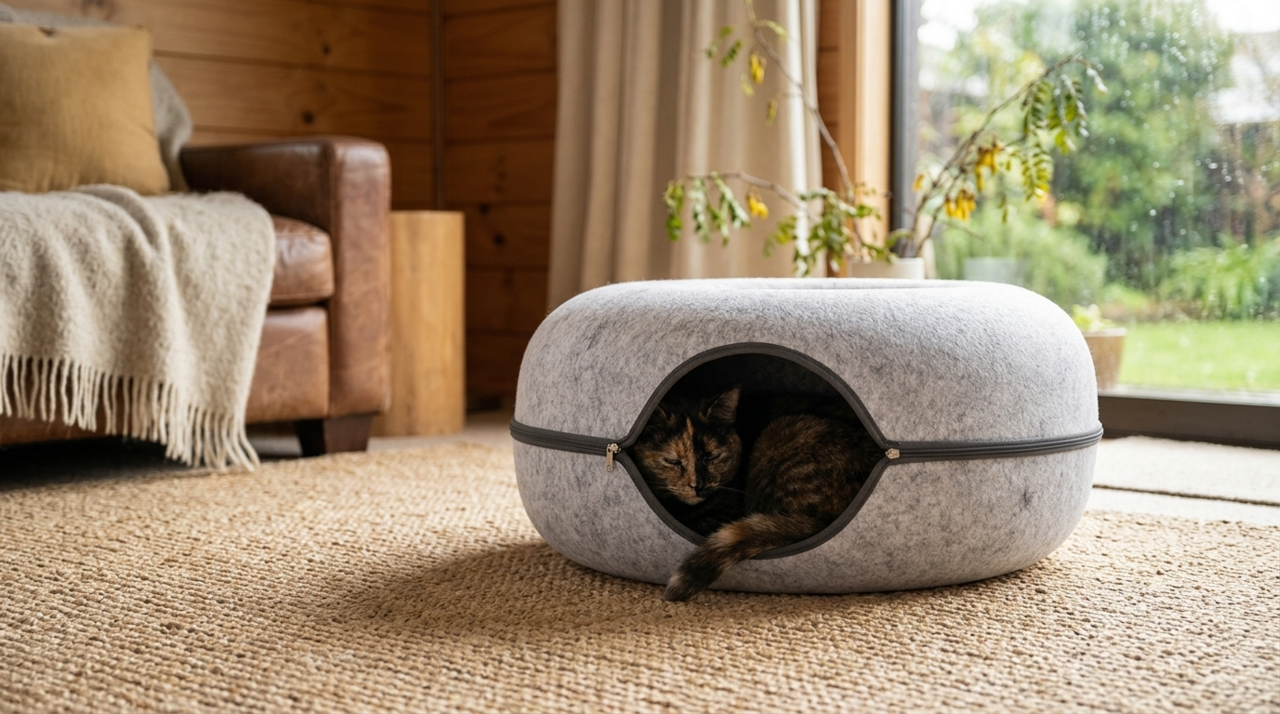
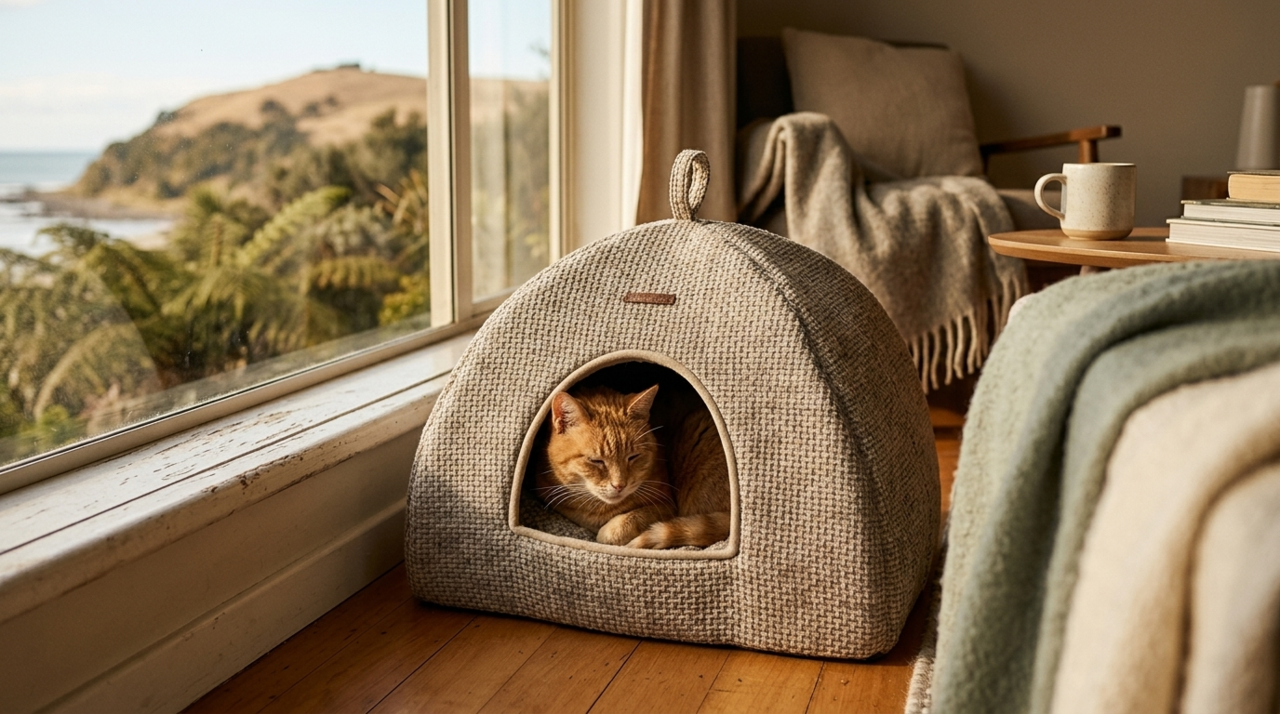
The single kindest thing you can offer a senior cat in winter is somewhere warm and snug to rest, low enough to reach without a jump. An enclosed cave bed traps body heat and feels secure, while a soft, deep-sided bed takes the hard edge off cold floors and cradles ageing joints through a long winter nap. Tuck one near where they already like to sleep, away from draughts and close to the warmth of the house.
Gentle warmth they can choose
A little extra heat makes a real difference to a cat who is feeling the cold, as long as they can move towards it or away from it as they please. A microwave heat pad tucked under a blanket gives hours of gentle warmth with no cord to worry about, while a self-warming mat reflects your cat's own body heat back to them and needs no power at all. Set warmth up as an option your cat can choose, never the only place they can settle.
Cosy layers and a calm setup
Small touches around the home make the cold months easier on an older cat. A soft blanket draped over their favourite chair adds warmth they can burrow into, and a snug fleece over a hard or cold surface gives them a warmer place to settle. Keep food, water and the litter tray within easy reach so a stiff cat is never forced into a long, cold trek, and our guide to a winter-proof home for your senior cat covers the wider setup.
Keep the winter comforts on hand
The things that keep a senior cat cosy through winter, from their bedding to their food, work best when they never run out. With Autodeliver you can set the senior staples to arrive on a schedule that suits you, save on every repeat order, and skip or change a delivery any time. Members also earn rewards through Pet Perks along the way.
EXPLORE AUTODELIVERFrequently Asked Questions
How can I tell if my senior cat is cold?
Look at how they rest and move. A cold cat curls up tight with paws and tail tucked in, seeks out warm spots, sits hunched with feet gathered under them, and is slower to get going. A comfortable cat rests loosely and moves about their day without much hesitation. The stronger and more constant these warmth-seeking habits are, the cooler your cat is likely feeling.
What temperature is comfortable for an older cat in winter?
Aim for a comfortable, draught-free warmth rather than a specific number. Older cats hold their body heat less well than they once did, so what matters most is giving them warm spots they can choose for themselves, such as a cave bed, a sunny windowsill or a blanket near the heat source.
Where should I put my senior cat's bed in winter?
Somewhere low, warm and easy to reach, away from draughts and close to where they already like to sleep. A stiff older cat should never have to jump or make a long, cold trek to get comfortable. Placing a warm bed near the household warmth, and off any cold hard floor, makes it far more inviting.
Are heated or self-warming beds safe for cats?
Gentle warmth is ideal as long as your cat can move towards it or away from it freely. A microwave heat pad releases stored warmth slowly with no cord, and a self-warming mat simply reflects your cat's own body heat back with no power at all. Always offer warmth as one option among several resting spots, never the only place your cat can settle.
My older cat is sleeping more in winter. Is that normal?
Longer naps and less roaming are common and usually nothing to worry about, as cats naturally rest more when it is cold. Watch the pattern over a few weeks. A gradual increase in cosy napping is ordinary winter behaviour, while a sudden or marked drop in movement is worth a closer look.
How do I know if it is more than just the cold?
Winter cosiness that comes on gradually and eases as your cat warms up is usually just the season. Pay closer attention if you also notice a clear drop in jumping, lingering stiffness, grooming changes, eating or drinking differently, or hiding away far more than usual. Our cold weather guide for senior cats walks through these signs in more detail.