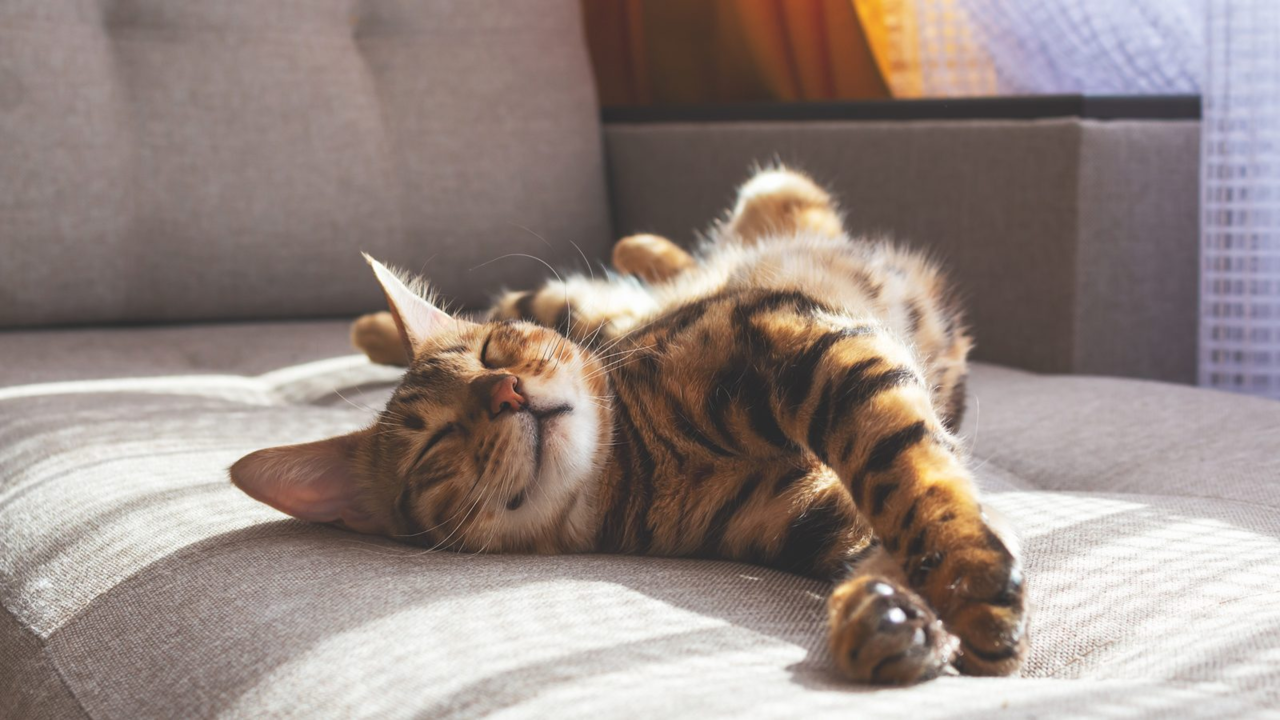
You have probably watched it happen on a cold morning. Your older cat wakes, lifts their head, and then takes their time. The long, leisurely stretch you know so well is slower to arrive, and a little stiffer when it does. They plant their front paws, lean into it, and only then ease themselves up and pad off to find a warm spot.
It is one of those small, tender things you notice when you live closely with a cat who has been with you a long time. In winter, that first stretch of the day often takes longer, and there are good reasons for it. This is a gentle look at why that happens, what it tells you, and the small comforts that make those cold mornings easier on ageing joints.
Quick answer
Senior cats take longer to stretch in winter because cold temperatures and older joints are a slow combination. Cool air tightens muscles and stiffens joints overnight, and an ageing body warms up and loosens more slowly than it used to. The stretch itself is how a cat eases that stiffness and gets the blood moving. Warm, easy-to-reach resting spots, gentle daily movement, and joint support chosen with your vet all help. A stretch that is simply slower is usually just winter and age. A cat who seems sore, stops jumping, or moves much less than before is worth a vet check.
Why the morning stretch takes longer in the cold
Cats are creatures of warmth. In New Zealand winters, where many homes cool right down overnight, an older cat feels the chill more keenly than they did in their younger years. Two things are happening at once on a cold morning, and together they slow that first stretch right down.
Cold tightens the body
Cool temperatures make muscles contract and joints feel stiffer. After a long, still night curled up tight to hold in heat, your cat has to work a little harder to loosen everything off.
Older joints warm up slowly
With age, the smooth cushioning in a cat's joints thins and the fluid that lubricates them gets a little stickier when cold. An ageing body simply takes longer to get going first thing.
The stretch is the warm-up
That big, deliberate stretch is not just a habit. It wakes the muscles, gets blood flowing and eases the night's stiffness. In winter a cat needs more of it, and more time, before they feel ready to move.
None of this is a sign that something is wrong. A gradual, gentle slowing is a normal part of getting older, especially in the cold months. What is worth knowing is that you can make those first stretches easier, and that a little arthritis often hides quietly behind exactly this kind of change. If you would like to understand the joint side of it more deeply, our guide to joint care for senior cats goes further.
What you might be noticing
Cats are quiet about discomfort, so the signs of a stiffer winter tend to show up as small shifts in habit rather than anything dramatic. You know your cat better than anyone, and these are the gentle changes owners often spot once the cold sets in.
Slower to rise
A longer pause between waking and getting up, and a stretch that is held a little longer before they commit to moving.
Seeking out warmth
Choosing the heat pump, a sunny windowsill or your lap more than usual, and curling up tighter to keep warm.
Choosing lower spots
Picking the couch over the top of the bookshelf, or hesitating before a jump they used to make without a thought.
A simple habit helps more than any single observation: notice the trend over a few weeks, not just one cold morning. Most of the time you are watching ordinary winter stiffness. When a change is sudden, or paired with eating less or hiding away, it is worth a closer look.
Warm, easy-to-reach resting spots
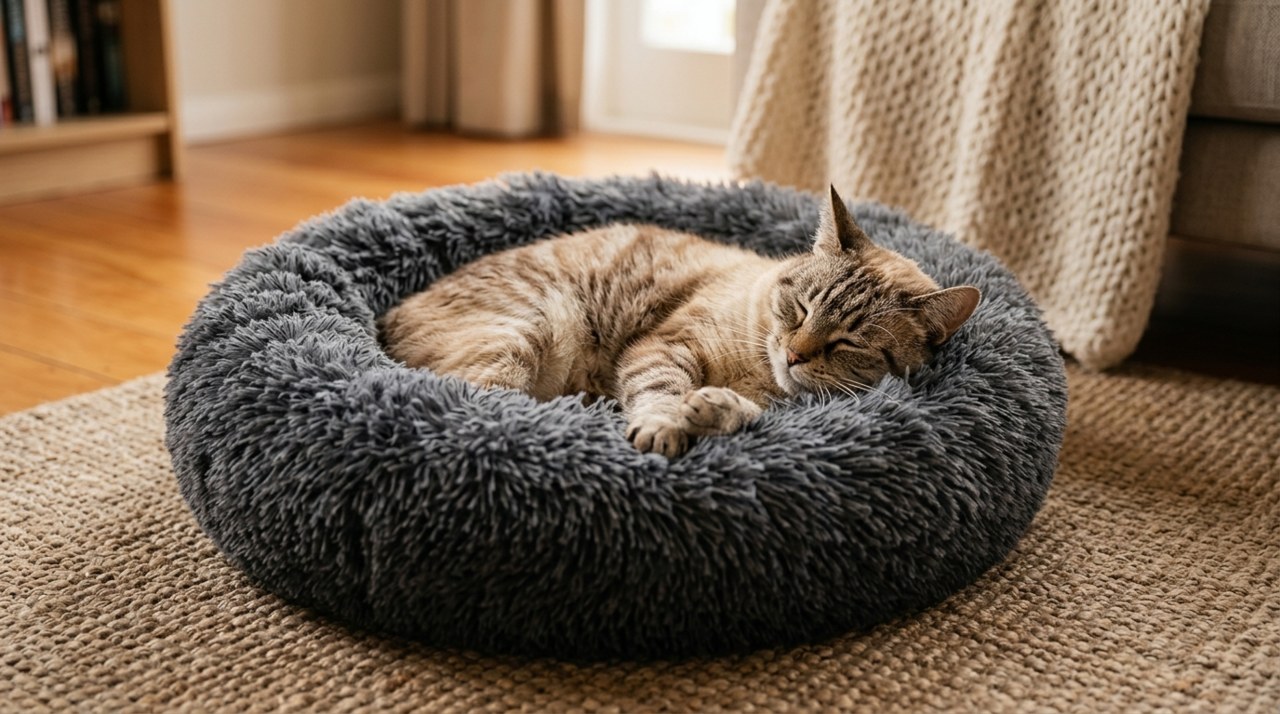
The single kindest thing you can offer a stiff older cat in winter is somewhere warm and snug to rest, low enough to reach without a jump. An enclosed cave bed traps body heat and feels secure, while a soft, deep bed takes the hard edge off cold floors and supports ageing joints through a long winter nap. Tuck one near where they already like to sleep, away from draughts and close to the warmth of the house.
Gentle movement and joint support
Movement is medicine for stiff joints, as long as it stays gentle. A short, easy play session once your cat has warmed up keeps muscle on their frame and helps the joints stay supple, without the strain of anything too energetic. Alongside that, a joint supplement can support cartilage and comfort over time. There are a few good options made for cats, from plant-based formulas to green-lipped mussel and omega oils. It is always worth choosing one with your vet so it fits your cat's needs.
A calm, cosy winter setup
Small touches around the home make the cold months easier on an older cat. A soft blanket draped over their favourite chair adds warmth they can burrow into, and a calmer, more settled atmosphere helps a senior cat who has become a little more sensitive with age. Keep food, water and the litter tray within easy reach so a stiff cat is never forced into a long, cold trek, and our guide to a warm winter for senior cats covers the wider setup.
When a slower stretch is worth a closer look
Most of the time, a slower winter stretch is simply age and cold doing their thing. But stiffness can also be the first quiet sign of arthritis, which is far more common in older cats than many owners realise. Because cats hide discomfort so well, it helps to know which changes are worth raising rather than waiting out.
Worth a vet check
Book a check if, alongside the slower stretching, you notice any of these:
- A clear drop in jumping, or struggling with places they used to reach easily
- Limping, an obvious stiffness that does not ease once they warm up, or flinching when touched
- Grooming less, a matted or unkempt coat, or trouble using the litter tray
- Eating less, drinking more, or losing weight
- Hiding away, becoming withdrawn, or a sudden change in temperament
- Any change that comes on quickly rather than gradually
Joint pain in cats is very manageable once it is recognised, and there is a lot your vet can do to keep an older cat comfortable. Catching it early simply means more easy, contented mornings ahead.
Frequently Asked Questions
When is a cat considered a senior?
Cats are generally considered senior from around 7 years of age. This is a guide rather than a hard line, and your vet may adjust it for your individual cat. From this point it is worth paying a little more attention to comfort, mobility and the small everyday changes that come with ageing.
Is it normal for my older cat to be stiff in the morning?
Some stiffness after a long, cold night is common in senior cats, and it usually eases as they warm up and get moving. The thing to watch is the pattern. Stiffness that lingers all day, comes with limping, or arrives suddenly is worth raising with your vet, as it can point to arthritis.
How warm should I keep the house for a senior cat?
Aim for a comfortable, draught-free warmth rather than a specific number, and give your cat warm spots they can choose for themselves, such as a cave bed, a sunny windowsill or a blanket near the heat source. Older cats hold their body heat less well, so the option to warm up easily matters most.
Will a joint supplement help my cat stretch more easily?
Joint supplements made for cats can support cartilage and comfort over time, and many owners find their cat moves more freely with regular use. They work gradually rather than overnight, and the right choice depends on your cat, so it is best to pick one with your vet.
Should I still play with my stiff older cat in winter?
Yes, gently. A short, easy play session once your cat has warmed up helps keep muscle on their frame and their joints supple. Let them set the pace, keep it low to the ground, and stop before they tire. Movement helps stiffness, as long as it never becomes a strain.
Could the slower stretching be arthritis?
It can be. Arthritis is common in older cats and often shows up first as exactly this kind of subtle stiffness, especially in the cold. If the slower movement comes with less jumping, limping, grooming changes or any sign of soreness, it is worth a vet visit. Arthritis is very manageable once it is recognised.
Related Reading
Cold Weather and Senior Cats: NZ Health Risks Guide
Joint Care for Senior Cats: Supplements and Support Options
Keeping Your Senior Cat Comfortable This Autumn
How Much Do Senior Cats Sleep? What's Normal vs Not
6 Subtle Signs Your Cat Is Entering Their Senior Years
Senior Cat Care: Signs Your Older Cat Needs Extra Support