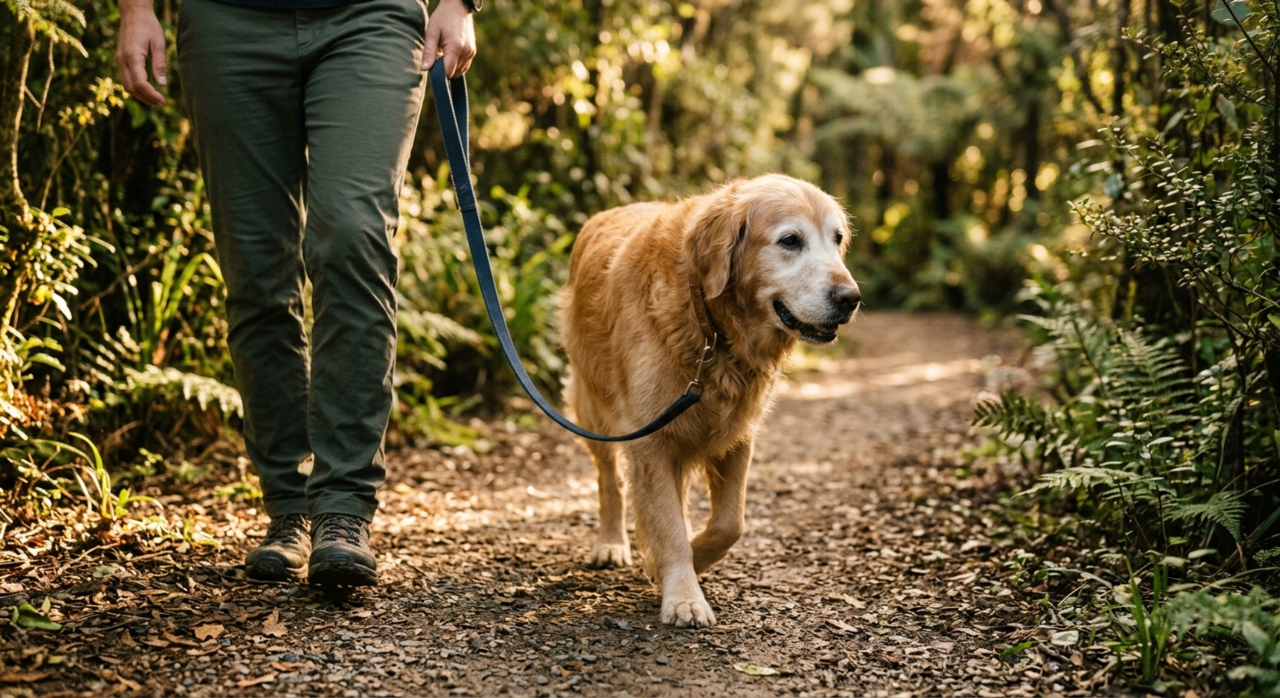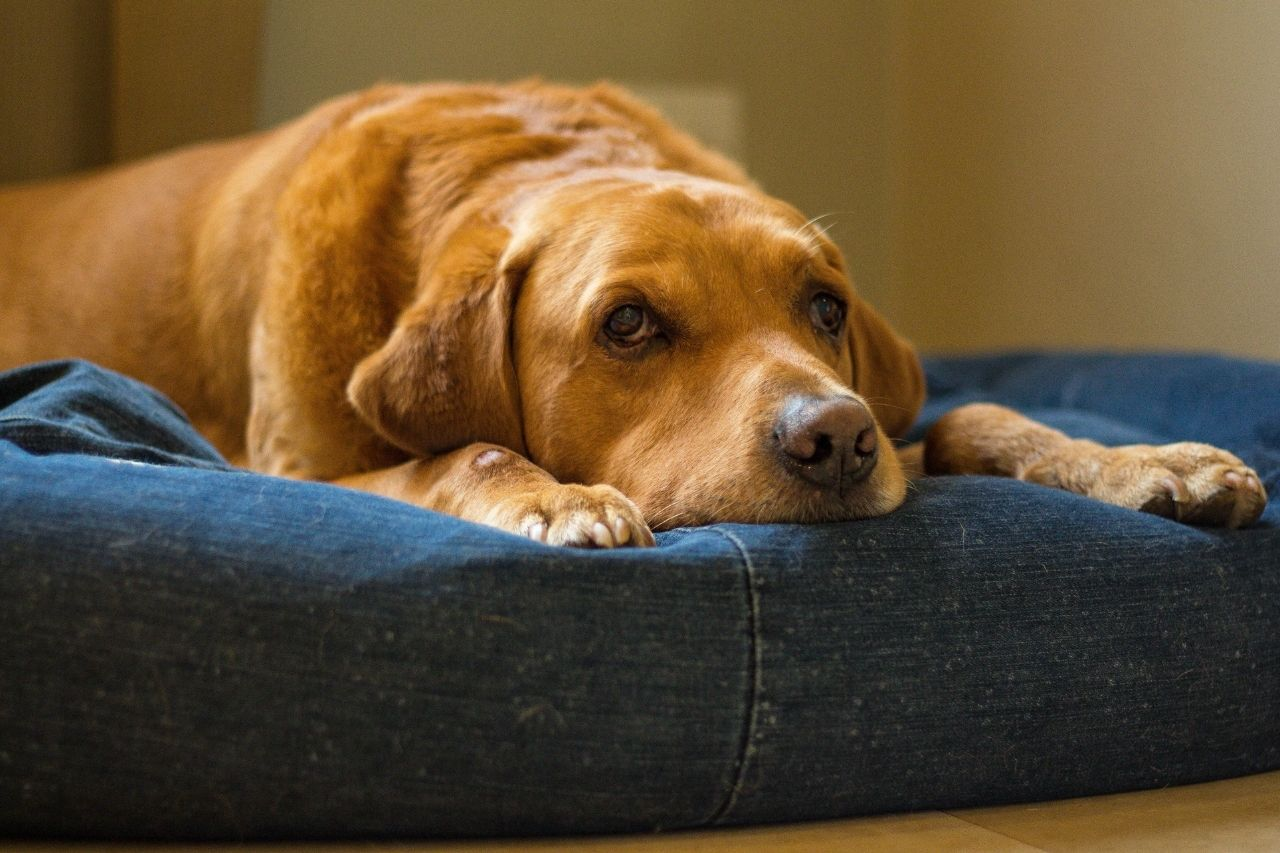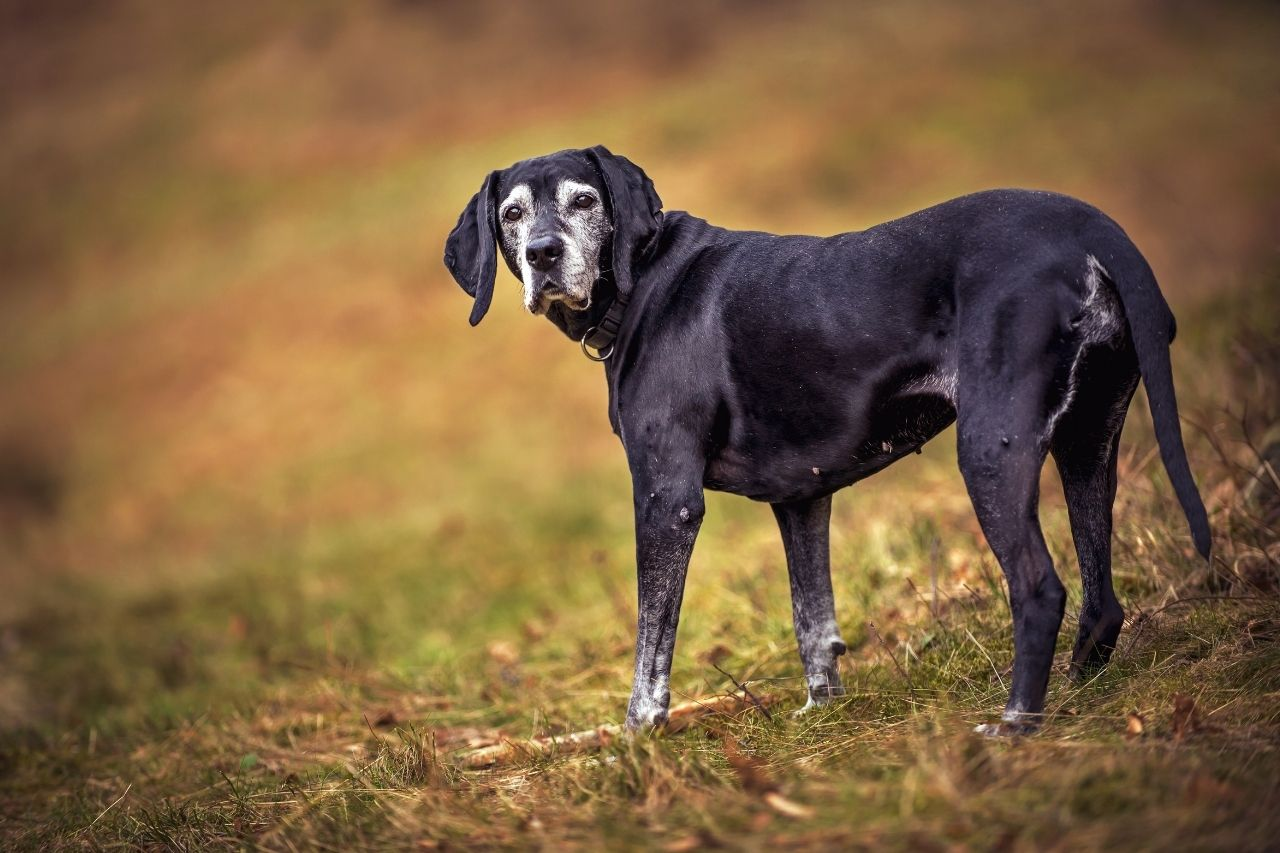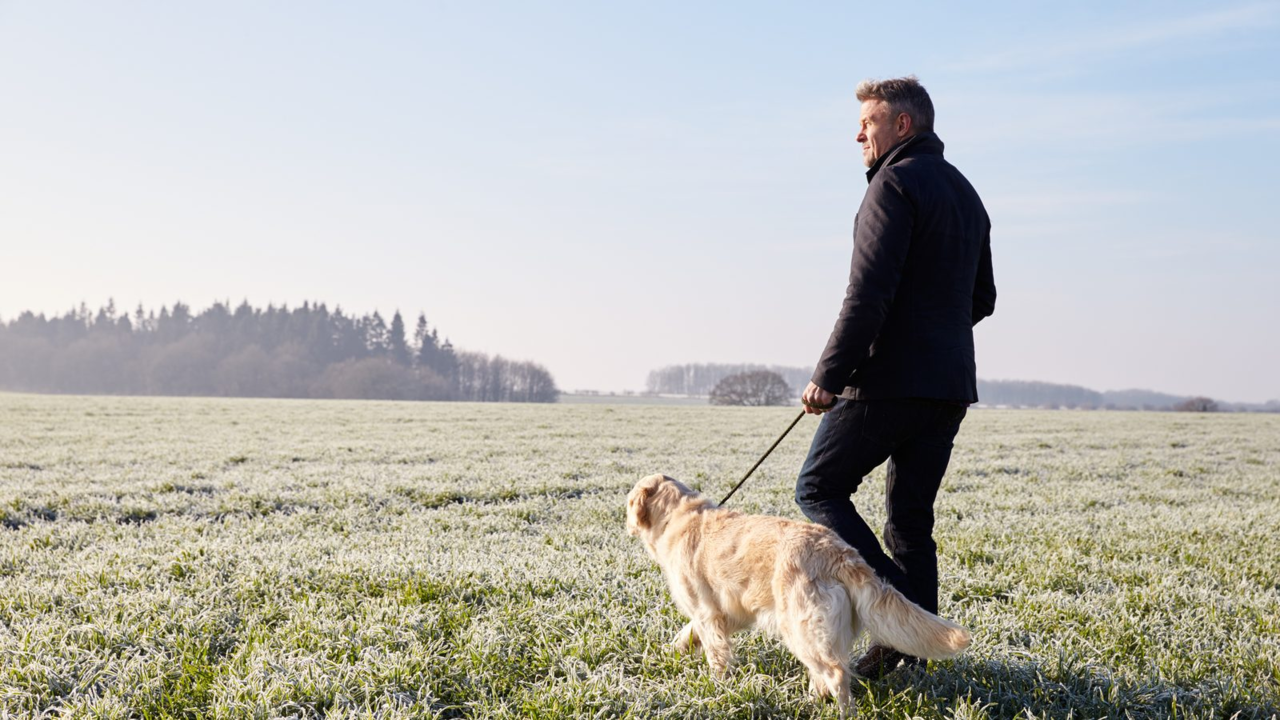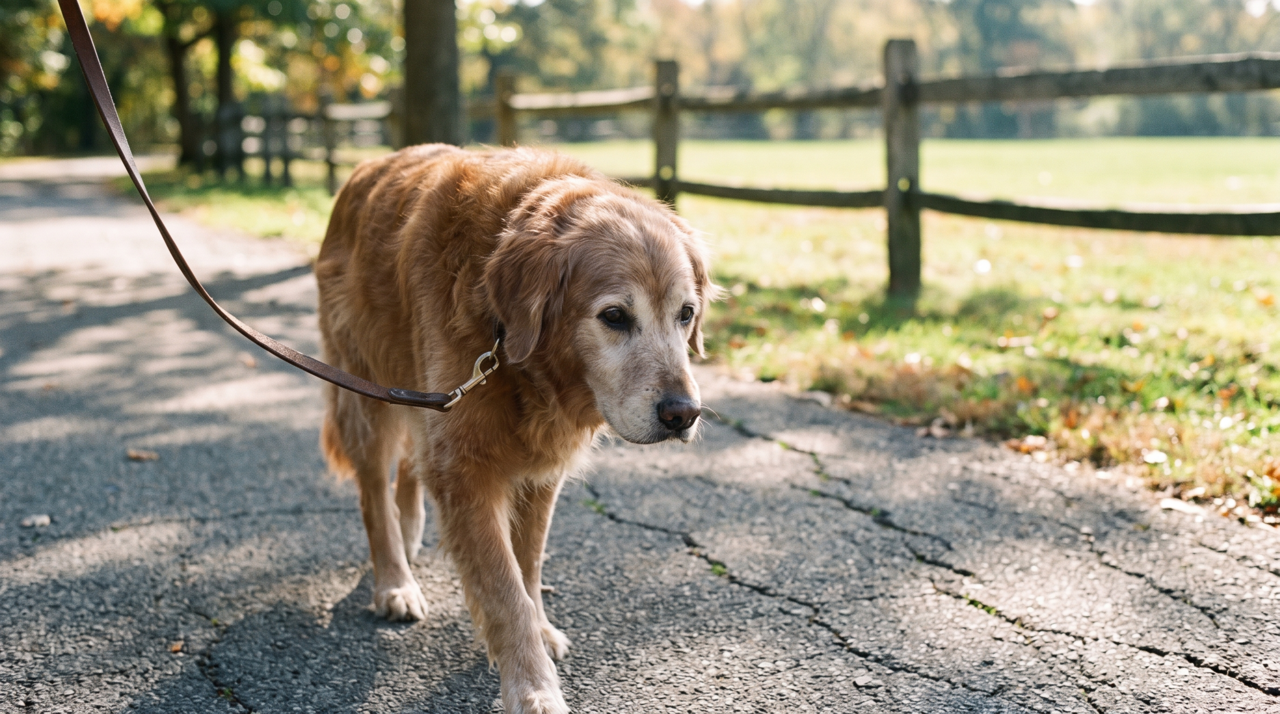
Your dog has walked the same loop with you for years. Lately, though, you have noticed the small changes: a slower pace on the way home, a bit of a lag on the hills, stiffness after a nap, or a hopeful glance back towards the front door before the walk is really over. These are your dog's way of telling you something, and learning to read them is one of the kindest things you can do as they age.
Shortening a walk can feel like taking something away, but for an older dog it is often the opposite. The right length keeps them moving comfortably without paying for it in stiffness the next day. This guide covers the signs that a walk is getting too long, how to adjust, and small comforts that make the daily outing easier on ageing joints. It is a starting point for observing your own dog, not a substitute for professional advice.
Quick answer
Shorten your senior dog's walk when you notice fatigue signals: lagging behind, slowing or stopping, heavy panting, stiffness during or after the walk, reluctance to carry on, or soreness the next day. Older dogs usually do better with shorter, more frequent walks at a gentle pace rather than one long outing. Watch your own dog, adjust to how they cope on the day, and factor in weather, terrain and their overall mobility.
Signs your senior dog's walk is too long
Every dog is different, so the best guide is your own dog's body language. These are the most common signals that it is time to turn for home.
Lagging behind
A dog who usually keeps pace but starts trailing, stopping to sniff far more than usual, or planting their feet is often telling you they have had enough.
Slowing or stopping
A noticeable drop in pace, or pausing to rest partway, is a clear sign the distance is stretching beyond what is comfortable today.
Heavy panting
Panting that is heavier than the effort or the weather calls for, and that does not settle when you slow down, means it is time to ease off.
Stiffness on the move
A stiff or bunny-hopping gait, a bobbing head, or favouring one leg during the walk suggests the joints are feeling the distance.
Reluctance to continue
Turning back towards home, sitting down, or looking up at you can be your dog asking to wrap things up. It is worth listening.
Soreness afterwards
The clearest sign often shows up later: struggling to settle, extra stiffness getting up, or a slow, achy start the next morning.
The morning-after test
A good rule of thumb is to judge a walk by how your dog feels the next day. If they are stiff, slow to rise, or clearly sore the following morning, the previous walk was probably a bit too much. Trim the distance and see how they go.
How to adjust the walk, not cancel it
Shorter does not mean less enjoyable. A few simple changes keep the daily walk a highlight while protecting ageing joints.
Go little and often
Two or three short, gentle strolls usually suit an older dog better than one long march. It keeps them moving without overloading tired joints.
Let them set the pace
Allow plenty of sniffing time and follow their lead. A slow, sniffy amble is great low-impact exercise and gentle on the body.
Choose softer ground
Grass and dirt tracks are kinder on joints than hard pavement. Flatter routes with fewer steep hills also make a big difference.
Mind the weather
Cold, damp days can stiffen older joints, and heat tires them faster. Adjust the length and timing to suit the conditions.
Warm up gently
Start slowly to let stiff joints loosen before picking up any pace, and finish gently rather than rushing the last stretch home.
Top up with brain games
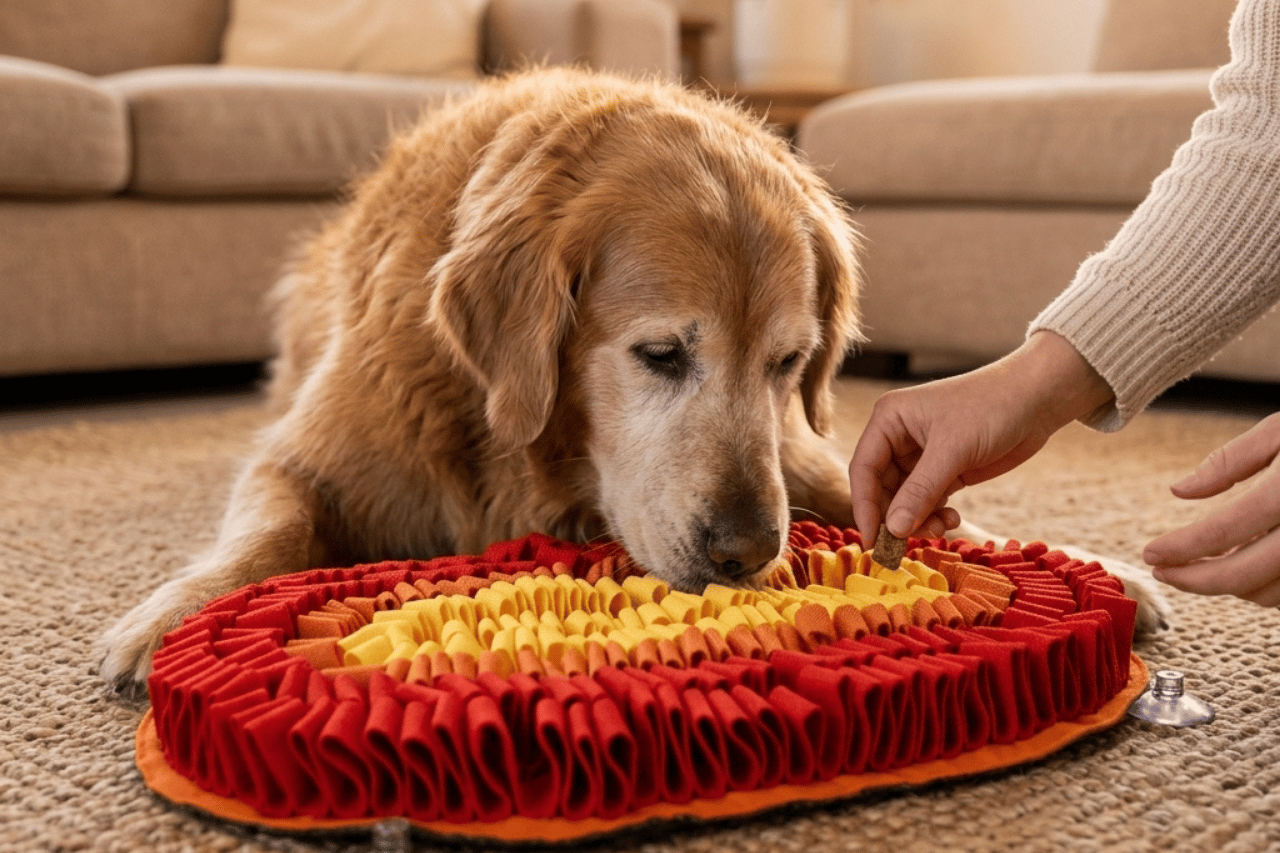
On days the body needs a rest, swap some of the walk for sniffing games or enrichment at home to keep their mind happy and tired.
Comfort and support for the daily walk
A few well-chosen bits of gear make gentle walks easier and more comfortable for an older dog. Joint support, a supportive harness and warm layers all help.
Joint support supplements
Everyday joint supplements can support mobility in ageing dogs. These are among our popular options, and they are all available on Autodeliver so you never run out.
Supportive harnesses
A well-fitted harness spreads pressure more evenly than a collar and gives you a gentle way to steady an older dog over kerbs and uneven ground.
Warm layers for cooler days
Older dogs feel the cold more, and a warm coat helps stiff joints stay loose on chilly walks.
Paw care
Cold, wet and rough ground can leave paws dry or cracked. A gentle balm helps protect and soothe them.
A gentle daily walk checklist
- Keep the pace slow and let your dog sniff and set the rhythm.
- Choose flat, soft routes and avoid long flights of steps where you can.
- Split the day's exercise into shorter, more frequent outings.
- Warm up slowly and finish gently rather than sprinting home.
- Adjust the length for cold, heat, wind and rain.
- Check paws after the walk and use a balm if they look dry.
- Watch how your dog feels the next morning and trim the distance if they are stiff.
More support for the golden years
When you add your dog to a pet profile, seniors automatically unlock Gold Paws, our free membership for older pets. You can also visit the senior scoop, our home of senior-pet advice, for more gentle-living tips as your dog ages.
Frequently asked questions
How long should a senior dog's walk be?
There is no single number, because it depends on the breed, size, mobility and health of your dog. Many older dogs do best with several short walks a day rather than one long one. Let your dog's pace and how they feel afterwards guide the length.
Should I stop walking my senior dog altogether?
Usually not. Gentle, regular movement helps keep joints mobile and muscles strong, and it matters for their mind too. The goal is to adjust the length and pace to suit them, not to stop.
Is it better to do one long walk or several short ones?
For most older dogs, several shorter walks are gentler on the joints and less tiring than a single long outing. It keeps them active across the day without overloading them at once.
My dog wants to keep going but is sore later. What should I do?
Some dogs push through in the moment and pay for it afterwards. If your dog is stiff or sore the next day, shorten the walk even if they seemed keen. You are the best judge of what they can handle comfortably.
Can supplements help my senior dog stay active?
Everyday joint supplements are designed to support mobility in ageing dogs and are a common part of a senior care routine. Pair them with sensible exercise, a healthy weight and warm, comfortable rest.
How can I tell the difference between tiredness and pain?
Tiredness tends to ease with rest, while pain often shows as limping, stiffness, reluctance to move, or changes in mood. If you are seeing signs of ongoing discomfort, it is worth seeking professional guidance.
Set your senior dog up for comfortable walks
Explore joint support, supportive harnesses and warm coats to make every gentle outing easier. Join Pet Perks for free to enjoy member pricing across the store.
SHOP SENIOR DOG