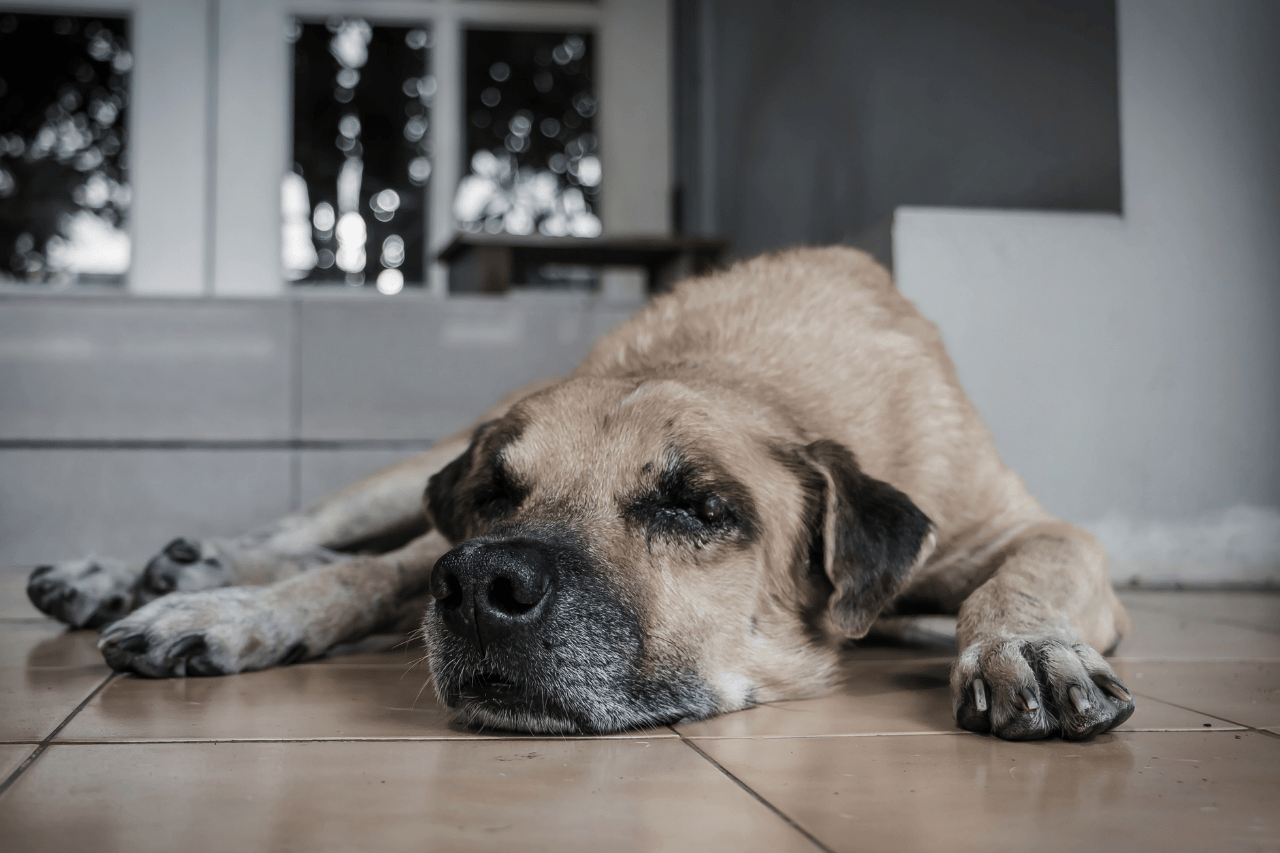
Older dogs slow down. They sleep a bit more, walk a bit shorter, and don't always launch at the door for a tennis ball like they used to. What doesn't slow down (or shouldn't if you can help it) is their need for mental stimulation. Brain games and gentle enrichment are one of the easiest, most enjoyable ways to keep your senior dog feeling engaged, settled and themselves as they age.
This is a friendly guide to brain games and enrichment that works for senior dogs, with easy ideas you can start today and a few of the products that make it simpler.
Quick answer
Senior dogs benefit from short, gentle, low-frustration enrichment activities like sniff games, lick mats, snuffle mats and easy puzzle toys. The aim is mental engagement, not exhaustion. 10 to 15 minutes of brain work a day is enough for most older dogs and can support better sleep, calmer behaviour and a happier daily routine. Keep it easy, rewarding, and adaptable to their pace.
Why Mental Enrichment Matters More as Dogs Age
As dogs slow down physically, mental stimulation often becomes the most rewarding part of their day. The brain, like a muscle, benefits from regular use. Older dogs who stay mentally engaged often:
Settle better at night
A bit of mental tiredness during the day often translates to better night-time sleep, which can be a big help for senior dogs prone to restlessness.
Stay calmer day to day
Dogs who get regular brain work tend to be less anxious, less destructive (yes, even at 12), and more content with quiet time around the house.
Feel more like themselves
Enrichment plays into your dog's personality. A puzzle session can put a senior dog right back into their happy place, even if they can't run as far as they used to.
Stay engaged with you
Daily brain games are bonding moments. Even short sessions remind your dog they're a working partner in your team, not just a passenger.
Compensate for less exercise
Older dogs often can't manage the long walks they used to. Mental stimulation helps fill the engagement gap so they're not bored.
Support overall wellbeing
Mental engagement is one piece of a wider senior wellbeing plan that includes good food, gentle exercise, comfortable rest and regular check-ups with your clinic.
How Senior Enrichment Should Look
Enrichment for older dogs is different from enrichment for puppies. The aim shifts from burning energy to staying engaged. A few principles that work well:
Short and sweet
10 to 15 minutes is plenty for most older dogs. Two short sessions through the day work better than one long one.
Easy, not frustrating
Senior dogs don't enjoy puzzles that feel impossible. Stick to easy and medium difficulty so they get plenty of wins. Frustration usually means it's too hard.
Reward-rich
Treats, kibble, soft food smears or stock-soaked snacks all work. The reward is what makes the brain work feel satisfying.
Body-friendly
Avoid activities that need a lot of jumping, running or twisting. Floor-based games, lick mats, snuffle mats and stationary puzzles are all kinder on senior joints.
Calm pace
Senior enrichment is more about steady focus than excitement. Skip noisy or high-arousal toys if your dog gets startled or anxious easily.
Predictable timing
Older dogs love routine. Same time each day, same place, same kind of session. The familiarity makes it more rewarding.
Brain Game Ideas to Try at Home
You don't need fancy gear to start. A few ideas you can try with what you've already got:
Sniff and find
Hide a few small treats around one room while your dog watches. Then let them sniff them out. Sniffing is mentally tiring and one of the most natural enrichment activities for any dog.
Cup shuffle
Put a treat under one of three cups, slowly shuffle them, then let your dog pick. Easy difficulty for senior dogs, big satisfaction when they get it right.
Towel roll
Sprinkle treats or kibble through an old towel, roll it up loosely, and let your dog unroll it to find them. Free, easy and surprisingly rewarding.
Box of boxes
Put a few small empty cardboard boxes in a larger box, hide treats among them, and let your dog rummage. Rotate through different shapes for variety.
Slow meal stretch
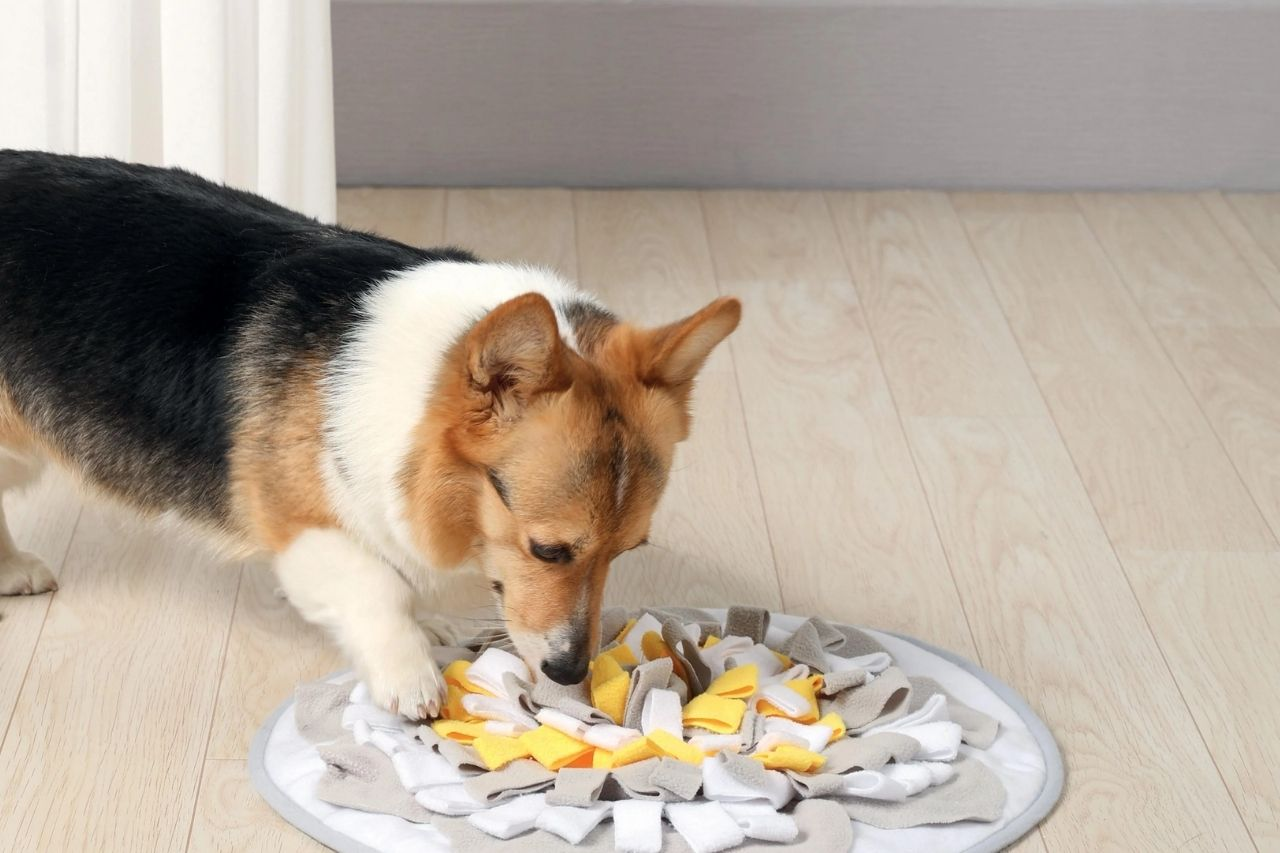
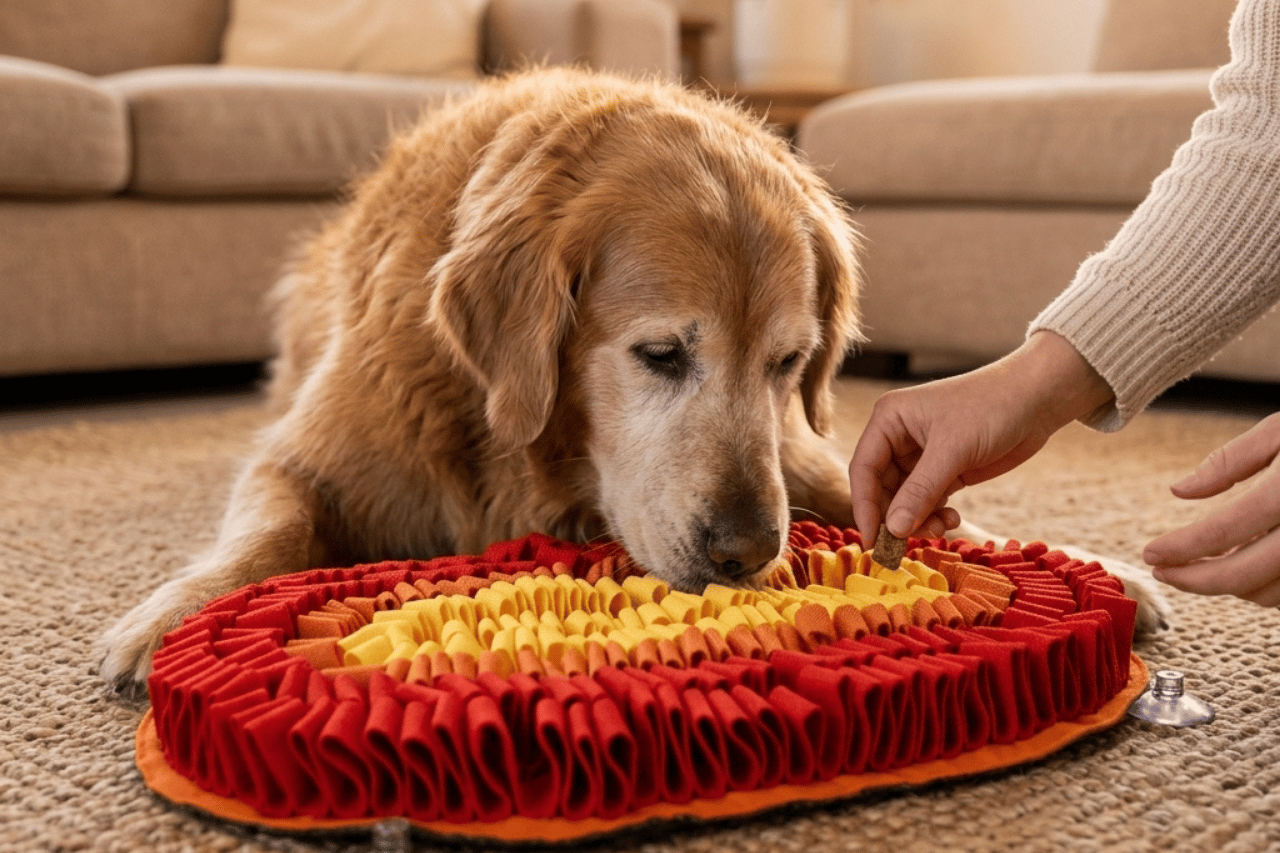
Instead of a bowl of kibble at dinner, scatter the same kibble over a snuffle mat or in their bed. Turns a 30-second meal into a 10-minute foraging session.
Frozen lick mat
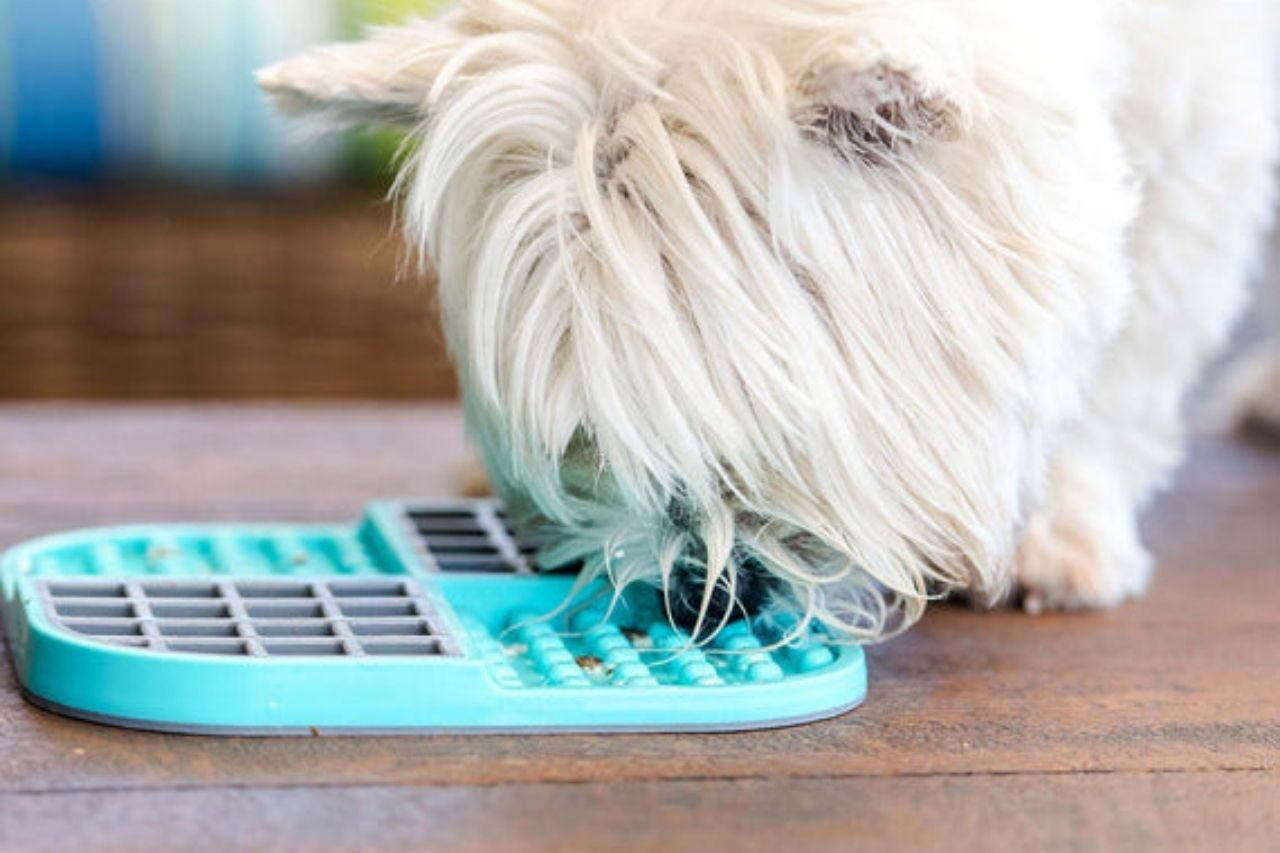
Smear soft food or wet food on a lick mat and freeze. Long-lasting, easy on senior teeth, and a calming activity for restless evenings.
Easy training refresher
Run through old commands they know (sit, paw, down) for treats. Refreshing known cues is just as good for the brain as learning new ones, and it's confidence-boosting.
New sniff walks
Slow walks where you let your dog sniff as much as they want. A short loop with new sniffs beats a long loop where you set the pace.
Puzzle feeder swap
Rotate two or three different puzzle feeders so each one feels new every time it comes out. Variety keeps it engaging.
Lick Mats and Snuffle Mats
Two of the gentlest, most senior-friendly enrichment tools. Lick mats are calming and good for slow eating, while snuffle mats turn meals into a foraging game without any jumping or strain.
Easy Puzzle Toys for Senior Dogs
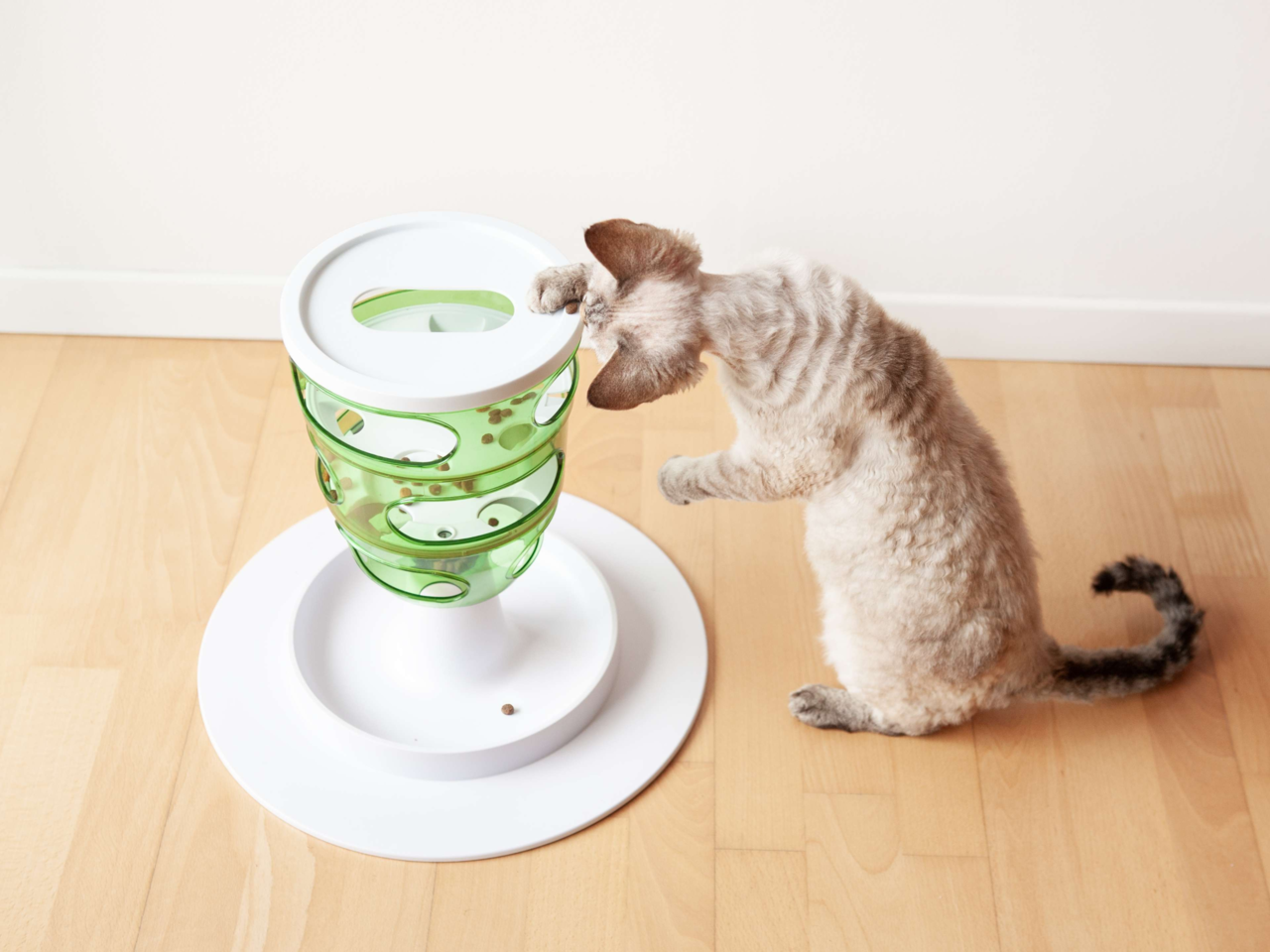
Look for puzzle toys at easy or medium difficulty. The aim is steady wins, not problem-solving struggle. Stationary puzzles you can use on the floor are best for older dogs.
Treat-Holding Toys for Slow Reward Sessions
Stuffable rubber toys turn a regular treat or scoop of kibble into a 15-minute brain session. Easy enough for senior dogs, satisfying enough to keep them engaged.
Foods and Supplements That Support Brain Health
Mental enrichment works alongside diet and supplements as part of a wider senior wellbeing approach. Some senior diets are formulated with antioxidants and omega-3s to support brain health. Always check with your clinic before changing diet or adding supplements.
A Simple Daily Brain Game Routine
You don't need to do everything every day. A loose weekly rhythm works well:
- Most days: 5 to 10 minutes of sniffing, scattering kibble or a snuffle mat at meal time
- 2 to 3 times a week: a puzzle toy session (10 to 15 minutes)
- Once a week: a new game or rotation of toys to keep things feeling fresh
- Daily: a short, sniff-led walk where your dog gets to set the pace
- Evenings: a lick mat or treat-stuffed toy to wind down
The exact mix is less important than the consistency. A little brain work most days is far better than a long session once a week.
When to Adjust Their Routine
Pay attention if your dog seems to disengage, get frustrated, or show signs they're uncomfortable. A senior brain games routine should always feel like a win for them. A few signs to watch for:
- Walking away mid-game (the puzzle is too hard or they're not enjoying it)
- Getting stuck or staring at the toy without trying (downgrade the difficulty)
- Whining or pawing at you for help (offer easier wins, build back up)
- Showing stiffness or hesitation to move (switch to floor-only or stationary games)
- Loss of interest in food rewards (worth a chat with your clinic, since changes in appetite can be a sign of something else)
Frequently Asked Questions
How much mental enrichment does a senior dog need?
10 to 15 minutes a day of dedicated brain work is enough for most senior dogs. Add to that a sniff-led short walk, slow meal feeding and the occasional lick mat in the evening, and you've got a strong daily rhythm.
Are puzzle toys good for older dogs?
Yes, when matched to their pace. Easy or medium-difficulty puzzles are ideal. Hard puzzles can be frustrating for senior dogs, especially if they're new to puzzle toys. Start easy and let them build confidence.
Can mental enrichment help with dog dementia?
Mental engagement is one piece of supporting a dog with cognitive change. It's not a fix on its own, but daily enrichment alongside a steady routine, supportive diet and clinic guidance can help your dog feel more settled.
What's the easiest brain game to start with?
Scattering your dog's kibble across the floor or in a snuffle mat instead of feeding from a bowl. Zero setup, zero cost, and turns a 30-second meal into a 10-minute foraging session.
Are lick mats good for senior dogs?
Lick mats are one of the best enrichment tools for senior dogs. They're calming, easy on senior teeth and joints, and great for evening wind-down. Smear soft food or wet food on the mat and freeze for a longer-lasting session.
How do I keep enrichment interesting?
Rotate two or three toys so each one feels new when it comes out. Mix sniff games, puzzles and lick mats through the week. Even small changes (different treats, new spot in the house) make familiar games feel fresh.
My senior dog isn't interested in toys anymore. What should I do?
Try sniff games, lick mats and food-based enrichment instead of traditional toys. Many senior dogs lose interest in tug or fetch but stay engaged with food-based activities. If a usually engaged dog suddenly stops being interested in food rewards, it's worth a chat with your clinic.
Find Senior-Friendly Enrichment Toys
Lick mats, snuffle mats, easy puzzles and stuffable toys for everyday brain work. Save with Autodeliver on senior food and enjoy everyday member pricing with Pet Perks.
SHOP INTERACTIVE DOG TOYS