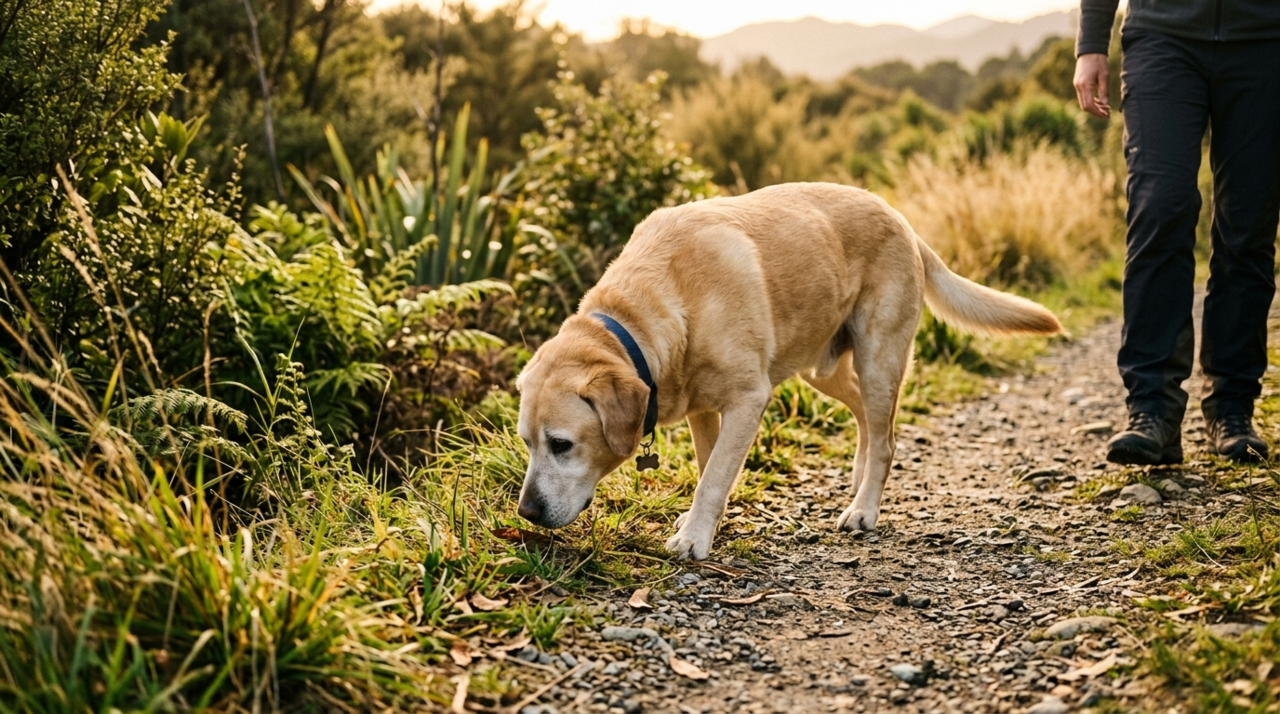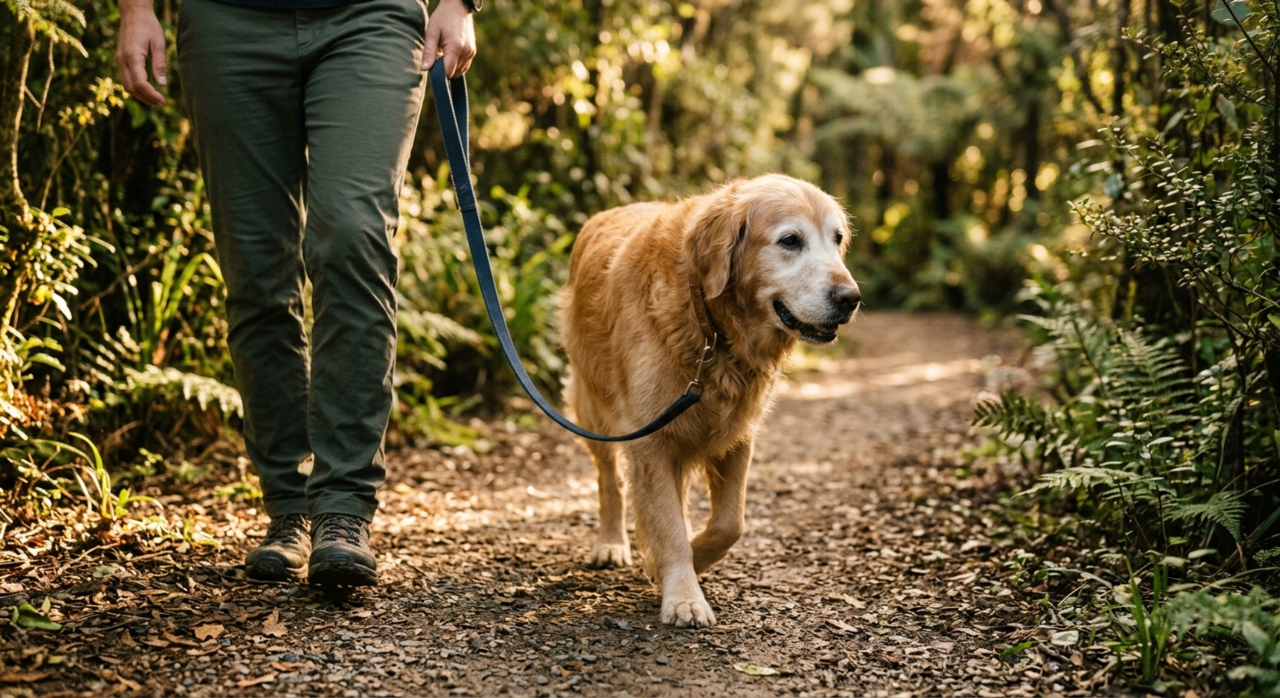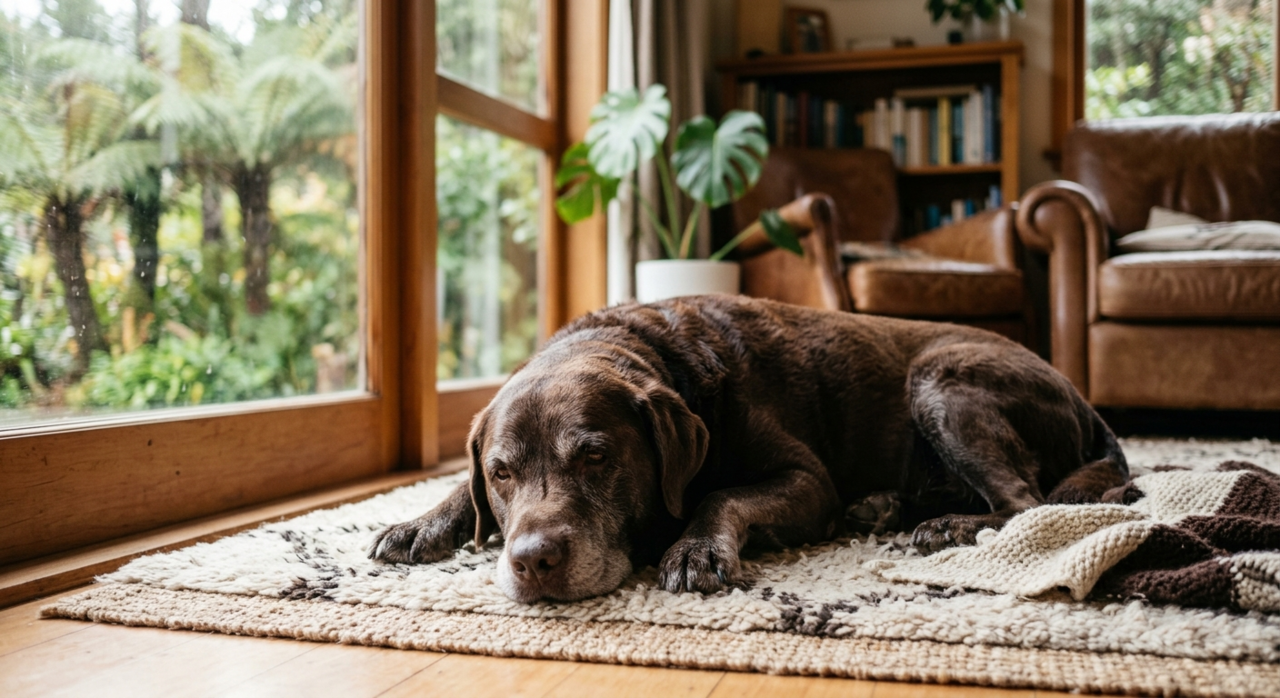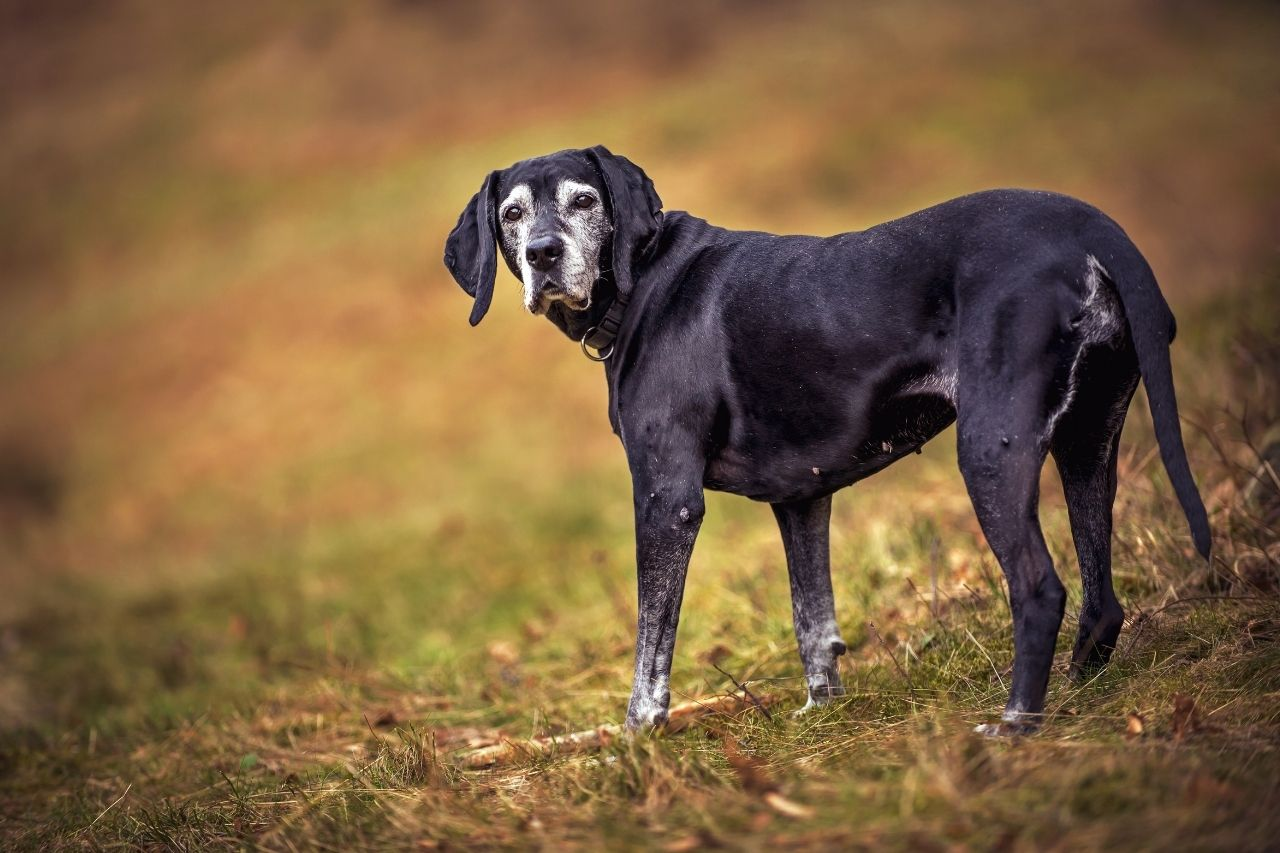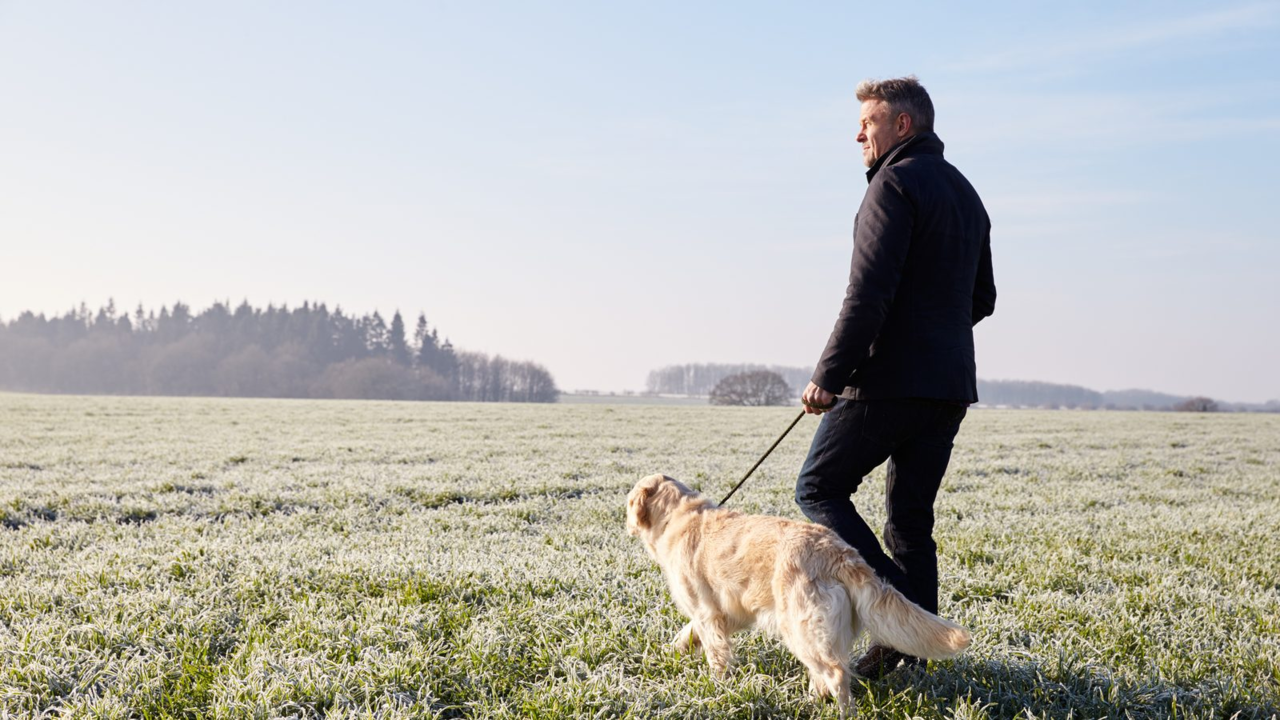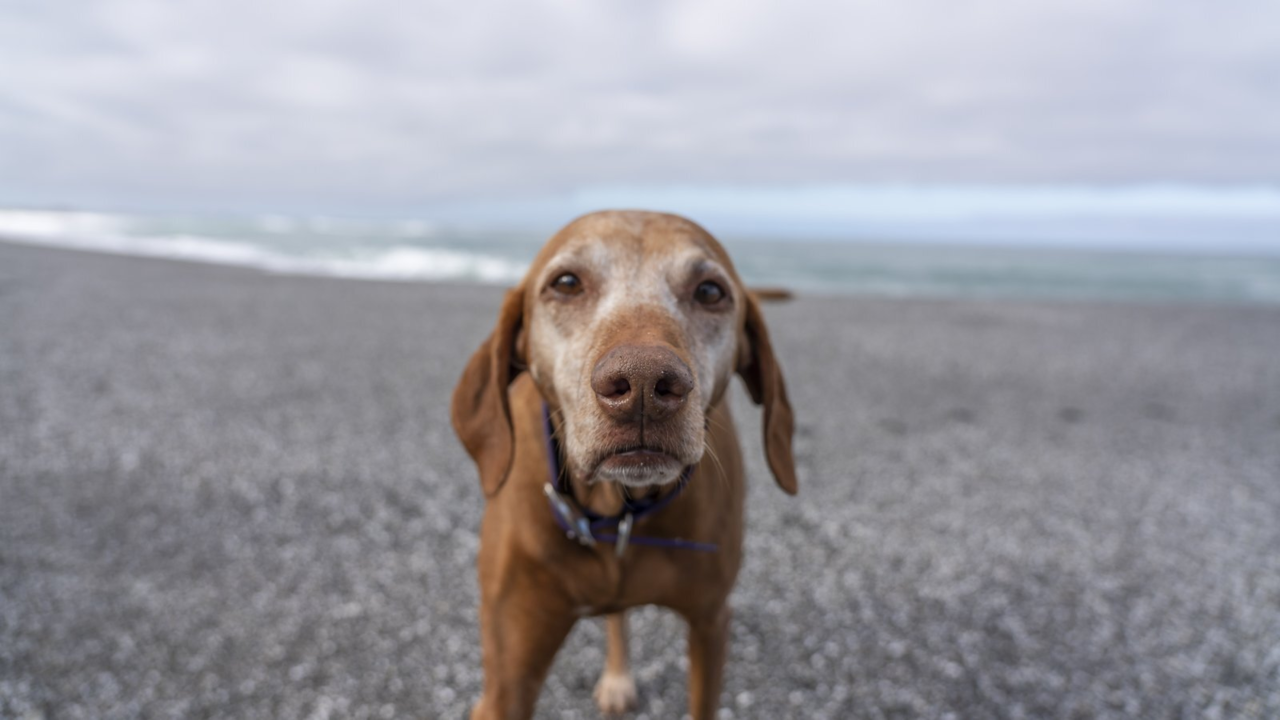
There comes a point with most older dogs when the walk quietly changes shape. The pull on the lead softens. They stop more often, sniff a little longer, and turn for home before you do. It is easy to read this as your dog losing interest, but more often it is simply your dog telling you what feels good now. A slower walk is not a smaller life. It is a different pace, and meeting your dog where they are is one of the kindest things you can do in their senior years.
Quick Answer
If your senior dog wants a slower walk, follow their lead. Swap one long outing for two or three shorter ones, walk at the warmest part of the day, choose soft and level ground, and let sniffing set the pace. A well-fitted harness, a warm coat in winter, fresh water, and a soft bed to recover on all make the gentler routine more comfortable.
Reading the signs your dog wants to slow down
Senior dogs rarely announce the change. They show it in small, repeatable ways. None of these on their own is cause for worry, but together they are your dog asking for a softer routine.
- Stopping more often, or planting their feet and looking back toward home.
- Taking longer to warm up at the start of a walk, especially on cold mornings.
- Lagging on the way out rather than only on the way back.
- Choosing to sniff and stand rather than stride ahead.
- Being slower to get up after resting, or stiff for the first few minutes.
- Sleeping more deeply after a walk that used to barely tire them.
The skill here is noticing without rushing to fix. Watch for a week, and you will usually see a clear pattern of what your dog still enjoys and where their comfortable limit now sits.
How to adjust the walk
Shorter and more often beats one big loop
Two or three short outings spread through the day are gentler on ageing joints than a single long walk, and they keep your dog moving little and often, which helps stiffness more than one burst of effort. If your usual loop is thirty minutes, try two ten-minute strolls instead and watch how your dog settles afterwards.
Walk at the kindest time of day
Cold, damp mornings are the hardest on stiff joints. In winter, aim for the middle of the day when the ground and the air have warmed a little. In summer, swap to the cool of early morning or evening so your dog is not working hard in the heat.
Let the route do less work
Soft, level ground is far easier on older legs than hills, steps, gravel, or slippery footpaths. A flat grassy reserve or a quiet street is often a better choice now than the big hill walk that used to be the highlight. Keep the option of turning back early, and treat that as a success rather than a cut-short walk.
Let sniffing set the pace
Sniffing is gentle, satisfying, and genuinely tiring in a good way. Letting your dog read the world at their own speed turns a short, slow walk into a full and contented one. If you want to lean into this, our companion piece on slow sniff walks below is a lovely place to start.
Gear that makes the gentler walk easier
The right kit takes friction out of the slower routine, both for getting ready and for staying comfortable along the way. A soft, well-fitted harness spreads pressure evenly and is far kinder than a collar on a dog who now stops and starts a lot. Older dogs feel the cold more than they used to, and a dog moving slowly is not generating much of their own warmth, so a light, easy-on coat keeps winter walks pleasant. A balm on the paw pads guards against cold, hard footpaths, and a portable water bottle means you can offer a drink without cutting the outing short.
If your walks involve a car trip to a flatter, gentler spot, a ramp saves your dog the jump in and out, which is often the hardest moment of the whole outing for stiff back legs.
Supporting comfortable movement
A gentler walk and a little daily joint support work well together. Many senior dogs do their best on a routine that keeps them moving softly each day, paired with a supplement that supports comfortable joints over time. These work gradually, so give them a few weeks before you judge the difference.
The rest afterwards matters too
A slow walk should end somewhere soft. A supportive orthopaedic bed helps tired joints settle and recover, and gives your dog a warm, familiar place to drift off once you are home. For many senior dogs, the contented sleep after a gentle outing is the best part of the whole routine.
When a slower walk is worth a closer look
Slowing down gradually with age is normal. A sudden change is not. If your dog goes off walks quickly, becomes reluctant to move, limps, or seems sore rather than simply slower, book a clinic check. Discomfort and joint pain often show up as a change in walking before anything else.
Comfort gear for gentler senior walks at Petdirect
From soft, well-fitted harnesses and warm winter coats to joint supplements, ramps and orthopaedic beds, find what you need to keep your senior dog comfortable at their own pace. Save with Autodeliver on supplements and food, and enjoy everyday member pricing as part of Pet Perks.
SHOP LEADS, COLLARS & HARNESSESFrequently Asked Questions
Is it bad to let my senior dog walk less?
No. Following your dog's pace is the right thing to do. Older dogs still benefit from gentle, regular movement, but the goal shifts from distance to comfort. Little and often, on soft ground, keeps them mobile without overdoing it.
How far should a senior dog walk?
There is no single number, because it depends on size, breed, and health. The better guide is your dog. If they are settled and content afterwards, the walk was about right. If they are stiff, flat, or reluctant to go again next time, ease back.
Should I still walk my dog every day?
For most senior dogs, yes, but in a gentler form. A short daily stroll keeps joints moving and gives them the sniffs and changes of scene they enjoy. On a sore or very cold day, a quiet potter around the garden can stand in for the main walk.
My dog keeps stopping on walks. Is something wrong?
Frequent stopping is often just an older dog choosing a slower pace, especially if they are happily sniffing. If the stopping is new, sudden, or paired with limping or reluctance to move at all, it is worth a clinic check to rule out pain.