If you've lived with a cat for any length of time, you'll know they have a relationship with the floor that involves the occasional hairball. It's something most owners file under "normal cat life" and move on with their day. The question that comes up later, usually when the cat is twelve or thirteen, is whether it's still "just a hairball" or whether something has shifted.
Vomiting in older cats is one of those changes that's easy to dismiss because it looks so familiar. Here's how to tell the routine grooming-and-hairball pattern from the kind that's worth following up, and what to adjust at home either way.
Quick Answer
An occasional hairball (roughly once or twice a month, expelled quickly, cat fine afterwards) is usually normal cat life. Vomiting becomes worth following up when it's more frequent than that, happening between hairballs, paired with weight loss or appetite changes, or made up of food, bile or liquid rather than fur. In older cats specifically, regular vomiting can flag kidney, thyroid, gut or food-related changes that respond well to early intervention. Brushing more, slowing meals down, supporting hydration and switching to a senior or sensitive-stomach formula handles a lot of the everyday cases. Anything that's new, frequent, or paired with other senior changes is worth getting looked at.
What "Normal" Vomiting Looks Like in a Cat
It helps to start with the baseline. Cats are tidy, fussy hunters who groom themselves several times a day, so they take in a lot of hair. Their stomachs are also small and not particularly forgiving, which is why "eating too fast and bringing it back up" is a thing in this species.
Usually normal
- A hairball every few weeks, or once a month, with visible fur in it
- Bringing food up right after wolfing down a meal (regurgitation, not really vomiting)
- A one-off after eating grass
- Cat is bright, eating, drinking and behaving normally before and after
- Returns to normal within an hour or two
Worth a closer look
- More than once a week, or several times in a few days
- Vomit is food, bile (yellow foam), liquid, or has blood in it (no obvious fur)
- Paired with weight loss, less appetite, or hiding more
- Drinking noticeably more, or noticeably less
- Lethargy, wobbliness, or hunched posture after vomiting
- Started suddenly, or getting worse over weeks
Why Older Cats Vomit More
An older cat isn't a younger cat with more years on the odometer, the system genuinely changes. A few things shift quietly through the senior years that make the stomach more sensitive, the grooming heavier, and the body more reactive to things that didn't bother them before.
Hairball load goes up
Longer grooming sessions, slower coat turnover and (in some cats) heavier shedding mean more hair swallowed. If your cat is grooming a particular spot a lot, that's a sign worth following.
The digestive system gets less efficient
Older cats produce slightly less stomach acid and digestive enzymes, and the gut moves food along a little slower. Foods that were fine for years can start causing the occasional bring-up.
Sensitivities can develop late
Some cats develop a sensitivity to a protein, grain or additive in their food in their senior years, despite eating the same formula their whole life.
Kidney changes are common
Kidney function naturally declines with age in cats. Early kidney change often shows up as drinking more water and the occasional vomit, well before anything obvious appears.
Thyroid shifts
Overactive thyroid is one of the most common senior cat conditions. It often shows up as an old cat who's eating like a kitten, losing weight, and bringing food up more often.
Inflammatory gut conditions
Long-running, low-grade inflammation in the gut is something older cats can develop. The pattern tends to be regular vomiting (more than once a week), often paired with softer stools and gradual weight loss.
Eating too fast or in stressful conditions
Multi-cat households, food bowls that are too narrow (whisker fatigue), or being startled at mealtime can all cause regurgitation. Worth ruling out before assuming it's medical.
Dehydration and constipation
Older cats often drink less than they need to, especially through winter. Mild dehydration leads to harder stools, slower gut transit and more nausea. (Our senior cat hydration guide goes into this further.)
The Hairball Question
Hairballs deserve their own section because they're so easy to mis-read.
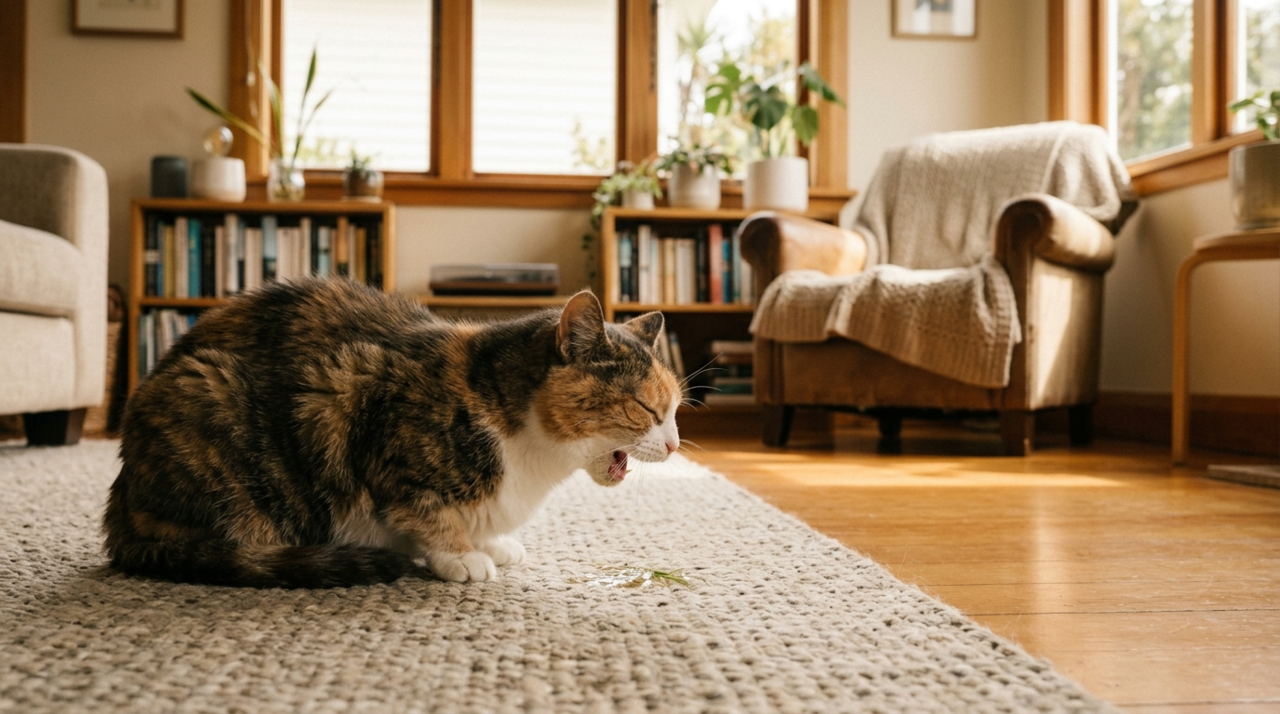
A "real" hairball comes up as a damp cigar-shaped tube of fur, usually with a small amount of liquid, after a heaving session that lasts a minute or two. Cats look briefly miserable, then walk away and eat their dinner. Once or twice a month is in normal range, especially for longhaired cats and during the spring and autumn coat-blowing seasons.
What's often labelled "hairballs" but actually isn't:
- Bringing up food shortly after eating (that's regurgitation, usually a too-fast or too-large meal)
- Vomiting yellow or clear liquid on an empty stomach (often a sign the stomach is sitting empty too long)
- Heaving without producing anything (that's nausea, not a hairball trying to come up)
- Hairballs more than once a week, every week, for a stretch
The hairball-management approach (brushing, hairball treats and gels, fibre-supported food) helps the genuine hairball pattern. If you're using those products and the pattern isn't budging, the cat is probably telling you it's not really a hairball problem.
What You Can Do at Home
Most everyday senior cat vomiting responds well to a small bundle of adjustments. Try these in combination for a few weeks and you'll usually see a real difference.
Brush more, more often
Daily brushing, even for a short cat, takes a surprising amount of loose hair out of the swallow-pile. Slicker brushes work well for medium and long coats, deshedding tools are excellent for double-coated breeds and seasonal shedders.
Switch to a senior, sensitive or hairball-control food
For cats over seven, a senior formula will be easier on the gut and kidneys than a standard adult food. Sensitive-stomach formulas are designed around easy digestion and limited ingredients, and hairball-control formulas add fibre to push more swallowed hair through the system rather than back up.
Slow the meal down
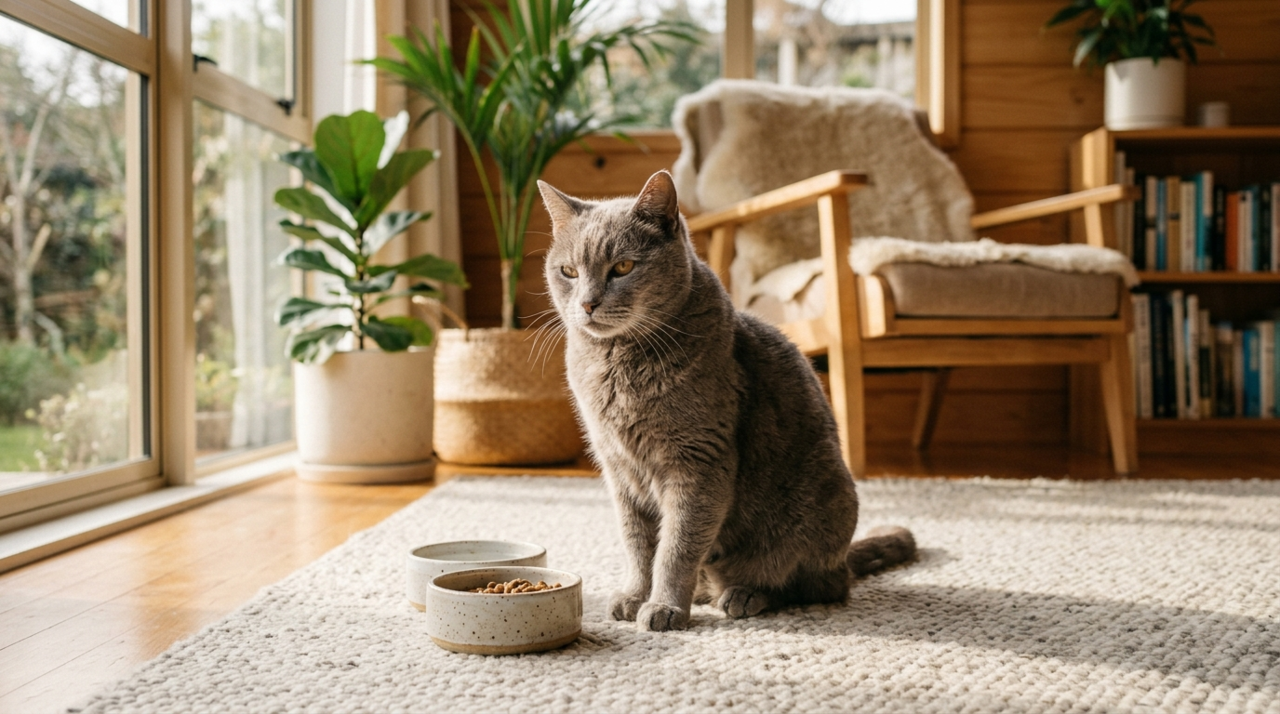
A wide, shallow bowl (not narrow and deep), smaller portions split across more meals, and a lick mat for a portion of the wet food all stretch eating time out. A lot of "vomiting" disappears once cats stop wolfing.
Support gut function with probiotics and hairball aids
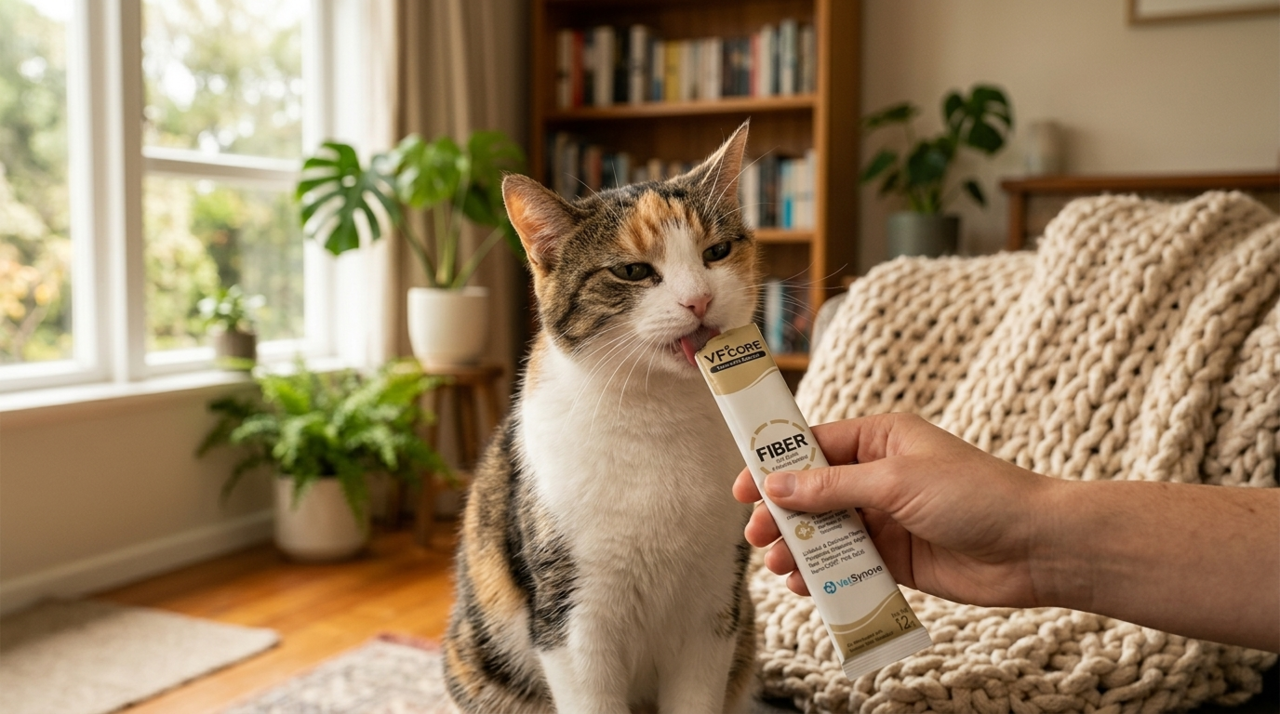
Cat-friendly probiotic supplements help re-balance the gut after upset, and hairball treats and gels make swallowed fur easier to pass. A probiotic paste is useful to keep on hand for the occasional one-off upset.
Lift water intake
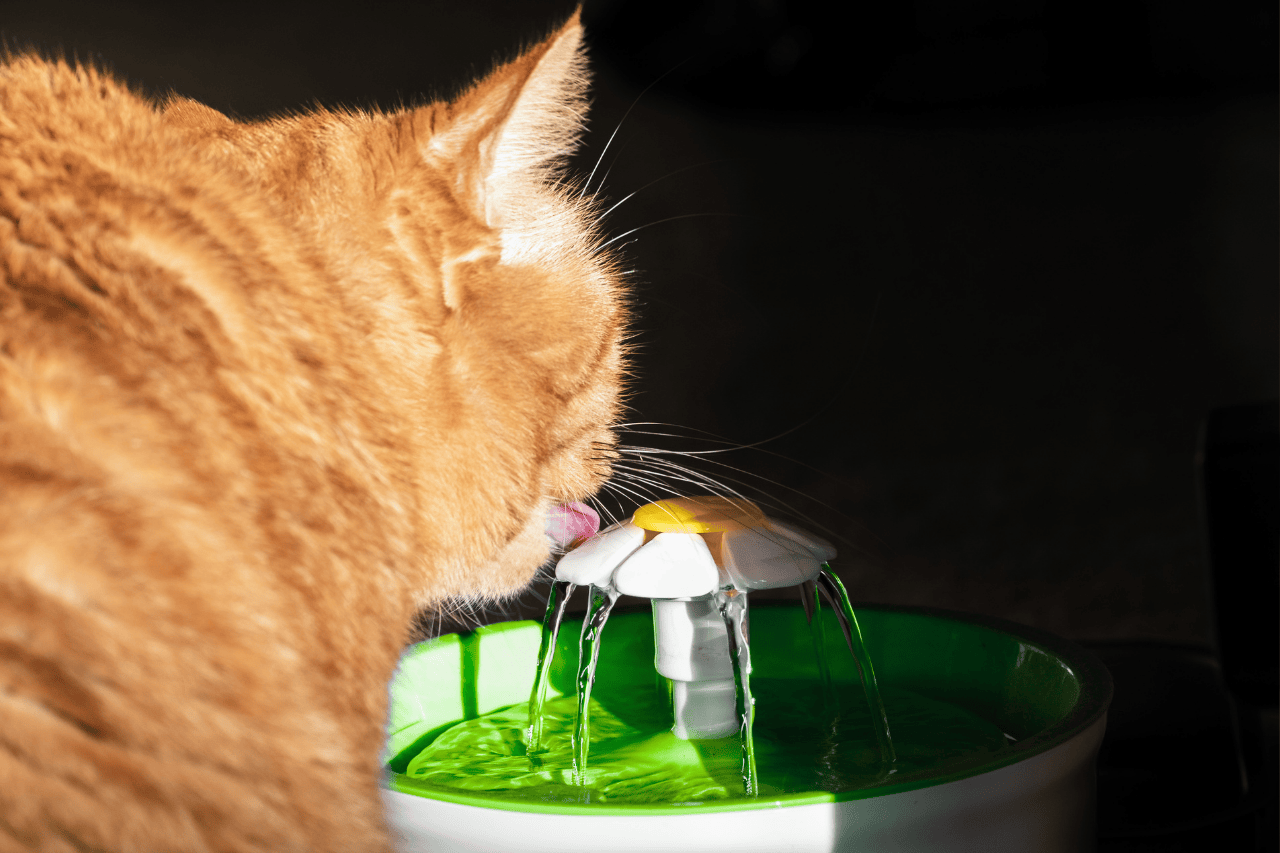
Better hydration means easier digestion, less constipation and less of the empty-stomach bile vomit. A pet water fountain is the single most effective change for most cats, since they drink more from moving water than a still bowl. Adding wet food, or topping dry food with warm water or a splash of broth, also helps.
What Doesn't Help (and What to Skip)
- Withholding food after every vomit. Useful once or twice in a row, but not as an ongoing strategy. An empty stomach all day can make the next vomit worse, not better.
- Switching foods every week. Constant chopping and changing makes things worse. Pick a likely-fit formula, transition over a week, and give it a few weeks to settle before judging.
- Giving human anti-nausea remedies. Don't, ever. Several human stomach medicines are toxic to cats. Stick to cat-formulated supplements and food.
- Assuming "she's always done this". Vomiting patterns shift over years. A cat who's "always" had a weekly hairball might be telling you the pattern's been creeping up.
- Switching to a new bowl placement that other cats can access. If you're trying to slow eating, a stressed cat will speed up, not down.
When to Get a Proper Look
Some patterns are worth following up sooner rather than waiting another fortnight to see.
- Vomiting more than once a week, every week, for more than a couple of weeks
- Sudden change from no vomiting to regular vomiting
- Blood in the vomit, or vomit that looks like coffee grounds
- Vomiting paired with weight loss, less appetite, or noticeably more drinking
- Lethargy, wobbliness, hiding more, or hunched posture
- Repeated heaving without producing anything (could be something stuck)
- Hairball remedies and food changes haven't shifted the pattern after a few weeks
- Kittens, very old cats, or cats with known conditions where you're not sure how much they can tolerate
None of these mean anything's necessarily wrong, they're just the patterns where catching things early matters more.
Frequently Asked Questions
How often is too often for a cat to vomit?
As a rough guide, more than once a week, every week, is the line where most owners should start paying attention. A hairball every few weeks is normal cat life. Several times in a few days, or a steady weekly pattern that's not budging, is worth a closer look.
My cat vomits yellow liquid in the morning. What is it?
That's usually bile coming up on an empty stomach. The fix for most cats is splitting their food into more, smaller meals (especially a small late-night portion), or leaving a measured portion out overnight. If it keeps happening despite the change, get it looked at, especially in an older cat.
What's the difference between vomiting and regurgitation?
Vomiting involves heaving, a delay between the meal and the bring-up, and usually partly-digested food or bile. Regurgitation is more passive, happens shortly after eating, and the food comes back up in roughly the same shape it went down (often tube-shaped). Regurgitation usually means eating too fast or too much, and slow feeders fix most of it.
Can changing food make my older cat vomit less?
Often, yes. A senior-specific formula is easier on the gut and kidneys than a standard adult food, and a sensitive-stomach or hairball-control formula targets the most common everyday causes. Transition over 7-10 days rather than swapping straight, and give the new food two or three weeks to settle before deciding if it's helping.
My cat is on a hairball-control food but still has hairballs. Why?
A few possibilities. The cat might be shedding heavily and just bringing up more fur than the food can move through. The cat might be grooming a lot because of an itch, skin issue or stress (not just because of seasonal shedding). Or what's coming up isn't actually hairballs, it's food or bile that looks similar. Brushing daily, checking the skin and coat, and getting a proper look if the pattern doesn't shift will sort most of these.
Are hairball treats safe to give every day?
Most hairball treats and pastes are designed for daily use. Follow the dosing on the pack (small cats need less than the headline dose), and don't use them as a meal replacement. If your cat is on a hairball-control food already, they may not need additional hairball treats on top.
My older cat vomits and is also drinking more water. Is that significant?
That combination is worth following up sooner. Increased drinking plus regular vomiting is a pattern that's worth a proper look, not a wait-and-see. (Our cat drinking more water guide covers the broader picture.)
How do I tell if my cat is dehydrated?
Lift the skin gently between their shoulder blades. If it springs straight back, hydration's fine. If it stays tented or returns slowly, the cat is at least mildly dehydrated. Other signs are dry or sticky gums, sunken eyes, and lethargy. A water fountain, more wet food, and a few small mealtime water-toppers can move the needle for most cats.
Senior Cat Digestive Support at Petdirect
From senior and sensitive-stomach foods to hairball treats, gut probiotics, water fountains and lick mats, find everything to settle an older cat's stomach in one place. Save with Autodeliver on the routine items, and enjoy everyday member pricing as part of Pet Perks.
SHOP SENIOR CAT FOOD