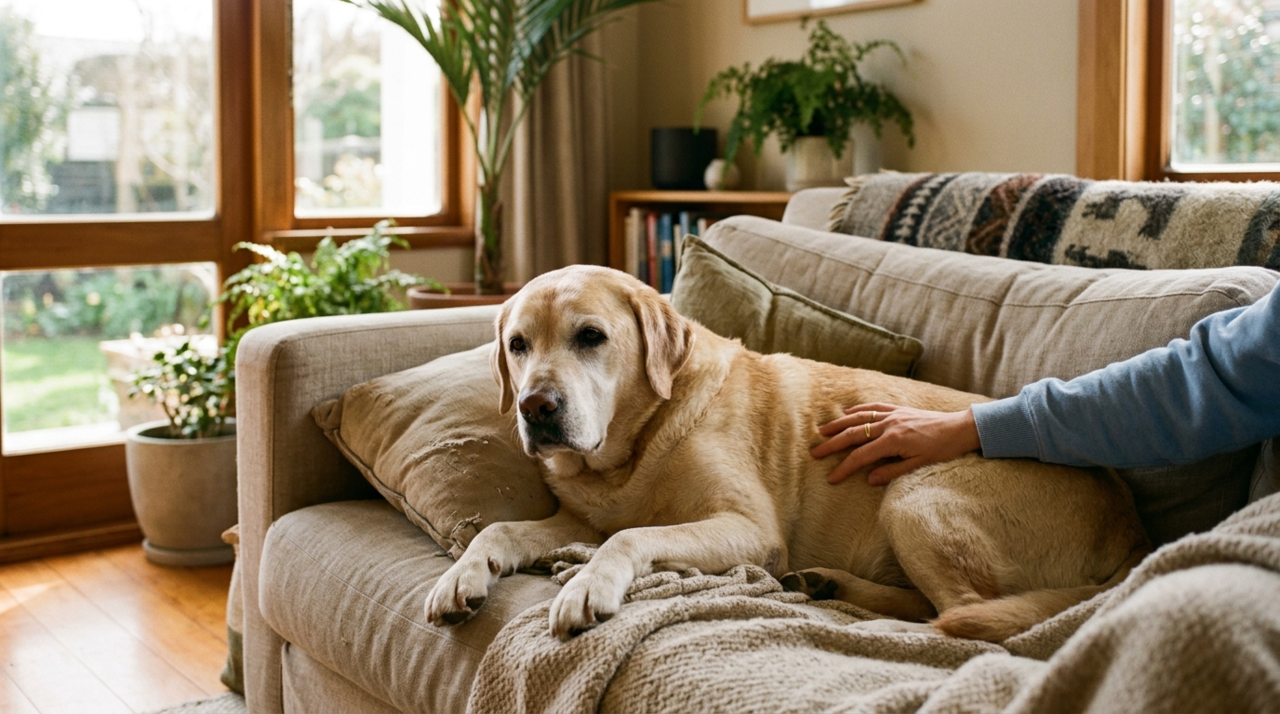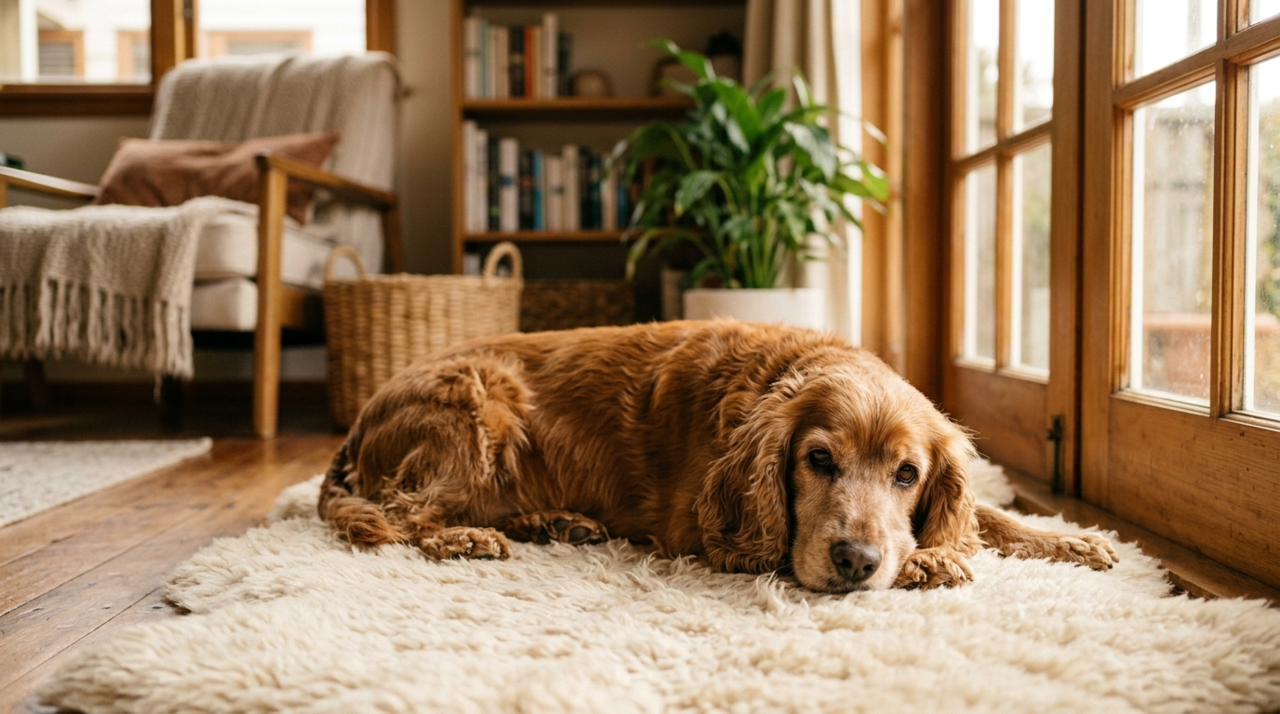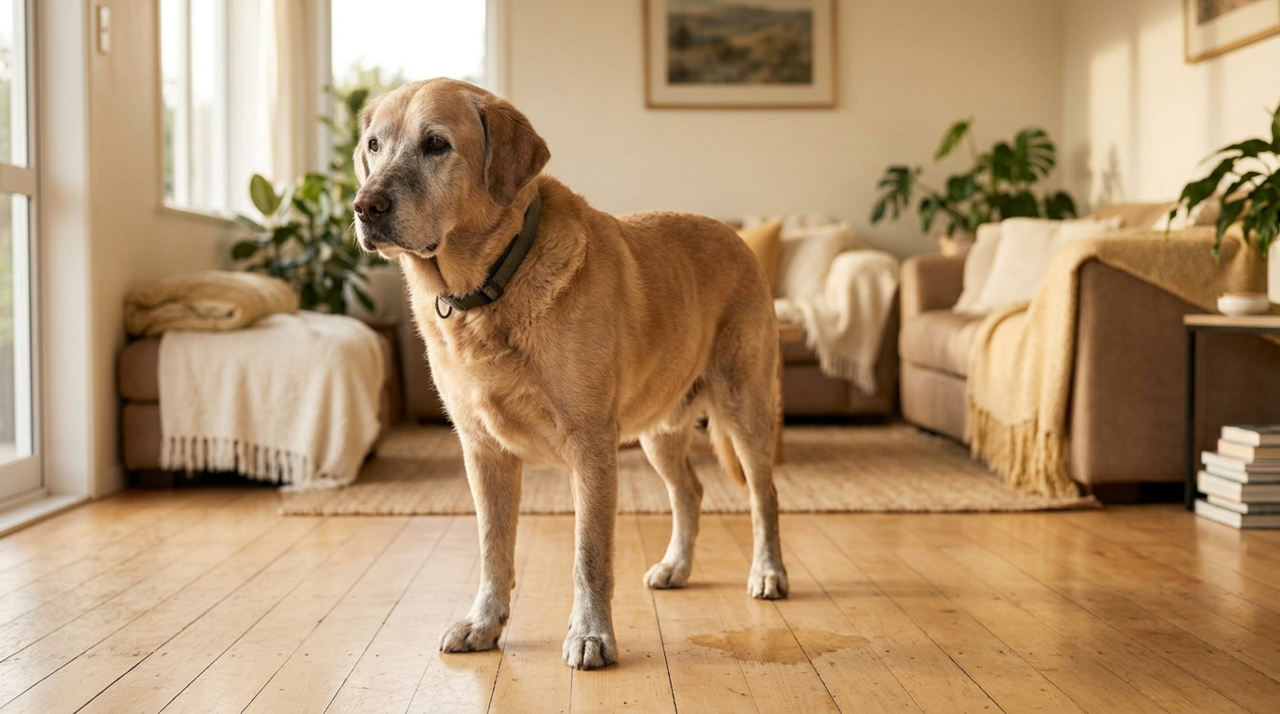
A previously house-trained older dog leaving puddles on the kitchen floor is one of those changes that catches owners off guard. It feels like a regression, or a behaviour problem, or worse, but in nearly every case it isn't deliberate and it isn't your dog "forgetting" what they know. A few things shift in an ageing dog's body and routine that make accidents more likely, and most of them have practical fixes.
Here's the calm version: why it's happening, what's worth checking at home, and the small adjustments that take the most pressure off, both for your dog and your carpet.
Quick Answer
Indoor accidents in older dogs are usually caused by physical changes rather than behavioural ones: a smaller bladder, less ability to hold on through the night, slower mobility making it harder to get outside in time, urinary or hormonal shifts, drinking more or eating more fibre than usual, joint pain that makes asking to go out feel like too much effort, or early cognitive change. Cleaning thoroughly with an enzyme-based cleaner, adjusting the toilet routine to more frequent shorter trips, raising the bowl and bed, and supporting bladder, joints and the night-time set-up usually takes care of most of it. If accidents start suddenly, come with other changes, or get worse fast, get a proper look.
What's Actually Changed
Older dogs don't choose to wee inside. What changes is some combination of how long they can hold on, how well they sense the urge, how easily they can get outside, and how quickly they recognise that they need to. A dog who's perfectly house-trained at six can start having accidents at twelve for reasons that have nothing to do with training.
The bladder gets smaller and less elastic
The muscles around the bladder weaken slightly with age, and the bladder itself can hold less than it used to. That means a senior dog who used to comfortably go eight hours overnight might only manage five or six, and the timing can creep earlier and earlier.
Mobility makes "getting out" slower
Joint pain, slower walking, hesitation about going down steps in the dark, and difficulty pushing through a dog flap all add seconds to how long it takes your dog to actually get to where they want to go. Sometimes that's enough.
Drinking and eating habits shift
More water in (a hot day, a salty treat, a new supplement, drinking from the garden) means more water out. A diet change that's higher in fibre or moisture will do the same.
The body's signal system is less precise
Older dogs sometimes get less notice from their body that they need to go, or take longer to act on the signal once they get it. By the time they've registered and made it to the door, the moment has passed.
The Most Common Reasons
If you're trying to work out what's behind your dog's recent accidents, these are the angles to consider, roughly in order of "most common, easiest to act on" first.
The toilet schedule hasn't caught up
The dog who used to be fine on three walks a day genuinely needs four or five now, and probably needs a quick garden trip before bed and another first thing. The schedule didn't move when the bladder shrank.
Holding through the night isn't possible anymore
Overnight is usually the first thing to give. Eight hours becomes seven, then six. Adding a late-night last-call wee, or putting a training pad near the door overnight, can solve a surprising amount.
Joint pain is in the way
A stiff older dog might delay getting up to ask. Pain on stairs, slippery floors, or cold concrete steps all make outside trips feel like more work. Joint support, a ramp, runners on slippery floors, all help.
Drinking more than usual
Increased water intake leads directly to more frequent toileting. If you've noticed the bowl going down faster, that's worth following up. (Our drinking more water guide covers what to look at next.)
Urinary tract issues
Urinary tract infections and irritation can affect any age dog, and older dogs in particular. Signs to look for: small amounts more often, straining, blood-tinged or cloudy urine, restlessness, or licking the area more than usual.
Hormonal weakness in spayed females
Some spayed female dogs develop a hormonal-driven bladder weakness in their later years, usually showing up as a small wet patch where they've been sleeping rather than a full puddle on the lounge floor. It's a common one, and very treatable.
Cognitive change
Dogs with early cognitive decline can forget house-training, get confused mid-trip, or lose the routine of asking to go out. Usually pairs with other changes (disrupted sleep, getting lost in familiar rooms, less responsive to their name). The senior dog cognitive decline guide goes into this in more depth.
Stress or routine change
A new pet, a house move, builders, fireworks, or you starting a new work schedule can throw an older dog's toilet routine off. They feel less settled, hold on less reliably, and the timing slips.
What You Can Do at Home
Most owners can take a real bite out of accident frequency with a handful of small adjustments. None of these are heroic, they just match the new reality of an older dog's body.
Update the toilet routine
Add one more outside trip than you used to do. For most senior dogs, that means a quick garden trip first thing, after every meal, mid-afternoon, late evening, and last thing before bed. Five short trips beats two longer ones almost every time. If you can get someone to pop in at lunch, even better.
Set up for accidents that do happen
A training pad near the back door, or in the spot they tend to go, is a quiet acceptance that some accidents will happen and a way to make the cleanup easy. Belly bands for boys and disposable diapers for girls aren't a long-term answer, but they're a useful tool for the short overnight stretch, while travelling, or while you're waiting for something to be looked at.
Clean properly so they don't go back to the same spot
Dogs revisit places that still smell like a toilet, even if you can't smell anything yourself. Enzyme-based cleaners actually break the smell down rather than just masking it. Regular household cleaners (especially anything ammonia-based) can smell like wee to a dog and make things worse, not better.
Make outside trips easier
A grippy runner on slippery hallways, a ramp at the back steps, a fully lit garden path for night-time trips, and a doormat in a sheltered spot to dry paws on the way back in all reduce the friction of going out. For dogs with sore joints, a daily joint supplement and a soft orthopaedic bed (especially one that's easy to climb out of) make a real difference.
Adjust the evening routine
Lift the water bowl an hour or two before bed (not all evening, just before bed), then a final garden trip just before you go to sleep. The aim isn't to restrict water across the day, just to lower the chance of a 3am full bladder.
Support the calm
For dogs whose accidents are partly stress or cognitive-driven, a calming pheromone diffuser, a quiet, predictable evening, and a senior-friendly food can all take pressure off.
What Doesn't Work (and Makes Things Worse)
The instinct to "retrain" an older dog who's having accidents is understandable, but worth resisting.
- Telling them off after the fact. Older dogs don't connect a scolding with something that happened minutes ago. They just learn that the kitchen is suddenly a stressful place, which sometimes makes accidents more likely, not less.
- Rubbing their nose in it. Old advice, never useful. Doesn't help training and makes the relationship more anxious.
- Restricting water across the day. Increases the risk of dehydration and urinary issues, doesn't fix anything. The late-evening lift is fine, an all-day restriction is not.
- Assuming it's "just old age, nothing to do". Some of the causes of senior accidents are very fixable. The earlier they're looked at, the simpler the fix usually is.
When to Get a Proper Look
Most setup and routine changes can be tried at home. Some patterns mean it's worth getting things looked at sooner rather than waiting.
- Accidents started suddenly rather than creeping in gradually
- Your dog is drinking and weeing much more than usual
- Straining to wee with only small amounts coming out, or any blood in the urine
- Your dog seems uncomfortable, restless, or distressed around toileting
- The accidents come with other senior changes (off food, weight loss, slowing down quickly, confusion)
- You're seeing wet patches where they've been sleeping rather than puddles when they're awake
- Your dog is leaking continuously rather than in distinct accidents
None of these mean the news is bad. They're just the patterns that benefit from a proper look rather than another week of waiting and watching.
Frequently Asked Questions
My older dog suddenly started having accidents. Why?
A sudden change is worth taking seriously. Common reasons include a urinary tract infection, a change in water intake, a routine disruption, stress, joint pain making it harder to get outside, or hormonal changes in spayed female dogs. If accidents have started suddenly, get them looked at rather than waiting it out.
How often should I take my senior dog outside?
Most senior dogs benefit from one or two more outside trips a day than they used to need. A practical schedule is: first thing in the morning, after every meal, mid-afternoon, after dinner, and last thing before bed. Short and frequent beats long and infrequent.
Should I use puppy training pads with my senior dog?
They're a useful tool, not a step backwards. Putting a pad near the back door, in the spot your dog tends to go, or in a sleeping area overnight gives them a "safe spot" if they can't make it out and makes cleanup easy. They're not a long-term replacement for outside trips, but they take pressure off a stressful situation.
Are belly bands or dog diapers okay for older dogs?
Yes, for the right situations. They're useful for overnight, for travel, while you're waiting to get something looked at, or for dogs with mild ongoing leaks that don't have a fixable cause. Change them regularly to avoid skin irritation, and don't use them as a substitute for trying to find and fix what's causing the accidents.
Will restricting water help?
Cutting water across the day is more likely to cause problems (dehydration, urinary irritation) than to fix them. What does help for some dogs is lifting the bowl an hour or two before bed and offering one last garden trip just before sleep. Keep water available the rest of the time.
My dog leaves a wet patch on their bed when they sleep. What is that?
That pattern (small wet patch where they've been sleeping rather than a puddle when they're awake) is often a hormonal-driven bladder weakness, most common in older spayed female dogs. It's treatable, so it's worth getting a proper look at rather than just adding a waterproof bed cover and moving on.
What's the best cleaner for dog accidents inside?
An enzyme-based pet stain and odour cleaner. Enzymes break down the chemistry of urine so the smell genuinely goes (not just from your nose, from your dog's nose). Regular household cleaners often leave traces that smell like a toilet to dogs, which can make them revisit the same spot.
Can my dog be retrained to stop having accidents?
"Retraining" usually isn't the right frame. The dog hasn't forgotten what to do, the body isn't keeping up. Adjusting the routine, supporting the body (joints, bladder, sleep), and reducing the friction of going outside is more useful than going back over the basics of house-training. Praise them when they do go outside, never punish accidents.