You're scratching your dog's chest in the same spot you've scratched a thousand times, and your fingers find something that wasn't there yesterday. A small soft bump. Or a firm round one under the skin. Or a flat little growth on the back leg.
The first thing to know: most lumps and bumps on older dogs are harmless. Fatty deposits, warts, skin tags and small cysts are extremely common as dogs age, and most don't cause any trouble at all. The second thing to know: we aren't a clinic, and there's no reliable way to tell what a lump is from looking and feeling at home. So this guide is about how to think calmly about a new lump, what's worth noting, and when it makes sense to book a vet visit.
Quick answer
Most lumps and bumps on older dogs are harmless growths like fatty lipomas, warts, skin tags or small cysts. When you find a new one, don't panic. Note its size, location, texture, when you found it, and take a photo for reference. Watch it. Many lumps stay the same for years and never need anything. Book a vet visit if a lump is growing quickly, changing colour or shape, ulcerating, painful, or making your dog uncomfortable. Regular grooming is the best way to keep an eye on what's there, since you'll often feel a lump before you'd ever see one.
Why Older Dogs Get More Lumps and Bumps
Skin changes with age in dogs the same way it does in people. The skin loses elasticity, oil glands work differently, hair follicles can clog, fat distributes differently under the skin, and the immune system works a bit less efficiently. Add up all those small changes and the result is a body that just produces more little growths than it used to.
Lumps in older dogs aren't a sign that something is wrong with how you're caring for them. They're a normal part of ageing. The point is to know what's there, keep a casual eye on it, and bring anything that's behaving unusually to a clinic for a proper look.
Common Types of Lumps Owners Notice
This isn't a diagnostic list, only a clinic can tell you what a lump actually is. But it's useful to know that most lumps owners find at home fall into one of these familiar categories.
Fatty lumps (lipomas)
By far the most common lump in older dogs. Soft, movable under the skin, slow-growing, often round or oval. Usually painless. They sit just under the skin, often on the chest, belly or back. Many older dogs have several.
Warts and skin tags
Small raised bumps on the surface of the skin, often around the face, eyelids, legs or belly. Usually flesh-coloured or grey. Common in older dogs and usually harmless, though they can occasionally bleed if knocked.
Sebaceous cysts
Small firm bumps under the skin that develop when an oil gland blocks. Often look a bit like a pimple. Some stay quiet for years, some occasionally rupture and discharge a thick paste before settling again. Usually harmless on their own.
Histiocytomas
Pink or red dome-shaped raised bumps, more common in younger dogs but can appear at any age. Often appear quickly. Many resolve on their own over a few months. Worth getting checked if they appear suddenly.
Abscesses
Painful, hot, swollen lumps that develop after a bite, scratch or puncture wound becomes infected. Often the dog will lick or pay attention to the spot. Always a clinic visit, even if you're not sure that's what it is.
Other growths
There are also lumps that aren't in the harmless category and need a proper clinic check. These can look like any of the above and sometimes there's nothing visually obvious that distinguishes them. That's exactly why a clinic visit is the right move when something is changing.
What to Do When You Find a New Lump
Stay calm. The vast majority of new lumps on older dogs turn out to be one of the harmless types above. Here's a practical way to handle it.
The 5-point lump note
When you find a new lump, write these five things down on your phone. They're what a clinic will ask you, and they're what you'll want to compare against next time.
- Size: rough measurement (a fingernail width? a 5c piece? a 50c piece?). Or just a photo with something for scale.
- Location: exactly where on the body. Left or right. Take a photo.
- Texture: soft and movable, or firm and fixed in place? Squishy, rubbery, or hard?
- Date you found it: not when it appeared, just when you noticed it. That's your reference point.
- Anything you noticed at the time: Was your dog flinching when you touched it? Has the skin around it changed colour? Is hair missing over the lump?
This little note becomes your comparison record. In two weeks, six weeks, three months, you can check the same lump and see whether it's the same, smaller, or bigger. That's far more useful than relying on memory.
When to Book a Vet Visit
Some lumps and bumps will stay the same for years and never need anything. Others change in ways that warrant a proper look. Here's what to watch out for.
Book a vet visit if a lump is:
- Growing quickly, especially over weeks rather than months
- Changing shape, colour or surface texture
- Ulcerating, bleeding, weeping or scabbed
- Painful when touched, or seems to be bothering your dog
- Hot to touch (often a sign of infection or abscess)
- Sitting on a part of the body where it's interfering with eating, walking, blinking or going to the toilet
- Firm, fixed in place and doesn't move with the skin around it
- One of many that have appeared at the same time
If you're unsure, the answer is always to book a visit. A short clinic appointment with a proper feel is worth far more than weeks of worrying about a lump on your couch.
Equally, a single soft, slow-growing, movable lump that hasn't changed in months and isn't bothering your dog is usually fine to mention casually at the next routine visit rather than rushing in.
How to Find Lumps Early
You'll usually feel a lump before you'd ever see one, especially on dogs with thicker coats. The single best habit for catching changes early is regular hands-on contact with your dog. Here's how to make it part of normal life rather than a chore.
Cuddles count
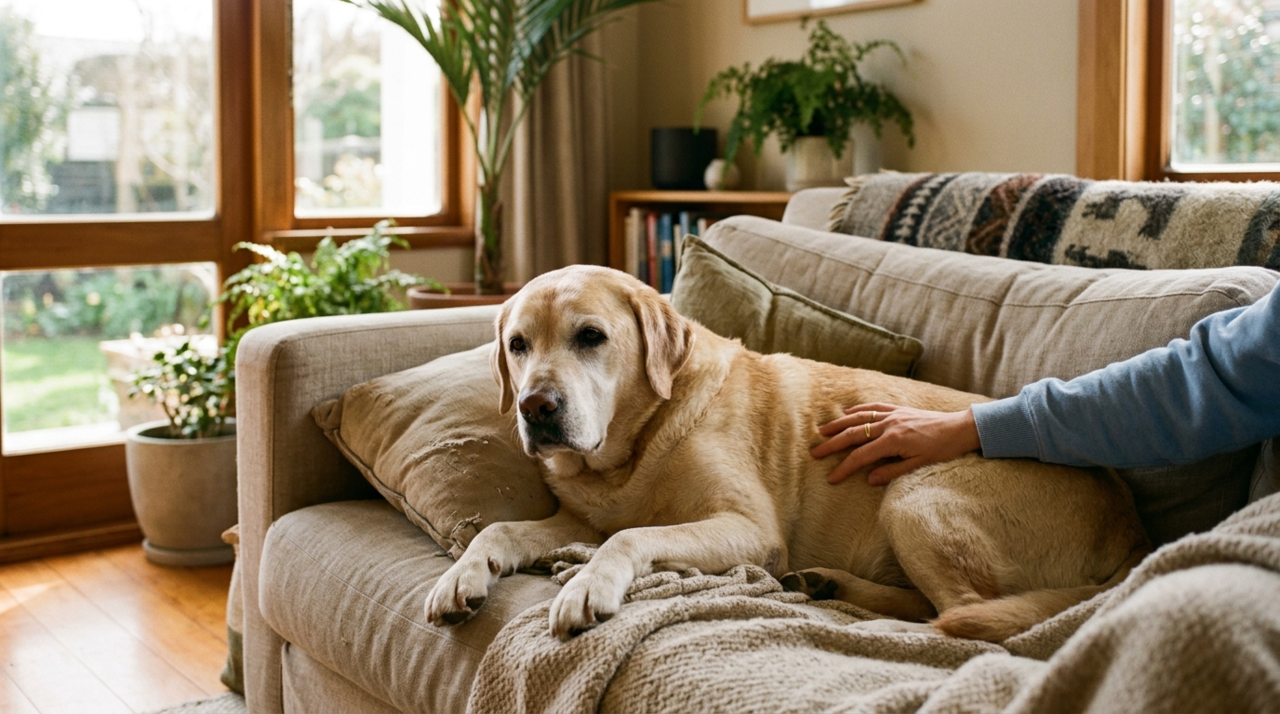
Most owners already do this without realising. When you're scratching the chest, rubbing the belly, or stroking down the side, your hands are running over most of the body. Pay just a little more attention to what your fingers are passing over and you've done a basic body check.
Make brushing routine
Regular brushing isn't just about coat care. A slicker brush or pin brush moving over the body is one of the most reliable ways to find a new lump while it's still small. Once a week is plenty for most dogs.
The bath catch
Bath time is when lumps that hide in a fluffy coat suddenly become obvious. Wet hair sticks flat to the skin, and your hands are everywhere working in shampoo. Many owners find their first lump during a routine bath.
Don't hunt for them
You don't need to do a "lump check" with a clipboard once a month. The goal is gentle awareness, not anxiety. Hands-on contact with your dog as part of normal life is enough.
Supporting Skin and Coat Health in Older Dogs
Skin and coat supplements won't make existing lumps disappear, but they do support healthy skin function more generally, which is worth knowing as your dog ages. A good skin and coat routine in older dogs typically includes a daily omega-3 oil, a gentle bathing routine using a soothing shampoo, and a soft cleansing wipe for any minor irritations along the way.
If your dog has a small skin tag or scab that's getting irritated by their collar or by licking, a soft topical spray can help support the skin while you decide whether it needs a clinic look.
Looking After an Older Dog Generally
A senior-appropriate routine helps your dog stay in the best possible shape, which makes it easier to notice when something changes. The basics are a senior-formulated food, a daily supplement routine that fits what your dog needs, regular gentle exercise, and that little bit of hands-on contact every day.
Our Senior Dog Supplements: A Practical NZ Guide covers the supplement side in more depth.
Frequently Asked Questions
Are lumps on older dogs always serious?
No. Most lumps on older dogs are harmless: fatty lipomas, warts, skin tags and small cysts are very common with age. That said, you can't reliably tell what a lump is from feeling and looking at home, so a new lump is always worth keeping an eye on, and a changing one is always worth a clinic visit.
How do I know if a lump is a fatty lump or something else?
You don't, not for sure, and that's the honest answer. Fatty lumps tend to be soft, movable under the skin, slow-growing and painless, but other types of lumps can feel similar. The only way to know for sure is a clinic visit, where they can take a small sample if needed. If you're not sure, that's reason enough to book.
How fast is "growing too quickly"?
As a rough guide: if a lump has clearly changed size in a couple of weeks, that's worth a clinic visit. A lump that's the same size in a month is usually moving slowly enough that it can be mentioned at the next routine visit rather than rushed in. Take a photo with something for scale and you'll have a real comparison rather than relying on memory.
Should I be checking my dog for lumps regularly?
Not in a formal way. You don't need to do a "lump check" with a clipboard. The best approach is gentle awareness during everyday cuddles, brushing and bath time. Most owners find lumps during routine contact, not during deliberate checks.
My dog has lots of small bumps all over. Is that normal?
For some older dogs, yes. Many older dogs accumulate multiple lipomas, warts and skin tags over the years. As long as none of them are changing, growing fast, ulcerating, or bothering your dog, it's usually fine. It's still worth mentioning to your clinic at the next routine visit so they can take a look and add it to your dog's notes.
Can I do anything to stop new lumps appearing?
Not really. Lumps are largely a function of age and genetics, not something you've done or not done. What you can do is keep your dog at a healthy weight (which makes lumps easier to feel), support skin and coat health with a good food and a daily omega-3, and stay aware of what's there.
Should I try to drain or pop a lump at home?
No. Even if it looks like a pimple or a cyst, draining or squeezing a lump at home risks infection, scarring and making things worse. If a cyst ruptures on its own (some do), keep the area clean and gently protected, and book a clinic visit so they can have a look.
What does the clinic actually do with a new lump?
Usually a clinic will feel the lump, ask about how long it's been there and how it's changed, and may take a small sample with a fine needle. The sample is looked at under a microscope, often the same day. Many lumps can be identified this way without surgery. If something more is needed, the clinic will explain the options.
Will my dog need surgery to remove a lump?
Often, no. Many harmless lumps are simply left alone if they're not bothering the dog. Lumps that are removed are usually ones that are growing, in awkward locations, or that the clinic wants to send away for further analysis. Your clinic will give you a clear picture of what's worth doing and what isn't.
Senior Dog Essentials at Petdirect
From soft brushes that help you spot changes during everyday grooming, to omega-3 oils, soothing shampoos and senior-formulated foods, find everything you need to look after an older dog in one place. Save with Autodeliver on the routine items, and enjoy everyday member pricing as part of Pet Perks.
SHOP SENIOR DOG ESSENTIALS