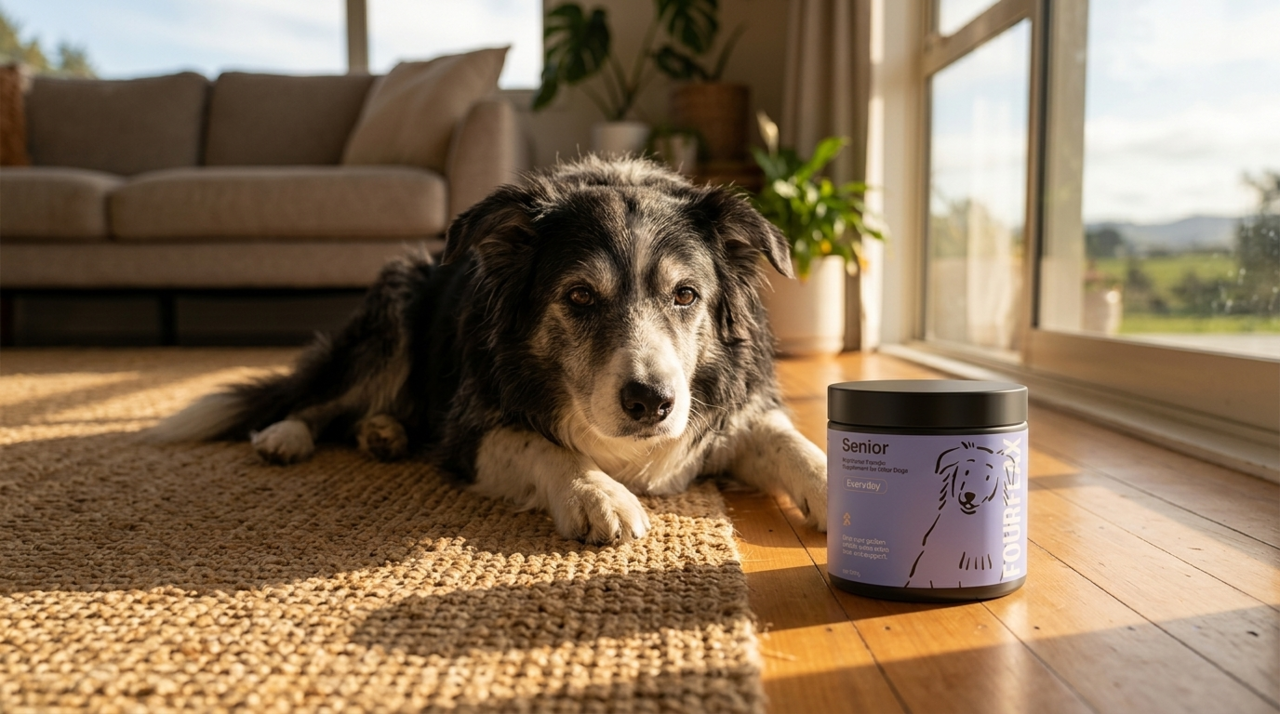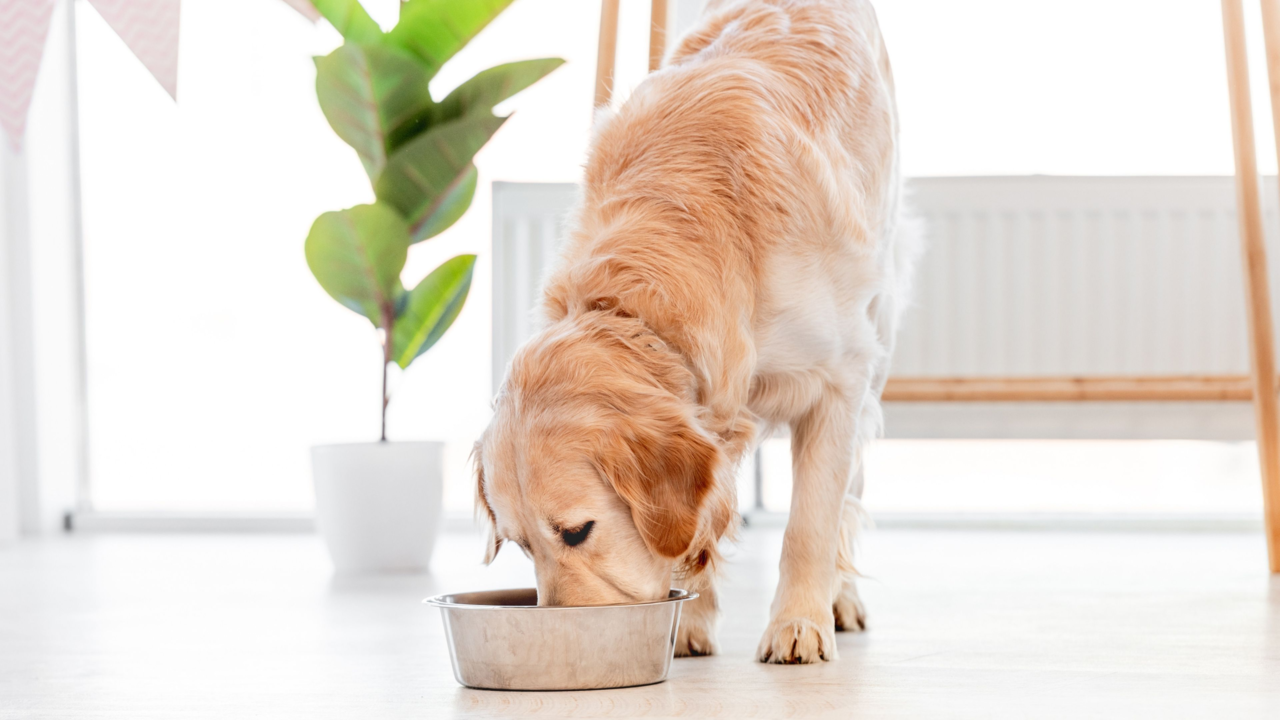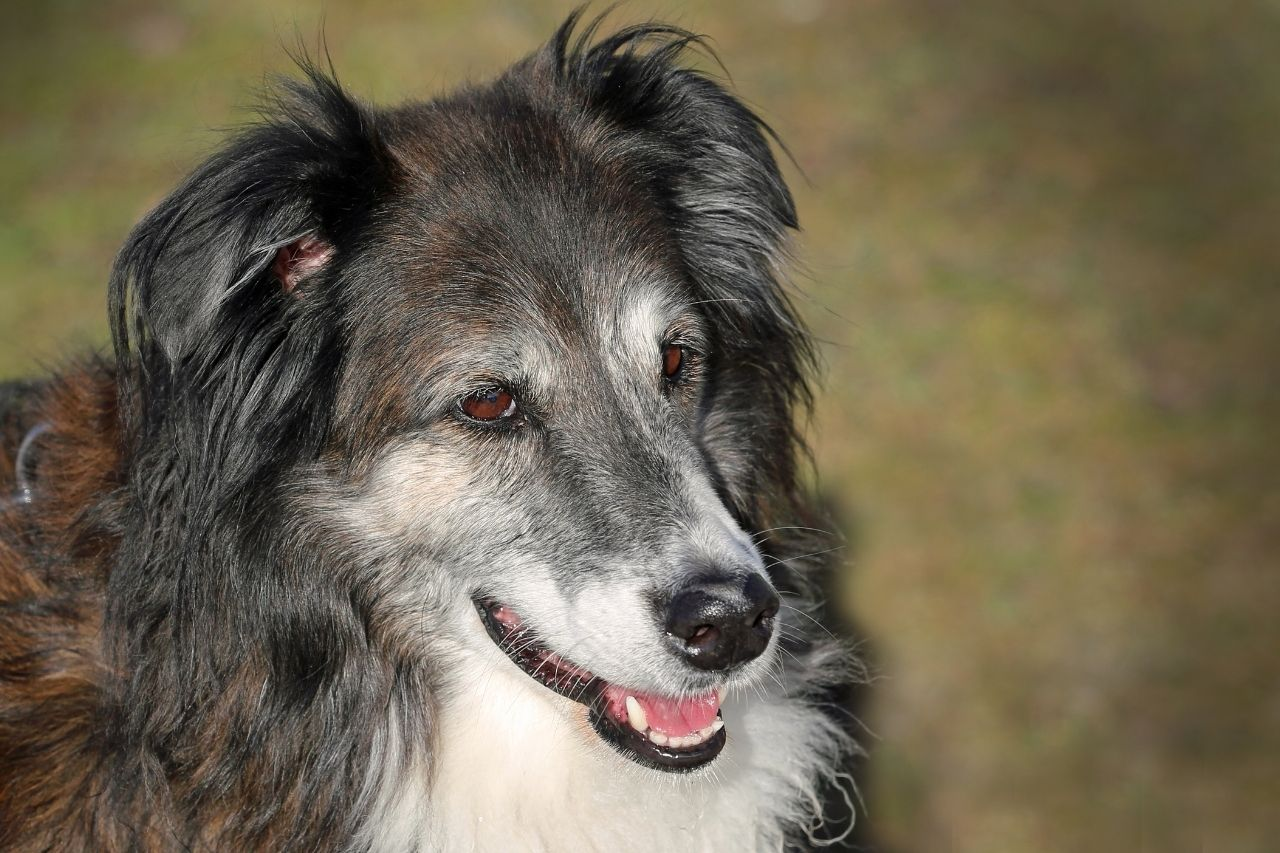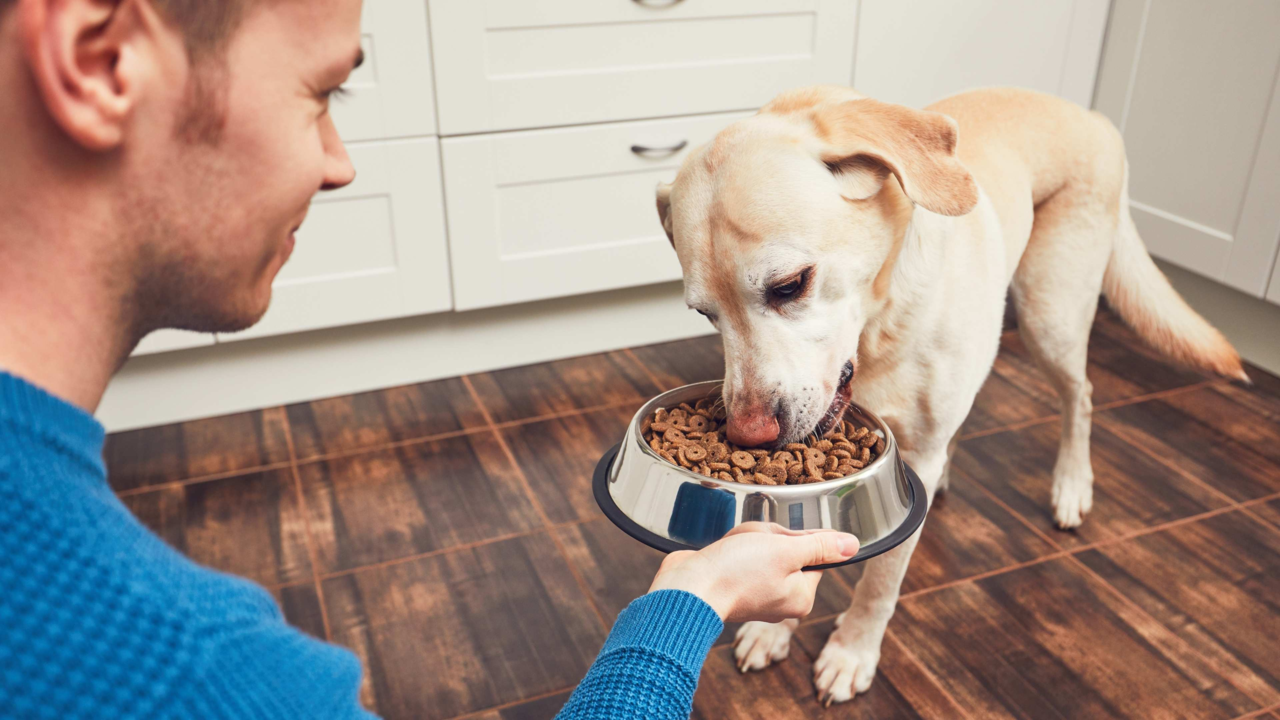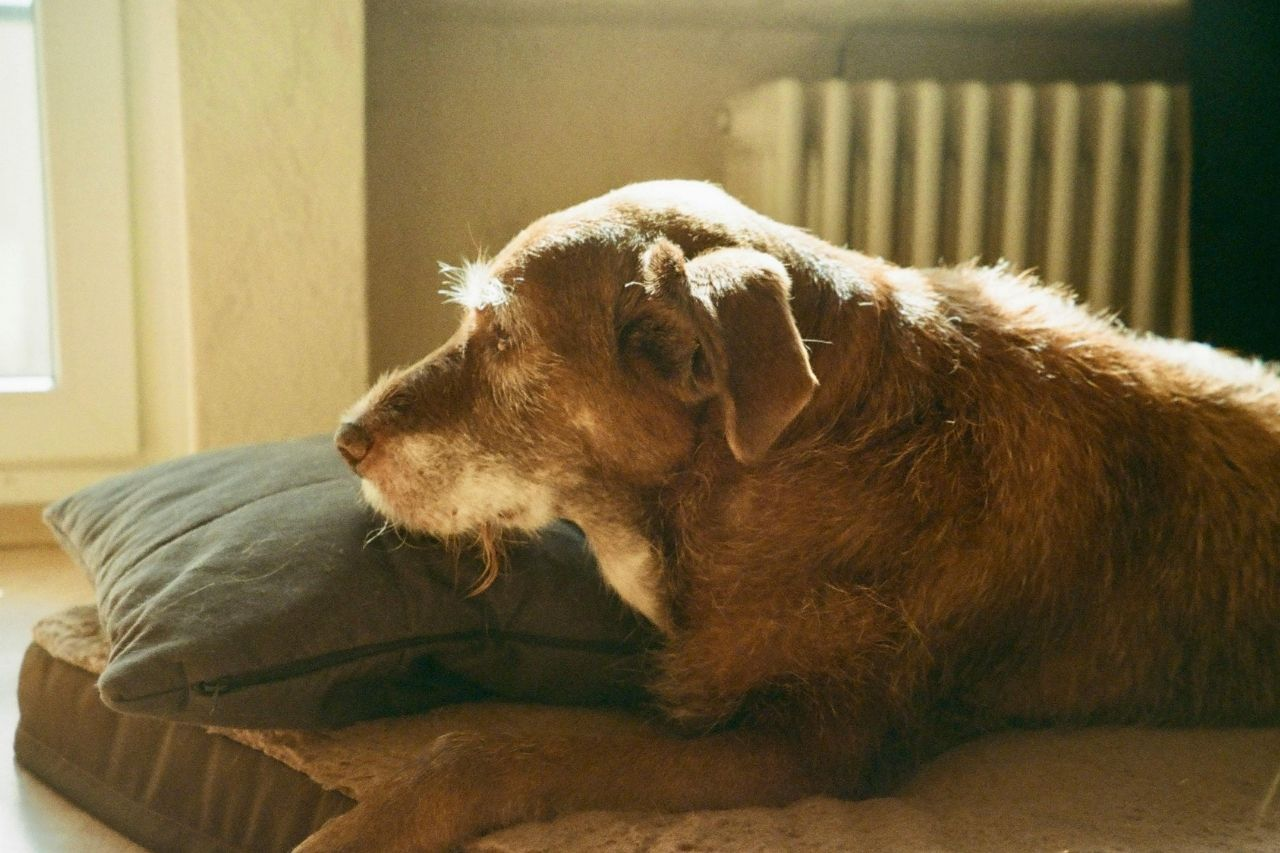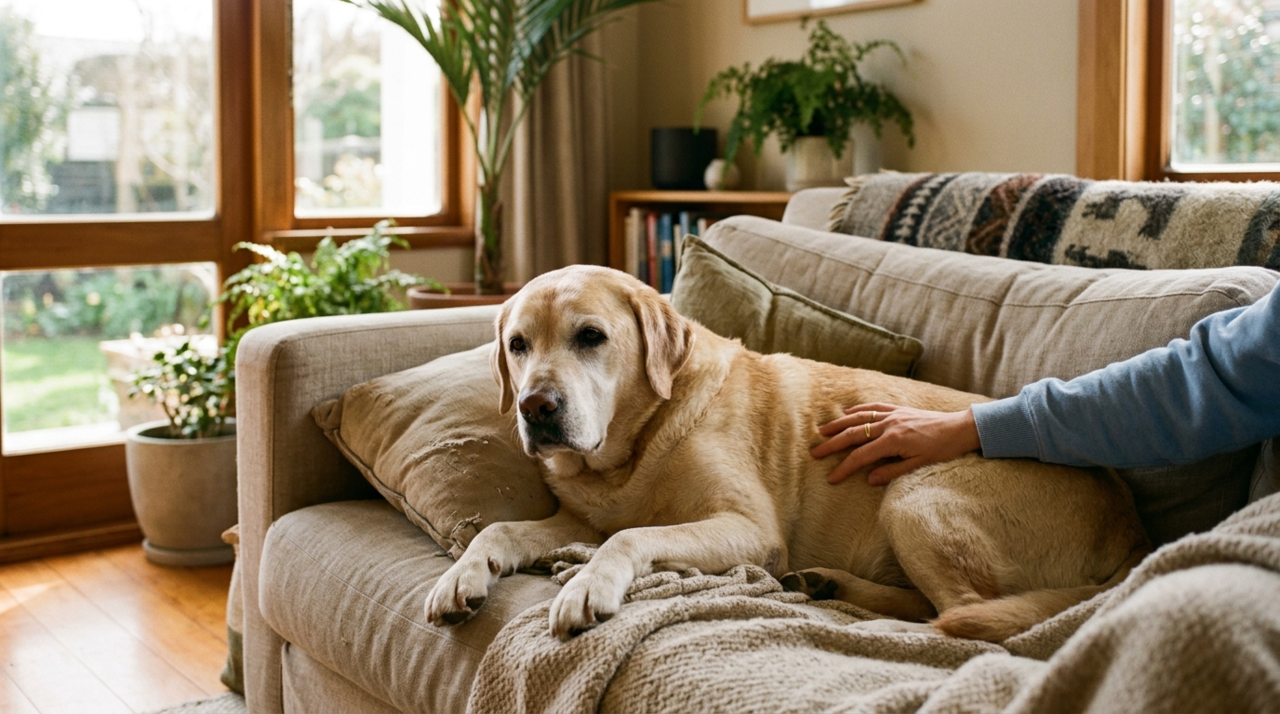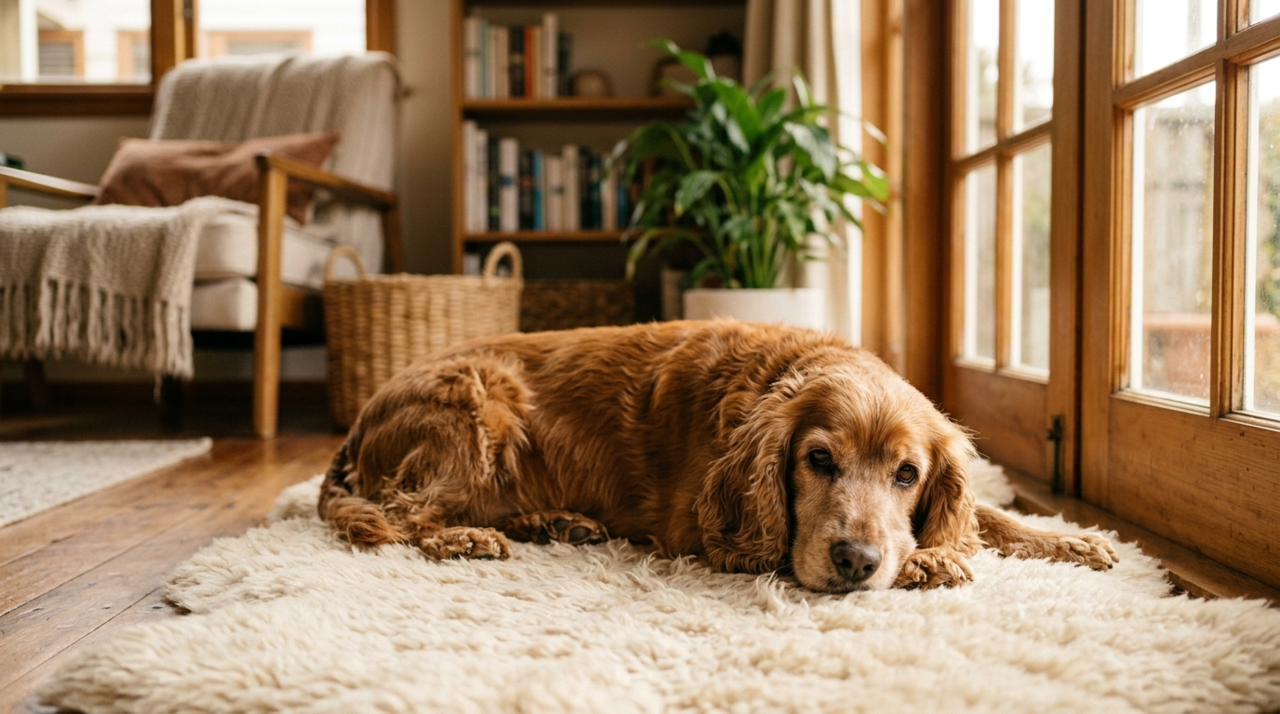
The gut does a lot of quiet work, and like everything else in an ageing dog, it slows down a little. Digestion takes a bit longer, nutrients are absorbed slightly less efficiently, and the system gets a bit more sensitive to changes that wouldn't have caused a flicker when your dog was four. The good news is that gut health is one of the easiest areas to support at home, and small changes in what you feed and how you feed it can make a real difference to how your senior dog looks, moves, and feels.
Here's a practical guide to what changes in a senior dog's digestive system, the signs worth paying attention to, and what you can do day to day to help keep things running smoothly.
Quick Answer
An older dog's gut is slower, less efficient, and more easily upset by changes. You can support gut health with a senior-formulated or sensitive-stomach food, a daily probiotic, smaller and more regular meals, plenty of water, gentle fibre support like pumpkin, and slow-feeder bowls if your dog wolfs their food. Watch for ongoing soft stool, constipation, weight loss, off appetite, or bad breath, and get a proper look at anything that doesn't settle within a few days.
What Changes in a Senior Dog's Gut
The digestive system ages alongside the rest of your dog. Three things in particular shift as dogs move into their senior years.
Digestion slows down
The muscles along the gut move food through a bit more slowly with age, which can mean food sits longer in the stomach (more chance of mild reflux or burping) and stool can become firmer or, in some dogs, softer if the slower transit lets too much fermentation happen.
Absorption gets less efficient
The lining of the gut, where nutrients are absorbed, thins gradually with age. The same bowl of food delivers slightly less to your dog than it used to. This is part of why some senior dogs lose weight or muscle even though they're eating the same amount, and part of why senior-formulated foods tend to be slightly higher in quality protein and easier to digest.
The microbiome shifts
The community of bacteria living in your dog's gut, the microbiome, changes naturally with age. The balance tilts in ways that can leave older dogs more prone to soft stool, wind, sensitive reactions to new foods, and the kind of low-level digestive grumble that wasn't there when they were younger. This is the part that gut-friendly food and probiotic supplements are aimed at.
Signs Your Senior Dog's Gut Needs Some Attention
Gut issues in older dogs are usually subtle and arrive gradually rather than all at once. These are the everyday signs worth keeping a quiet eye on.
Loose or inconsistent stool
Stools that go soft and then firm and then soft again over a couple of weeks usually mean the gut is unsettled. A one-off soft poo isn't anything to worry about. A pattern is.
Straining or constipation
Older dogs can become a bit constipated, partly from slower gut movement and partly because they're not running around as much. Look for straining, less frequent toileting, or hard, dry stools.
Off appetite
A dog that's gone a bit picky, leaves food behind, or eats reluctantly might be telling you their gut feels off. It's worth ruling in or out before assuming it's just "they've gone fussy".
Wind and rumbling tummy
A bit of wind is normal. Persistent gas, rumbling, or visible discomfort after eating is the gut saying the current food or routine isn't agreeing.
Weight loss with normal eating
If your dog is eating the same amount but slowly losing weight or muscle, reduced absorption is one possibility. A senior nutrition rethink is usually worth it at this point.
Bad breath that's new
Bad breath is most often a dental thing, but a gut issue can also show up in the mouth. If dental care is up to date and the breath has changed, the gut is worth a closer look.
None of these in isolation is reason to panic. If a sign sticks around for more than a few days, or you're seeing two or three together, get a proper look. The earlier you intervene, the smaller the change usually needs to be.
Senior Foods That Support Gut Health
The single biggest lever you have on a senior dog's gut is the food going in. A good senior diet is more digestible than an adult food, has the right balance of protein and fibre for an older dog, and is built to be gentle on a gut that's no longer in its prime. If your dog has had a sensitive stomach their whole life, a sensitive-stomach formula can sit alongside or replace the standard senior pick.
Wet food (gravy pouches, stews, loaves) tends to be easier on a senior gut than dry food alone, and it adds water to the meal, which helps with hydration and stool consistency. Many senior dog households end up with a mix of dry and wet, or topping dry kibble with a bit of wet for palatability and digestion.
Probiotic and Fibre Support
Supplements aren't a replacement for a good base food, but the right one in the right spot can be properly useful for a senior gut. The two categories that consistently pull their weight for older dogs are probiotics (to help nudge the microbiome back into balance) and fibre support (to help with stool consistency and regularity).
Probiotics are usually a sprinkle or sachet on food, taken daily for a few weeks at first and then maintained or paused depending on how your dog responds. Fibre support is best added gradually and adjusted to what you're seeing in the stool. As with everything else, change one thing at a time so you know what's working.
How You Feed Matters as Much as What You Feed
A senior gut handles food better when the meal arrives in a way it can keep up with. A few practical tweaks make a noticeable difference.
- Smaller, more frequent meals. Two or three smaller meals usually sit better than one big bowl, especially for senior dogs that have always wolfed their food.
- Slow the eating down. A slow-feeder bowl or lick mat stretches a meal from 30 seconds to a few minutes, which gives the gut a chance to keep pace and reduces the chance of regurgitation or bloating.
- Keep water topped up and easy to find. Older dogs sometimes drink less if the bowl is in an awkward spot. Multiple water stations help.
- Be patient with food changes. A 7 to 10 day transition (a quarter new for two days, half-and-half for two days, three-quarters new for two days, then all new) is gentler on a senior gut than an overnight switch.
- Add a topper if appetite is flagging. A spoon of wet food, a sprinkle of bone broth or pumpkin powder, or a warm-up of dry kibble can lift palatability without overhauling the diet.
When Gut Issues Need a Closer Look
Most senior gut grumbles settle once the food and routine are dialled in. Some need a proper look. Use this as your shortlist:
- Diarrhoea that lasts more than 48 hours, or any diarrhoea with blood
- Vomiting more than once in 24 hours, or any vomiting with weakness
- A noticeable drop in appetite that lasts longer than a day or two
- Ongoing weight loss despite a normal appetite
- A bloated, hard or tender belly, especially if your dog seems uncomfortable
- Straining without much coming out, or going off the toilet routine completely
- Any sudden change in stool colour (black, very pale, or streaked with blood)
The pattern that matters most is "not settling". A one-off soft stool, a skipped meal, a single bout of vomiting after eating something they shouldn't, all common and usually fine. The same thing repeating for several days, especially in an older dog, is worth getting checked properly rather than waiting it out.
Frequently Asked Questions
When should I switch my dog to a senior food?
Most dogs benefit from a senior food somewhere between 7 and 10 years old, with smaller breeds switching later and larger breeds earlier. If your dog is generally well and eating normally, there's no rush. If you're already seeing signs of slower digestion, reduced appetite or weight changes, that's a sensible nudge to make the change.
Are probiotics worth giving daily?
For most senior dogs, yes, especially during or after any kind of upset, food change, or course of medication. They're a low-fuss daily addition, you sprinkle a sachet on food, and most dogs eat them without noticing.
Is pumpkin really good for a dog's gut?
Pumpkin is gentle, naturally high in soluble fibre, and works in both directions, it can firm up soft stool and ease constipation depending on how much you give. A spoon stirred through food works well. Plain cooked pumpkin or a dedicated pumpkin powder are both fine.
How much fibre does a senior dog need?
More than an adult dog, but not by a huge amount. A good senior or sensitive-stomach food will already have fibre dialled in for the right level. If your dog's stool is consistently soft, a small fibre top-up can help. If it's hard or dry, the same. Adjust gradually, watch the stool, and don't overshoot.
My senior dog has gone fussy. Is that a gut thing?
It can be. Reduced appetite is often the first sign that a senior gut isn't quite happy. Before assuming it's pickiness, try a gentler senior food, add a wet topper or warm the meal slightly, switch to smaller portions, and check that the bowl spot isn't somewhere uncomfortable to bend down to. Dental discomfort can also look like fussiness, so worth a check there too.
Should I give bone broth to my senior dog?
Bone broth (the powdered or low-sodium pet kind, not the salty supermarket version) is an easy way to add palatability, moisture and gentle nutrients to a meal. Most senior dogs love it. Start with a teaspoon mixed through food.
Can I give my senior dog yoghurt?
Plain unsweetened yoghurt in small amounts is fine for most dogs and contains some natural probiotics. Avoid flavoured yoghurt, anything with sweeteners (especially xylitol, which is dangerous), and skip yoghurt entirely if your dog is dairy-sensitive. A dedicated dog probiotic is a more reliable option if the goal is gut support.
How long should I wait before getting digestive issues checked?
For mild signs (one soft stool, one skipped meal, a bit of wind), a couple of days of watchful waiting is reasonable. For anything more than that, or any vomiting, blood, ongoing diarrhoea, weight loss, or noticeable discomfort, get it looked at rather than waiting longer. Senior dogs have less buffer than younger ones, and the earlier issues are caught the simpler they usually are to settle.
Senior Dog Food and Gut Support at Petdirect
From senior-formulated dry and wet foods to probiotic supplements, slow feeders, and gut-friendly toppers, find everything you need to support an older dog's digestion in one place. Save with Autodeliver on the routine items, and enjoy everyday member pricing as part of Pet Perks.
SHOP SENIOR DOG FOOD