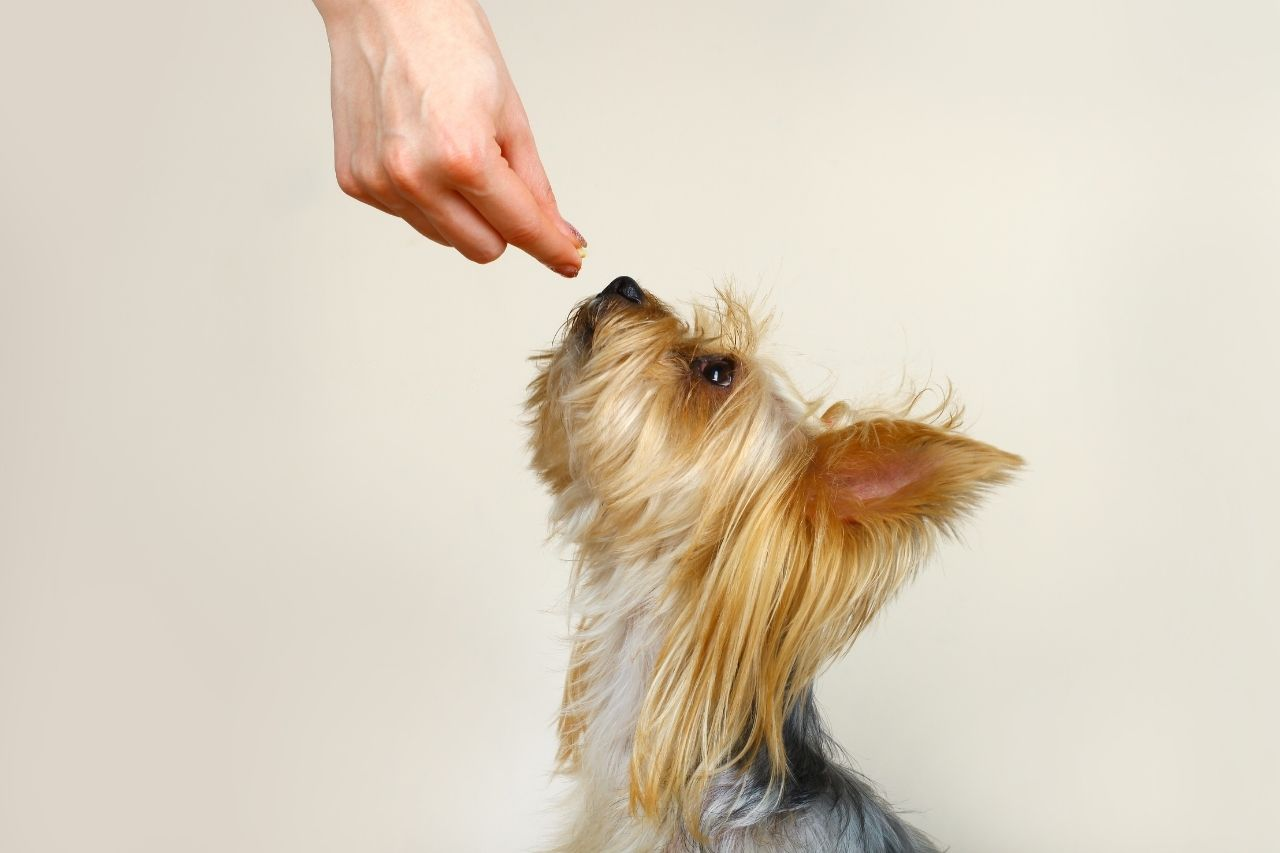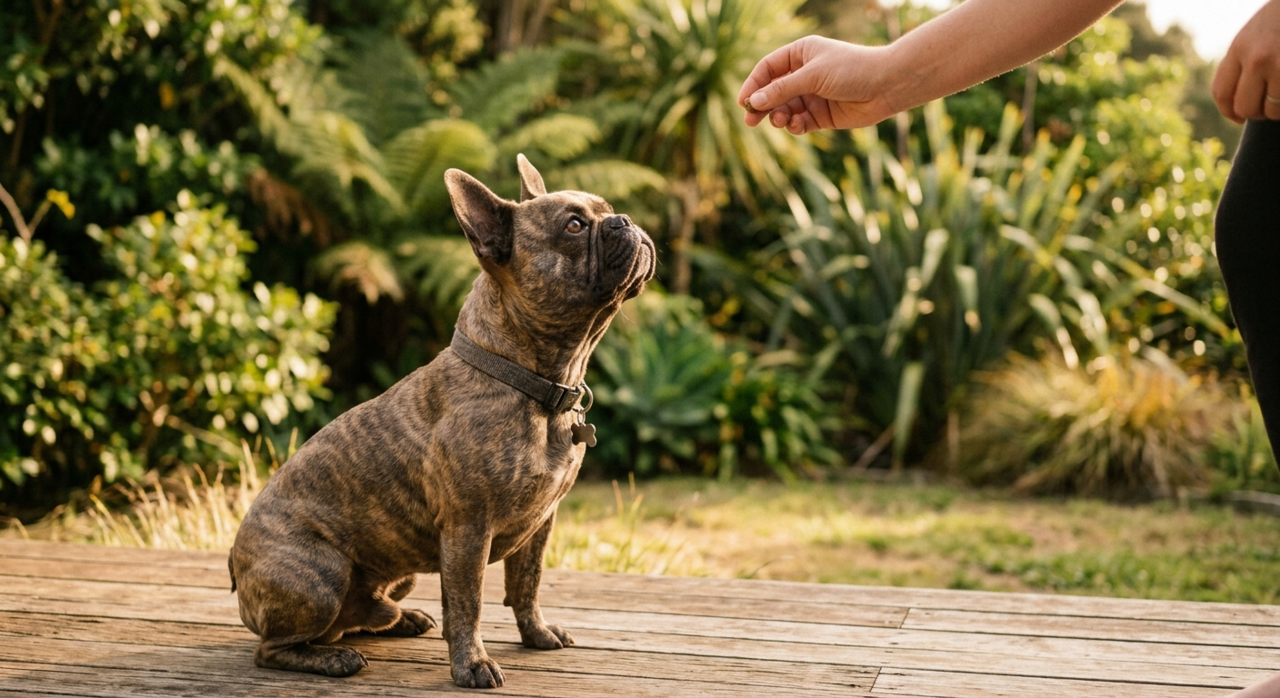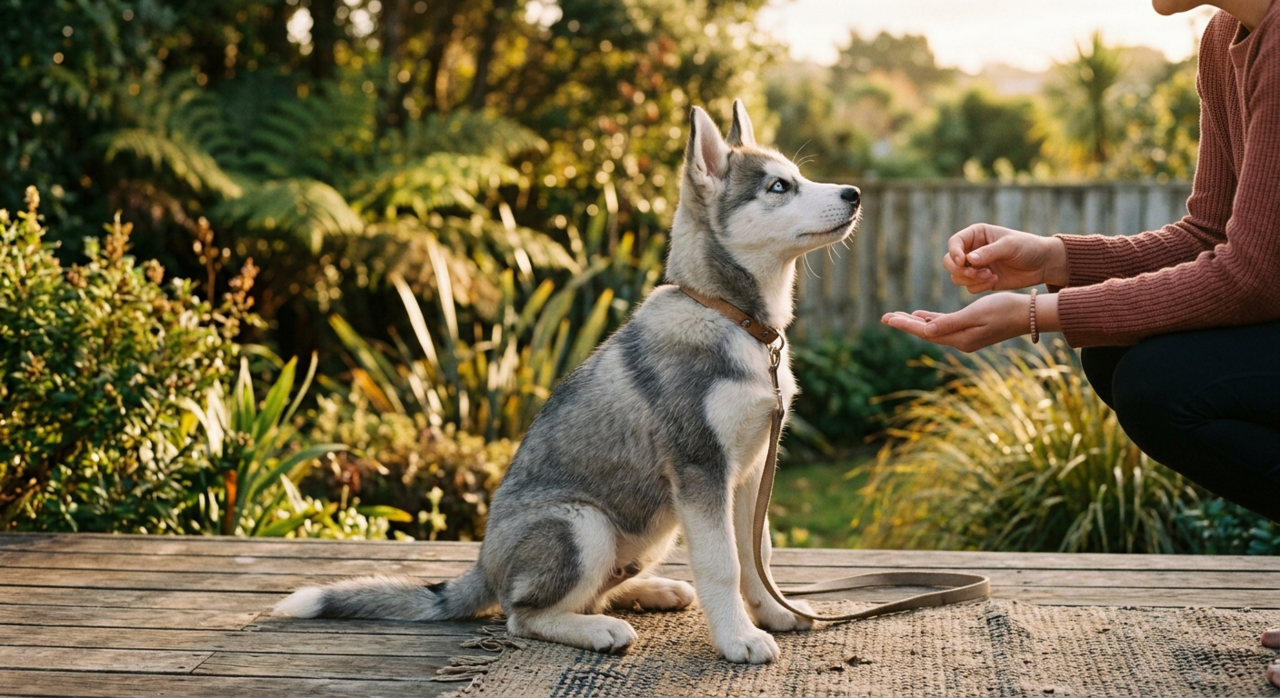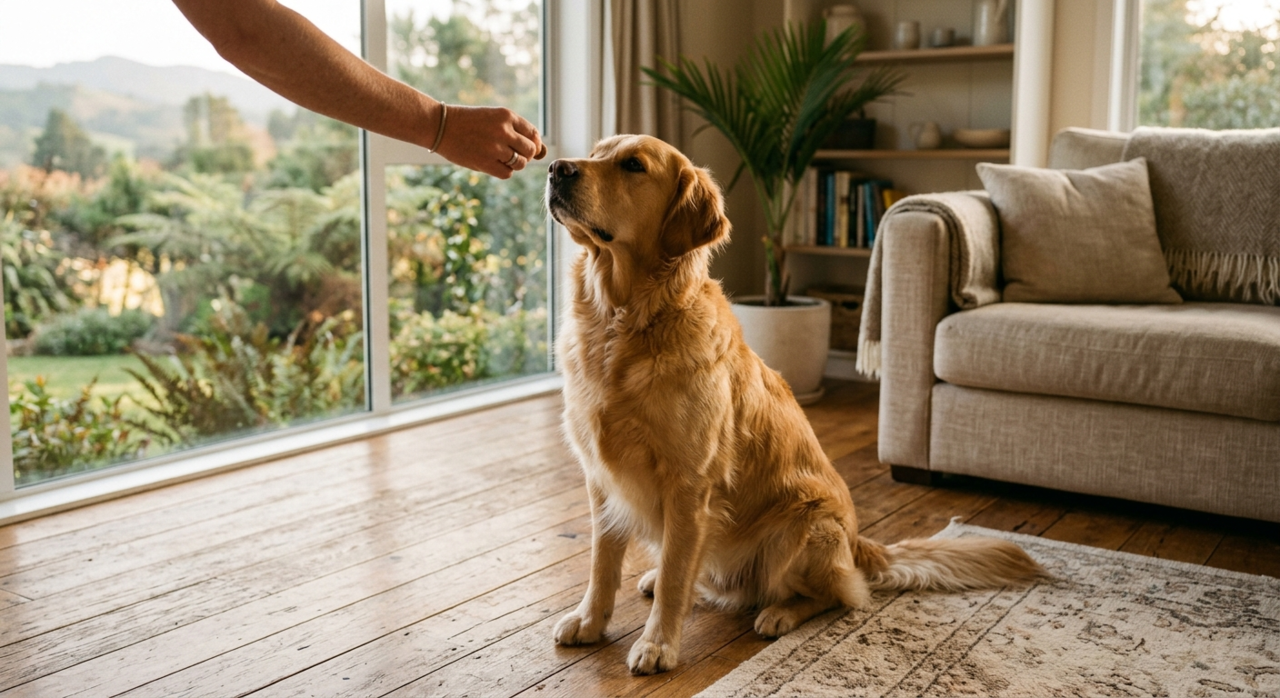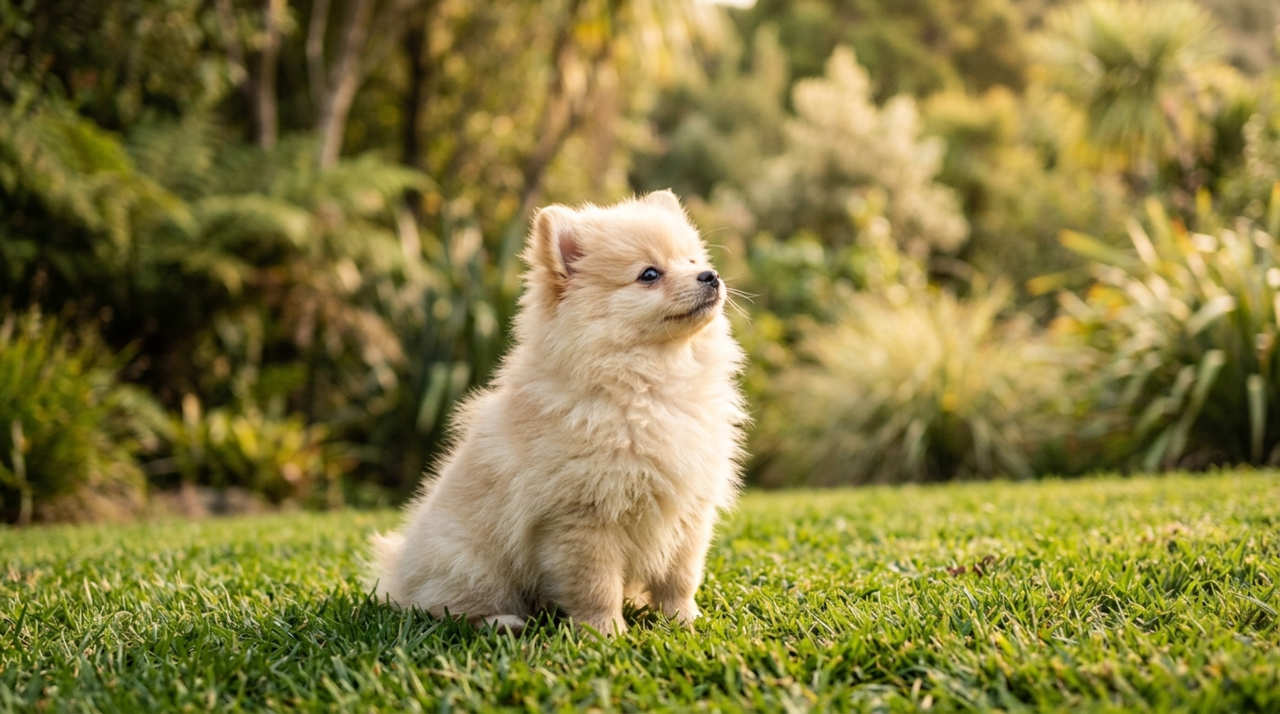
For such a small dog, a Pomeranian has a lot of opinions. They're bright, watchful, and quicker to bark than most breeds twice their size, which is exactly what makes them so loved and, occasionally, so much work. The good news is that Poms are very trainable when you work with their temperament rather than against it. They love a job, they love a treat, and they're usually delighted to be the centre of attention as long as the rules of the game feel fair.
Here's a practical guide to training a Pomeranian at home, written for NZ households and the real-world stuff (apartment living, courier visits, the cul-de-sac dog who sets them off every afternoon) rather than a textbook obedience programme.
Quick Answer
Pomeranians are smart, food-motivated and eager to please, but they're also vocal, easily over-stimulated, and prone to "small-dog syndrome" if you don't set clear rules early. The most effective approach is short positive-reinforcement sessions (5-10 minutes), a clicker or marker word, high-value tiny treats, a soft harness rather than a collar, and a calm consistent response to barking instead of shushing or scolding. Start with name recognition and "sit" in week one, build up to recall and lead walking by month two, and reward calm as much as you reward tricks.
Understanding the Pomeranian Brain
Pomeranians were bred down from much larger Spitz-type sled and herding dogs, and a lot of that working dog wiring is still in there. They notice everything, they alert to anything that moves, and they love feeling like part of the action. The traits people sometimes find tricky in Poms are usually a working dog brain in a four-kilo body with nothing useful to do.
Smart and quick to learn
Poms learn new commands fast and tend to retain them well. They're often working ahead of you in a training session, which is great when it's pointed in the right direction.
Vocal by nature
Alert-barking is the breed default, not a bad behaviour. Training isn't about silencing them, it's about teaching them when barking is and isn't useful.
Confidently independent
Poms can be stubborn if they don't see the point of an instruction. They respond well to being asked rather than told, and they shut down with harsh handling.
Easily over-stimulated
A loud household, two visitors at once, or another dog barking through the fence can tip a Pom from "interested" to "fully wound up" quickly. Training calm is as important as training behaviours.
Strongly bonded to their person
Most Poms want to be near you, want to know what you're doing, and respond beautifully to praise. This is your training superpower, use it.
Prone to "small-dog syndrome"
The pattern where a small dog is allowed to behave in ways a large dog never would (jumping up, snapping when picked up, barking at strangers from the lap). It's avoidable, but you have to treat them like a dog, not a soft toy.
Set Up for Training Success
Three or four things make Pomeranian training noticeably easier before you've taught a single command.
Use a harness, not a collar
Poms have a delicate windpipe and a tendency to lunge or pull when over-excited. A neck collar transfers all of that force into their throat. A well-fitted soft harness (preferably with a front-clip option for lead training) takes pressure off and lets you guide them gently.
Get the right treats
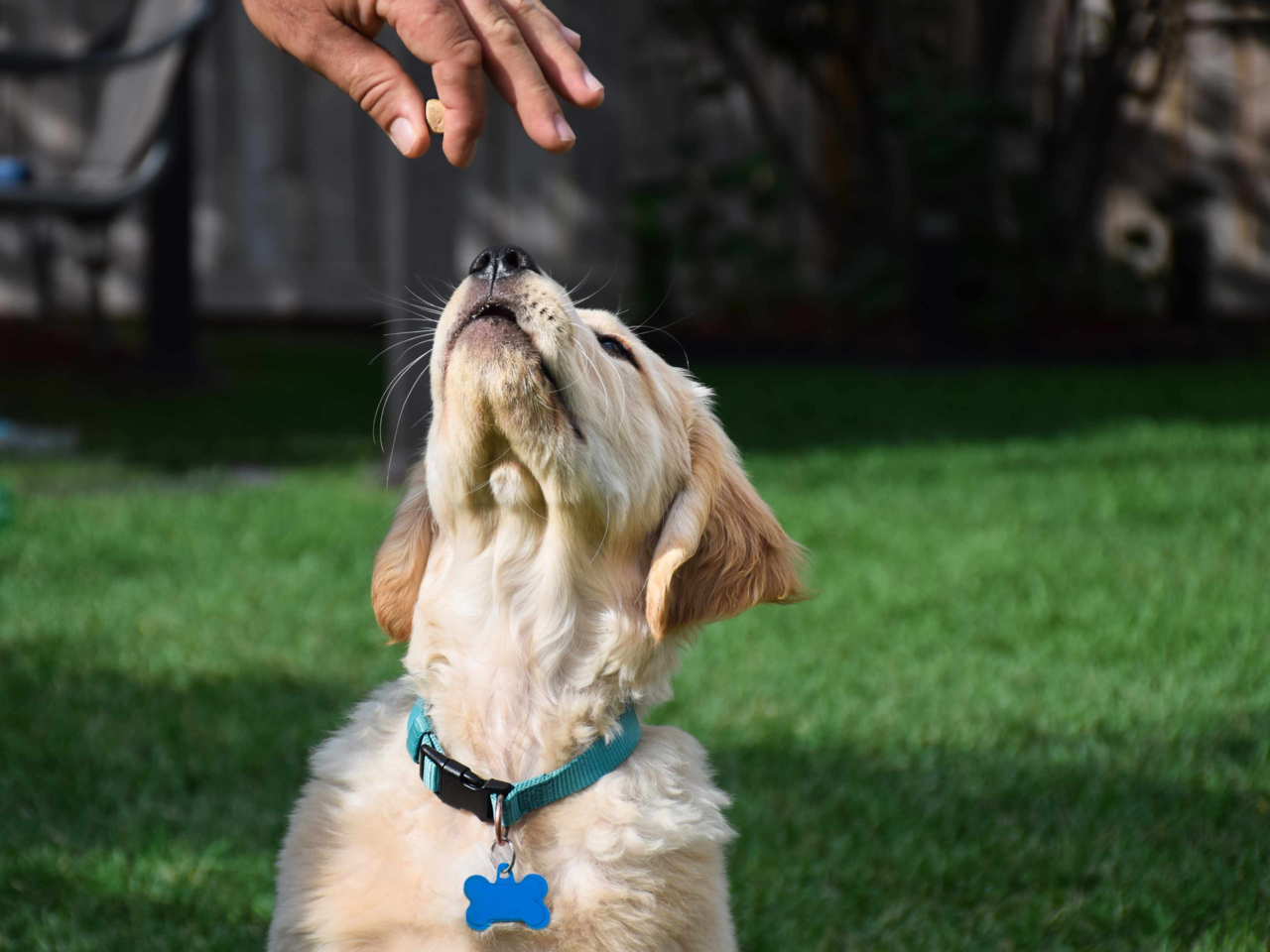
Tiny, high-value, soft, easy to break up. A Pom's "treat" should be about the size of a pea, the same total daily treat allowance as a much bigger dog adds up to too much food in a tiny body. Air-dried liver, freeze-dried meat treats, or training-specific bites are perfect.
Use a clicker or marker word
A clicker (or a clear marker word like "yes") tells your dog exactly which moment earned the treat. Poms are quick to pick up on the click-treat pattern and respond to it well across all training tasks.
Keep treats handy
The training-treat-bag-on-your-belt thing isn't only for puppy class. Catching good behaviour in normal life (calm at the door, quiet when the courier walks past, settled at your feet) reinforces faster than any structured session.
The First Six Weeks: A Real-World Plan
Pom training works best in short, frequent sessions rather than long ones. Aim for 5-10 minutes, two or three times a day, with the dog ending on a win every time. Stop while they're still keen.
Week 1: Name and "sit"
The whole first week is about getting your Pom to look at you when you say their name, and to sit on cue. That's it. Tiny treat for every name response, tiny treat for every voluntary sit. Don't worry about commands they ignore, you're building the foundation.
Week 2: "Look" and "wait"
"Look" (or "watch me") teaches your Pom to bring their attention to you on cue, which is the single most useful behaviour for a bark-prone breed. "Wait" at doorways, in front of food bowls, before getting picked up, all teach impulse control without ever feeling like a fight.
Week 3: Lead manners and harness comfort
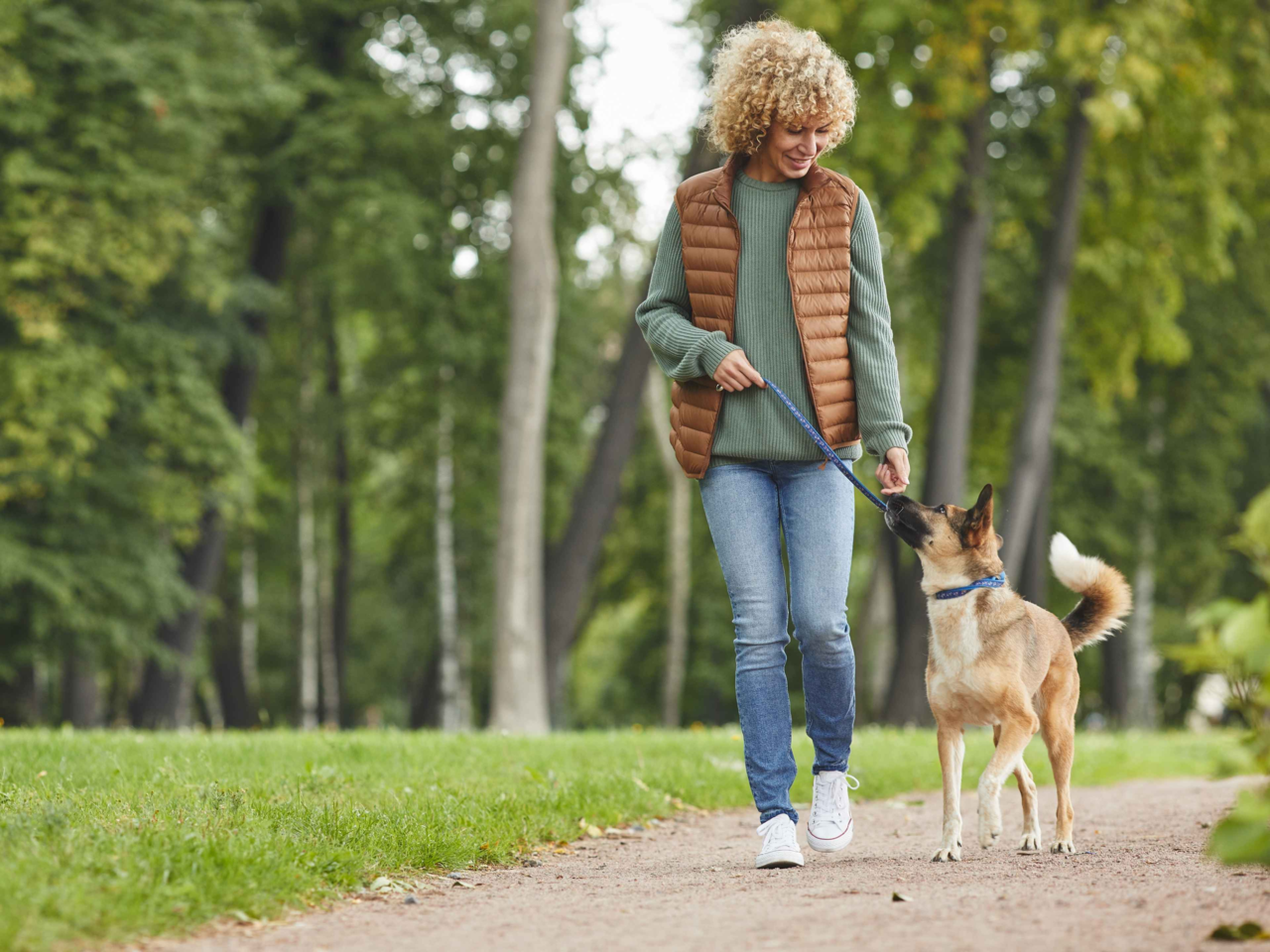
Walk around the house in the harness first, then the garden, then short trips outside. Tiny treats for staying near you. Most Poms pull because they're excited, not because they're disobedient. Stop walking when they pull, walk on when the lead's loose, repeat. Patience pays off here.
Week 4: Recall
Start indoors with a long line in a quiet room. Say their name + "come", reward heavily when they arrive, never call them to something they won't like. A reliable recall is the difference between a Pom you can let off-lead in safe spaces and one you can't.
Week 5: The barking conversation
Pick one trigger (the courier, the doorbell, a particular dog on the walk). Don't try to fix all barking at once. Use the "look" cue you taught in week 2 to redirect attention before the bark escalates, reward the quiet, repeat. Three weeks of consistent practice on one trigger usually shifts the pattern.
Week 6: Settle
"Settle" or "place" teaches your Pom to lie down on a mat or bed and stay there calmly while life goes on around them. This is the most underrated command for a vocal breed, dog who knows how to switch off is a dog who barks less.
Managing Barking Without Suppressing It
This deserves its own section because it's the number one thing Pom owners want to fix and the easiest one to get wrong.
A Pom barks to alert you to something. They're doing the job their ancestors were bred for. Shushing, scolding, spraying with water, or telling them off in a sharp voice usually makes the barking worse, because now there's tension and confusion on top of the original trigger. The dog gets more wound up, not less.
What works:
- Acknowledge the alert. Walk to the window calmly, look at what they're barking at, say "thanks, I see it", and call them back to you. They've done their job.
- Redirect to a known behaviour. "Look", "sit", "settle", anything they already know. Reward the moment they comply.
- Work below threshold. Practise around mild triggers (a quiet neighbour walking past) before strong ones (a barking dog through the fence). Build up gradually.
- Reward the quiet. The pause between barks is the moment to mark with the clicker or your marker word, and treat.
- Reduce the trigger when you can. A frosted film on the lower window, a slightly different walking route, a sound machine, all reduce the load on a sensitive Pom.
Mental Enrichment to Burn Energy
Poms don't need three-hour walks. They need short walks, plenty of sniffing, and mental work that uses their busy brain. A bored Pom finds their own jobs, and they're usually loud ones.
Lick mats with a thin layer of wet food, snuffle mats with their kibble scattered through, and treat puzzles that take a few minutes to figure out are all far more tiring than another lap of the block.
What to Avoid
- Harsh corrections. Poms shut down or get defensive with harsh handling. Stay calm, stay positive, ignore mistakes and reward wins.
- Letting "small dog" rules slide. Jumping up, snapping when picked up, growling on the lap. Behaviours you wouldn't tolerate in a large dog get baked in quickly in a small one if you let them.
- Long training sessions. Five productive minutes beats twenty frustrated ones. Quit while they're still keen.
- Inconsistency between family members. If one person allows jumping up and another doesn't, the dog learns nothing useful. Agree the rules and stick to them.
- Trying to fix everything at once. Pick one trigger or one behaviour at a time. Stack the wins.
- Skipping socialisation. Poms benefit hugely from calm, controlled exposure to other dogs, kids, traffic and household noise from puppyhood. A poorly socialised Pom becomes a reactive Pom.
Frequently Asked Questions
At what age should I start training my Pomeranian?
The day they come home. Puppy basics (name, sit, "look", toilet training) can start at 8-10 weeks. Pomeranian puppies have short attention spans, so think 2-3 minutes per session at first, and several short sessions a day. Old Poms can learn new tricks too, but younger is easier.
How do I stop my Pomeranian barking at everything?
Don't try to stop barking entirely, it's hardwired in the breed. Train a strong "look at me" cue, work below threshold with one trigger at a time, reward the quiet moments, and reduce the strength of the trigger where you can. Three weeks of consistent practice on one trigger usually shifts the pattern noticeably.
Are Pomeranians hard to toilet train?
Small breeds in general are slightly harder to toilet train because they have small bladders and accidents are easier to miss on a wood floor than a carpet. Frequent trips outside (every hour for a puppy, after every meal/nap/play), heavy reward when they go in the right spot, and an enzyme cleaner for accidents will get most Poms house-trained in 4-8 weeks.
Should I use a collar or a harness on my Pom?
A harness. Pomeranians have a small, delicate windpipe and many are predisposed to a condition called collapsing trachea. A neck collar that gets pulled against (even just from excited lunging) puts pressure on a vulnerable spot. A well-fitted soft harness, especially a front-clip style for lead training, is much safer.
Can Pomeranians be trained off-lead?
Many can, with consistent recall training and the right environment. Start indoors with a long line, work up to enclosed gardens, then quiet dog-friendly parks. Even reliable Poms benefit from staying on-lead near roads, around livestock, or in unfamiliar territory, that prey drive is small but real.
How long does it take to train a Pomeranian?
Basic obedience (name, sit, wait, look, come, settle) usually takes 6-8 weeks of short daily sessions. Reliable recall in distracting environments takes months. "Trained" in the sense of a well-mannered adult dog is a 12-18 month project, but the early weeks set the tone for the rest.
My Pomeranian growls when picked up. Is that a training issue?
Possibly, but worth checking it isn't pain or discomfort first (Poms can hide neck or back issues). Once that's ruled out, the answer is to stop picking them up suddenly and instead teach them to step onto your lap or be invited up. Many Poms growl because being scooped is sudden and unsettling rather than because they're aggressive.
How much exercise does a Pomeranian need?
Two short walks a day (15-20 minutes each) and a couple of indoor play or training sessions is plenty for most adult Poms. They're a small breed with a big personality, the mental work matters more than the physical exercise. Puppies need less walking and more frequent rest.
Pomeranian Training Essentials at Petdirect
From small-breed harnesses, training treats and clickers to puzzle feeders, calming beds and snuffle mats, find what you need to set your Pomeranian up to succeed. Save with Autodeliver on the treats and food, and enjoy everyday member pricing as part of Pet Perks.
SHOP TRAINING ESSENTIALS