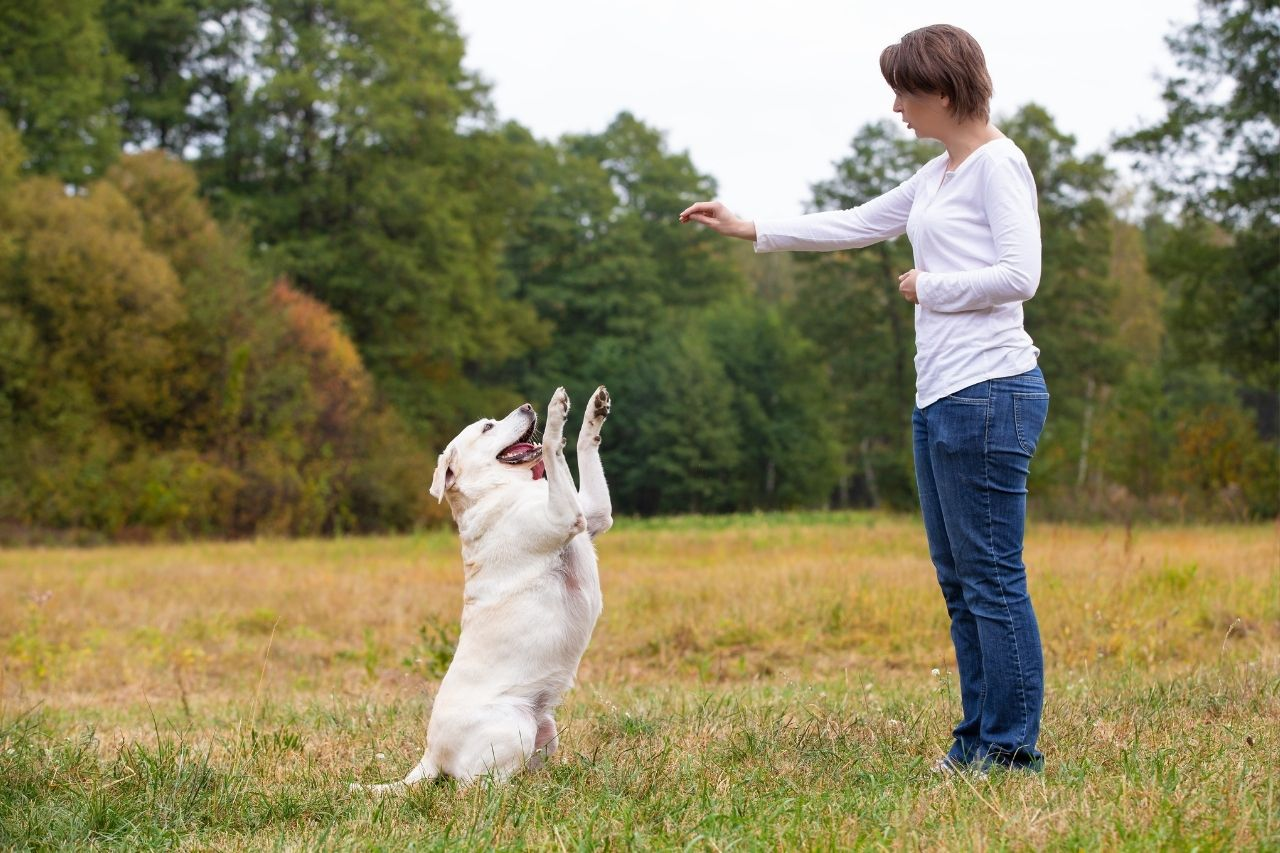
Golden Retrievers are, by a comfortable margin, one of the easiest dog breeds to train. They want to please you, they're highly food motivated, they pick things up quickly, and they live for the praise that comes when they get it right. Honestly the biggest training challenge with a Goldie isn't getting them to learn, it's keeping the lessons interesting enough that the brain stays engaged once the body is older.
That said, there are a few breed-specific quirks that catch new Golden Retriever owners by surprise: the mouthy puppy phase, the over-enthusiastic greetings, the recall failures around birds and water, and the gentle souls who quietly fall apart when corrections feel harsh. This guide is for getting those right from week one. None of it is technical, all of it works.
Quick answer
Golden Retrievers are famously easy to train because they're highly food-motivated, eager to please and quick to pick up new things. The keys are: start early (8 weeks is fine), use treats and praise rather than corrections (Goldies are sensitive and shut down if shouted at), keep sessions short and fun (5 to 10 minutes is plenty), prioritise recall and loose-lead walking from puppyhood, and channel the natural mouthy retrieving instinct into fetch toys before it becomes a problem with shoes and hands. Your Goldie will be sitting reliably within a week and walking nicely on lead within a month or two if you're consistent.
Why Goldies Train Differently to Most Breeds
Knowing what's special about the breed makes training a lot easier. Goldens come pre-installed with traits that make them brilliant family dogs, and they shape exactly how you should approach training.
Highly food motivated
Treats are the easy mode of Goldie training. Most Goldens will work for almost any food reward, which means you can shape behaviour quickly. The flip side is they'll happily counter-surf and beg if you don't establish boundaries early.
Sensitive to tone
Goldens want to do well. A sharp tone or a frustrated owner can make a Goldie genuinely sad, and a sad Goldie shuts down rather than tries harder. Keep training upbeat. They respond to "yes!" like nothing else.
Mouthy by design
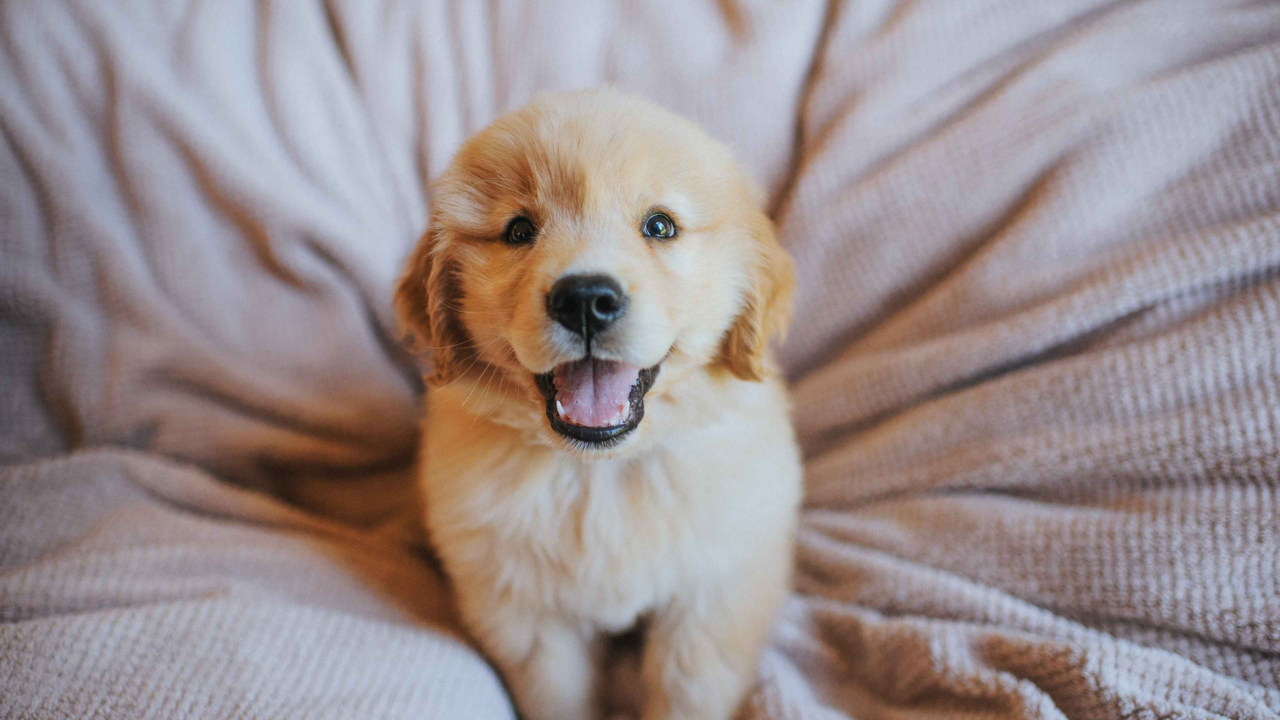
The "retriever" in Golden Retriever is literal. They want to carry things in their mouths. Puppies will mouth your hands, ankles, sleeves and shoes constantly for the first 4 to 6 months. Redirecting to a toy is the trick, not telling them off for doing what their breed is built to do.
Social and over-friendly
Goldies want to meet every dog and every person. That sounds lovely until they're 30kg of enthusiasm dragging you across the park toward a stranger. Loose-lead walking and a reliable recall around distractions are the two skills that need the most work.
Smart and quick to learn
A new command can stick in two or three sessions. The risk is they also pick up bad habits at the same speed. Your Goldie will learn that one whine gets the door open if you let it slide once, and they'll remember.
Energetic, water-loving, prey-aware
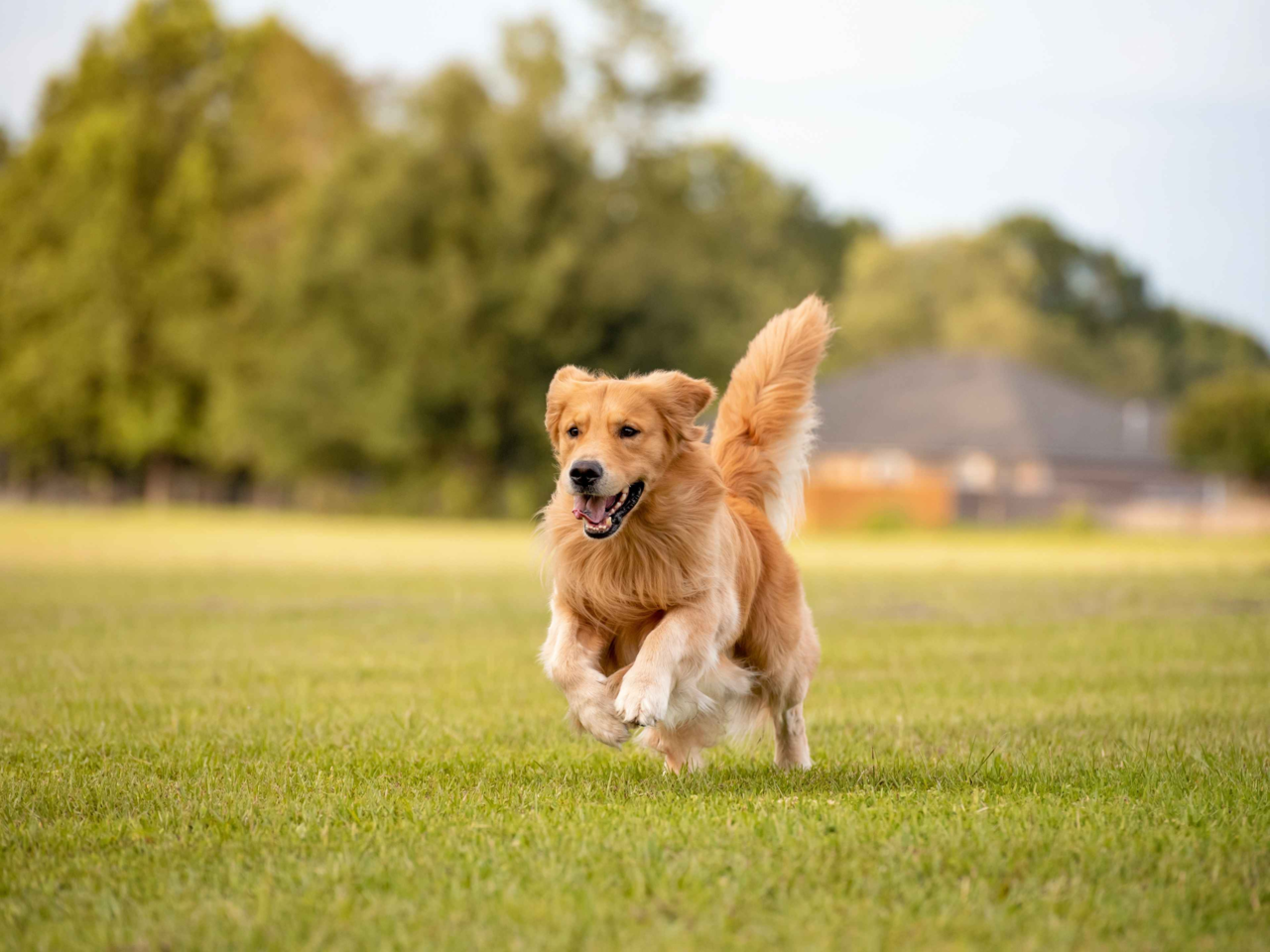
Goldens have a working heritage. They love water, fetch and the smell of a duck on the breeze. Off-lead recall around wildlife (ducks, swans, chickens, sheep on country roads) is one of the genuinely harder challenges, and worth investing serious time in.
The 8-Step Goldie Training Plan
Step 1Start at 8 weeks
You can start the moment your puppy comes home. Goldies absorb new things fast, and the puppy brain is at its most plastic between 8 and 16 weeks. Wait too long and you're catching up on socialisation and habits that should have been set earlier.
The first week's lessons: their name, "sit", "come" indoors, getting used to a collar and lead, eating from a hand without nipping, and starting toilet training.
Step 2Use food, not corrections
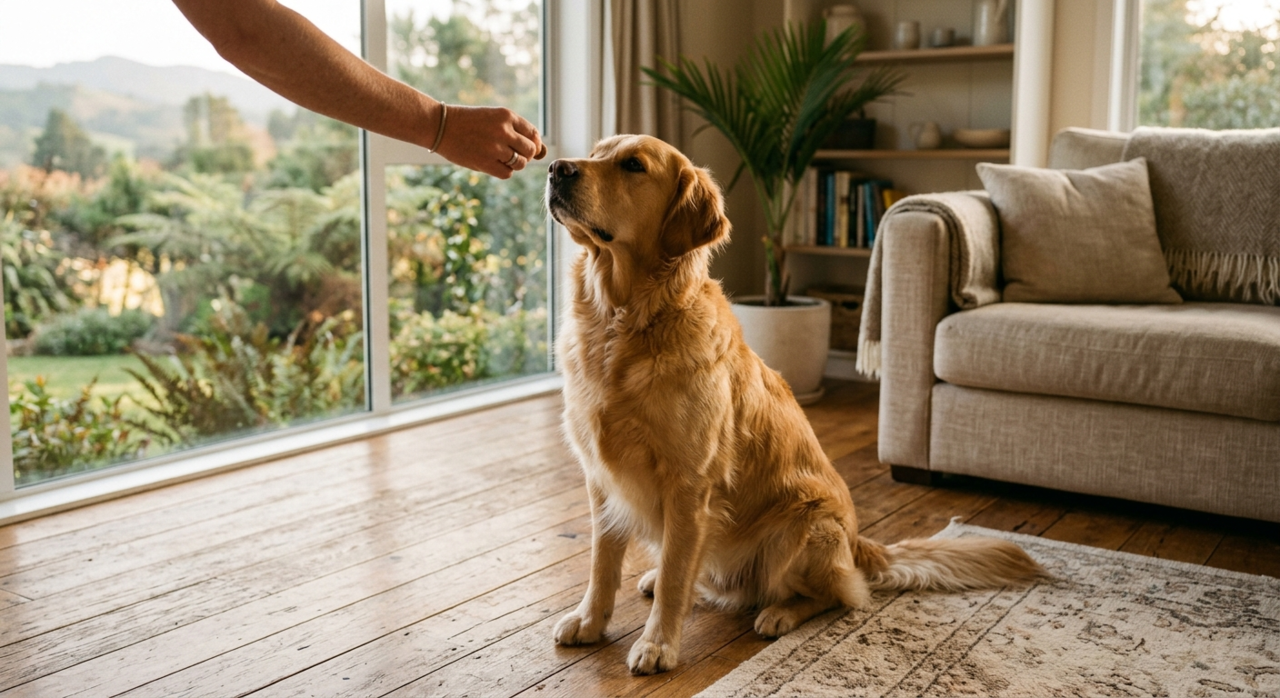
Goldens are bred to work for praise and food. Reward what you want, ignore or redirect what you don't. They genuinely shut down with harsh corrections, so save the firm voice for true safety moments (running into the road) and use treats and "yes!" for everything else.
A clicker is optional but useful. It marks the exact moment your Goldie does the right thing, which they pick up faster than verbal markers.
Step 3Short sessions, fun energy
5 to 10 minutes of focused training, 2 to 3 times a day, beats a 45-minute session once a week. Goldies enjoy short bursts and remember the pattern: fun thing, treat, fun thing, treat, brain feels good. End every session on a win, even a tiny one.
Step 4Channel the mouth into a toy
Mouthy puppy phase is at its peak around 12 to 16 weeks. The fix isn't telling them off, it's having a tug toy or fetch ball ready for the moment they go for your sleeve. Hand goes into mouth → toy appears → toy goes into mouth → praise. After two weeks of this they reach for the toy first.
This also doubles as a brilliant way to wear out the body in 10 minutes, which calms the brain.
Step 5Recall is the most important skill
Goldens love everyone and everything. A reliable "come back" is the single most important command for this breed because the second they spot a duck, another dog or a friendly person, they want to investigate. Build it like this:
Indoors first, with treats, when they're already coming. Add the cue ("Goldie, come!") just as they reach you. Reward huge. Move to the back garden. Then a long-lead at the park. Only progress to off-lead when they're 100% reliable on the long lead. Most Goldies need 6 to 12 months of practice before they're rock-solid off-lead in distracting environments.
Step 6Loose-lead walking from week one
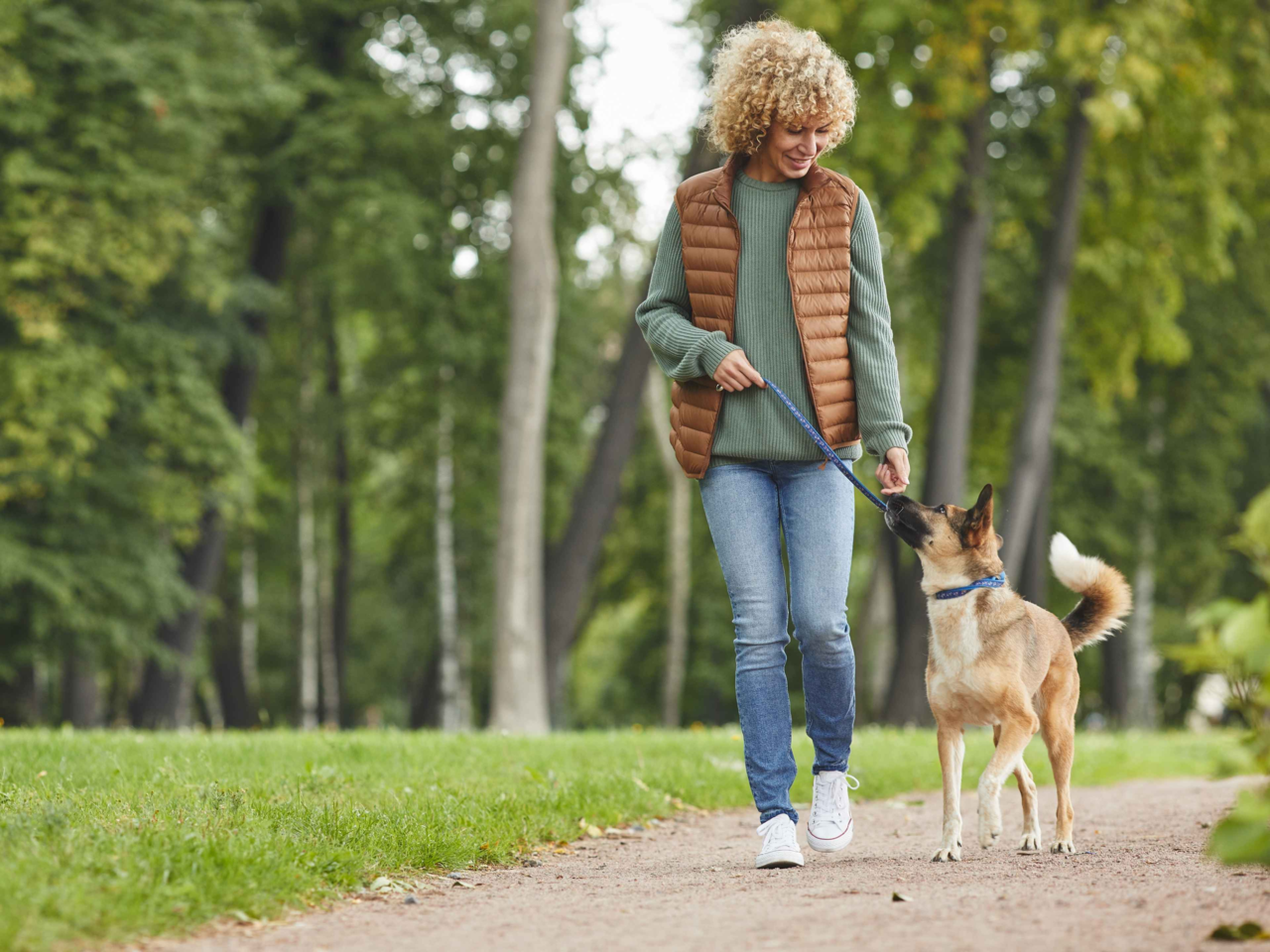
A dragging-on-the-lead Goldie is one of the most common breed-specific complaints, and it's preventable. Start with a front-clip harness or head collar, walk in slow figure-eights in the back yard, and reward your Goldie for being beside you. Stop walking the moment the lead goes tight; only move forward when it's loose. Boring at first, brilliant within a month.
Step 7Teach "settle" and crate calm
Goldies are energetic, friendly, want to be involved in everything. A calm Goldie is a learned skill. Teach a "settle" command on a mat or in a crate, build it up slowly with reward for being calm. Pair with a stuffed lickmat or KONG for genuine "off duty" time. A Goldie who can switch off is a much nicer Goldie to live with.
Step 8Keep enriching, even after they "know" everything
Most Goldies have nailed the basics by 6 months. Then comes the long phase of keeping the brain busy. Puzzle feeders, snuffle mats, scent-find games, "find it" with treats hidden around the house. A bored Goldie chews shoes and counter-surfs. An enriched Goldie naps on the rug.
Training Treats Worth Keeping in the Pocket
For a food-motivated breed like the Goldie, having the right treats on hand is half the battle. Soft, small, smelly and high-value, that's the brief. Use the highest-value treats for the hardest skills (recall, settle around distractions) and lower-value ones for routine practice.
Lead, Harness and Clicker Setup
For a breed that loves to greet everyone and pull toward distractions, a thoughtful walking setup makes the difference between a 10-minute battle and a 30-minute pleasant walk. Front-clip harnesses, head collars and longer training leads are the most useful tools here.
Toys for Mouth, Body and Brain
Goldies need fetch (the body), tug (the mouth), and puzzle work (the brain). One of each in rotation keeps a Goldie happy, calm and trainable. Fetch in particular wears them out faster than any walk.
Frequently Asked Questions
How long does it take to train a Golden Retriever?
The basics (sit, name recognition, indoor recall, lead introduction) usually click in 1 to 2 weeks. Reliable loose-lead walking takes 4 to 8 weeks of consistent work. A rock-solid recall around real-world distractions (ducks, other dogs, people) typically takes 6 to 12 months. Goldies are quick learners, so the limiting factor is usually how consistent the human is, not how fast the dog gets it.
Are Golden Retrievers easy to train?
Yes, they're one of the easiest breeds. They're highly food-motivated, eager to please and quick to pick up new things. The trade-off is they pick up bad habits just as fast, so consistency matters more than with a less biddable breed. Be calm, generous with rewards, and they'll get there.
What age should I start training my Goldie puppy?
The day they come home, usually around 8 weeks. Puppy brains are at their most plastic between 8 and 16 weeks, so the basics, socialisation, and gentle exposure to new sights and sounds should start straight away. Keep it short, fun and reward-based. Formal puppy class around 12 to 14 weeks is also worth doing.
Why does my Golden Retriever puppy bite so much?
Because they're built to carry things in their mouths. The "retriever" part is literal. The mouthy phase usually peaks at 12 to 16 weeks and eases by 6 months. The fix isn't telling them off, it's redirecting: hand goes near mouth → tug toy appears → toy goes into mouth → praise. After a couple of weeks of consistent redirection most Goldies stop reaching for hands first.
How do I stop my Goldie from jumping up?
Reward them for sitting when people approach, and ignore them completely (turn your back, no eye contact, no talking) when they jump. Most Goldies jump for greetings rather than from anxiety, so removing the reward (your attention) and offering an alternative (a sit gets pats) usually works within 3 to 4 weeks. The trick is making sure visitors do the same thing.
How do I teach a reliable recall?
Build it slowly: indoors first, then back garden, then long-lead at the park, then off-lead in low-distraction spots, then off-lead with distractions. Use the highest-value treat you've got for recall practice, and never call your Goldie to you for something they'll associate with negative (lead-on at end of walk, bath, ear cleaner). Recall practice is an ongoing thing for Goldies, since they're enthusiastic by nature and the recall needs maintenance.
Is a clicker worth it for a Goldie?
Optional but useful. The clicker marks the exact moment your dog does the right thing, faster than your voice can. For a quick-learning breed like the Goldie, that precision speeds training up. If you'd rather use your voice, a sharp "yes!" works almost as well.
What if my Goldie pulls on the lead?
Almost every untrained Goldie pulls on the lead because they're enthusiastic about absolutely everything. The fix is consistency: stop walking the moment the lead goes tight, only move forward when it's loose, reward heavily for walking beside you. A front-clip harness or a head collar makes the early weeks much easier. Most Goldies are walking nicely within a month if you stick with it.
Can I train an older Goldie or rescue?
Absolutely. Goldies remain biddable and food-motivated their whole lives. Older dogs do take a bit longer to unlearn habits than puppies do, and the first few weeks are about building trust as much as teaching commands. The training method is the same: positive, treat-based, short sessions, lots of praise.
Golden Retriever Training Essentials
Find training treats, clickers, harnesses, leads, fetch toys and puzzle feeders in one place. Save with Autodeliver on training treats, and enjoy everyday member pricing as part of Pet Perks.
SHOP TRAINING ESSENTIALS