Training a French Bulldog is rewarding, funny, and occasionally maddening. They're smart, food-motivated and people-oriented, which makes them brilliant pupils. They're also stubborn, easily distracted, and prone to deciding training time is over before you do, which makes them famously cheeky. Get the approach right and they'll surprise you with how much they pick up.
This is a friendly guide to training a Frenchie at any age, with a step-by-step plan and the gear that makes it easier.
Quick answer
French Bulldogs train best with short, fun, reward-based sessions of 5 to 10 minutes, two or three times a day. Use small high-value treats, a clicker if you can, a body harness instead of a collar (their short neck and breathing make collars a poor fit), and never train hard outdoors in the heat. Be patient with their stubborn streak, end every session on a win, and skip harsh correction completely. Most Frenchies pick up sit, stay, recall and lead manners with a couple of weeks of consistent daily practice.
What Makes Training a Frenchie Different
French Bulldogs aren't your standard high-drive working dog. They've got their own quirks, and understanding them upfront makes the whole training process easier.
Stubborn streak
Frenchies are independent thinkers. If they don't see the point of a command, they'll just look at you. The fix is making it worth their while with a treat or game they care about.
Short attention span
5 to 10 minutes is plenty for one session. Try to push past that and you'll lose them. Two or three short sessions a day works much better than one long one.
Brachycephalic build
Frenchies overheat easily because of their short muzzle. Train inside or in cool weather, never in midday sun, and always keep water nearby.
Sensitive to harsh correction
Yelling, scolding or physical correction shuts a Frenchie down completely. Stick to positive reinforcement and they'll keep wanting to work with you.
Food-motivated (sometimes too much)
Most Frenchies will work hard for a treat. Use small, low-calorie pieces, since the breed is prone to weight gain.
Velcro dogs
Frenchies often follow their humans everywhere, which makes recall easy in some ways. It also makes separation harder, so build alone-time tolerance early.
Front-heavy build
A neck collar puts pressure on their already-restricted airway. A body harness is much better for walks and lead training, and helps protect their spine.
Smart but easily distracted
They learn fast in a calm environment. Add a squirrel, another dog, or new smells and they're gone. Train in stages from quiet to busy.
What You'll Need to Get Started
You don't need a huge kit. A handful of essentials covers most training:
- Small high-value training treats (pea-sized, soft, smelly)
- A treat pouch you can grab quickly with one hand
- A clicker (optional, but really helps mark the moment they get it right)
- A body harness (not a collar) and a fixed-length lead
- A quiet space at home for early sessions
- Patience and consistency, mostly
Treats Worth Their Effort
Small, soft, smelly and easy to chew. Frenchies have short jaws, so anything too crunchy or chewy slows the session right down. Stick to pea-sized pieces and break larger treats up.
Training Gear for Frenchies
A clicker, treat pouch and a body harness make day-to-day training a lot smoother. Skip the neck collar for any kind of leash work.
A Step-by-Step Plan to Train Your Frenchie
Start with name recognition
Say their name in a happy voice, mark with a click or "yes" the moment they look at you, then reward. Practise this constantly in the first week. A Frenchie who looks at you when you say their name is halfway to everything else.
Teach sit
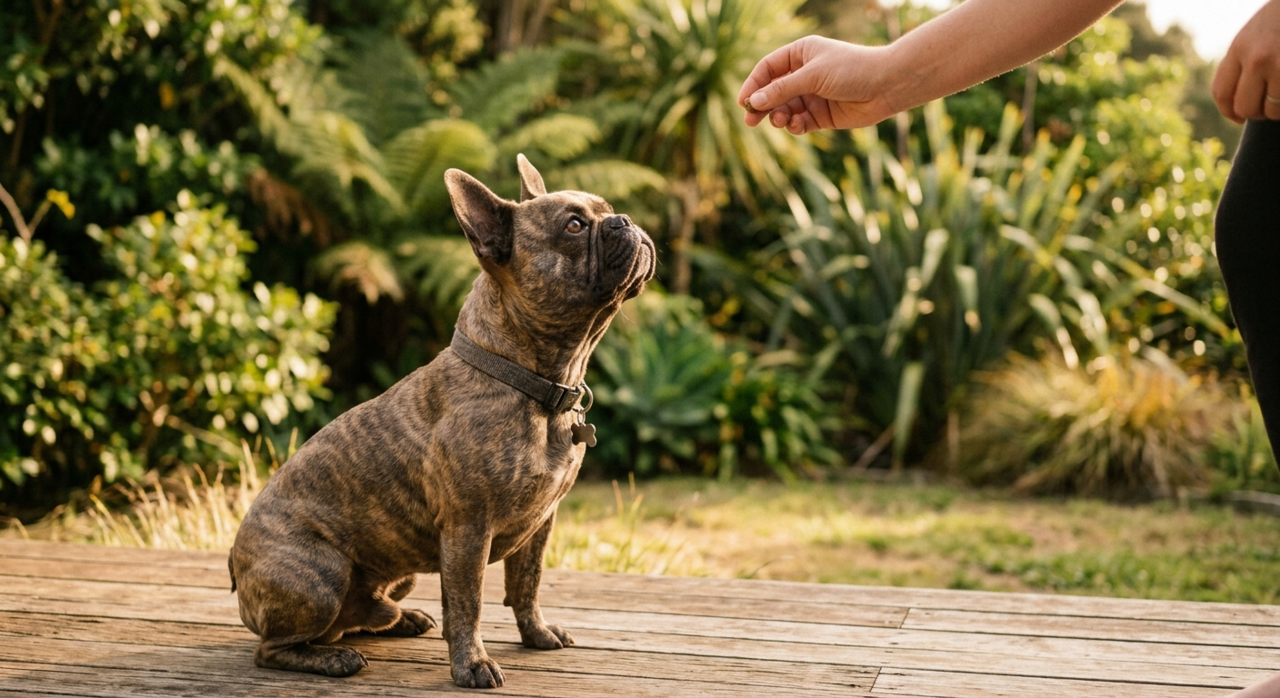
Hold a treat above their nose and slowly move it back over their head. Their bottom usually drops as their head tilts up. Mark and reward the second their bum touches the floor. Most Frenchies have this down within two or three sessions.
Teach down
Once they sit reliably, hold a treat at their nose and move it slowly down to the floor between their paws. Mark and reward when their elbows touch the ground. Some Frenchies find this awkward at first because of their build. Be patient.
Build a strong recall
Start indoors. Crouch down, say their name, then "come" in an excited voice. Reward heavily when they get to you. Build distance gradually. Recall is one of the most important commands and often the hardest to keep solid, so practise it for life, not just in the early weeks.
Teach stay
From a sit, hold a flat hand up, say "stay", then take one step back. Return and reward if they hold it. Build duration first, then distance, then distractions. One step at a time.
Lead manners
Start in your hallway with the harness on. Reward heavily for walking next to you on a loose lead. The moment they pull, stop walking. They'll learn that pulling makes the walk pause. Frenchies usually pick this up fast indoors and need practice outdoors with distractions.
Crate or settle training
Frenchies are prone to separation anxiety, so teach them to settle quietly in a crate or bed from puppyhood (or as soon as you bring them home). Short sessions of being in their spot with a chew or treat-stuffed toy build positive associations.
Socialisation
From day one, expose your Frenchie to different people, surfaces, sounds, vehicles and (vaccinated) dogs in calm, positive ways. The first 16 weeks are golden for socialisation. A well-socialised Frenchie is much easier to train as an adult.
Build alone-time tolerance
Leave the room for 30 seconds, return calmly. Build up to a few minutes, then longer stretches. A treat-stuffed toy or lick mat helps. Frenchies get attached fast, so this is genuinely important for their wellbeing.
Keep going for life
Training isn't a 12-week course you graduate from. Keep sprinkling short refresher sessions through your week. Frenchies stay sharp when they're working with you, and a 5-minute brain workout is one of the easiest gifts you can give them.
Brain Games to Pair With Training
Frenchies have busy minds in compact bodies. Puzzle toys and lick mats give them something to work on between sessions and help burn mental energy without overheating.
Common Frenchie Training Challenges
"They just lie down and refuse"
Classic Frenchie. They're done for the session. Don't push it. Use higher-value treats next time, keep sessions shorter, and end before they decide to.
Pulling on the lead
Switch from a collar to a body harness if you haven't already. Stop the moment they pull and only move forward when the lead is loose. Most Frenchies get the message within two or three weeks.
Selective recall
Some Frenchies recall beautifully at home and pretend not to know you at the park. Practise daily in low-distraction settings, and only graduate to busier places once it's solid.
Toilet training plateau
Frenchies are usually reasonably easy to toilet train, but accidents happen well into the first year. Stick with regular outings, reward heavily for wees outside, and don't tell them off for accidents inside.
Separation anxiety
If your Frenchie struggles when you leave, build alone-time tolerance from short sessions, leave a treat-stuffed toy or lick mat, and avoid making big deals of leaving and arriving.
Overheating during sessions
If they're panting heavily, drooling more than usual, or seem reluctant, stop and rest. Frenchies overheat fast and can't tell you they're struggling until it's well underway.
Frequently Asked Questions
Are French Bulldogs hard to train?
Not hard, just specific. They're smart and food-motivated, which makes them brilliant pupils, but they're also stubborn and easily distracted. Short sessions, high-value treats and patience are the keys.
What age should I start training my French Bulldog?
The day they come home. Puppies can start learning their name, basic recall, name-look responses and toilet training from 8 weeks. Formal sessions can start a few weeks later. Adult Frenchies can absolutely still be trained, it just takes a bit more patience.
How long should training sessions be?
5 to 10 minutes per session is plenty. Two or three short sessions a day work much better than one long one. End every session on a successful note rather than pushing for one more rep.
Should I use a collar or a harness for training?
A body harness, not a collar. Frenchies have short, muscular necks and a brachycephalic airway, so neck pressure from pulling on a collar can put strain on their breathing. A front-clip or chest-plate harness is much safer and gives you better control too.
Are Frenchies stubborn?
Yes, sometimes. They're independent thinkers. If they don't see the point, they'll just sit there. The trick is making it worth their while with a high-value reward, then being patient. Harsh correction backfires badly with this breed.
Can I train my Frenchie outside in summer?
Be very careful. Frenchies overheat fast because of their short muzzle. Train indoors or early morning and evening when it's cooler, and always keep water nearby. Watch for heavy panting, drooling or any reluctance to move, and stop the session immediately.
How do I stop my Frenchie barking?
First identify what they're barking at (other dogs, doorbell, boredom, attention). Then desensitise gradually by rewarding calm behaviour around the trigger. Don't yell, since that can read as you joining in. Plenty of mental stimulation also helps boredom barking.
Are Frenchies prone to separation anxiety?
Yes, more than many breeds. Build alone-time tolerance from puppyhood, never make big fuss of leaving or arriving, and leave them with something engaging like a treat-stuffed toy or lick mat.
Frenchie Training Essentials
Find treats, harnesses, clickers and brain toys to make Frenchie training easier. Save with Autodeliver on training treats and enjoy everyday member pricing with Pet Perks.
SHOP TRAINING TREATS