Huskies have a reputation for being headstrong, vocal, escape-prone and impossible to train. That's only half the story. Siberian Huskies are highly intelligent, very motivated by play and food, and absolutely trainable when you understand what makes them tick. The trick is recognising that they're a working sled-dog breed, independent thinkers, bred to make their own decisions on the trail, with serious athleticism and serious prey drive. Train them like a Labrador and you'll struggle. Train them like a Husky and they'll surprise you.
Here's a friendly NZ-focused guide to training a Husky from puppy through adulthood, what to focus on early, and the realistic challenges to plan for.
Quick answer
Huskies need consistent, fun, reward-based training started early, with extra focus on recall, lead manners and impulse control around prey. Use high-value treats, keep sessions short, and bake in plenty of exercise and mental enrichment so they're not training tired or training bored. Plan for an escape-proof setup at home (Huskies are famous fence climbers and gate openers) and never let them off lead in unfenced areas until your recall is rock solid, and even then, with caution.
What Makes Training a Husky Different
Understanding the breed helps the training make sense. Huskies aren't being difficult on purpose, they're being Huskies.
Independent thinkers
Sled dogs were bred to make their own decisions on the trail when the musher couldn't see ahead. That independence shows up at home as "I heard you, I just don't agree."
What it means for training: motivation matters more than command. Make doing what you ask the most rewarding option.
High prey drive
The instinct to chase small fast-moving things is strong. Cats, rabbits, possums, chickens, even small dogs can trigger it.
What it means for training: recall around prey is one of the hardest things to train. Until it's solid, a long lead and fenced spaces are the safer bet.
Escape artists
Huskies dig under fences, climb over them, slip out of harnesses and sneak through gaps. They genuinely treat boundaries as a puzzle.
What it means for training: the right gear, secure home setup, and consistent routine matter as much as the training itself.
Very vocal
Howling, "talking", grumbling and screaming-tantrum noises are part of the package. Most isn't aggression, it's communication.
What it means for training: reward quiet behaviour, ignore the operatic protests, and don't expect a silent dog.
Lots of energy
Huskies are athletes. A bored, under-exercised Husky is the one who eats the couch and digs up the lawn.
What it means for training: meet the exercise need first, then train. A tired Husky learns better than a wired one.
Heat-sensitive in NZ summers
That double coat is built for snow. NZ summers can be tough, and a hot Husky is a grumpy, distracted, harder-to-train Husky.
What it means for training: train in the cool of the morning or evening through summer, never in the heat of the day.
The Six Things to Get Right Early
Build the recall from day one
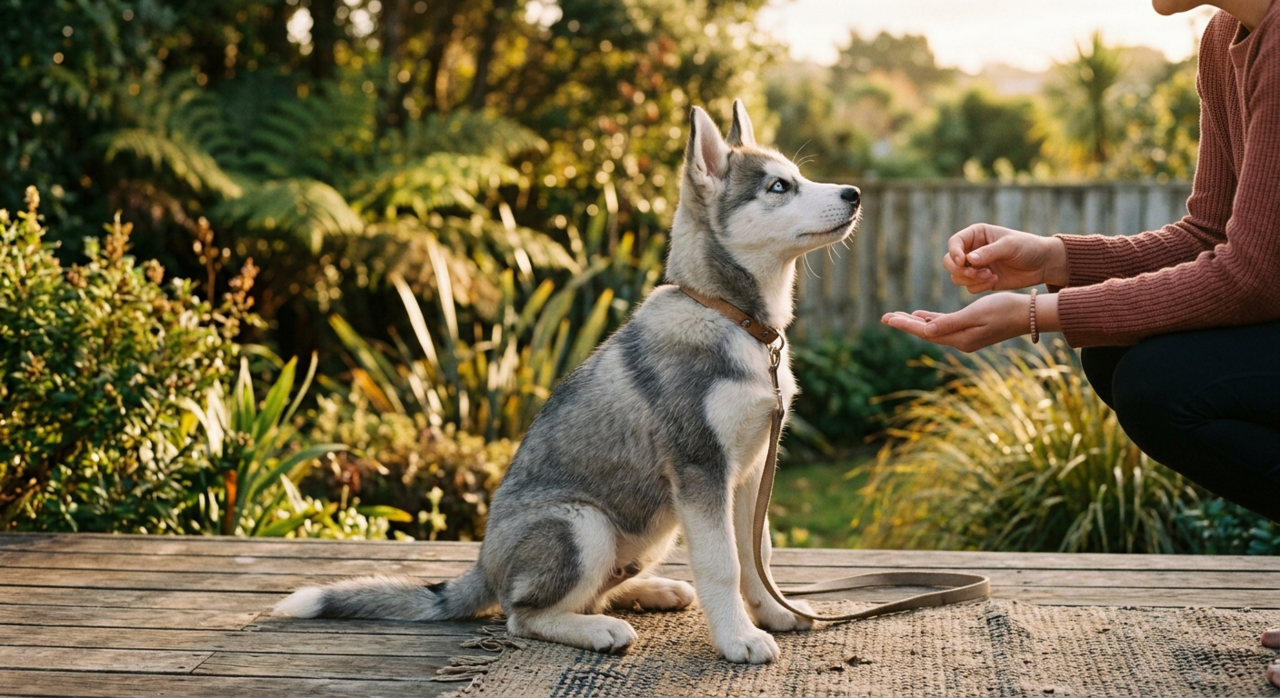
Recall is the single most important thing you'll ever teach a Husky. Start the moment they come home, in the safest spaces (indoors, fenced section), and pair the recall word with something better than whatever they were doing, usually a high-value treat.
Never call them for something they don't like (bath, lead on to go home, into the crate). The recall word should mean only good things.
Train lead manners on a long lead
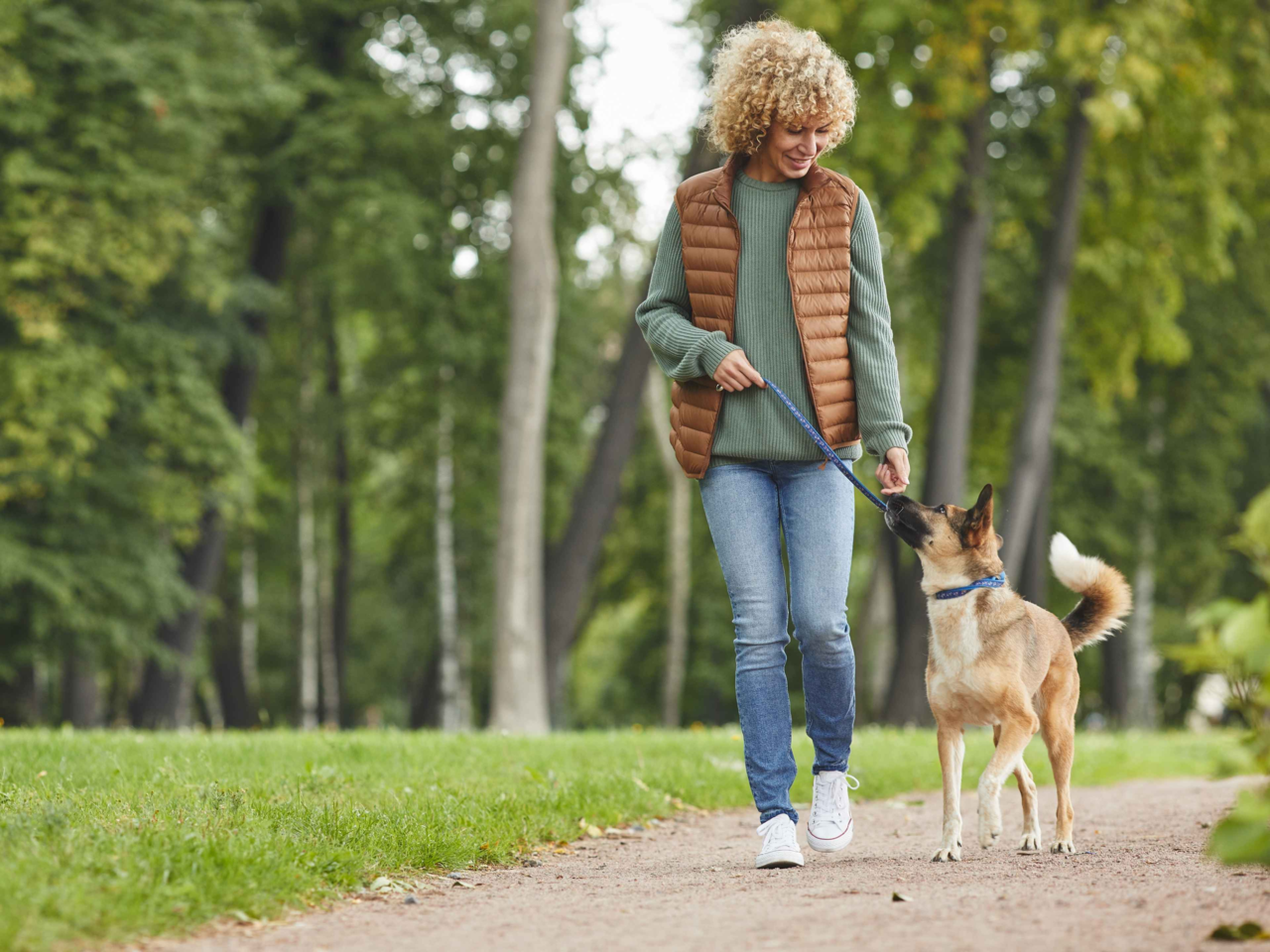
Most Husky owners discover that a 1.5-metre lead in an open park is asking for trouble. A 5 to 10 metre training lead lets your Husky explore, smell and move while you keep the safety net of being attached. Practise loose-lead walking, recall back to you mid-walk, and "leave it" cues.
A front-clip harness or head collar can take the pulling out of normal walks while you keep training the underlying behaviour.
Reward-based, short and frequent
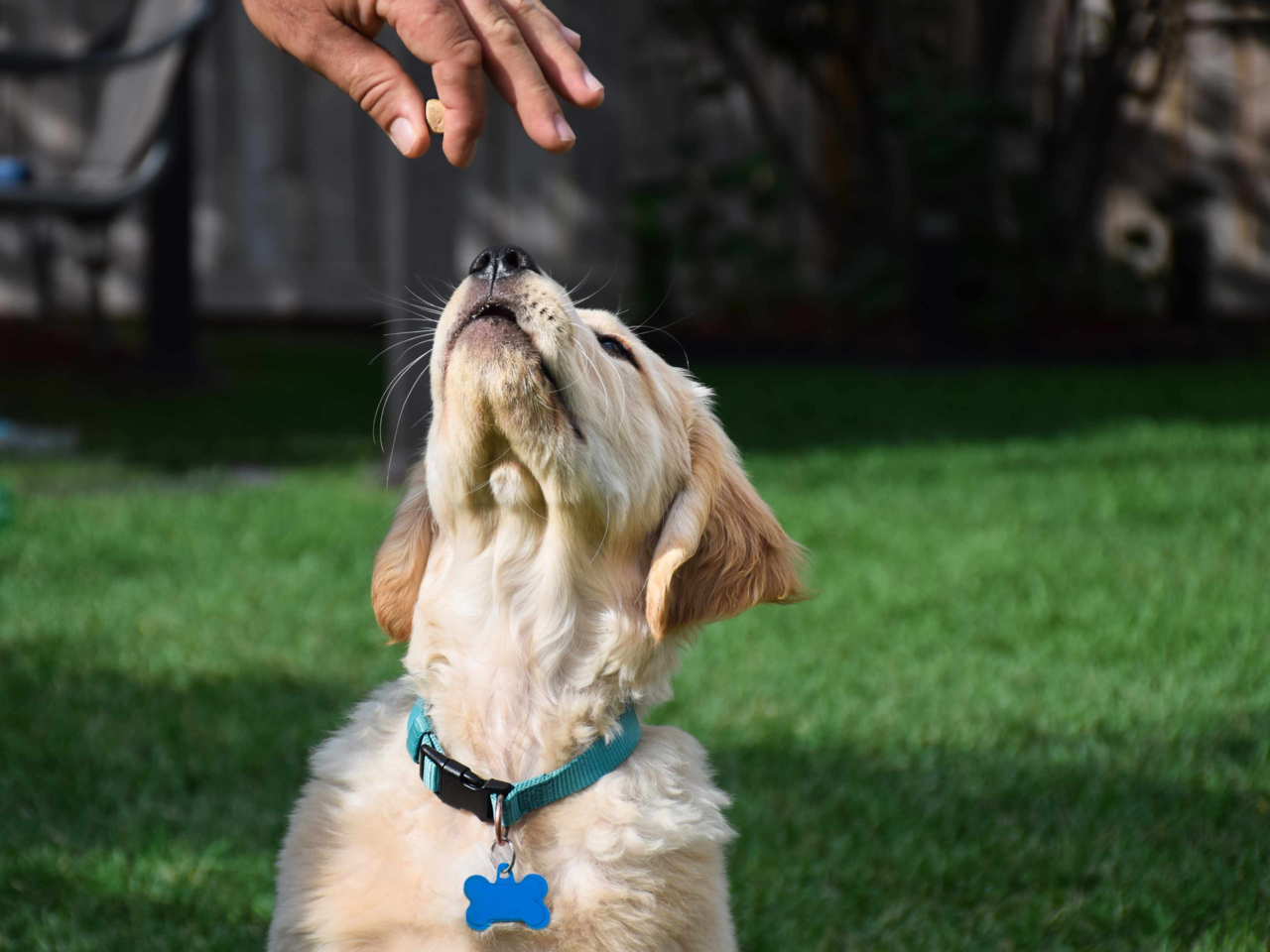
Huskies switch off if a session drags. Aim for five to ten minutes of focused training, two or three times a day, with high-value rewards, small soft treats they don't get any other time. Liver treats, freeze-dried meat and small bits of cheese tend to work better than dry biscuits.
End every session on a win, even a tiny one.
Socialise widely as a puppy
Between 8 and 16 weeks is the most important window for socialisation. Calm exposure to lots of different people, dogs, surfaces, sounds, places and situations pays off for the rest of their life. Keep it positive, never overwhelming.
For Huskies, this also includes calm exposure to small animals on lead, supervised, controlled, rewarded for staying calm.
Crate training and alone time
Huskies are pack-oriented and can struggle with being left alone. Crate training, started gently and paired with good things, helps build a calm "off-switch" and a safe space when you need to leave them.
Keep early alone-time stints short and build slowly. A LickiMat or stuffed toy can make alone time something they look forward to.
Mental enrichment every day
A Husky needs more than walks. Daily mental work, puzzle feeders, snuffle mats, scent games, training sessions, burns energy that would otherwise go into mischief. This is non-negotiable for the breed.
Treats That Work for Husky Training
High value, soft, small enough to swallow in a second, and saved just for training. The best Husky training treats are the ones they don't get any other time.
Tip: pre-fill a treat pouch before each session so you can reward fast. The faster the reward follows the right behaviour, the quicker your Husky understands what worked.
Lead, Harness and Training Gear
The right gear makes daily walks safer and training easier. Huskies are strong pullers and can slip out of poorly-fitted harnesses, so good fit matters.
Mental Enrichment Tools
A Husky who's been mentally worked is a much easier dog to live with. Build at least one of these into the daily routine.
Rotate the toys week to week so they stay novel. A puzzle that was fascinating on Monday tends to be boring by Friday if it's been out the whole time.
The Five Biggest Husky Training Mistakes
1. Trusting recall too soon
Huskies are sprinters, sighted hunters, and natural runners. The biggest cause of lost Huskies is "they had perfect recall in the back garden". Until you've proofed recall around real-world distractions, keep them on a long lead.
2. Skipping the exercise before training
A Husky with unspent energy can't focus. Burn off some of the buzz with a brisk walk or a play session before you sit down to train.
3. Repeating commands
"Sit. Sit. Sit. SIT." teaches your Husky to ignore the first three. Say it once, wait, reward when they do it. If they don't, reset and try again with better motivation.
4. Going harsh when they get stubborn
Huskies don't respond well to harsh correction. They tend to dig in or shut down. Reward what you want, redirect what you don't, and keep your tone friendly.
5. Underestimating the fence
Standard NZ fences are not Husky-proof. They climb, they dig, they squeeze through gaps. Walk the boundary regularly, fix gaps, and don't leave them in the section unsupervised for long stretches until you know your fencing holds up.
A Realistic Daily Routine
If you're working out what a day with a young Husky looks like, this is the rough shape that works for most:
- Morning: longer walk, off-lead in a fenced area or a long lead, plus a short training session.
- Mid-morning: puzzle feeder breakfast or a stuffed KONG to start the day with mental work.
- Lunchtime: short play or training session, especially recall practice.
- Afternoon: chew time, snuffle mat or lick mat to keep them settled.
- Evening: second walk (cooler in summer), training session, calm time with the family.
- Bedtime: somewhere cool, comfortable and predictable. Crate or designated bed, in a calm part of the house.
Huskies thrive on routine. If you can be consistent with timing, training and exercise, the rest tends to fall into place.
Frequently Asked Questions
Are Huskies hard to train?
They're not difficult so much as different. A Husky won't train well with the same approach you'd use for a Labrador or Golden Retriever. With reward-based training, short sessions, high-value treats and consistent routine, most Huskies are very capable students. The challenge is matching their motivation, not their intelligence.
When should I start training my Husky puppy?
From the day they come home. Eight weeks old is not too young. Keep sessions very short (a couple of minutes), focus on names, basic cues, gentle handling and crate familiarity. The 8-to-16-week socialisation window is one of the most important times in their life.
Can a Husky ever be trusted off lead?
Some can in some places, after a lot of recall work, in low-distraction environments. Many Husky owners choose to keep their dog on a long lead permanently when not in a fenced area, because the consequences of losing them are serious. There's no shame in that, it's matching the management to the breed.
How much exercise does a Husky need?
An adult Husky generally needs around two hours of physical activity a day, plus mental enrichment on top. Puppies need much less physical exercise (their joints are still developing) but plenty of mental stimulation and short, fun training sessions. Match the intensity to the temperature, Huskies overheat quickly.
How do I stop my Husky pulling on the lead?
Start in low-distraction environments with a front-clip harness or head collar. Reward them for being beside you, change direction often, and stop walking when they pull. Pulling pays off when it gets them where they want to go faster, so the answer is to make it never work. Our blog Leash Pulling Solutions goes deeper.
Why does my Husky scream when I leave the room?
Husky drama is real. Some of it is genuine separation distress (worth working on with crate training and gradual alone-time exposure), and some of it is theatrical complaint that ends two minutes after you leave. The fix is the same either way: build alone time gradually, make it positive with a stuffed toy or lick mat, and don't reward the noise by coming back during a tantrum.
Are Huskies good with cats and small animals?
Some are, with very careful introduction from puppyhood and ongoing supervision. Many aren't, because of their prey drive. Never assume, always supervise, manage with baby gates and closed doors, and respect the breed's instincts.
Can I train my Husky with a clicker?
Yes, very effectively. Clickers mark the exact moment your dog does the right thing, which speeds up learning. Pair the click with a high-value treat every time at first, and you'll find Huskies pick up cues faster.
What's the best treat for Husky training?
Soft, smelly, small and saved just for training. Liver treats, freeze-dried meat, small cheese cubes or air-dried meat treats all work well. Avoid hard biscuits during training, they take too long to chew.
Husky Training Essentials
Find treats, training leads, harnesses, puzzle feeders and clickers in one place. Save with Autodeliver on training treats and food, and enjoy everyday member pricing as part of Pet Perks.
SHOP TRAINING ESSENTIALS