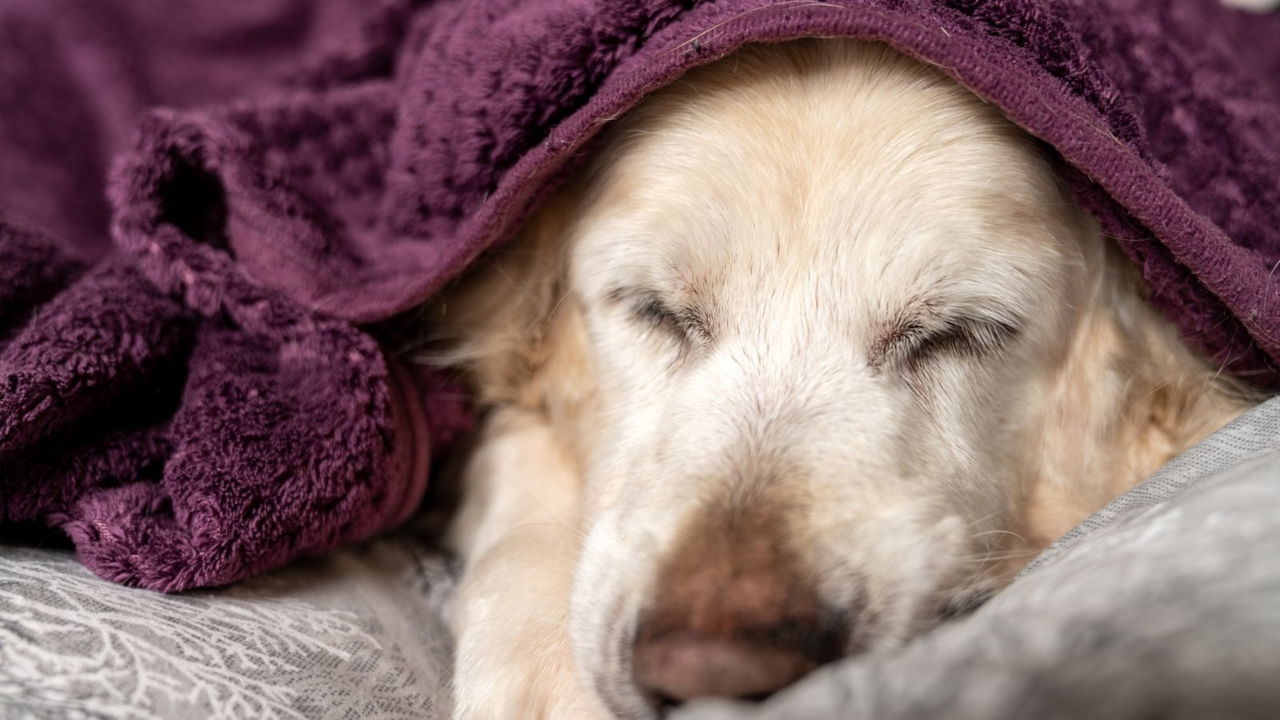
One of the quiet changes that comes with an older dog is how much they sleep. The daily zoomies settle into longer naps in the sun, earlier nights and a lie-in most mornings. For most senior dogs this is completely normal, and a sign they are doing exactly what an ageing body needs. It helps to know what is typical, though, so you can tell restful, healthy sleep from a change worth a closer look.
The quick answer
Most senior dogs sleep for around 16 to 18 hours a day once you add up their overnight sleep and daytime naps, and some sleep even more. That is noticeably more than the 12 to 14 hours a typical adult dog needs. A gradual increase in sleep as your dog ages is normal. A sudden change, restless or broken nights, or trouble settling are the things worth raising with your clinic.
How much sleep does a senior dog need?
Dogs sleep more than we do at every age, and they get most of it in naps rather than one long stretch. As a rough guide across a full day:
| Life stage | Typical sleep per day |
|---|---|
| Puppy | 18 to 20 hours |
| Adult dog | 12 to 14 hours |
| Senior dog | 16 to 18 hours or more |
Every dog is an individual, so treat these as a guide rather than a rule. A dog is generally considered a senior from around 8 for small breeds, 7 for medium breeds, 6 for large breeds and 5 for giant breeds, and you will often notice their sleep creeping up around this time. What matters most is your own dog's usual pattern, and whether it is changing gradually or suddenly.
Why senior dogs sleep more
More sleep in the senior years is rarely a worry on its own. It usually comes down to a mix of very normal changes in an older body.
Less energy to spare
An older metabolism runs a little slower, so everyday activity takes more out of them and recovery takes longer.
More effort to move
Stiffer joints and softer muscles make moving around harder work, so rest becomes the more appealing option.
Quieter senses
As hearing and eyesight fade, there is less going on to keep an older dog alert and awake through the day.
A busy brain resting
Sleep helps an ageing brain process the day and recharge, so older dogs naturally lean on it more.
When more sleep is normal, and when to check
The key is your dog's own baseline. A slow, gradual rise in sleep over months is expected. A sharp change over days or weeks, or sleep that seems disturbed, is worth a chat with your clinic.
Usually normal
- Longer, more frequent daytime naps
- Going to bed earlier and sleeping in later
- Choosing warm, soft, quiet spots to rest
- Slower to get up, then bright and happy once moving
Worth a vet check
- A sudden jump in how much they sleep
- Restless, broken nights or pacing after dark
- Very hard to wake, or seeming disoriented
- Sleeping through meals, or off their food
- Heavy or laboured breathing while resting
None of these mean something is certainly wrong, but they are your cue to get your dog looked over rather than putting the change down to age alone.
Helping your senior dog sleep well
Good sleep in the senior years is mostly about comfort, warmth and routine. A supportive bed keeps aching joints happy, a warm spot invites them to settle, and a calm, predictable day helps them wind down at night. A few things that make a real difference:
Yours Droolly Osteo Orthopaedic Memory Foam Dog Bed
Memory foam cradles older joints and takes the pressure off hips and elbows, which is why an orthopaedic bed is the single best upgrade for most senior dogs.
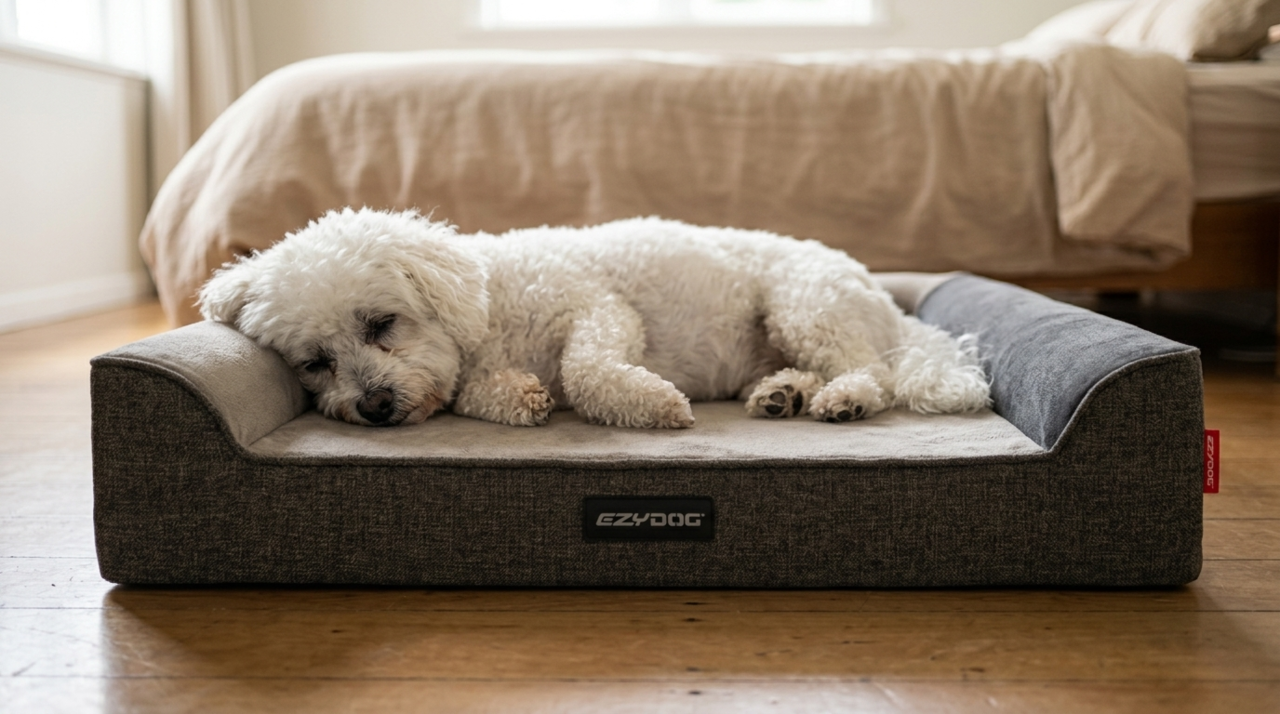
EzyDog Next-Gen Ortho Orthopaedic Lounger Dog Bed
A supportive lounger with a raised edge to rest their head on, ideal for dogs who like to stretch out and prop up while they sleep.
Coco & Cooper Supreme Serenity Orthopaedic Memory Foam Dog Bed
A plush, supportive own-brand option that pairs orthopaedic foam with a cosy, sink-in feel for longer, deeper rest.
SnuggleSafe Microwave Pet Heat Pad
Warmth is soothing for stiff older joints. This cordless pad heats in the microwave and stays warm for hours, perfect tucked under bedding on a cold night.
Brooklands Dog Calming Mattress
A soft, plush mattress designed to help anxious or restless dogs feel secure and settle more easily.
Adaptil Calm Home Pheromone Diffuser
A plug-in that releases calming dog-appeasing pheromones, which can help a restless senior dog relax and sleep through the night.
Nutreats Vitals Hip & Joint Dog Supplement
Comfortable joints make for better sleep. A daily joint supplement can help keep an older dog moving and resting more easily.
PAW Osteocare Joint Health Dog Chews
A tasty daily chew to support joint health, so aches are less likely to disturb a good night's rest.
Night waking and restlessness
Some older dogs sleep plenty during the day but grow unsettled after dark, pacing, whining or seeming lost in familiar rooms. This can be linked to age-related changes in the brain, sometimes called canine cognitive dysfunction, and it is worth mentioning to your clinic. A steady bedtime routine, a night light, easy access to a toilet spot and a warm, supportive bed all help. You can read more in our guide to cognitive decline in senior dogs.
Frequently asked questions
Is it normal for my senior dog to sleep all day?
Long stretches of sleep and frequent daytime naps are normal for older dogs, who often sleep 16 to 18 hours or more across a full day. What matters is that the change is gradual and your dog is still bright, eating well and happy to get up and about when something interests them.
How many hours should a senior dog sleep?
Around 16 to 18 hours a day is typical once you include overnight sleep and naps, compared with 12 to 14 hours for an adult dog. Some seniors sleep a little more, which is fine as long as their overall pattern is stable.
When should I worry about my senior dog sleeping too much?
A sudden increase in sleep, difficulty waking, disorientation, sleeping through meals, or restless and broken nights are all worth raising with your clinic. These can point to something beyond normal ageing.
Why is my senior dog restless and awake at night?
Night-time restlessness in older dogs can be linked to discomfort, needing a toilet break, or age-related changes in the brain. A warm, supportive bed, a calm bedtime routine and easy toilet access all help, and it is worth a clinic check if it continues.
Does a better bed really help an older dog sleep?
Yes. An orthopaedic or memory foam bed takes pressure off ageing joints, and a warm spot away from draughts makes settling easier. For many senior dogs it is the simplest way to improve their rest.
Help your older dog rest easy
A supportive bed and a warm, calm spot can make a real difference to how well your senior dog sleeps. Browse our range of senior comfort and care to find the right fit for your old mate.
SHOP SENIOR COMFORTRelated Reading
The Quiet Joy of a Senior Dog Asleep
When Your Pet's Sleep Changes: Signs It Could Signal a Health Issue

How to Create a Calm Sleeping Environment for Your Pet
Best Orthopaedic Dog Beds for Senior Dogs NZ
Cognitive Decline in Senior Dogs: Signs, Support and Tips
How Much Do Senior Cats Sleep? What's Normal vs Not