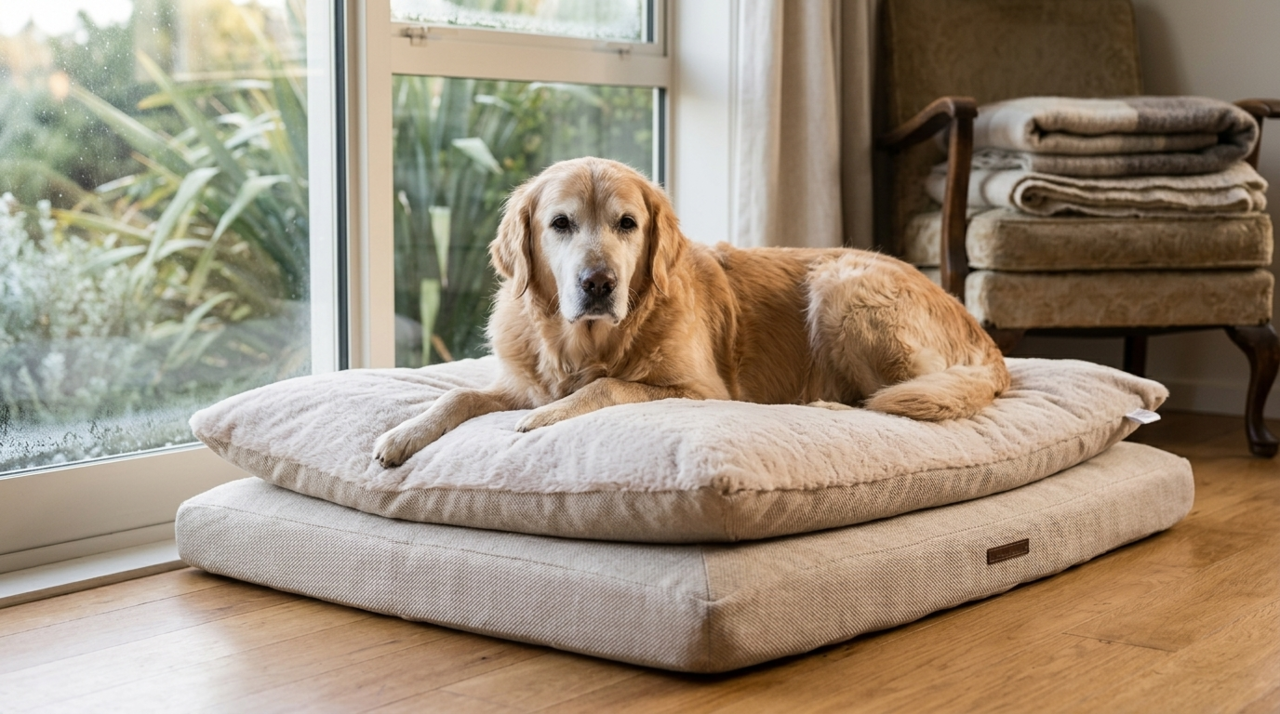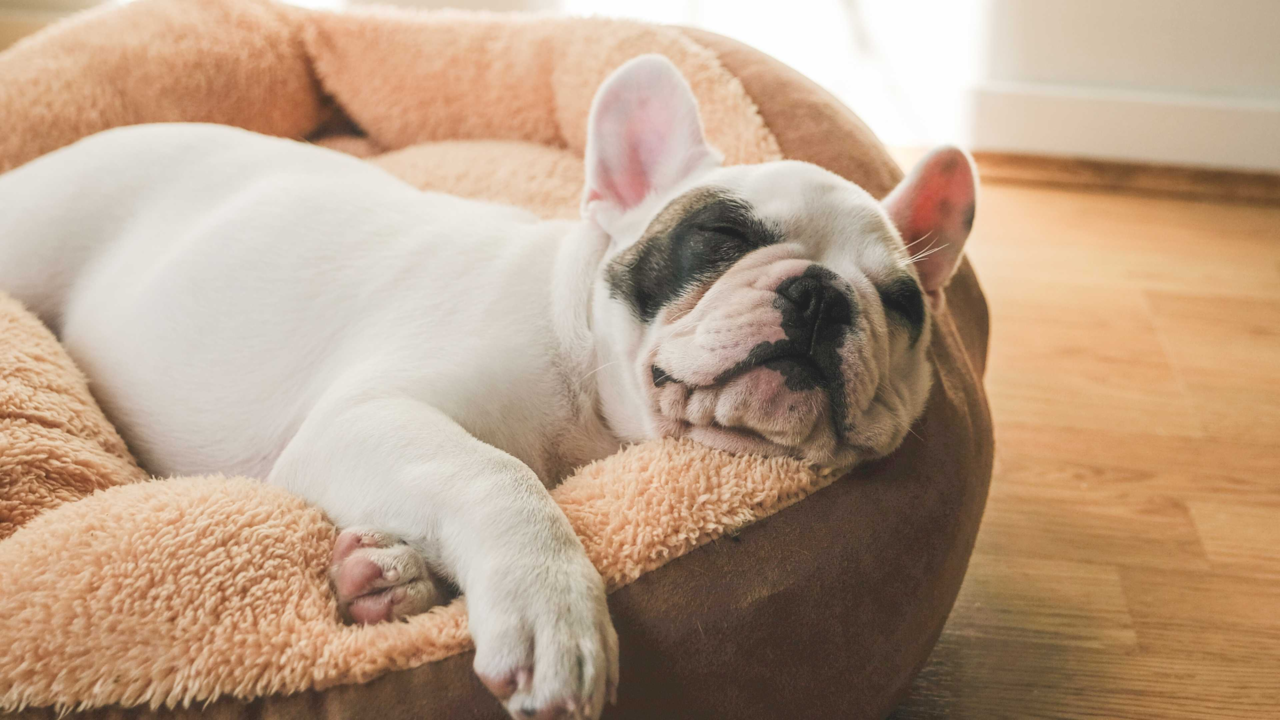
If there's a sound that defines living with an older dog, it's the deep, slow sigh that says everything is exactly as it should be. The half-curled paw. The eyebrow twitch in the middle of a dream. The way they choose the warm patch of carpet you just stepped off and settle in without a word.
Senior dogs sleep more, and the world around them slows down to match. This is a quiet appreciation of that, and a small guide to making the spots they nap in as good as they deserve.
Quick answer
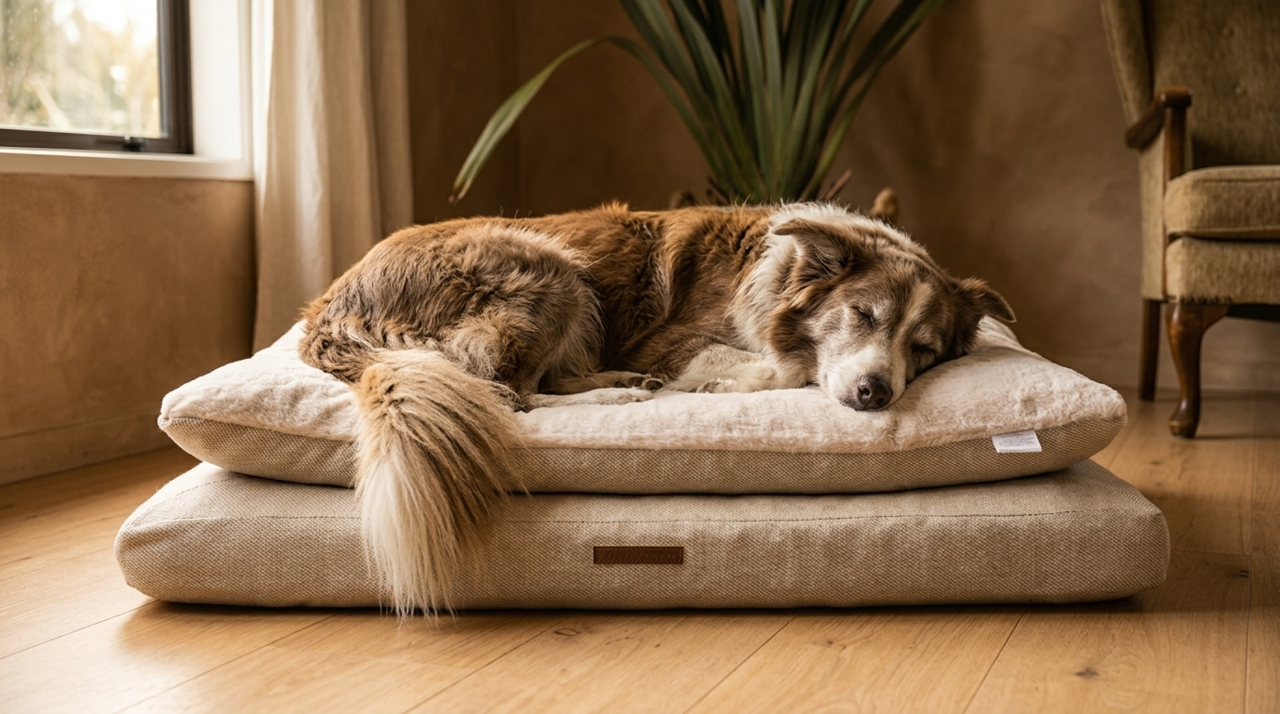
A senior dog sleeping is one of the most peaceful sights in the home. Older dogs nap around 12 to 16 hours a day, and the cues you'll see in their sleep (the paw twitch, the soft sigh, the chosen warm spot) are signs of a content, settled dog. Set them up with a supportive bed, a warm layer, and a quiet corner near you, and the joy more or less takes care of itself.
The little moments worth noticing
Sleep is where older dogs do their best living. A long doze in the sun, a chin resting on your foot while you work, the gentle puff of breath against your ankle when they finally settle. None of it is dramatic. All of it is the point.
The deep sigh
That long exhale as they curl into a bed is a settling signal. Dogs sigh as they let the tension out of their day. It's the canine version of "ah, that's better".
The paw twitch
Twitching paws, flickering eyelids, the occasional muffled little "woof". Your senior dog is dreaming, and most dreams seem to involve running. Let them be. They're chasing something happy.
The chosen spot
Older dogs become very particular about where they sleep. The warmth of the morning sun on the kitchen floor. The end of the couch with the throw on it. The spot in the doorway where they can see both you and the back door.
The one eye open
Senior dogs often doze with one eye partly open, especially when they want to be near you but not miss what you're doing. It's not poor sleep. It's love expressed as light surveillance.
The chin on the paw
The chin-on-paw doze is one of the universal "I'm here but I'm content" positions. It usually means they're comfortable, warm, and not quite ready to fully commit to a deep nap.
The follow-you-around nap
Some senior dogs follow you from room to room just to sleep wherever you've landed. It looks like devotion. It is devotion. Keep a small soft mat or blanket in each room and the loop gets easier on their joints.
How much do senior dogs sleep?
Plenty. Most older dogs sleep around 12 to 16 hours across a 24 hour period, often in short stretches rather than one long block. They wake for meals, walks, the rustle of a treat packet, and to follow you to a different room. Then they're back to it.
What's worth noticing is the rhythm rather than the total. A senior dog who settles easily, sleeps deeply for stretches, and stretches out comfortably when they wake is doing what older dogs are meant to do. A dog who paces, struggles to find a spot, or whines when they lie down is telling you something else, and that's a different kind of conversation worth having with someone who knows them.
The bed makes everything better
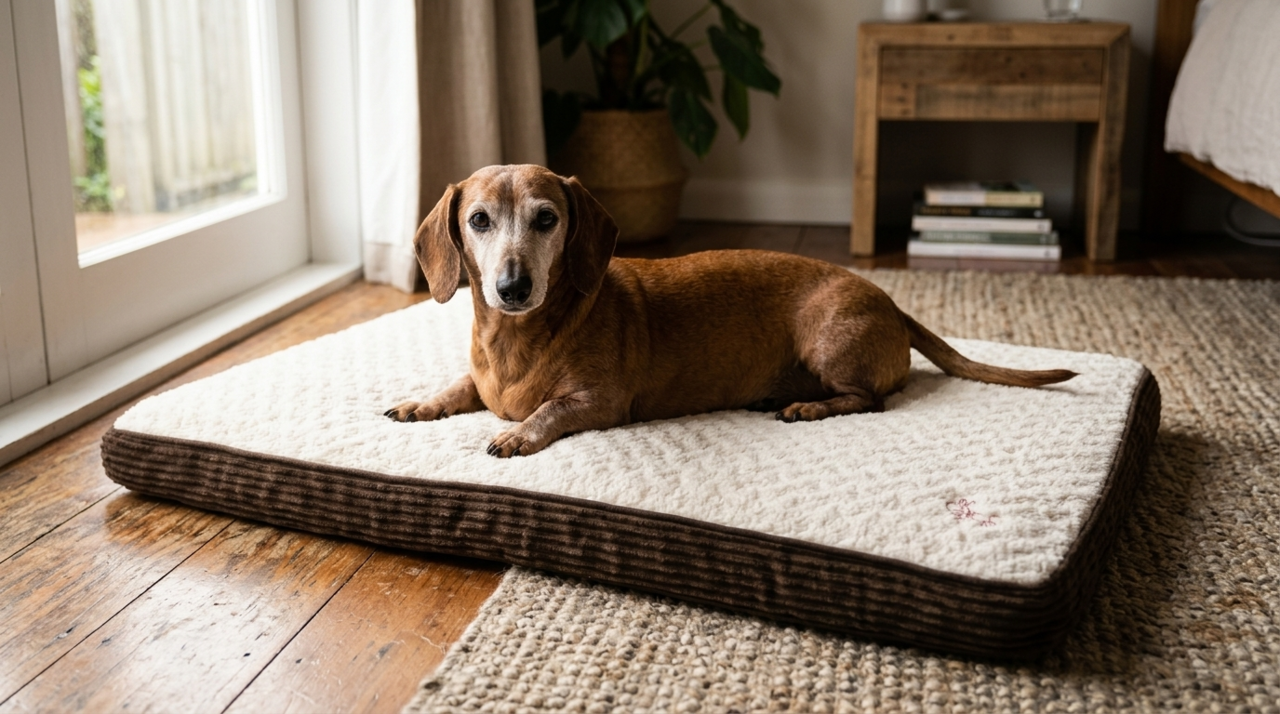
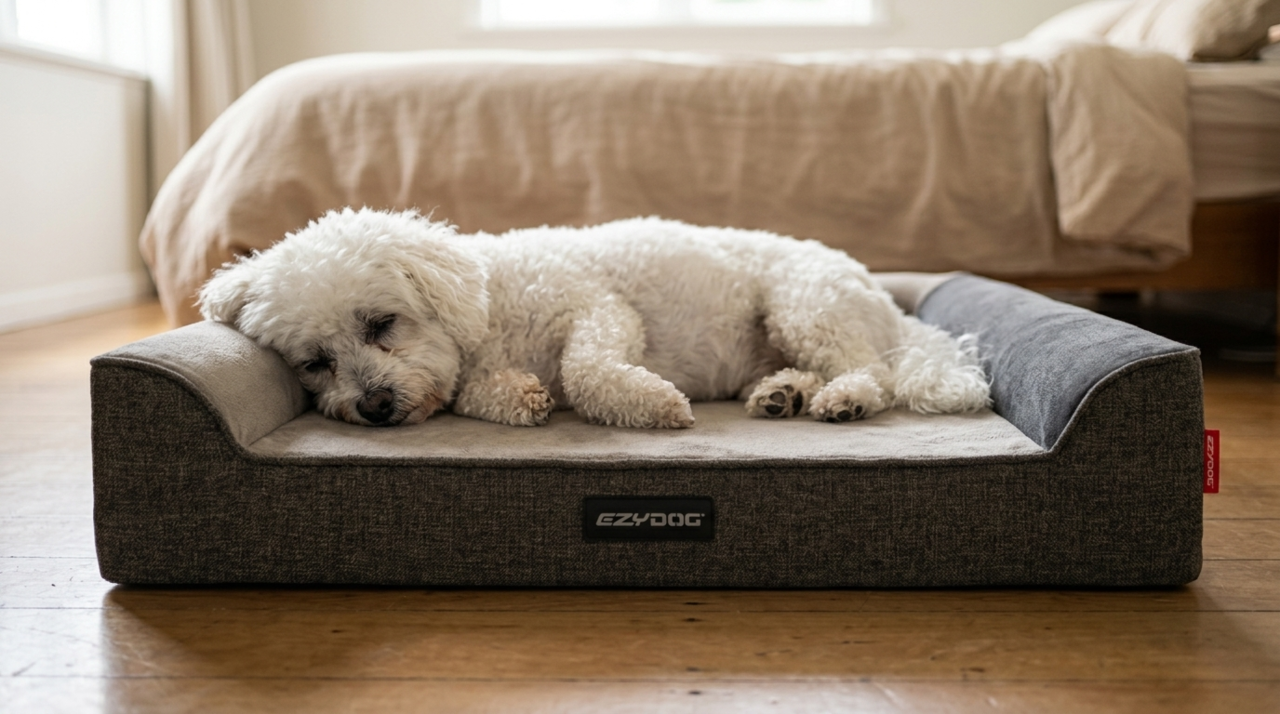
An older dog's bed is the single most-used object in your home. They spend the bulk of their day on it. A bed that supports stiff joints, holds warmth, and feels like a hug is the difference between getting up easily and not bothering. Memory foam orthopaedic bases are the gold standard for senior dogs because the foam moulds to their shape and takes pressure off elbows and hips.
Warmth is half the story
Older dogs feel the cold more than they used to. Less muscle, thinner coats, slower circulation. A soft pullover or a winter coat for evening toilet trips. A self-heating mat or a calming blanket on the bed. A folded throw on the couch. Small things, big difference.
The small things that help them settle
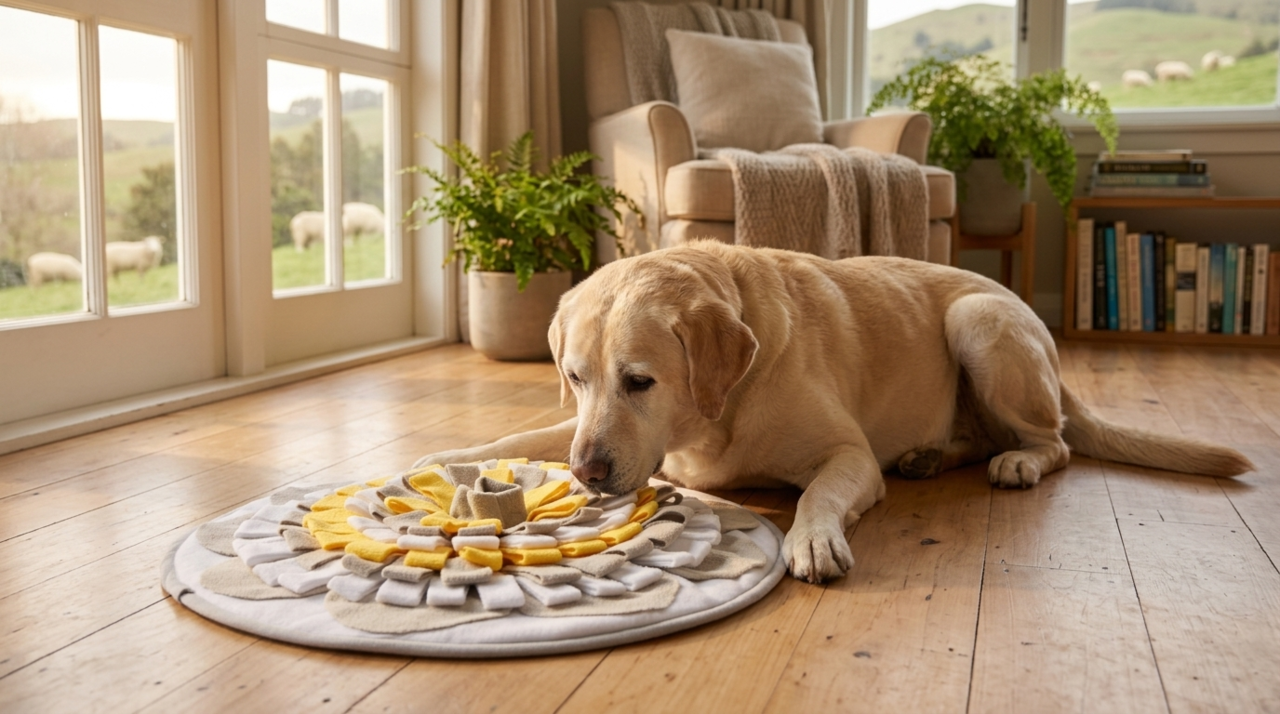
A lick mat with a smear of something gentle on it is the best wind-down ritual most senior dogs have. Slow licking lowers their heart rate. They fall asleep mid-mat, which is a small daily miracle. A ramp at the couch or bed takes the strain out of getting on and off their favourite human-adjacent spots.
Supporting the way they sleep from the inside
A senior dog who's comfortable in their body sleeps better. Omega-3s help skin, coat and joint comfort. A targeted senior supplement covers the gentler ageing needs without medicating an otherwise healthy dog. Nothing dramatic, just steady support that adds up over months.
Why the quiet matters
A young dog's life is loud. Walks, fetch, zoomies, the squeaker hunt, the bin raid. An older dog's life is mostly quiet, and the quiet is not loss. It's the version of the day that suits them now.
The hours your senior dog spends asleep at your feet are the hours they've earned. They're the soundtrack to your work-from-home day, the bookend to your evening on the couch, the gentle inhale-exhale you hear if you wake at 3am and don't move because you don't want to disturb them. That is the joy. It looks like very little, and it's a lot.
Frequently asked questions
Is it normal for my senior dog to sleep this much?
Yes. Most older dogs sleep 12 to 16 hours across the day, often in shorter stretches. As long as they wake easily, eat well, enjoy their walks, and seem comfortable settling, the extra sleep is part of how their body looks after itself.
Why does my older dog twitch and "run" in their sleep?
They're dreaming. Dogs dream during REM sleep just like we do, and dream content seems to mirror their day. Most twitching is happy and harmless. If it shifts to anything that looks more like a seizure (rigid, unresponsive, takes time to come around), it's worth checking in with someone who knows them.
Should I let my senior dog sleep on the bed with me?
If they're comfortable getting up there, you're both happy, and it's not making anyone's joints worse, there's no reason not to. A ramp or a few stacked steps protects their hips from jumping down. Some senior dogs settle better in their own supportive bed nearby, so let them tell you.
What's the best kind of bed for an older dog?
Memory foam or orthopaedic base, with a low front edge they can step over easily. Look for a removable washable cover, a non-slip base, and enough length that they can fully stretch out. Two beds in the home (one in their favourite quiet spot, one near the action) usually works better than one perfect bed in the wrong room.
Do senior dogs sleep more in winter?
Often, yes. Cooler weather and shorter daylight pull most dogs into longer naps. Add a warm layer or a heated mat and they'll happily sleep through the chilly bits.
My older dog circles a lot before lying down. Is something wrong?
Circling before settling is a normal canine ritual that comes from generations of nest-making. If the circling has suddenly become more frantic, or they seem unable to find a comfortable position once down, that's worth a closer look. A more supportive bed often helps.
Make the nap spots count
Orthopaedic beds, warm layers, ramps and gentle wind-down kit for the dog who's earned a long sleep.
Shop dog beds