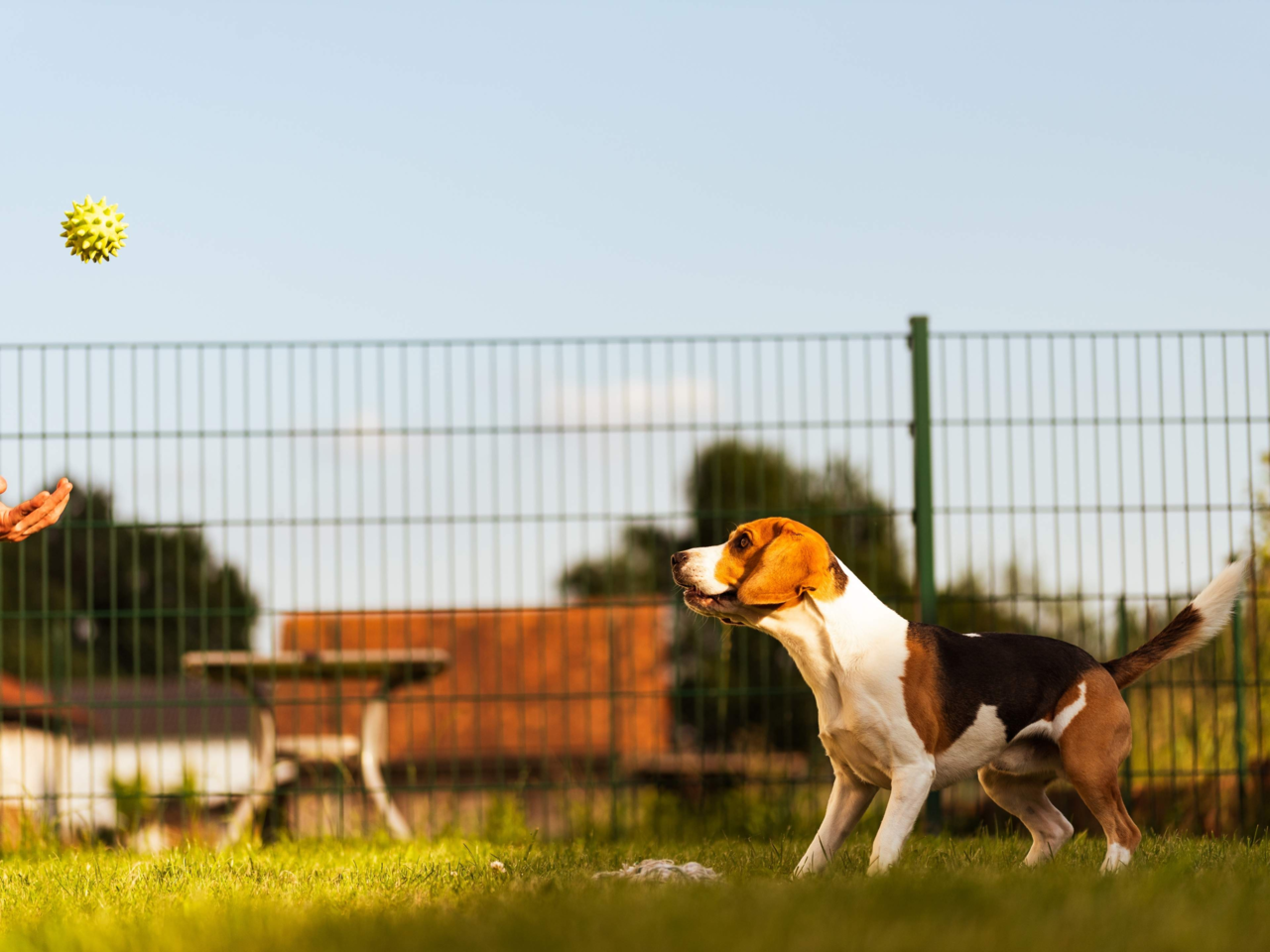
Backyard Games For Dogs
A backyard game can be a gentle search, a shared tug or a toy rolled across the grass. It does not need to be a race. Choosing the right game means noticing what your dog enjoys, checking the space and being willing to stop when the weather or their interest changes.
These backyard games for dogs keep the focus on easy setups and shared play. Use your own secure space, leave room to move and make a quieter indoor option part of the plan.
Quick answer
Start with a secure, clear yard during a cooler part of the day. Offer a toy search, gentle retrieve or ground-level tug suited to your dog. Provide shade, fresh water and breaks, supervise throughout and finish before play becomes uncomfortable. Move indoors when the yard is too warm.
Set up a play space before choosing a game
Check gates and fences, remove garden tools and clear anything your dog could run into. Look for slippery patches, sharp debris and exposed ground that has heated in the sun. Keep toys away from garden chemicals and check that nobody is working nearby.
Choose cooler conditions rather than relying on a clock alone. A shaded patch can still be hot or poorly ventilated. If you cannot offer a comfortable space and an easy way to stop, choose an indoor game instead. Our hot-ground guide explains why play surfaces matter.
Roll and retrieve without the big chase
Roll a suitable fetch toy along clear, level ground and let your dog decide whether to follow. Keep it within the space you have checked, rather than throwing over obstacles or towards a fence. Praise a return without demanding another chase.
A purpose-made fetch toy is preferable to a found stick. Select a size your dog can carry without fitting the whole toy into their mouth. The M-PETS Play Squeaky Stick is a fetch option to assess against your dog's size and play style. Check its condition before and after use, especially if your dog focuses on the squeaker.
Make tug a shared, ground-level game
Use a toy intended for tugging, leave space between your hand and your dog's mouth and keep their feet on the ground. Let the game pause rather than lifting, jerking or swinging your dog. If hands become the target or your dog cannot settle into the game, put the toy away calmly.
The M-PETS Coto Natural Cotton Rope Tug offers a different play format from fetch. Rope still needs supervision: remove it if strands loosen or pieces begin to come away. It is not a toy to leave in the yard for unattended chewing.
Try a toy search or a simple puzzle
Let your dog see you place a familiar toy behind an easy-to-reach object, then invite them to find it. Start with an obvious spot. Avoid hiding places among tools, dense plants or anything your dog would need to climb or push over. Finding the toy can be the whole game.
For a change of pace, set an interactive puzzle on a stable surface in a cool spot. Introduce it according to its instructions and help if your dog becomes frustrated. The M-PETS Brainy Games Darwin is an option for supervised puzzle play. If using food, choose something already suitable for your dog and account for it within their usual feeding.
Keep obstacle and water games optional
A clear route around widely spaced, stable objects offers an alternative to jumping. Walk beside your dog and let them go around at their own pace. Skip raised obstacles, unstable chairs and anything that could fall, trap a paw or force a tight turn.
If your dog enjoys shallow water, supervise in a suitable container they can enter and leave freely. Do not force participation, spray their face or turn a hose into a chasing game. Water play does not make strenuous exercise appropriate in heat. Read our dog water-safety guide before planning a splash.
End with water, shade and a toy check
Keep fresh drinking water separate from any play water. A portable bowl such as the Kurgo Collaps-a-Bowl can be useful when your usual bowl is not close by. Place it somewhere stable, keep it clean and refresh the water as needed.
Let your dog walk away from play, rest in a cooler space and leave the toys alone. Check each toy for splits, loose parts or fraying before putting it away. If your dog shows heavy panting with weakness or breathing difficulty, stop the game, move them somewhere cooler and contact your vet immediately. A game or accessory is not a way to manage heat distress.
Frequently asked questions
What backyard game needs very little equipment?
A search for a familiar toy is a simple starting point. Make the hiding place easy to reach and keep the search within a clear, secure area. Avoid asking your dog to dig through garden materials or climb.
Can I play fetch in a small yard?
Only if there is enough clear space for your dog to move and stop comfortably. Try rolling a toy instead of throwing it. If the space is cramped, choose a stationary puzzle or toy search.
Is tug suitable for every dog?
No single game suits every dog. Choose an appropriate tug toy, keep the movement gentle and stop if your dog becomes uncomfortable or cannot engage calmly. Do not use tug to test strength.
What if my dog does not want to play?
Let them opt out. Offer a quiet resting place instead of increasing the excitement or insisting on another turn. Their preferences and comfort matter more than finishing a planned game.
Can I leave toys outside between games?
Check each toy's care and storage instructions. Collect toys after play so you can inspect, clean and store them as directed. Do not assume an outdoor toy can stay in sun or rain indefinitely.
What should I do when the backyard is too hot?
Move to a cooler indoor space and choose gentle play or rest. Shade, a water game or a cooling accessory does not make a hot yard suitable for active exercise.
Related reading
Choose toys for the way your dog plays
Match the toy to your dog, check its instructions and keep shared play comfortable.
Shop dog interactive toys