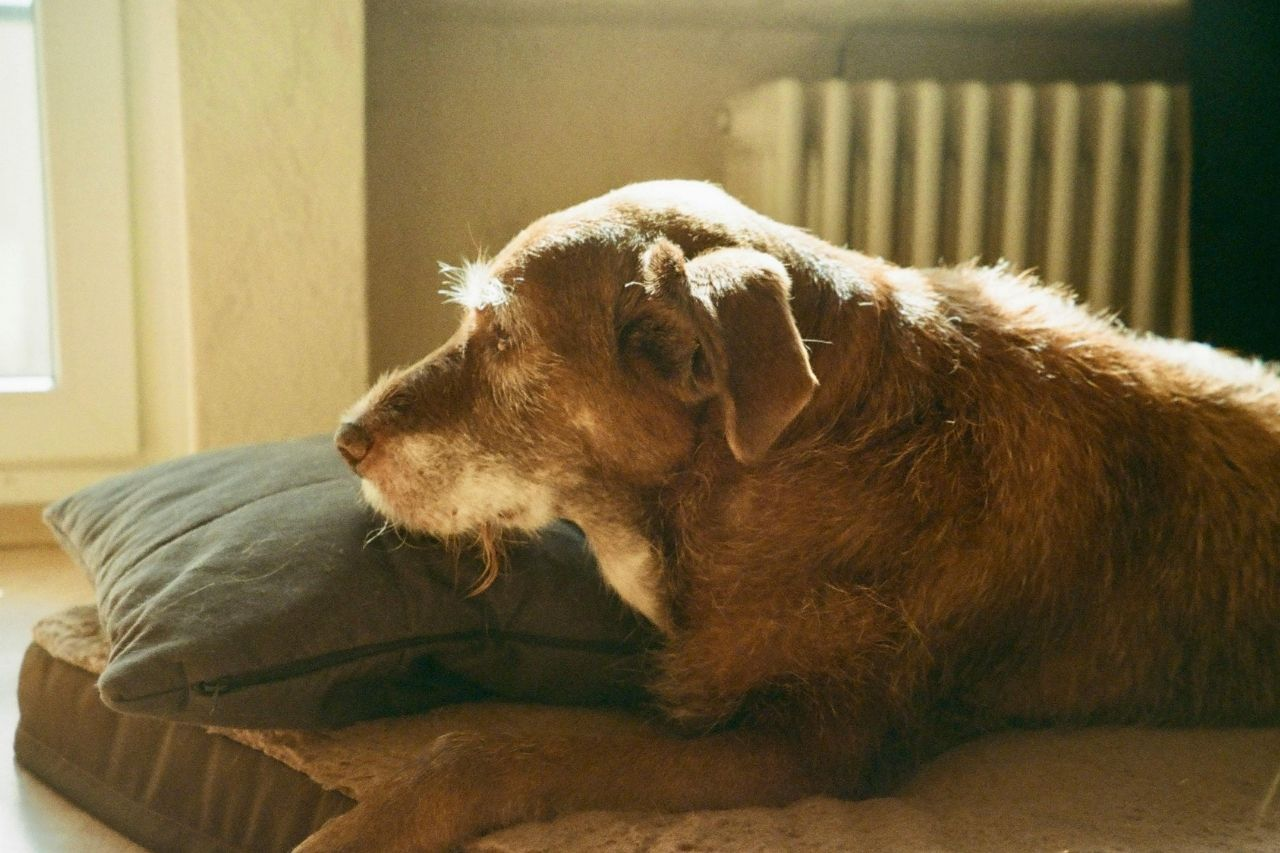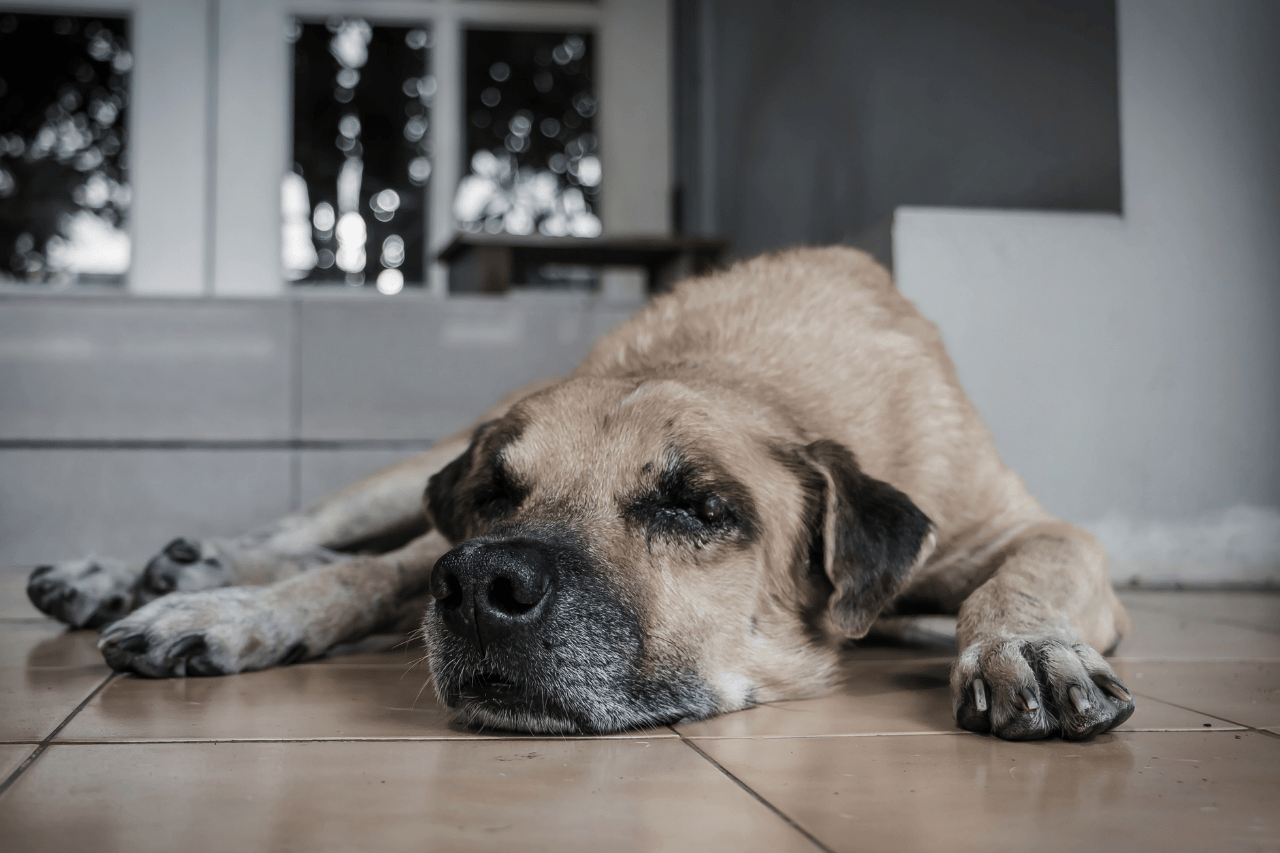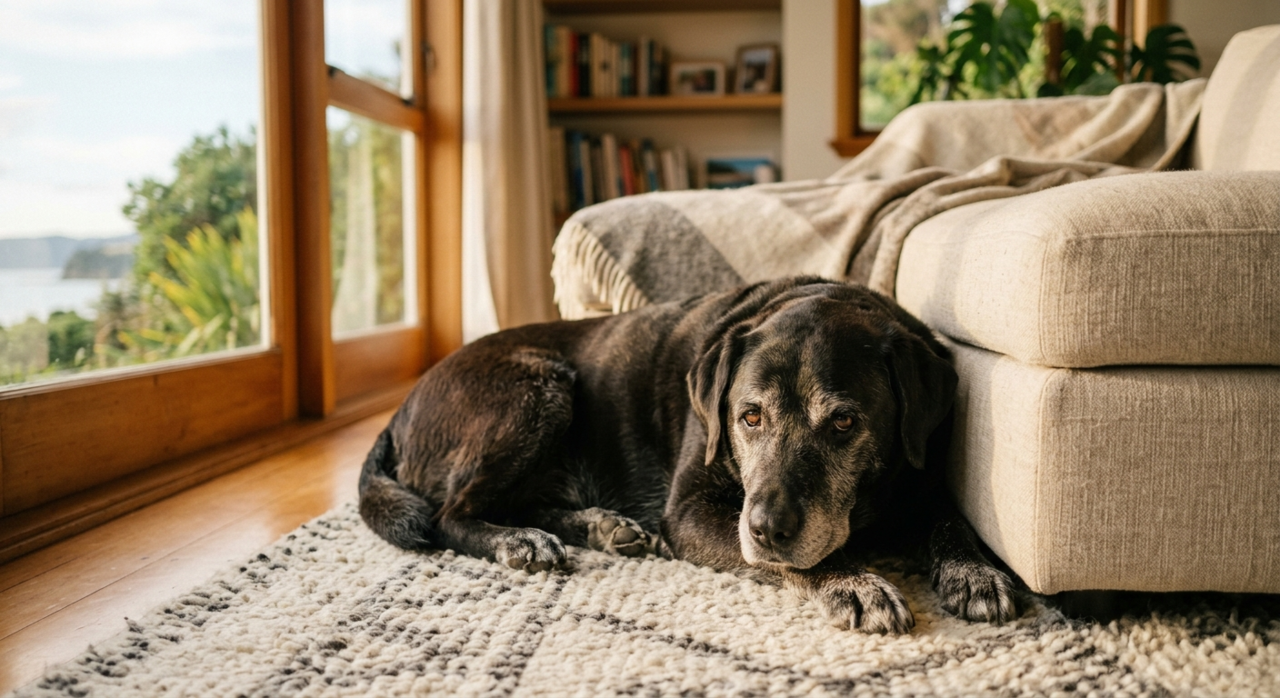
Older dogs change. The bouncy 4-year-old who always greeted you at the door slowly becomes the dignified 11-year-old who lifts their head and thumps their tail instead. Most of those changes are gentle, gradual, and just part of getting older. Some though are sudden, different, or come with other shifts you can't quite explain. Those are the ones worth a closer look.
Here's a friendly NZ-focused guide to the kinds of behaviour changes that are usually pointing at something else, what they might mean, and how to tell normal ageing from "this is new and I'm not sure". We're not a clinic, so anything sudden, getting worse, or coming alongside changes in eating, drinking, toileting or movement is worth a chat with your clinic.
Quick answer
Slow, gradual mellowing as a dog ages is normal. Sudden behaviour change isn't. The most common reasons older dogs shift behaviour quickly are pain (especially joint), sensory loss (vision and hearing fading), cognitive change, illness, or anxiety. The clearer signal isn't usually one new behaviour on its own, it's combinations and timing: a sudden change with no obvious environmental cause, or a single behaviour shift alongside changes in eating, drinking, toileting or how they move. If something else has shifted, it's worth getting checked.
Behaviour Changes Worth Paying Attention To
Suddenly snappy or grumpy
A normally tolerant dog who growls, snaps, or pulls away when touched in a specific spot is usually telling you something hurts there. It's not a personality change, it's a pain signal.
What it might mean: joint pain, dental pain, ear infection, or a sore spot on the body.
Pacing or restlessness, especially at night
An older dog who can't seem to settle, paces the same loop in the evening, or wakes during the night and seems lost is showing one of the more recognised cognitive signs.
What it might mean: cognitive change, joint discomfort, anxiety, or disrupted day-night rhythm. Our blog Night-Time Pacing and Restlessness goes deeper.
Getting "lost" in familiar rooms
Standing facing a wall, going to the wrong door, getting stuck behind furniture they could navigate around easily yesterday. This one is usually cognitive.
What it might mean: cognitive dysfunction. Our Getting Lost in the House guide covers it.
Sudden change in toilet habits
A house-trained dog having accidents indoors, peeing or pooing more often, or struggling to get into position to go is rarely a training problem in an older dog.
What it might mean: medical (urinary tract, kidney, diabetes), joint pain making the toilet position hard, or cognitive change.
Hiding or unusual clinginess
A dog who suddenly wants to be alone in a quiet corner, or the opposite, suddenly won't leave your side, is reacting to something. Either direction is worth noticing.
What it might mean: pain, illness, anxiety, sensory loss making them feel less safe in open spaces, or a household change.
Loss of interest in things they loved
Not coming for a walk, leaving food half-finished, ignoring a favourite toy, walking past their squeaky tennis ball without a glance. A dog who's stopped caring about things they used to enjoy usually has a reason.
What it might mean: pain (most common), illness, depression following a household change (loss of a companion pet, family member moving out).
Changed reaction to noise or touch
Suddenly startled by familiar sounds, not responding to their name, or jumping when you touch them where you used to scratch. Often the dog isn't behaving differently on purpose, the input has changed.
What it might mean: hearing loss, vision loss, ear or skin pain. The reaction is to the new information, not to you.
Drinking and peeing much more (or less)
Big shifts in either direction shouldn't be ignored in a senior dog. They're often the earliest sign of something medical worth understanding.
What it might mean: kidney issues, diabetes, hormone changes, medication side effects.
Normal Ageing vs Worth Checking
Probably normal ageing
- Gradually less interested in long, fast walks (over months)
- Sleeping a bit more, slower to get up after a long nap
- Choosing a softer or warmer spot than they used to
- Taking a moment to recognise visitors before greeting them
- Less keen on rough play but still happy with gentle interaction
- Eats normally, drinks normally, toilet habits unchanged
- Same dog at heart, just a more dignified version
Worth a closer look
- Change happened suddenly (within days, not months)
- New behaviour came with no obvious environmental change
- Eating, drinking or toileting habits have shifted at the same time
- They flinch, growl or snap when touched in a specific spot
- Sudden anxiety, fear or aggression that's new
- Loss of interest in food, walks or play that used to make them happy
- Pacing, restlessness or getting "lost" in the house
- Visible weight loss, low energy or hiding for long stretches
The single most useful question to ask is: did something change with this? A behaviour shift that comes alongside a change in eating, drinking, toileting or how they move usually has a reason worth understanding.
The Five Most Common Reasons Behind Sudden Behaviour Changes
1. Pain (especially joint)
The single most common quiet reason. Older dogs are stoic about pain, so it shows up as behaviour change rather than obvious limping. Snappiness, hiding, slowing down, reluctance to jump or climb stairs.
2. Sensory loss
Hearing and vision both decline gradually in older dogs. A dog who suddenly seems "ignorant" or "easily startled" often isn't either, they just can't see or hear as well as they used to.
3. Cognitive change
Older dogs can develop cognitive dysfunction in much the same way humans can. Confusion, pacing, day-night flips, getting lost in familiar rooms, vocalising for no obvious reason.
4. Underlying medical condition
Kidney issues, thyroid changes, diabetes and other conditions often show up first as a behaviour change rather than obvious physical signs. Drinking and toilet habits shifting are common early clues.
5. Anxiety or environmental change
Older dogs handle disruption less well than they used to. A house move, a new pet, a family member moving out, or even just rearranged furniture can trigger anxiety that wasn't there before.
Often it's more than one
Sudden behaviour changes often have stacking causes, like joint pain plus winter weather plus the grandchildren visiting. Working through them with your clinic helps untangle what's really going on.
What to Note Before You Get It Checked
The most useful thing you can give your clinic isn't your guess at what's wrong, it's a clear picture of what's actually changed. A few minutes thinking through this list before you go saves a lot of "I think it started about…" later.
When it started
Approximate date or week. Sudden vs gradual is a real clue.
What's changed alongside it
Eating, drinking, toileting, energy, weight, sleep, willingness to be touched.
Anything that triggered it
House move, visitors, new pet, change of food, new medication, recent injury or near-miss.
How they're moving
Stiff getting up? Avoiding stairs? Reluctant to jump in the car? One leg favoured over another?
What still works
The things they're still happy with give your clinic useful contrast. "Still loves food, still happy on short walks, but won't go up the stairs any more" is much more useful than just "behaving weird".
A short video if you can
Behaviour can be hard to describe and almost always disappears in the consult room. A 30-second video of the actual behaviour is gold.
Helpful Supports You Can Add at Home
None of these replace getting it checked, but they're the kinds of supports that often help an older dog feel more settled while you work out what's going on.
Joint supplements work best when given consistently every day, with a 4 to 6 week window before you'd judge whether they're helping. Many of these are great with Autodeliver for that reason. Our full guide is at Joint Health for Senior Dogs.
Frequently Asked Questions
How do I tell normal ageing from a real behaviour change?
Normal ageing is gradual and consistent: a slow drift over months. A real behaviour change is usually faster, came alongside something else (a change in eating, drinking, toileting, or how they move), and feels different from "just getting older". The "did something else change?" question is the most useful filter.
Why has my older dog suddenly become snappy?
The most common reason is pain. Dogs who are normally tolerant but flinch, growl or snap when touched in a specific area are usually telling you that area hurts. Joint pain, dental pain and ear infections are the common culprits. Get it checked rather than telling them off, the snappiness usually settles once the pain is sorted.
Could my old dog have dementia?
Cognitive decline is real in older dogs and can show up as confusion, pacing, day-night flips, getting lost in familiar rooms, or vocalising at odd times. Our blogs Cognitive Decline in Senior Dogs and Dog Dementia Explained cover it in plain language.
My older dog doesn't seem to recognise me sometimes. Should I worry?
If it's brief and they snap back into recognition, it might just be sleepy confusion. If it's recurring, lasts longer than a few seconds, or comes with other signs (pacing, getting lost, day-night flips), it's worth getting checked. Hearing or vision loss can also look like "not recognising you" when they actually just can't see or hear you yet.
Is sudden anxiety in an older dog a real thing?
Yes. Older dogs can develop new anxiety as their senses change, their world shrinks, or they start feeling less secure in busy spaces. It can also be triggered by household changes, even small ones. A calm routine, predictable feed times, and a quiet retreat space all help while you work out what's going on.
Should I just chalk it up to old age?
The advice "they're just getting old" is one of the easiest things to say and one of the hardest things to be sure of. A lot of what gets dismissed as "old age" is actually treatable, and the dog feels better once it's addressed. If you're noticing changes that feel out of pattern, raising them with your clinic is rarely wasted.
What's the most useful thing I can do before a clinic visit?
Make a short list of what's changed, when, and what came alongside it. A 30-second video of the actual behaviour, if you can get one, is gold. The behaviour almost always vanishes in the consult room.
Can a behaviour change just be from a household change?
Yes, and older dogs are more sensitive to disruption than they used to be. New baby, new pet, family member moving out, a renovation, a holiday with a different routine. If the timing lines up with a known change, give the routine time to bed back in. If you're past 2-3 weeks and they're still off, it's worth checking.
Senior Dog Comfort and Support Essentials
Find joint supplements, senior dog food, orthopaedic beds and supportive supplements in one place. Save with Autodeliver on supplements and food, and enjoy everyday member pricing as part of Pet Perks.
SHOP SENIOR DOG FOOD