Indoor life can be safe and comfortable, but cats still need chances to stalk, chase, climb, scratch, investigate and solve small problems. Changes such as restless meowing or overgrooming can have several causes, so treat them as clues rather than proof of boredom. A simple enrichment routine gives your cat more choice while helping you notice what they genuinely enjoy.
Quick answer
Your cat may benefit from more mental stimulation if they repeatedly seek attention, wake you for activity, lose interest in their usual toys or redirect energy into scratching and chasing. Those behaviours can also reflect stress or health issues. Start with short, varied play and contact your vet if the change is sudden, persistent or paired with physical signs.
Possible signs your cat needs more to do
Repeated attention-seeking
Persistent meowing, pawing or interrupting may be your cat's way of asking for interaction, especially at predictable times of day.
Restless night activity
Zooming around at night can be normal, but a play routine before your bedtime may help channel some of that natural hunting energy.
Toy fatigue
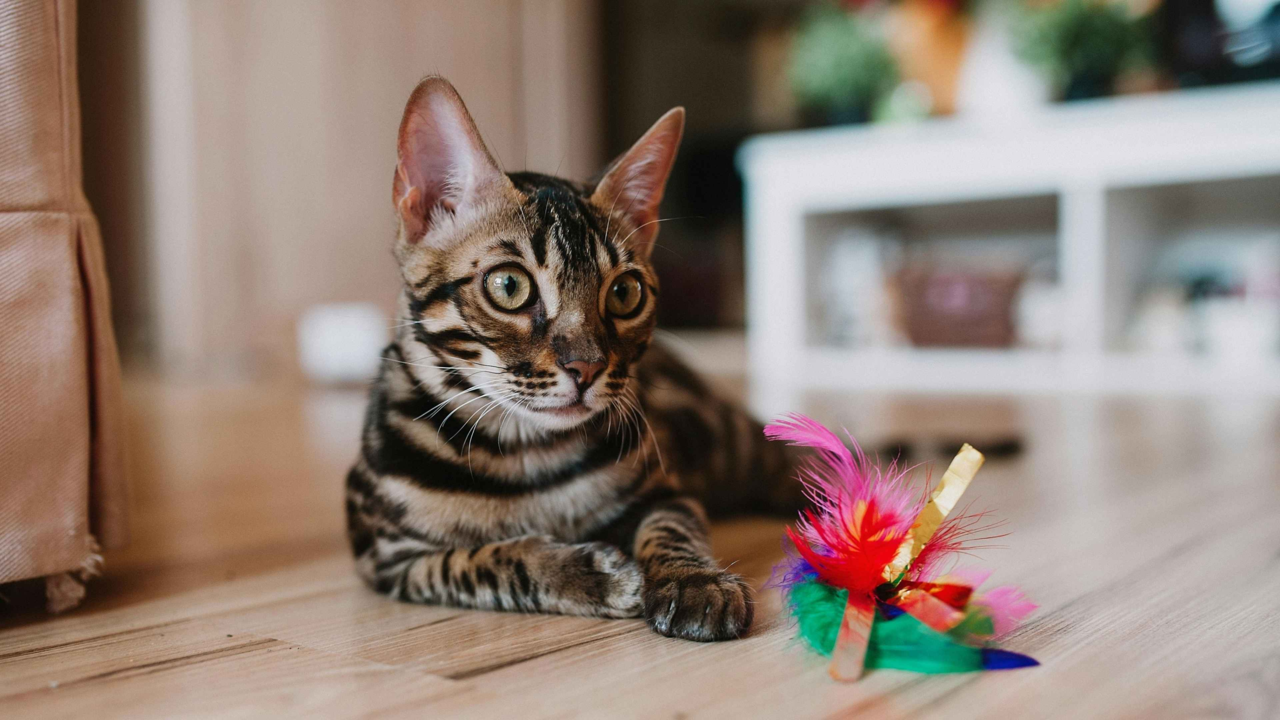
If every toy is always available, it may lose novelty. Rotating a small selection can make familiar items interesting again.
Scratching new places
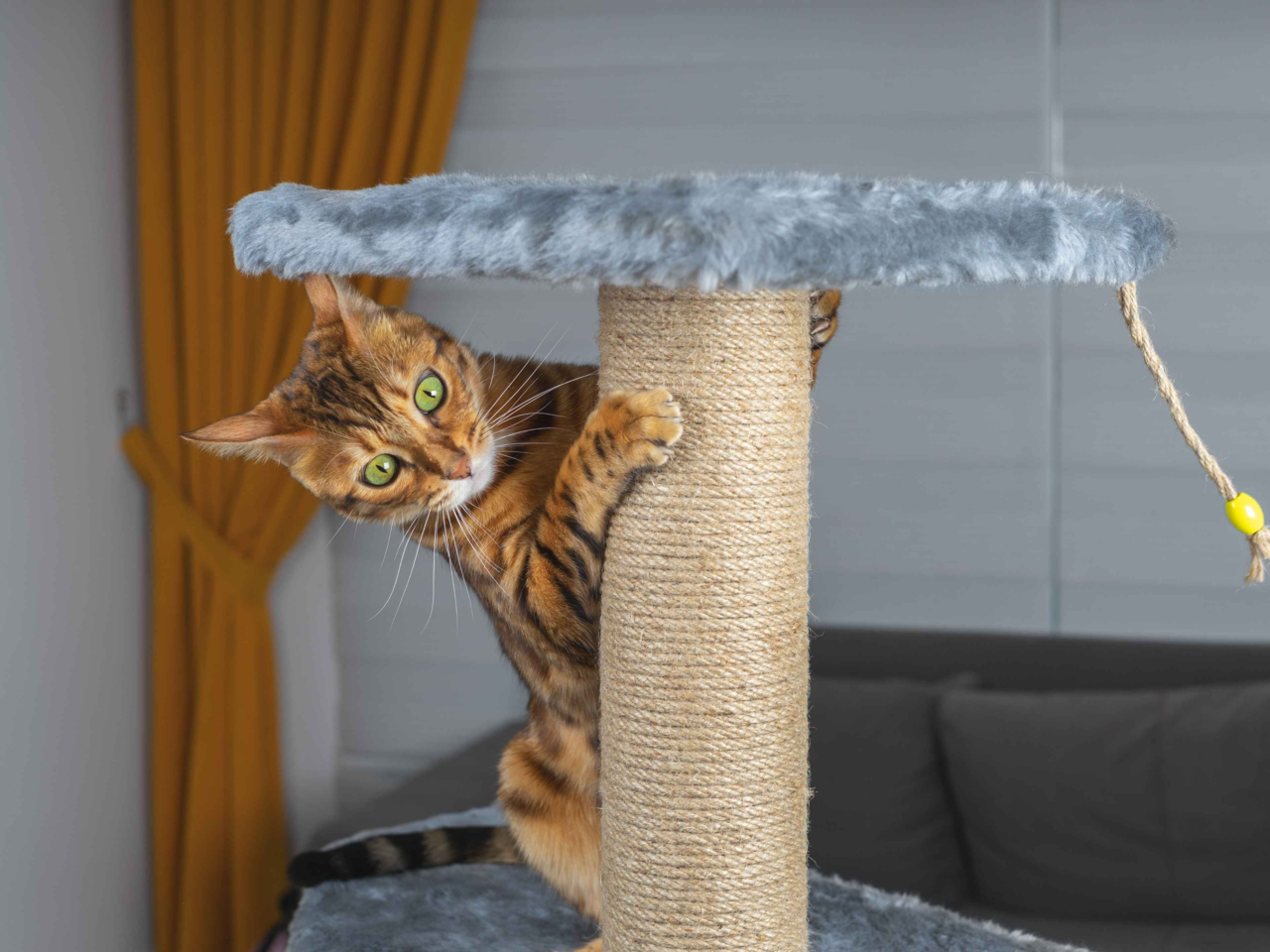
Scratching is normal communication and body care. More varied horizontal and vertical surfaces may give your cat a better outlet.
Rough or redirected play
Ambushing ankles or chasing another pet can happen when hunting energy has nowhere appropriate to go. Use distance toys rather than hands.
A change in grooming
Overgrooming can be linked to stress, skin discomfort or pain, not just under-stimulation. A new or persistent change deserves veterinary advice.
Behaviour changes can have medical causes
Contact your vet if you notice a sudden change, reduced appetite, weight change, toileting problems, skin damage, hiding, pain signals or a major shift in sleep. Enrichment supports wellbeing but does not replace a health check.
A simple daily enrichment routine
Start with search
Move a wand toy like prey around furniture or hide a few pieces of your cat's usual food where they can find them safely.
Let them stalk and chase
Keep sessions short and let your cat pause. Several brief sessions often suit cats better than one long play marathon.
Give them a catch
Finish laser play with a physical toy your cat can grab, or use a wand throughout, so the sequence has a satisfying ending.
Add a food puzzle
Use part of the daily food allowance in an easy puzzle, lick mat or scatter feed. Begin simply so the task feels achievable.
Offer choice and rest
Provide climbing, hiding and scratching options, then allow quiet time. Enrichment should be available, not forced.
Three ways to vary play
Keep food enrichment balanced
Use food from your cat's measured daily allowance rather than automatically adding extra treats. In a multi-cat home, supervise puzzles and provide separate resources so every cat can participate without competition.
Cat mental stimulation FAQs
How much play does my cat need?
There is no single number for every cat. Start with several short sessions and adjust for age, mobility, health and interest. Stop while your cat still looks comfortable.
Can older cats use puzzle feeders?
Yes. Choose a stable, easy puzzle and adapt it for vision, mobility or dental needs. The goal is gentle success, not frustration.
Why does my cat get bored with toys?
Constant access can reduce novelty. Rotate toys, vary movement and store string or wand toys safely after supervised play.
Are laser pointers good for cats?
They can encourage chasing, but your cat cannot physically catch the light. End with a catchable toy or food reward and stop if your cat seems frustrated.
Can I use cardboard boxes for enrichment?
Yes. Clean boxes can become hiding places, tunnels or simple food-search games. Remove staples, tape loops and loose pieces that could be swallowed.
Should I leave electronic toys on all day?
Use them in short periods and follow the product instructions. Rotation and supervision help protect safety and novelty.
When should I call my vet about behaviour changes?
Call for sudden, persistent or severe changes, especially when paired with appetite, weight, toileting, grooming, movement or sleep changes.
Make enrichment part of the room
Small changes count. Keep a box to investigate, a perch with a view and a toy rotation within easy reach. For more ideas, read our happy indoor cat guide.