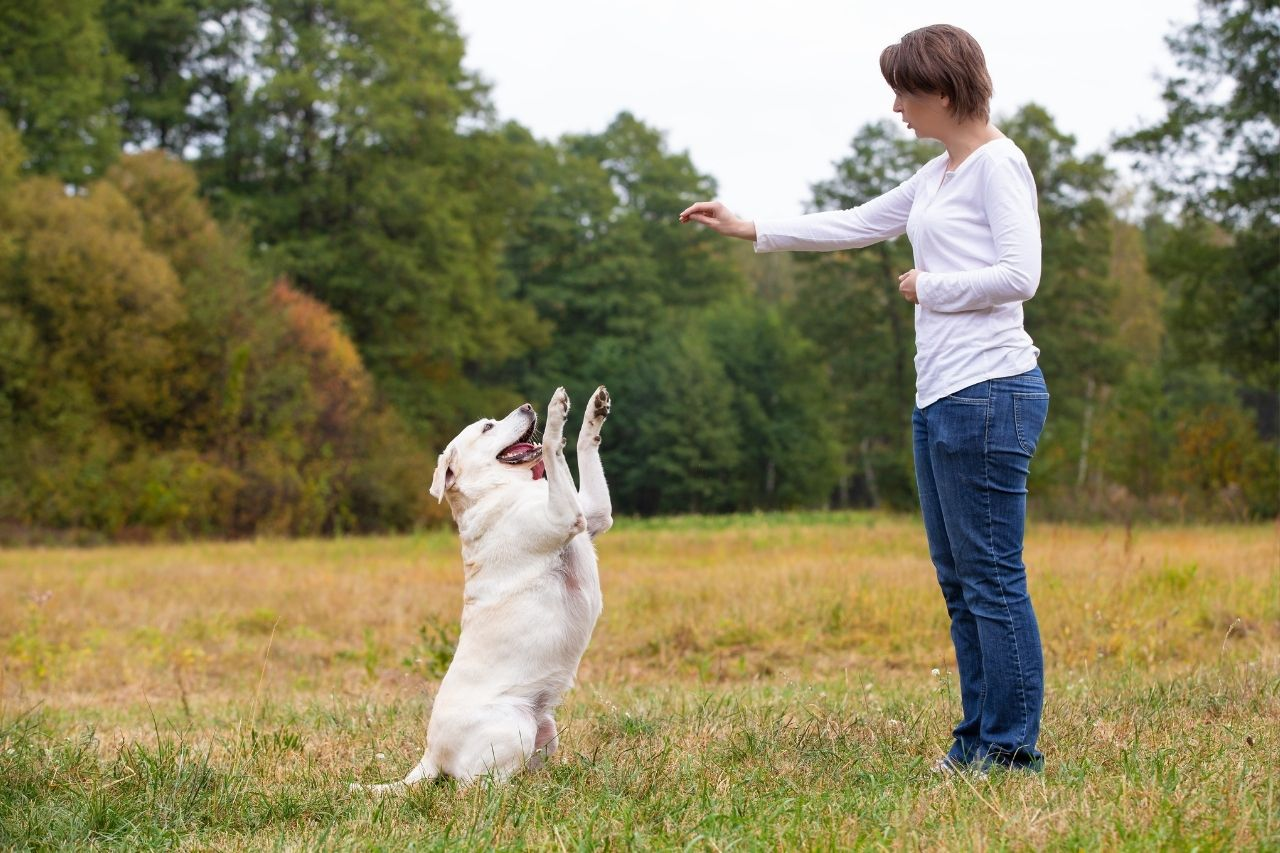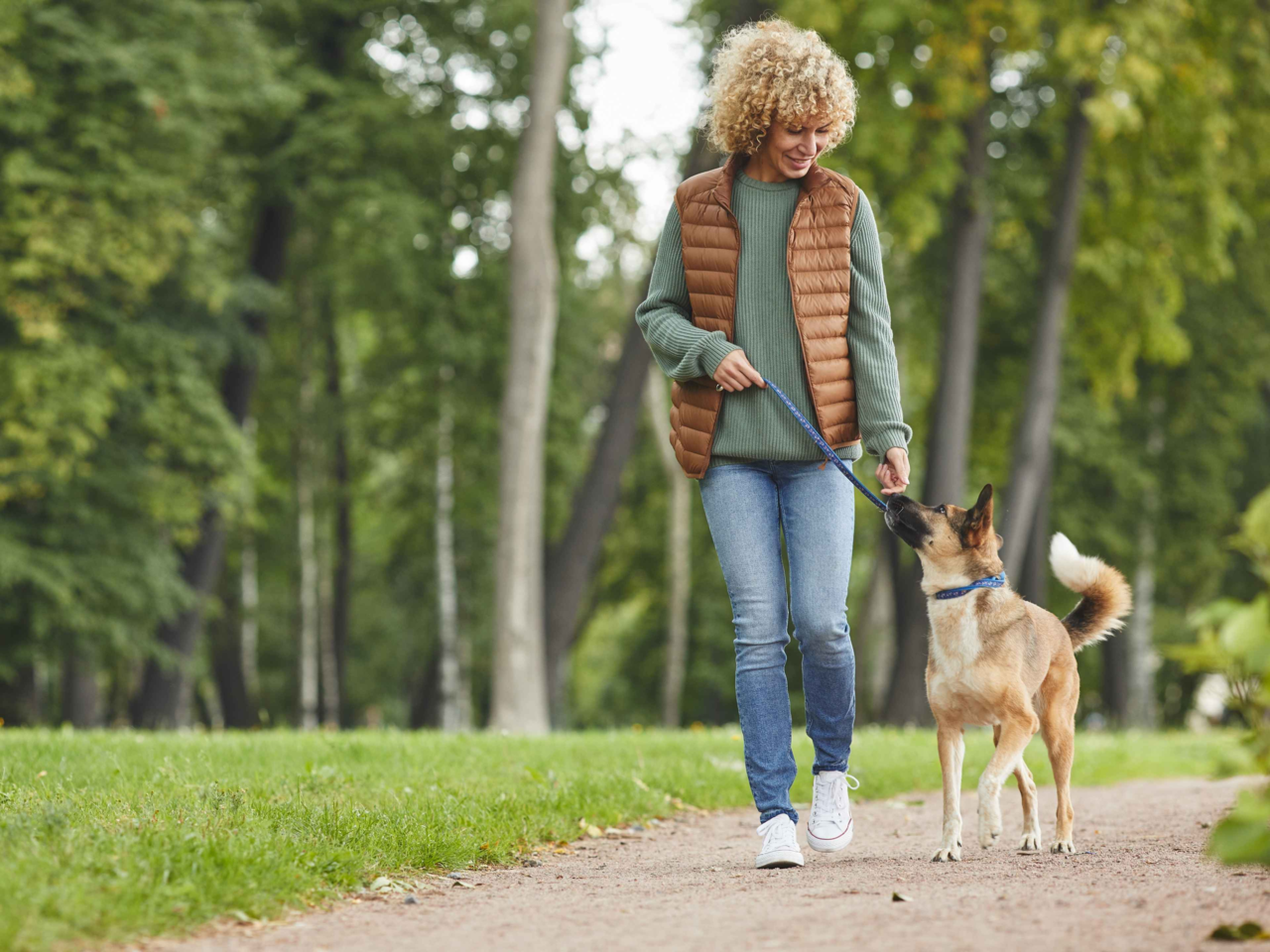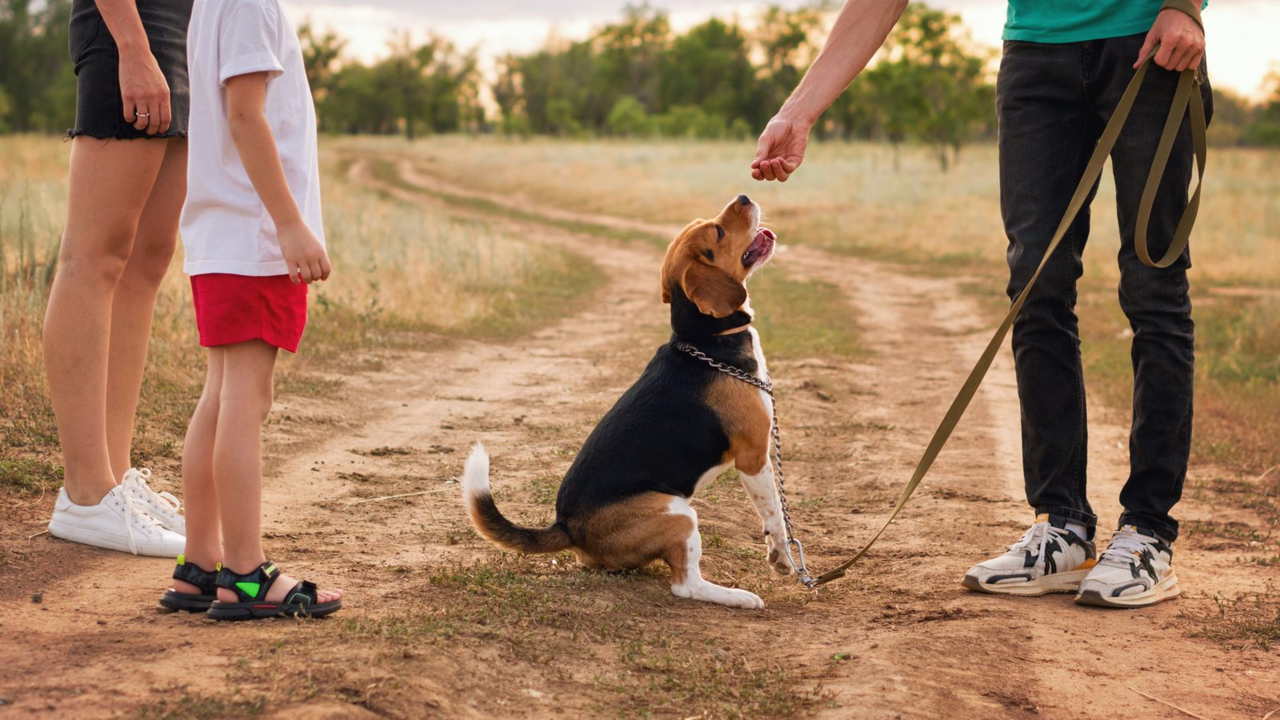
Beagles are not difficult dogs. They're just honest about being hounds. Bred to follow a scent for hours and bay when they found something interesting, they show up to family life with the same job description and a famously food-driven brain.
Training a Beagle isn't about overriding any of that. It's about working with the nose, channelling the bay, and using their bottomless appetite as the best tool you've got. Here's the NZ owner's guide.
Quick answer
Train a Beagle with short, food-led sessions of 5 to 10 minutes a few times a day. Build a rock-solid recall on a long line before you ever go off-lead. Use a treat-led marker (clicker or "yes!") and high-value rewards. Channel the nose with scent games and snuffle mats, manage pulling with a front-clip harness, and teach a "quiet" cue from day one. Beagles will work hard for food and forgive almost anything except a boring trainer.
What makes a Beagle tick
Understanding the breed saves you about a year of frustration. Beagles are scent hounds, not biddable working dogs, and they're stubbornly cheerful about it.
The nose runs the show
A Beagle's nose has around 220 million scent receptors. When a smell wins, your voice loses. Train with this in mind rather than fighting it.
Food-motivated to the core
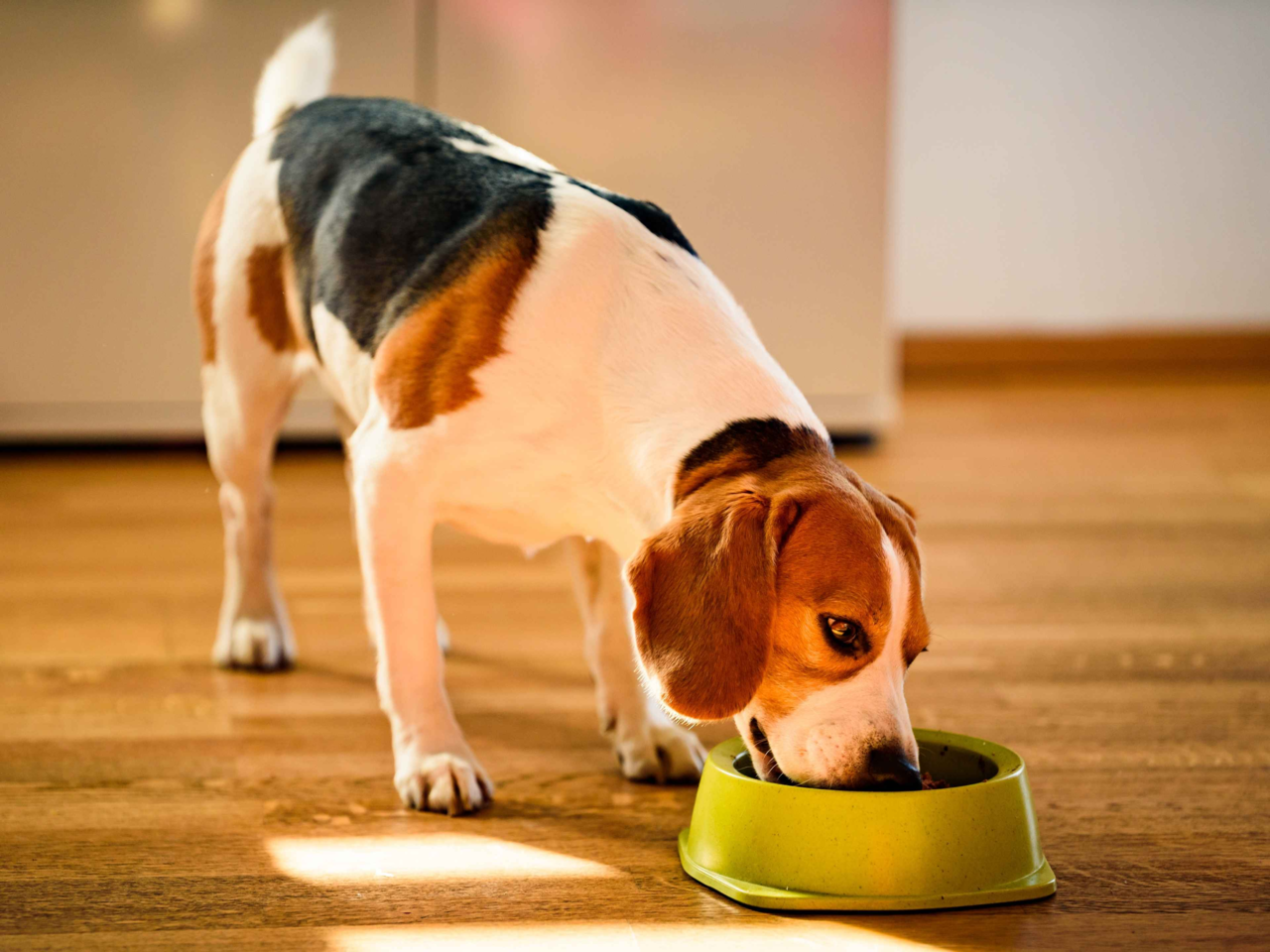
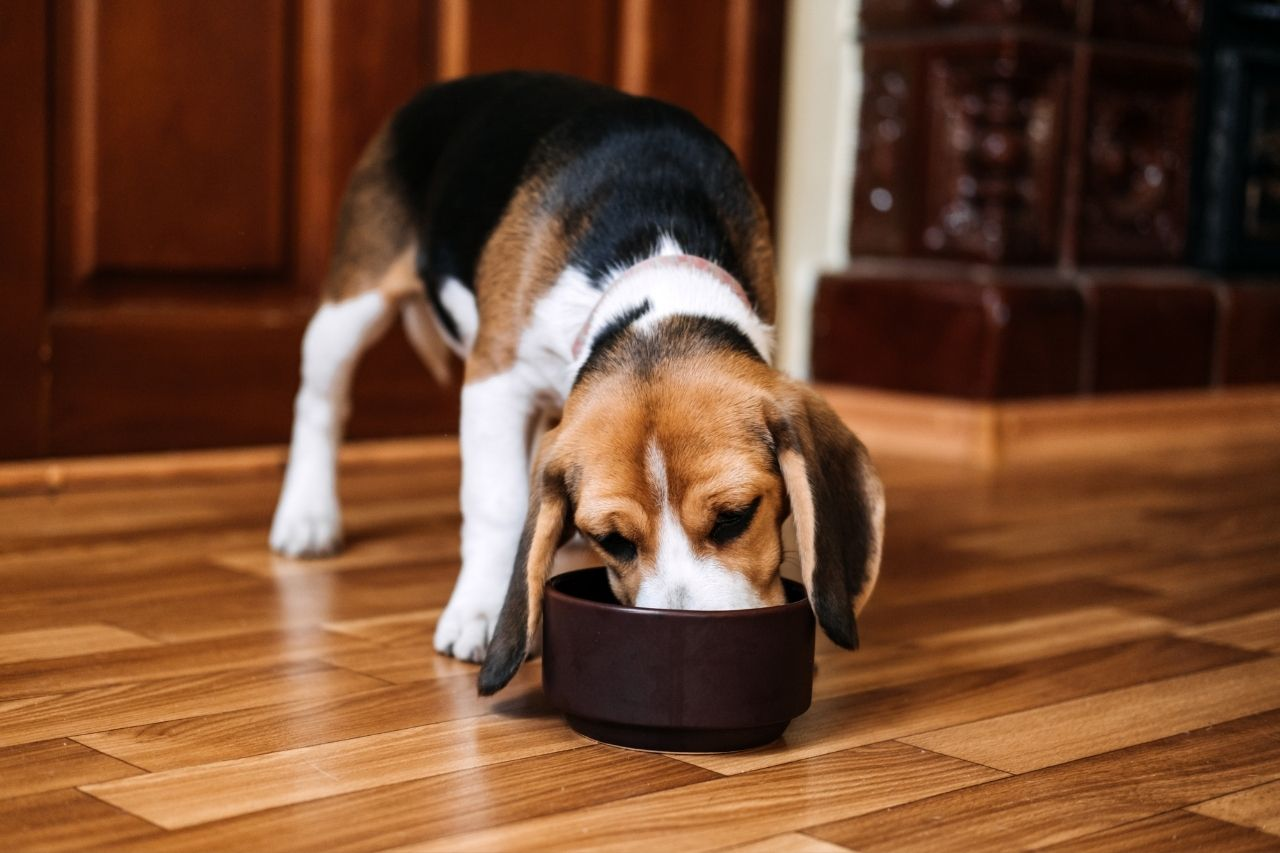
Beagles will work harder for food than most breeds. That makes training easy. It also makes counter surfing and bin raiding a daily sport unless you stay on top of management.
Bay, howl, talk
Beagles are vocal. Teaching a "quiet" cue early is kinder than asking them never to bark. Reward calm, mark silence, give them a way to settle.
Pack dogs at heart
Beagles love company and dislike being left alone for long stretches. Build alone-time gradually from puppyhood to prevent separation issues.
Selectively deaf outdoors
It's not naughtiness. A Beagle following a scent is running their original job description. The fix is a strong recall built up over months on a long line, not shouting.
Bright but not biddable
Beagles learn fast when there's something in it for them. They're problem-solvers, not people-pleasers. Make training pay and they'll bring their A-game.
The training kit for a Beagle
You don't need much, but the right gear makes a hound's life easier. A clicker or marker word for precision, a treat pouch you can reach into one-handed, and a front-clip harness for pulling.
High-value treats: the Beagle's currency
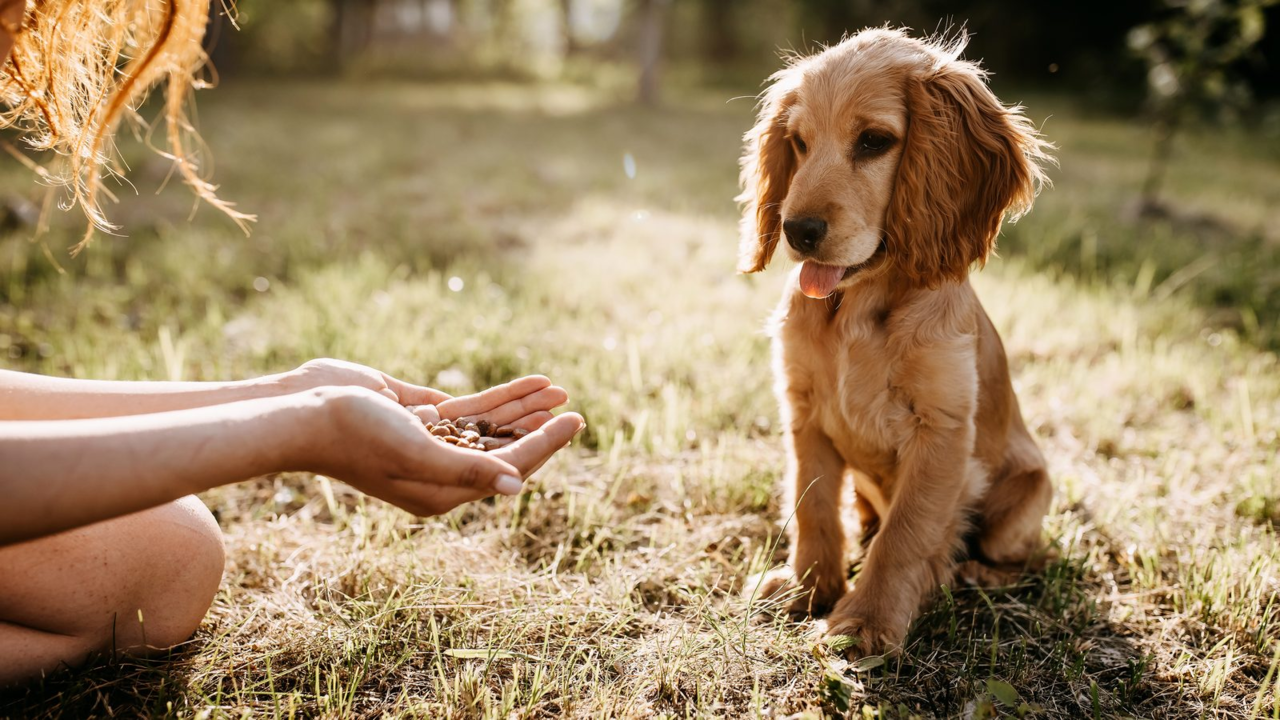
Small, smelly and varied. Beagles work for food, but they get bored fast if you only ever bring the same biscuit. Rotate two or three different training bites within a session to keep the value high.
Harness and lead for a puller
Beagles pull because their nose is busy. A front-clip harness, a head collar, or a well-fitted body harness gives you a fighting chance on lead. A longer training lead is essential for safe recall practice.
The step-by-step training routine
Build the marker
Click (or say a bright "yes!") and pop a high-value treat into their mouth straight away. Repeat 10 times. You're loading the marker so it predicts food. Once your Beagle whips their head around at the sound, you can use it to mark behaviours you want to repeat.
Name recognition and a fun recall
Say their name, mark the moment they look, reward generously. Then start adding distance. With a Beagle, recall is the cue you'll work on for years, so build it as a party every single time. Never use recall to call them back for something boring or unpleasant.
Sit, down and a useful "wait"
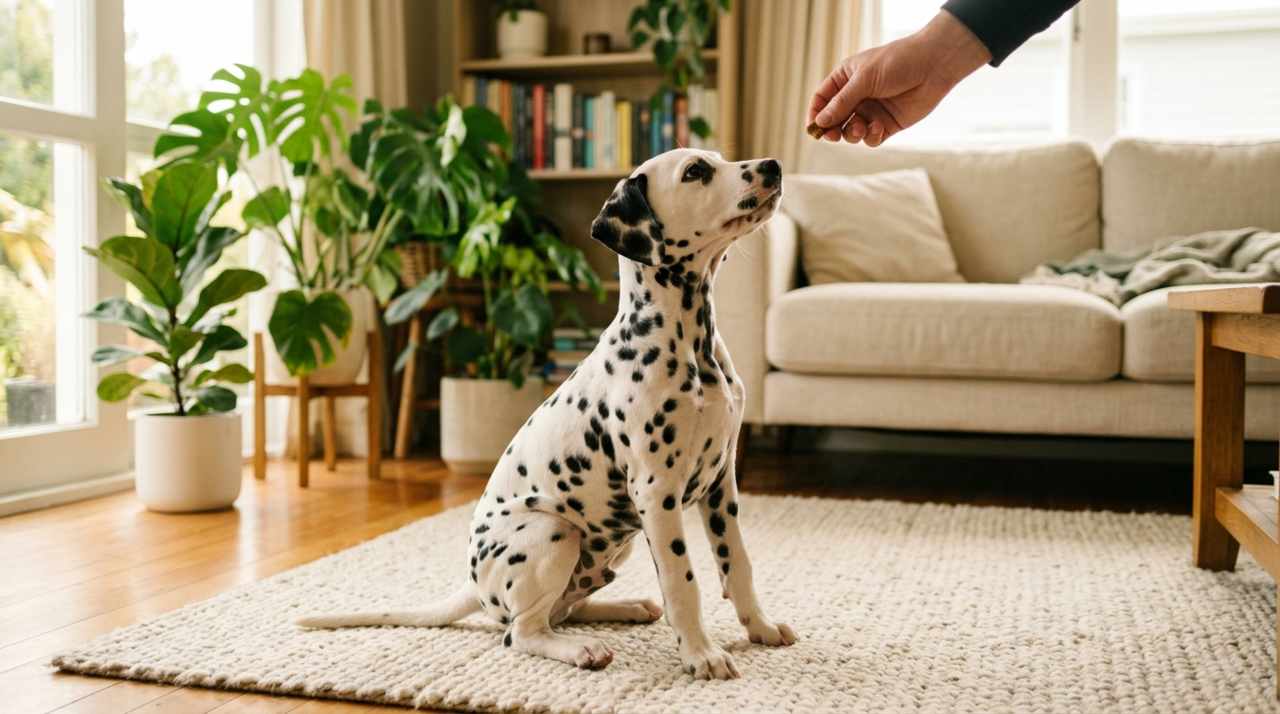
Lure with a treat for sit and down. Add a "wait" cue at doorways and before meals. Beagles thrive on these tiny moments of impulse control, and "wait" is the cue that stops a Beagle bolting through an open gate after a scent.
The long-line recall
This is the most important habit for any Beagle owner. Clip a 5 to 10 metre training line to a back-clip harness in a safe open space. Let your Beagle wander and sniff. Call their name in your happiest voice. The instant they look, mark and run backwards, rewarding lavishly when they reach you. Practise this for months before you trust them off-lead, and never assume the recall is finished.
Loose-lead walking, one Beagle at a time
Start indoors with zero distractions. Reward every step or two beside you. The moment they pull, stop and wait. When they look back, mark, reward, start again. Outside, expect frequent stops for sniffing, and that's fine. Build sniff-breaks into the walk so the lead time has purpose for the hound too.
The "quiet" cue
When your Beagle bays, wait for the pause. Mark the silence with a soft "yes" and reward. Add the cue word "quiet" just before they tend to stop on their own, so it predicts the behaviour. Beagles will always be vocal, but a strong "quiet" cue gives you a calm-down button.
Channel the nose
An unstimulated Beagle is a destructive Beagle. Build sniff games into every day. Hide treats around the garden, scatter kibble in a snuffle mat, use a lick mat after walks. Five minutes of nose work tires a Beagle out more than half an hour of fetch.
Manage the food obsession
Beagles will work for food. They will also steal it from benches, bins, school bags and other dogs' bowls. Treat food management as part of training. Bin lids on, bench tops clear, treats in sealed containers, meals in lick mats instead of bowls. You're not over-managing. You're working with the breed.
Nose-work enrichment to slot into the daily routine
Beagles need their brains worked, not just their legs. Slow feeders, puzzles and snuffle mats are non-negotiable kit for this breed.
Frequently asked questions
Are Beagles hard to train?
Not really, but they're often called "hard" because owners expect Beagles to behave like working breeds. They won't. Train with food, keep sessions short and varied, and accept that the nose will sometimes win. Once you stop fighting that, training a Beagle gets a lot easier.
Can a Beagle ever be trusted off-lead?
Some can, with months of recall conditioning on a long line in increasingly distracting environments. Others, honestly, never quite get there. Plenty of NZ Beagle owners do their off-lead sniffing in fully fenced areas and stick to a long line on open walks. There's no shame in it.
How do I stop my Beagle barking and baying?
You don't stop it completely. Beagles are vocal by design. You manage it by teaching a "quiet" cue, by giving them enough nose-work that they aren't bored-barking, and by rewarding calm settling on a bed or mat. Punishing the bay tends to make it worse.
What's the best treat for training a Beagle?
Small, smelly, and rotated. Tiny pieces of cheese, chicken or liver work brilliantly. Soft training bites are perfect for rapid-fire reward sessions. Adjust meal portions slightly down if you're using a lot of treats, because Beagles gain weight quickly.
How much exercise does a Beagle need?
About 60 to 90 minutes of varied activity a day for an adult. Mix on-lead walks, sniff time, off-lead in safe areas, and indoor enrichment. A Beagle who only gets one big walk a day and no nose-work is usually the Beagle who eats the couch.
At what age should I start training my Beagle puppy?
The day they come home. Eight-week-old Beagles can learn name recognition, sit, and the marker game. Keep sessions to a few minutes, end on a win, and stack lots of small successes rather than long sessions.
Can I crate-train a Beagle?
Yes, and it helps a lot with toilet training and giving your Beagle a safe alone-time space. Make the crate a high-value spot with a stuffed KONG, treats hidden inside, and never use it as a punishment. Build duration gradually.
My Beagle steals food from the bench. Help.
Welcome to Beagle life. Treat this as management first, training second. Keep benches clear, bin lids closed, and consider a baby gate to keep them out of the kitchen during meal prep. Teach a "leave it" cue with very high-value rewards, but don't rely on training alone. The breed will always be motivated to steal a sandwich.