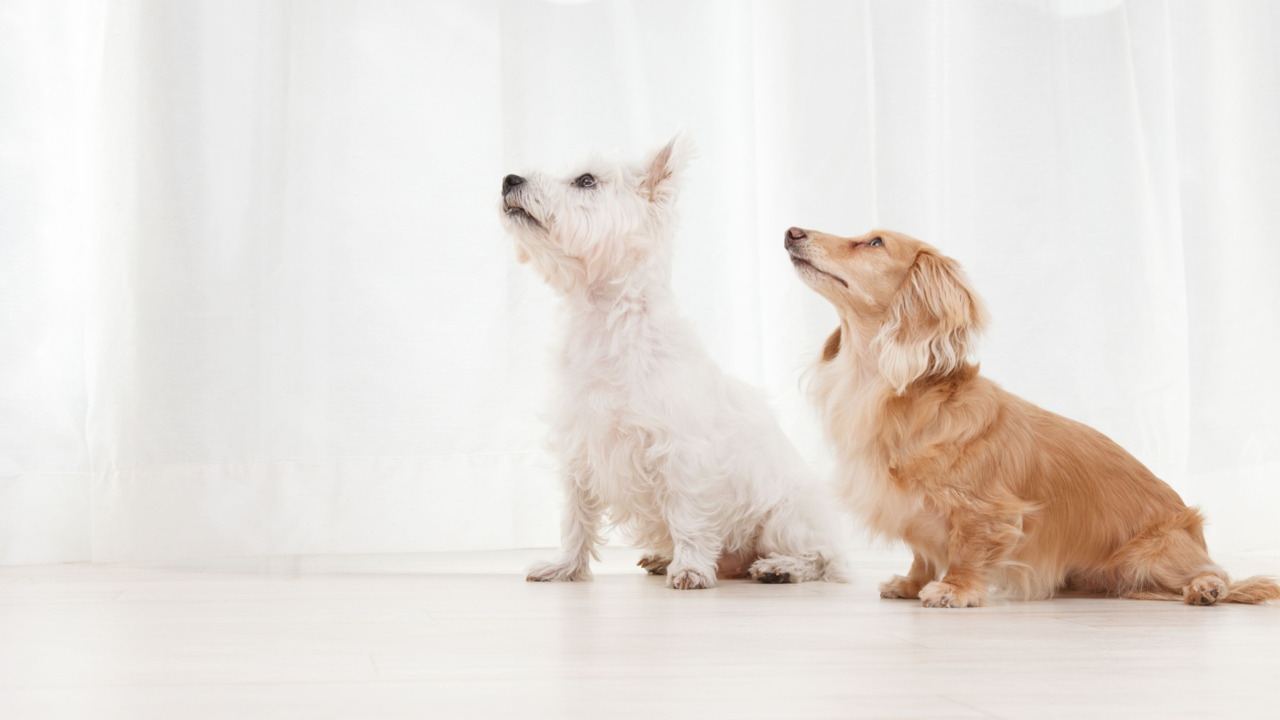
Some dogs become instant playmates. Others build a quieter friendship by resting nearby, greeting softly and moving around each other without tension. Both can be signs that dogs like each other.
The clearest answer comes from the whole interaction, not one tail wag or one burst of wrestling. Look for loose bodies, shared choices and natural pauses. Just as importantly, check whether both dogs can move away and whether their boundaries are respected.
Quick answer
Dogs who like each other usually look loose, curved and comfortable. During play, they may bow, bounce, take turns chasing and pause before choosing to re-engage. Away from play, they may rest nearby, greet calmly or share a space without watching each other closely. Stiff bodies, fixed staring, repeated escape attempts and one-sided chasing mean it is time to create space.
What are the signs dogs like each other?
Friendly dogs communicate through a pattern of invitations and responses. One dog offers play, the other accepts, and both keep checking that the interaction still feels good. Their movements tend to be soft and curved rather than direct and rigid.
Loose body language
Wiggly hips, relaxed faces, soft eyes and curved approaches suggest both dogs feel comfortable. Their movements may be energetic, but they do not look locked or tense.
Balanced interaction
Healthy play often includes role changes. The chaser becomes the chased, the stronger dog eases off and both dogs get chances to pause or restart.
Freedom to choose
Each dog can step away, sniff, shake off or return to their person. If they choose to go back with the same loose body, that is a useful sign of mutual interest.
| Green light | What it can mean | Red light | What to do |
|---|---|---|---|
| Loose, bouncy or curved bodies | The dogs feel relaxed enough to move naturally | Stiff posture, freezing or weight pushed forward | Call both dogs away and add distance |
| Play bows and exaggerated movements | The dog is signalling that the next action is playful | Fixed staring or slow, direct stalking | Interrupt early before tension builds |
| Taking turns chasing, pinning or being underneath | Both dogs have some control over the game | One dog is always chased, cornered or held down | End the round and give the pursued dog a clear exit |
| Soft eyes and a relaxed, open mouth | Facial muscles are not carrying obvious tension | Hard eyes, tightly closed mouth or lifted lip | Create space without reaching between the dogs |
| Frequent pauses followed by willing re-engagement | Both dogs can regulate excitement and keep choosing play | Hiding, repeated escape attempts or clinging to a person | Respect the request for space and stop the interaction |
| Relaxed sharing of a room or walking route | Friendship can be calm rather than playful | Blocking paths, guarding resources or policing movement | Separate valuable items and manage the shared space |
Look for play that stays fair
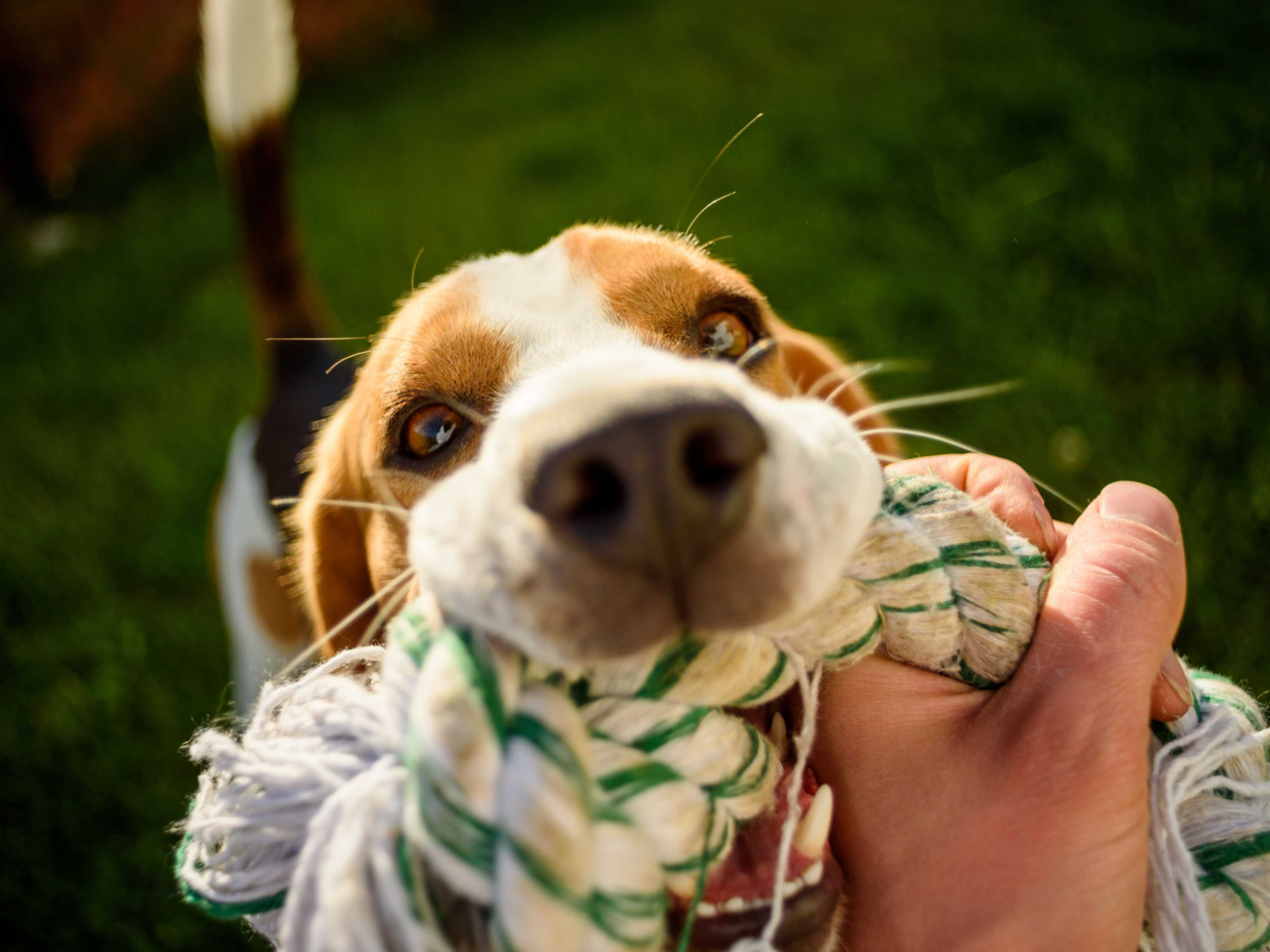
Dog play can look noisy and physical. Chasing, wrestling, mouthing, growling and shoulder bumps can all appear in friendly interactions. The deciding factor is not how dramatic one moment looks. It is whether both dogs remain loose, responsive and able to stop.
A play bow, with the front end lowered and the rear in the air, is a common invitation. Dogs also use exaggerated hops and sideways movements to keep the mood clear. A larger or more skilled dog may slow down, roll over or reduce the force of their movements so the other dog can stay involved. This is sometimes called self-handicapping.
Turn-taking matters too. One dog may chase for a few seconds, then let the other lead. One may be on top during wrestling, then switch positions. Perfectly equal play is not required, but a repeated pattern where one dog cannot get away is not balanced.
Listen with your eyes
A play growl can sound fierce, while a silent interaction can still be tense. Read the sound alongside the dogs' bodies. Loose movement, role changes and pauses support a playful interpretation. Stiffness, hard staring and attempts to escape tell a different story.
Use a consent check when play gets intense
A short consent check helps you see whether both dogs want the game to continue. It is especially useful when one dog is more energetic, larger or repeatedly in the chasing position.
Call a brief pause
Cheerfully call the more active dog away and reward them beside you. If needed, guide a dog using a lead or a harness they are already wearing. Avoid grabbing collars or reaching between excited dogs.
Give the other dog a choice
Wait for a few seconds without encouraging contact. The free dog may approach with a play bow or loose body, or they may sniff, drink, walk away or stay near their person.
Follow the answer
If the other dog clearly asks to restart and both bodies remain loose, allow another short round. If they move away or avoid re-engaging, end the play and give them space.
The goal is not to test the dogs repeatedly. It is simply to make sure excitement has not carried one dog past the other's comfort level. Regular natural pauses are a good sign and often help play stay friendly.
Notice the quieter signs of dog friendship
Dogs do not have to wrestle, share a bed or follow each other everywhere to get along. Some friendships are calm. Dogs may choose to rest in the same room, walk side by side with relaxed leads or greet each other with a soft sniff before returning to their own activities.
Comfortable dogs can pass through doorways without blocking each other, settle while the other receives attention and recover easily after a small surprise. They may choose nearby sleeping spots while still keeping personal space. Calm indifference can also be a successful relationship, especially for an older dog or a dog who simply prefers people to canine playmates.
Watch for changes around food, chews, toys, beds and human attention. Dogs who are relaxed in the garden may feel differently when a valuable item appears. Friendship does not remove the need for separate feeding areas, fair access to resources and supervision during exciting moments.
Help two dogs meet without pressure
A thoughtful introduction gives both dogs room to communicate. Start in a neutral, open place with one calm handler per dog. Walk in the same direction with enough distance for loose bodies and easy attention. Gradually close the gap rather than asking for a direct, face-to-face greeting.
Keep leads relaxed and avoid tangling them. Tight leads can restrict natural movement and add frustration. After a brief sniff, encourage the dogs to move on together. Several short, successful greetings are more useful than one long meeting that becomes too intense.
Keep the first sessions simple
- Choose space over closeness and let the dogs approach in curves.
- Put away food bowls, chews and favourite toys before entering a shared home.
- Reward each dog separately for checking in, moving away and settling.
- Use gates, separate rooms or individual rest areas so neither dog must stay social.
- Finish while both dogs are still coping well rather than waiting for tension.
Small rewards can reinforce calm check-ins and easy movement away from the other dog. Keep food separate and deliver it directly to each dog so there is no competition around the reward.
Know when dogs need space
Pause the interaction when you see freezing, hard staring, repeated mounting, relentless chasing, body slamming without breaks, guarding or a dog trying to hide. A tucked tail, low body, pinned ears or repeated lip licking can also show discomfort, particularly when the dog cannot leave.
Do not punish growling. A growl is useful communication that tells you a dog needs more space. Calmly separate the dogs, remove the source of pressure and let arousal settle. For recurring tension, use physical separation and seek help from a qualified force-free dog behaviour professional before trying another close interaction.
Separate safely
Do not put your hands between fighting dogs or grab at their collars. Use distance and a solid barrier such as a door or gate when possible. Once separated, keep the dogs apart until both are fully calm and you have a safer plan.
Frequently asked questions
Does a wagging tail mean two dogs like each other?
Not by itself. A wag shows arousal and can appear with excitement, uncertainty or tension. Check the whole body. A loose, sweeping wag with soft eyes and curved movement is more reassuring than a high, tight wag over a stiff body.
Can dogs growl while playing?
Yes. Some dogs are vocal during play. Look for loose bodies, turn-taking, pauses and willing re-engagement. Stop the interaction if the growling comes with stiffness, fixed staring or attempts to escape.
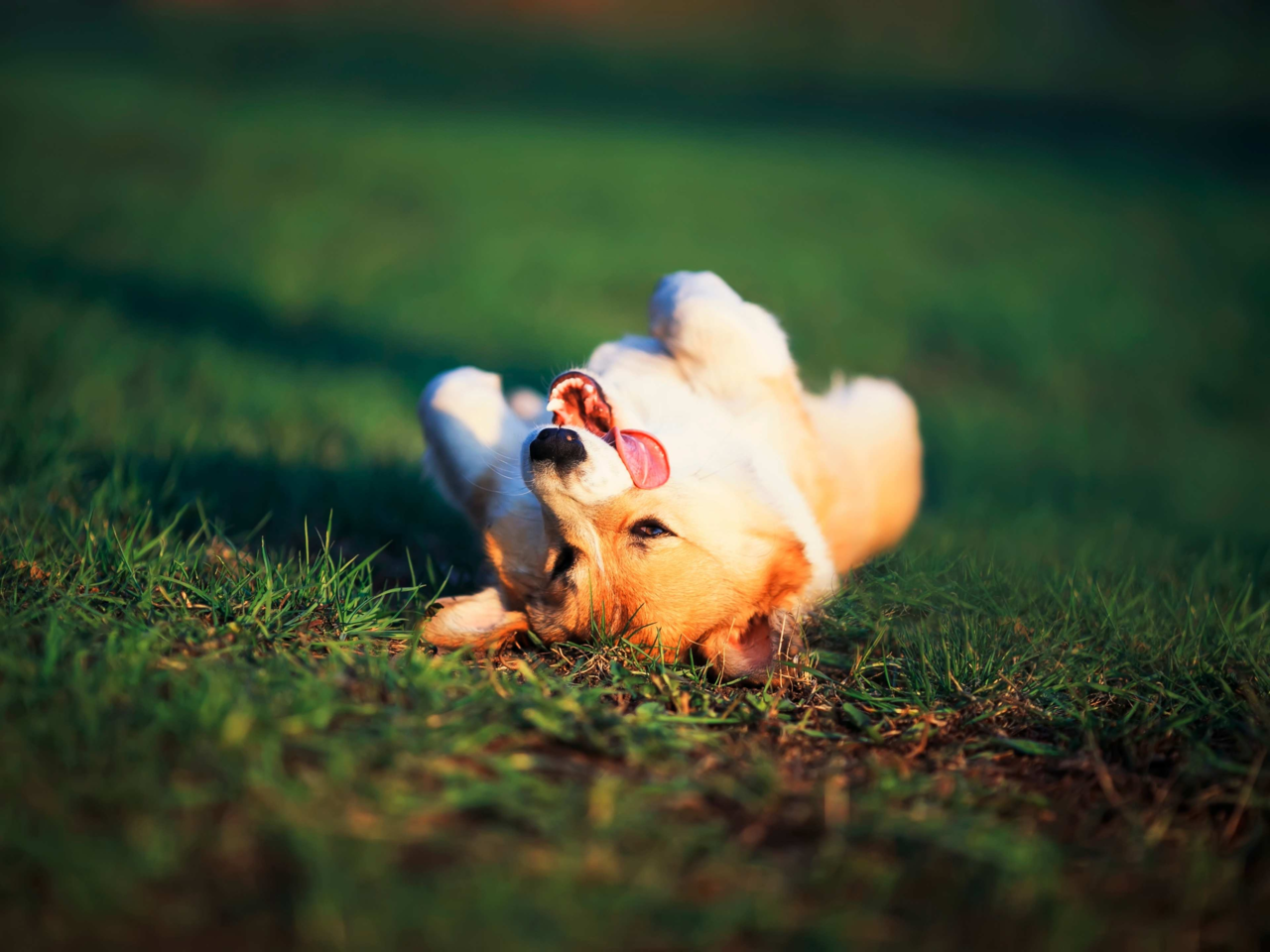
Why does one dog lie on their back during play?
It may be part of role reversal or a playful invitation, especially if the dog looks loose and gets up willingly. If they stay very still, tuck their tail or repeatedly try to leave, give them space.
Do dogs have to play to be friends?
No. Many dogs show a comfortable relationship by resting nearby, walking calmly together and sharing a room without tension. Peaceful coexistence is a good outcome.
How can I tell if play is too rough?
Pause when one dog is always chased or pinned, cannot take a break, keeps trying to hide or stops returning after separation. Healthy rough play still includes choice, role changes and frequent resets.
What if my dog ignores the other dog?
Calmly ignoring another dog can show comfort, not dislike. If both dogs can relax, move freely and access their resources without tension, they may simply prefer a low-key relationship.
Can a puppy and an adult dog become friends?
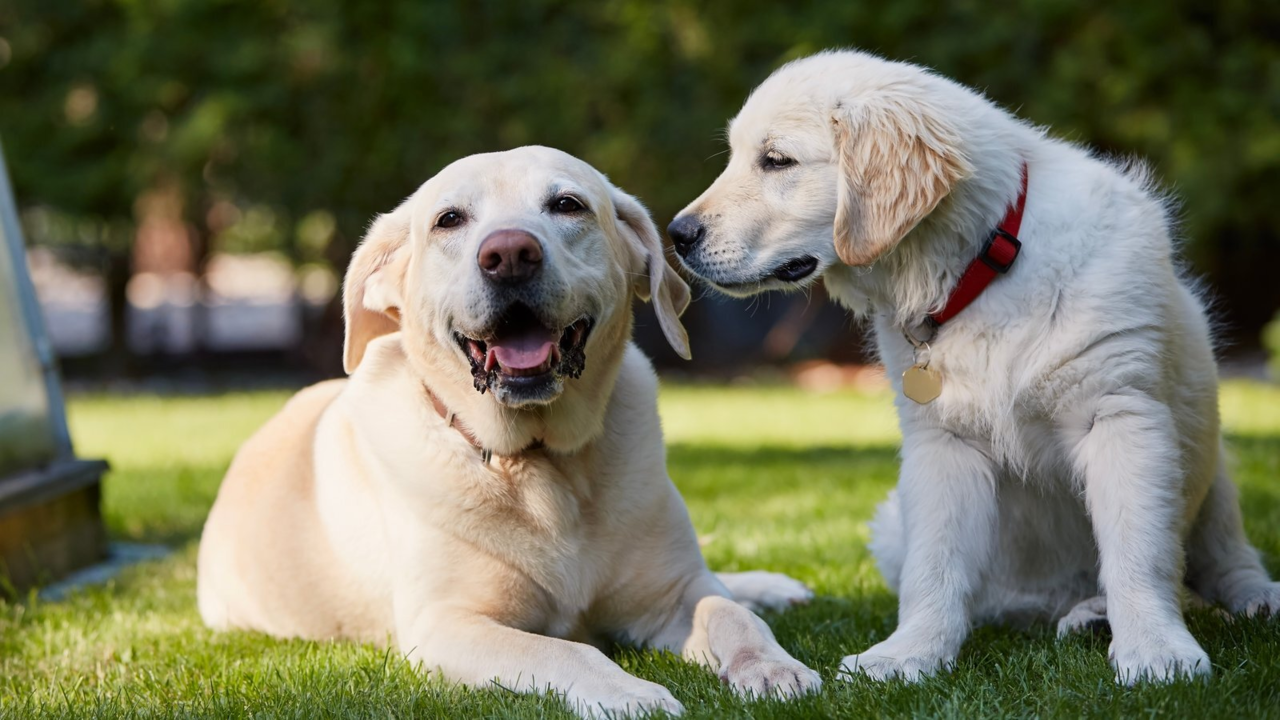
Yes, but puppies often need help respecting breaks. Give the adult dog puppy-free rest areas, interrupt persistent pestering and keep early sessions short so both dogs can finish feeling comfortable.
Support calmer dog introductions
Choose practical leads, reward tools and training accessories that help you create space, reinforce check-ins and keep early meetings manageable.
Shop dog training and behaviour