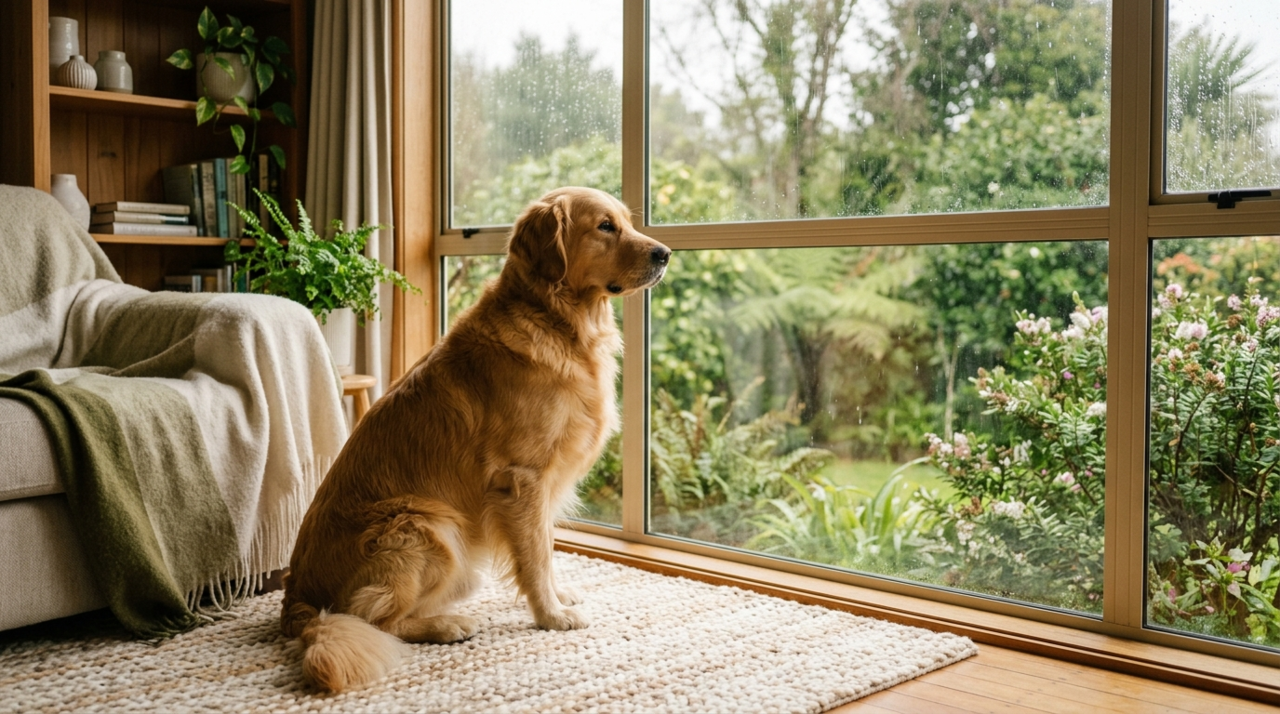
Winter in New Zealand is hard work for cats. The rain doesn't stop, the daylight's gone by 5pm, and even cats who normally vanish into the garden for half the day are suddenly inside, watching the weather, watching you, and looking for something to do. Indoor-only cats have always lived this way, but for cats who normally come and go, a wet NZ winter can mean weeks of cabin fever, more sleeping, more sulking, and (in some households) more 3am zoomies.
Toys are one of the best ways to take the edge off. Not just any toys, though, the right kind for a wet-winter indoor cat: things they can play with on their own when you're out, things you can play together with in the evening, and a few cosy comfort options for when they just want to nest somewhere warm.
Quick Answer
For wet NZ winters, the best indoor cat toys cover four bases: motion and interactive toys for solo play during the day, wand and teaser toys for evening play with you, puzzle feeders and lick mats for slow mental enrichment, and catnip toys plus a cardboard scratcher for cosy comfort. Rotate three or four out at a time rather than leaving everything out at once, and most cats stay much more settled through a wet winter.
Why Wet Winters Are Hard on Cats
Cats need movement, mental work and predictable outlets for their hunting instincts. When the weather turns and outdoor time drops off, all three of those needs have to be met inside the house. A cat who can't get to them tends to find their own solutions, which is where the boredom signals start showing up.
Sleeping more than usual
Some extra sleep in winter is normal cat life. A cat who's gone from 12 hours to 18 hours and lost interest in their day-to-day is usually under-stimulated rather than ill.
3am parkour
A cat with nowhere to put their hunting energy during the day burns it off at 3am instead, usually involving curtains, your feet, and the loudest object in the house. More play in the late afternoon and evening usually fixes this.
Over-grooming or self-soothing
Some indoor-bored cats start over-grooming a patch on their belly or legs. It's a self-soothing thing, and it's worth giving them a more interesting outlet before assuming it's a skin issue.
Getting snippy with you or the other cat
Cabin fever shows up as short tempers. A cat that's started swiping when picked up, hissing at the other cat, or generally being a bit cross usually needs more to do, not less attention.
Over-eating or asking for food constantly
Bored cats often try to make food the entertainment. Slowing down meals and adding play sessions around mealtime takes a lot of pressure off this one.
Staring at you from across the room
The classic "do something". A 10-minute wand session at the same time each evening usually does more for a winter cat than any amount of pats.
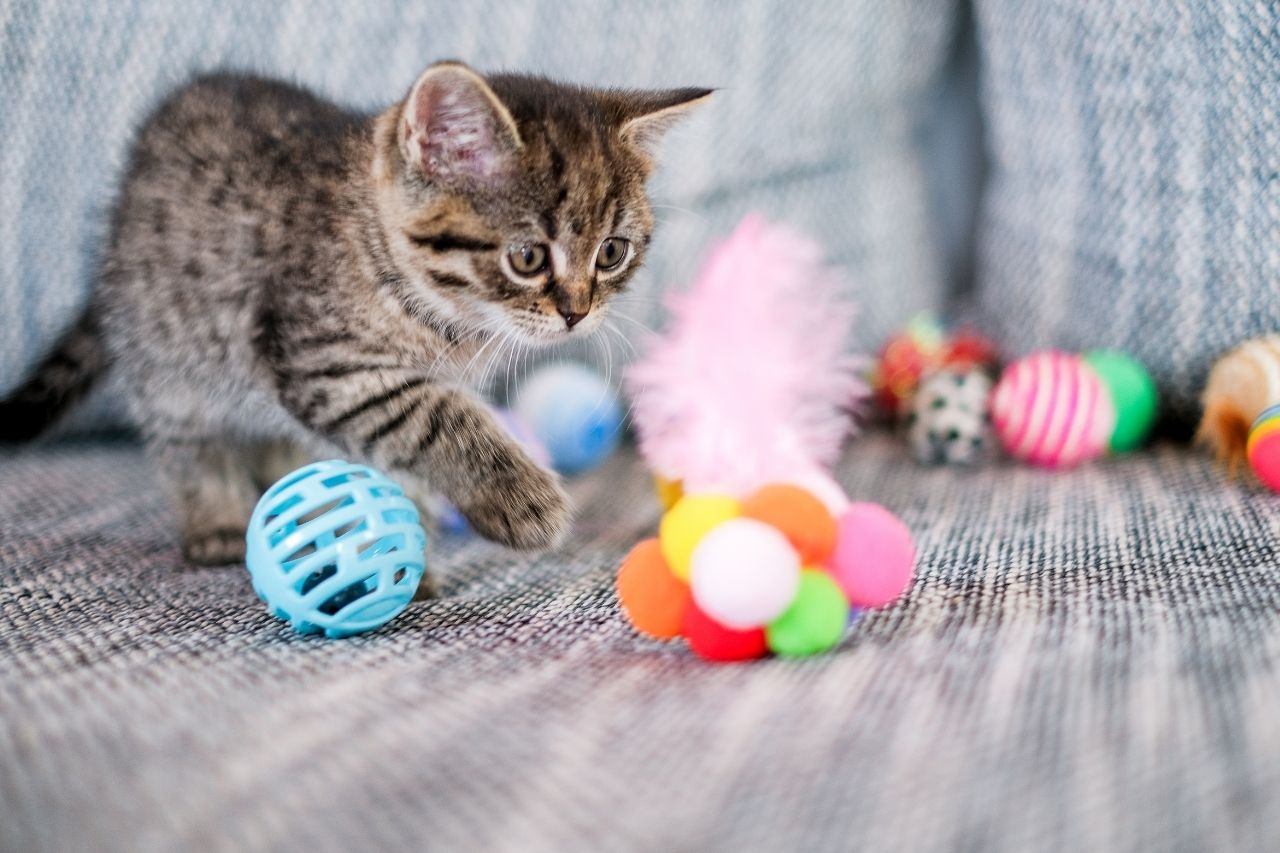
Motion and Interactive Toys for Solo Play
These are the toys that work while you're at work. Battery-powered movers, sound-activated mice, and closed-track ball toys all give a cat the satisfying chase-and-pounce sequence without needing a human at the other end. They're the single most useful category of cat toy for a wet-winter household with cats home alone during the day.
One quiet tip: many of these toys are most popular with cats in their first week or two, then get ignored. Rotate them. Put one out for a fortnight, then swap it for a different one. Most cats will treat the rotated-back toy like a brand new thing.
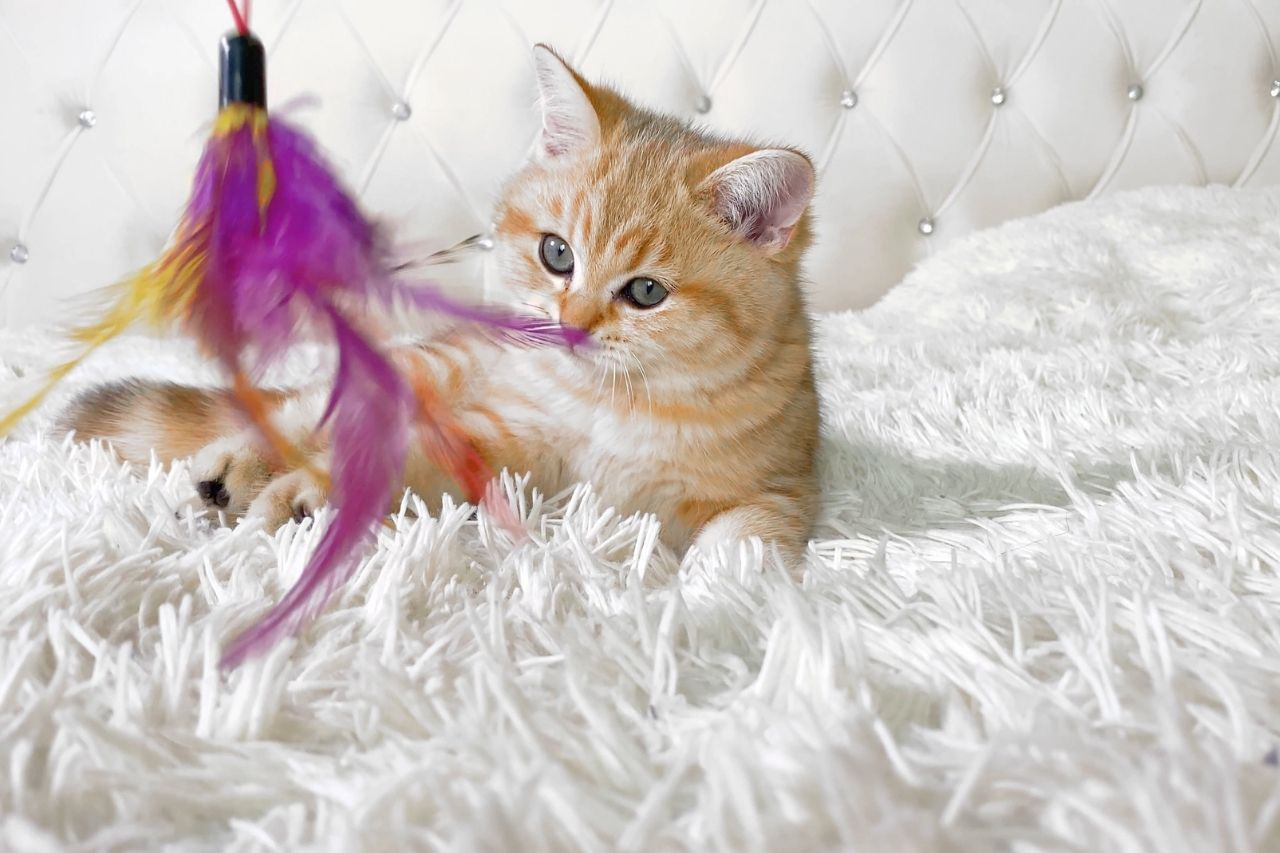
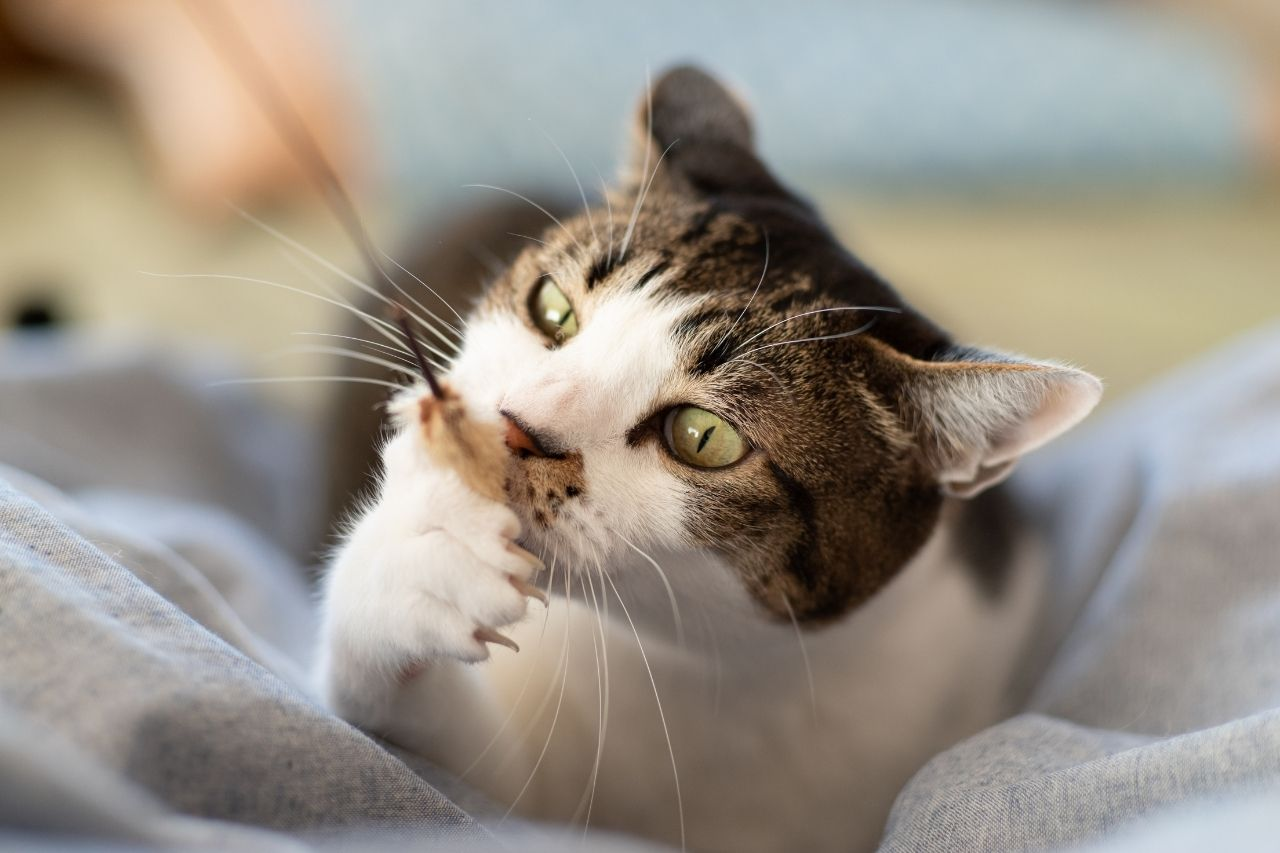
Wand and Teaser Toys for Evening Play Together
If you only do one thing for your winter cat, do this: a 10-minute wand session in the late afternoon or early evening, every day. It hits their hunting drive properly (stalk, chase, pounce, catch), takes the edge off the dinner-time agitation, and pushes the 3am zoomies way down. Most cats settle hard for the rest of the night after a proper wand session.
The trick with wand toys is letting them actually catch the thing every few rounds. Cats who chase but never catch end up frustrated rather than satisfied. End the session with a real "kill" so they get the closure their hunting brain wants, and ideally follow it with a small meal or treat.
Puzzle Feeders and Lick Mats for Slow Enrichment
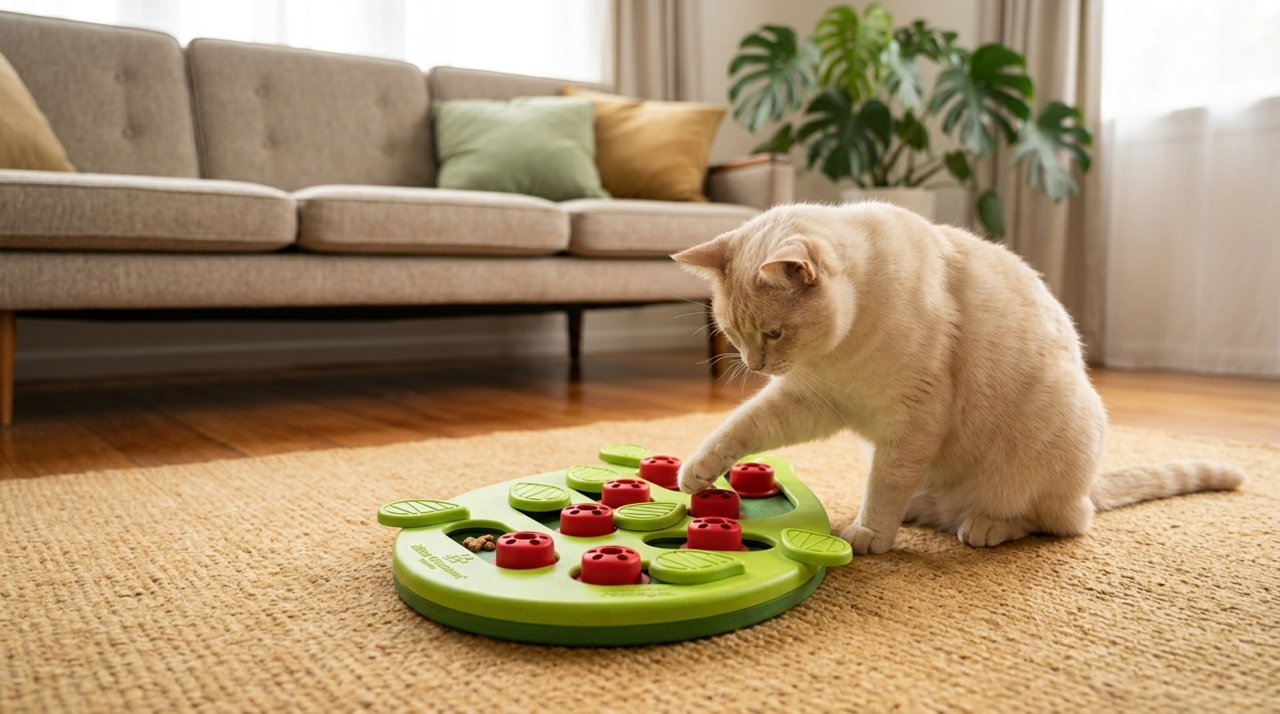
Mental work tires cats more than physical chasing does. Puzzles, treat tumblers and lick mats are the indoor cat's version of a long outdoor mooch, slow-burn work that uses their brain and stretches a meal into something interesting.
If your cat hasn't met puzzle feeders before, start easy. A lick mat smeared with a thin layer of wet food is a great first puzzle, since the reward is immediate. Once they've got the idea, you can move them on to slow-feeders and treat puzzles that take more figuring out.
Catnip and Cosy Comfort Options
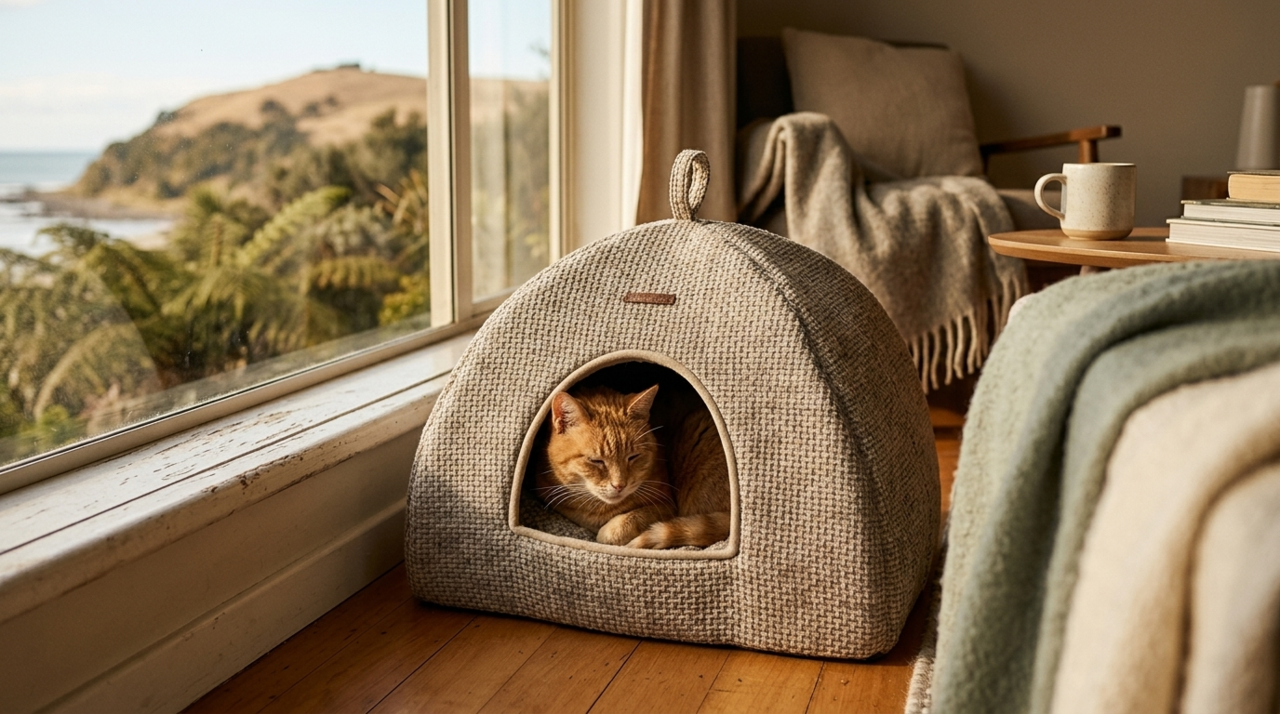
Not all winter play is active. Cats also need things to nest in, things to scratch, and things to fall asleep on top of. Catnip toys give them a self-soothing solo activity, cardboard scratchers protect your couch from the redirected outdoor scratching urge, and a tunnel or hideaway gives a winter cat a den to retreat into when the rain is loud.
Worth knowing: cardboard scratchers cost very little, last most cats a few weeks at most, and are one of the highest-value "indoor enrichment" buys around. Pop a fresh one in a different spot every month or two and most cats will use it like it's a new toy. Catnip sensitivity varies too, around two-thirds of cats respond to catnip and a third are indifferent. If yours is in the indifferent group, valerian or silvervine are alternatives some cats prefer.
How to Use Toys Well Through Winter
A few small habits make the difference between a toy box gathering dust and a winter routine that actually keeps your cat settled.
- Rotate toys. Three or four out at a time, the rest in a cupboard. Swap them every couple of weeks. Cats treat rotated-back toys as new.
- Anchor play to mealtimes. Wand session, then dinner. This mimics the natural hunt-catch-eat-sleep sequence and settles cats reliably.
- Put toys where cats already want to be. A favourite window perch, a sunny spot, the top of the stairs. Toys in dead corners get ignored.
- Make the window count. Even on a wet day, a window perch with bird traffic, plant pots, and movement outside is real entertainment.
- Pair play with somewhere to nest after. The post-play crash is a thing. A cosy bed or tunnel near the play spot gets used hard in winter.
- Don't leave string-and-feather wand toys out unsupervised. Cats can swallow string, which gets dangerous fast. Pack wand toys away between sessions and use a self-contained motion toy for the solo hours instead.
Frequently Asked Questions
How much play does an indoor cat need each day?
Most cats do well on two short play sessions a day, around 10 to 15 minutes each, ideally one in the afternoon and one in the early evening. Solo toys and puzzles can fill the gaps. Older cats often prefer one slightly longer, slightly gentler session.
My cat ignores their toys. What am I doing wrong?
Usually one of three things: the toys have been out too long and lost novelty (rotate them), the toys don't suit how your cat plays (some are hunters, some are nesters, some are puzzle-solvers), or the play sessions are too short for them to get into the chase. Start with a wand toy, end with a "catch", and rotate.
Are battery-powered cat toys worth it?
For wet winters with cats home alone during the day, yes. They give a cat something to chase that isn't your toes, and they self-shut-off so they're not running all day. Read the noise level reviews if your cat is noise-sensitive, and check the toy is safe to leave out unsupervised before you commit.
My cat won't use a lick mat. Any tricks?
Start with a strong-smelling wet food spread thinly. Warm it slightly to bring the smell out. Show your cat the mat with a finger-dab of food on their nose, then put the mat in their usual eating spot. Most cats get it within a couple of goes. If yours doesn't, try a different shape or texture, some cats prefer the smoother ones, some prefer the bumpier ones.
Can multi-cat households share these toys?
Mostly yes, but with caveats. Wand and motion toys are fine to share (one at a time). Lick mats and puzzle feeders should be one per cat with space between, because two cats sharing a treat puzzle tends to end in tension. Catnip toys can be shared, although a couple of cats can get a bit boisterous on catnip together.
Is catnip safe to give every day?
Yes, catnip is safe for cats and non-addictive. The effect wears off after about 10 minutes and most cats need a break of a few hours before they respond again. Daily catnip is fine. If your cat doesn't respond to catnip at all, you're not doing anything wrong, roughly a third of cats are indifferent to it.
How can I help my outdoor cat cope with being stuck inside?
This is the classic NZ winter problem. The two biggest helps are an enriched window perch (something to watch outside) and more interactive play than usual, since they're missing their normal hunting and patrolling. Cardboard scratchers, catnip toys and a quiet hideaway tunnel all give them indoor-equivalent activities. Some outdoor cats also do well with a covered outdoor catio or balcony enclosure if you have the space.
Will more play actually stop the 3am zoomies?
For most cats, yes. Late afternoon and evening play sessions burn off the hunting energy that would otherwise come out overnight. Combine that with a small evening meal after the wand session and most cats settle properly until morning. Some cats just have a hardwired 3am clock, but for most, more daytime play makes a real dent.
Indoor Cat Toys at Petdirect
From motion toys, wand teasers and puzzle feeders to catnip, lick mats and cardboard scratchers, browse the cat toy range curated to keep an indoor cat busy through a wet NZ winter. Enjoy free shipping on orders over $79 and everyday member pricing as part of Pet Perks.
SHOP CAT TOYS