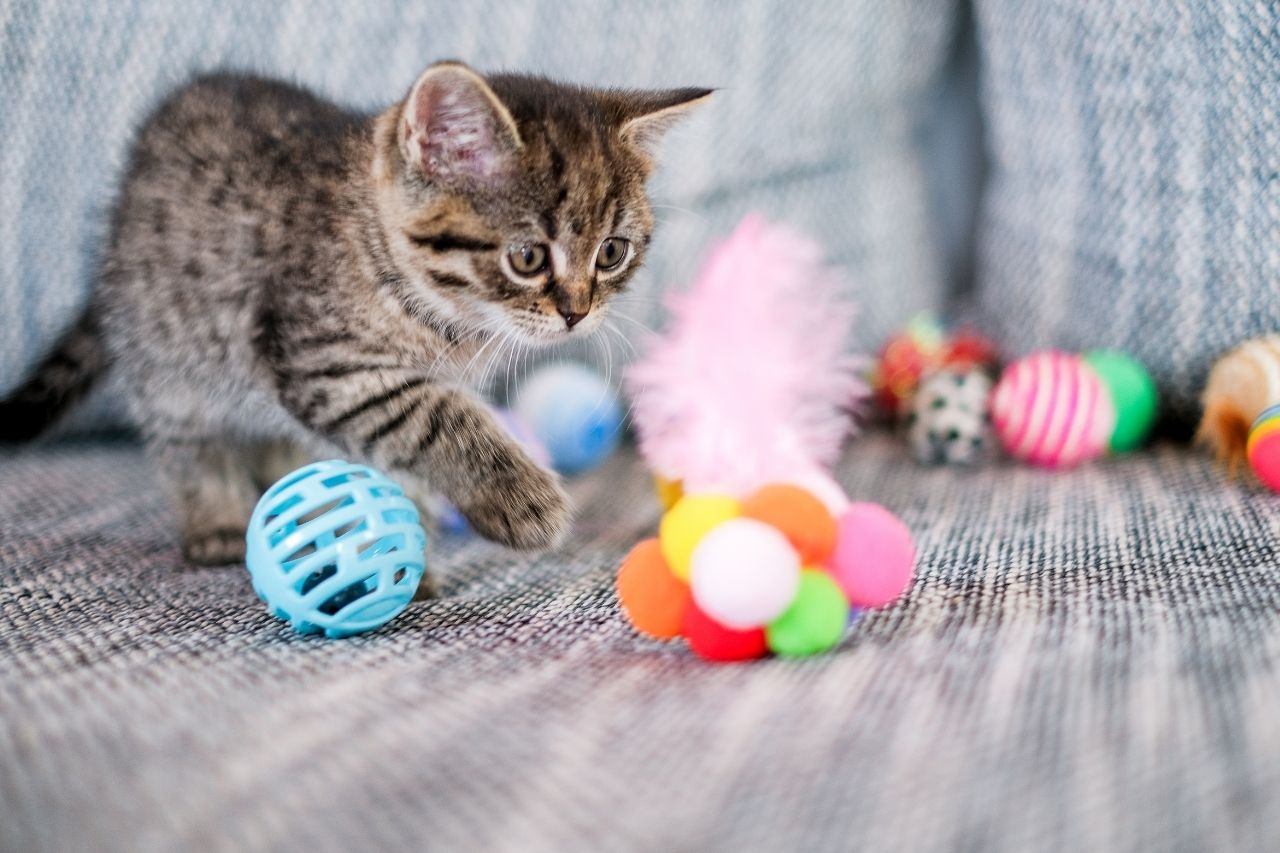
Cats are natural hunters. Even the most pampered indoor cat still has instincts to stalk, pounce, chase, and catch. The right toys tap into those instincts and give your cat an outlet for all that built-up energy, which means less scratching the furniture, less 3am zoomies, and a happier, healthier cat overall.
But not every cat plays the same way. Some are chasers, some are ambushers, some are batters, and some seem to ignore every toy you buy. This guide helps you figure out what your cat actually wants and which toys are worth your money.
Why Toys Matter More Than You Think
Physical Exercise
Indoor cats especially need toys to stay active. Without them, cats can become overweight, lethargic, and prone to health issues. Just 15 to 20 minutes of active play a day makes a real difference. Read more in why indoor cats need daily playtime.
Mental Stimulation
Boredom is one of the biggest causes of behavioural problems in cats, from over-grooming to destructive scratching. Puzzle toys, interactive feeders, and rotating toy selections keep your cat's brain engaged and prevent frustration.
Stress Relief
Play helps cats burn off nervous energy and process stress. This is especially important for anxious cats, cats in multi-cat households, or cats adjusting to a new home. For more, read calming tips for anxious cats.
Types of Cat Toys and Which Cats Love Them
Cats have distinct play personalities. Understanding how your cat likes to play is the key to choosing toys they will actually use.
Wand and Feather Toys
The gold standard of cat toys. Wand toys let you mimic the movement of prey, which triggers your cat's hunting instinct like nothing else. They are perfect for interactive play sessions and work for almost every cat, from kittens to seniors. Move the toy away from your cat (not towards them) to simulate prey trying to escape.
Balls and Mice
Small, lightweight toys that cats can bat, chase, and carry. Crinkle balls, felt mice, and bouncy balls are all popular. These are great for solo play and for cats who like to stalk and pounce. Scatter a few around the house so your cat can "discover" them.
Catnip Toys
Stuffed with dried catnip, these toys trigger a burst of playful energy in most cats. About 60 to 70% of cats respond to catnip (it is genetic), so if your cat goes wild for it, keep a few catnip toys in rotation. Read what is catnip? for the full story.
Puzzle and Treat-Dispensing Toys
Toys that make your cat work for their food or treats. Puzzle feeders, treat balls, and food trees slow down eating, provide mental stimulation, and mimic the problem-solving cats would do in the wild. Brilliant for indoor cats and food-motivated cats. Read the benefits of cat puzzle toys.
Ball Tracks and Circuit Toys
Enclosed tracks with balls that spin around inside. Cats can bat the ball endlessly without it rolling under the couch. These are great for solo play and for cats who love repetitive batting and chasing motions.
Electronic and Motion Toys
Battery-powered toys that move on their own, like laser pointers, fluttering butterflies, and vibrating mice. These are handy when you cannot play interactively, but should not replace wand toy sessions entirely. Cats need the satisfaction of actually catching something.
Scratching Posts and Pads
Scratching is not just about sharpening claws. It is a full-body stretch, a stress reliever, and a way for cats to mark territory. Every cat needs at least one scratching surface. Vertical posts, horizontal pads, and cardboard scratchers all work. Read our ultimate guide to cat scratchers.
Tunnels and Hideaways
Crinkle tunnels and pop-up hideaways tap into your cat's love of enclosed spaces and ambush play. Cats love darting through tunnels, hiding inside, and pouncing on toys (or ankles) from the other end.
Best Cat Toys by Age
Kittens (under 12 months)
Kittens are bundles of energy who want to play with everything. They are learning to hunt, pounce, and coordinate their movements, so toys that move unpredictably are ideal. Wand toys, small balls, crinkle toys, and soft mice are all great choices. Avoid toys with small parts that could be swallowed. For a stage-by-stage breakdown, read kitten toy timeline: 8 weeks to 12 months.
Adult cats (1 to 10 years)
Adult cats have established play preferences. Some are chasers, some are ambushers, and some prefer puzzle-solving over physical play. The key is variety. Rotate between wand toys for interactive sessions, puzzle feeders for mental stimulation, and solo toys like ball tracks for when you are not around.
Senior cats (10+ years)
Older cats still need play, but they may prefer gentler, shorter sessions. Slow-moving wand toys, puzzle feeders with easy difficulty settings, and catnip toys they can bat around at their own pace are all good options. Avoid toys that require jumping or fast reflexes if your cat has joint issues.
Best Toys for Indoor Cats
If your cat lives indoors, toys are not optional. They are essential. Indoor cats do not get the stimulation of hunting, climbing trees, or exploring new territory, so you need to recreate that enrichment at home. A good indoor cat toy setup includes:
- At least one wand or feather toy for daily interactive play
- A puzzle feeder or food tree to make mealtimes more engaging
- A ball track or circuit toy for solo play
- A scratching post or pad (ideally one per cat, plus one extra)
- A tunnel or hideaway for ambush play
- A rotation of 3 to 5 toys swapped every few days to prevent boredom
For a full setup guide, read indoor cat enrichment: how to keep your cat happy indoors.
What to Do When Your Cat Ignores Their Toys
If your cat seems uninterested in toys, it usually means one of three things: the toy does not match their play style, they have lost the novelty factor, or the toy is not being presented in the right way. Here are some quick fixes:
- Move the toy away from your cat, not towards them. Prey runs away, it does not charge at the predator
- Try different textures and movements. Some cats prefer feathers, others prefer crinkle, and some only respond to things that slide along the floor
- Rotate toys every 2 to 3 days. Put some away and bring them back later so they feel new again
- Play at the right time. Most cats are most active at dawn and dusk, so schedule play sessions around those times
- Try catnip or silvervine on toys that have lost their appeal
- End play sessions while your cat is still interested, not after they have lost interest. Leave them wanting more
For more strategies, read best cat toys to keep your kitty engaged.
Cat Toy Safety Tips
Toys to avoid or supervise closely
String, ribbon, yarn, rubber bands, and hair ties are extremely dangerous if swallowed. They can cause linear foreign body obstructions, which are a surgical emergency. Never leave these out unsupervised, and always put wand toys away after play.
- Always supervise play with wand toys, string toys, and feather toys. Put them away when you are done
- Check toys regularly for loose parts, exposed stuffing, or broken pieces
- Replace toys that are falling apart. A damaged toy is a choking or ingestion risk
- Avoid toys with small button eyes, bells, or decorations that can be chewed off and swallowed
- Laser pointers are fun but always end the session by directing the dot onto a physical toy your cat can catch. Cats need the satisfaction of a "kill" to avoid frustration
- Read how often to replace your cat's toys for a full safety guide
How Many Toys Does a Cat Need?
You do not need to buy dozens of toys. Quality and variety matter more than quantity. A good starting kit for most cats includes:
- 1 to 2 wand or feather toys (for interactive play with you)
- 3 to 5 small solo toys (balls, mice, crinkle toys) rotated every few days
- 1 puzzle feeder or treat-dispensing toy
- 1 scratching post or pad
- 1 to 2 catnip toys (if your cat responds to catnip)
Keep half the toys put away and swap them out every few days. This simple rotation trick makes old toys feel new again and keeps your cat interested without you having to constantly buy more.
Shop Cat Toys
Find the Perfect Toy for Your Cat
Browse the full range of cat toys at Petdirect, from wand toys and puzzle feeders to catnip toys and scratching posts. Enjoy free shipping on orders over $79.
Shop Cat ToysFrequently Asked Questions
How long should I play with my cat each day?
Aim for at least 15 to 20 minutes of interactive play per day, split into two or three short sessions. Kittens and young cats may need more. Even senior cats benefit from a few minutes of gentle play. The best times are usually early morning and early evening, when cats are naturally most active.
Why does my cat ignore expensive toys but play with a bottle cap?
Cats are attracted to movement, texture, and novelty, not price tags. A bottle cap sliding across a hard floor mimics prey perfectly. The trick is to choose toys that move in interesting ways and to rotate them regularly so they stay novel. Sometimes the simplest toys are the most effective.
Are laser pointers safe for cats?
Laser pointers are fine for short play sessions, but always end by directing the dot onto a physical toy or treat that your cat can catch. Cats need the satisfaction of a successful "hunt". Chasing a dot they can never catch can lead to frustration and anxiety over time.
Do indoor cats need more toys than outdoor cats?
Yes. Outdoor cats get mental and physical stimulation from exploring, hunting, and climbing. Indoor cats rely entirely on you and their environment for enrichment. A good selection of toys, a scratching post, and daily interactive play are essential for indoor cats. Read how to keep indoor cats active for more.
Is catnip safe for cats?
Yes, catnip is completely safe and non-addictive. It triggers a temporary burst of playful energy in about 60 to 70% of cats (the response is genetic). The effect lasts around 10 to 15 minutes, after which your cat will lose interest until the next exposure. Read what is catnip? for the full explanation.
How often should I replace my cat's toys?
Replace toys as soon as they show signs of damage: loose parts, exposed stuffing, frayed string, or broken pieces. For a detailed guide on when to toss and when to keep, read how often to replace your cat's toys.