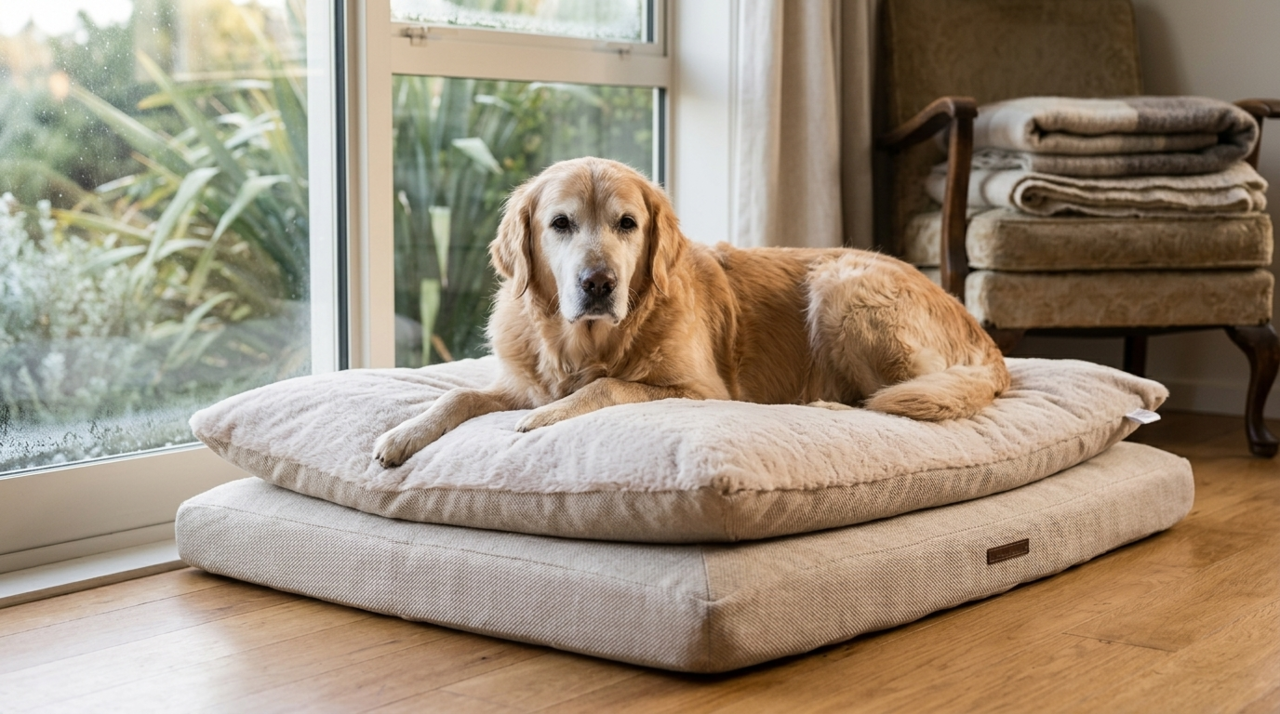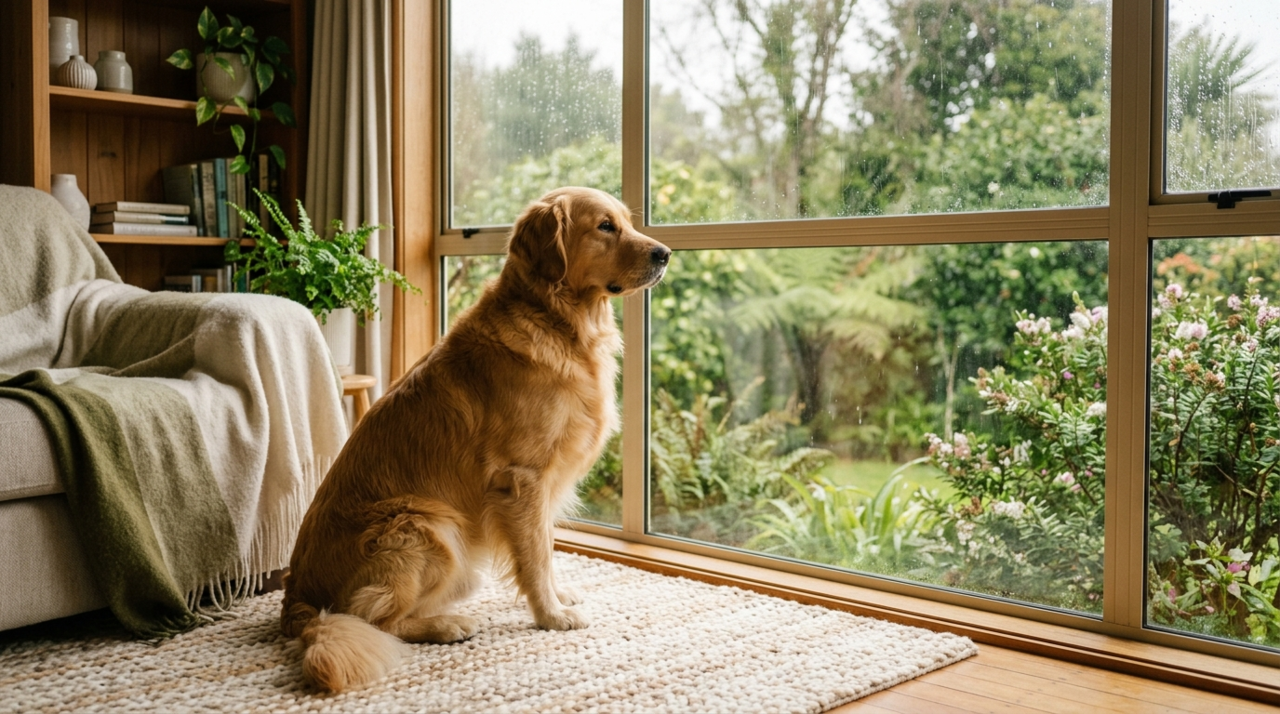
It's pelting down outside. Your dog is standing at the door looking at you. The walk is not happening today. And by 4pm your normally chilled-out pup has started chewing the rug, pacing the kitchen, or staring at you with that very specific "I have so much energy and you are responsible for fixing this" expression.
NZ winters mean wet days, dark afternoons and short windows of decent weather. Most dogs can happily skip a walk or two when the conditions are bad, as long as you're putting in mental work to replace the physical work they're missing. The good news is that mental enrichment is often more tiring than a wet park lap anyway. Here's how to get through a whole winter of grim days without anyone losing the plot.
Quick answer
The best indoor dog activities for wet NZ winters mix mental enrichment (snuffle mats, lick mats, food puzzles), scent work and find-it games, short training sessions, indoor playtime (tug, fetch in a hallway), and long-lasting chews for downtime. Aim for one 15 to 20-minute enrichment session in the morning, one in the afternoon, and a chew or stuffed lick mat in the evening to replace the energy a missed walk would have burned. Mental work tires most dogs out as much as physical exercise.
Why Mental Enrichment Works as Well as a Walk
A 30-minute walk does two things for a dog: physical exercise and mental stimulation (smells, environment, social info). When the weather rules out the walk, you can replace both with indoor enrichment, but the mental side is doing most of the heavy lifting. Most dogs who get a focused enrichment session come out of it more tired and more settled than they would from a quick lap around the block.
That doesn't mean indoor enrichment replaces walks long-term. It means you can absolutely get through a wet day, or a wet week, without your dog climbing the walls.
1. Food Puzzles and Slow Feeders
Turn dinner into a 20-minute job
The single highest-leverage swap on a wet day is taking your dog's normal dinner out of the bowl and putting it into a puzzle or slow feeder instead. Same food, same calories, dramatically more enrichment. Most dogs go from inhaling a bowl in 90 seconds to working at a puzzle for 15 to 20 minutes.
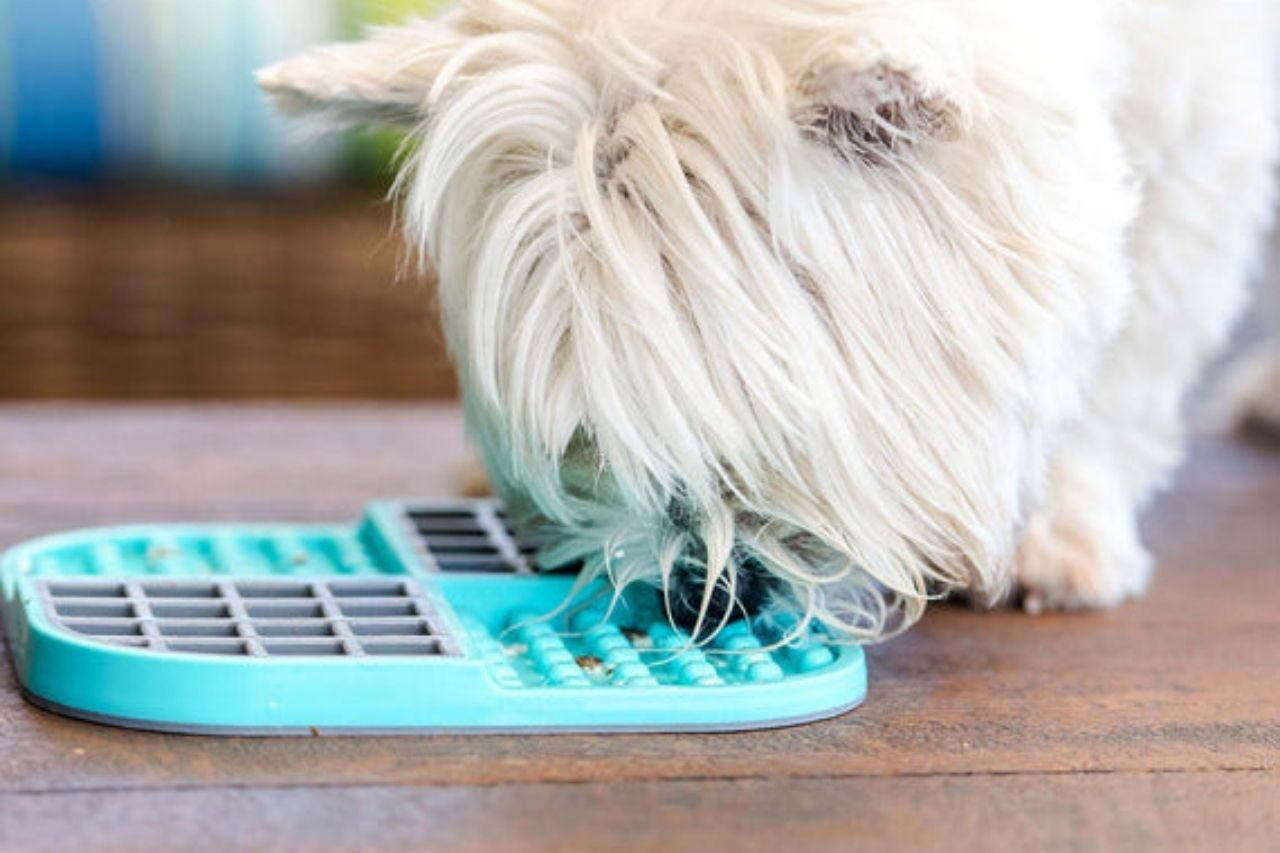
Lickimats are the easiest entry point. Smear with wet food, a spoon of peanut butter, or a meat-based topper, and pop in the freezer for an extra 5 to 10 minutes of work. Puzzle feeders (sliders, twisters, rotating discs) work for dogs ready for more of a challenge.
Want recipe ideas? Our Healthy Lick Mat Recipes guide has loads.
2. Nose Work and Find-It Games
Burn energy through the most powerful sense your dog has
Dogs experience the world through their nose. Scent work is one of the most genuinely tiring activities you can give them, and it doesn't require any space. You can play in a lounge, a kitchen or a single bedroom.
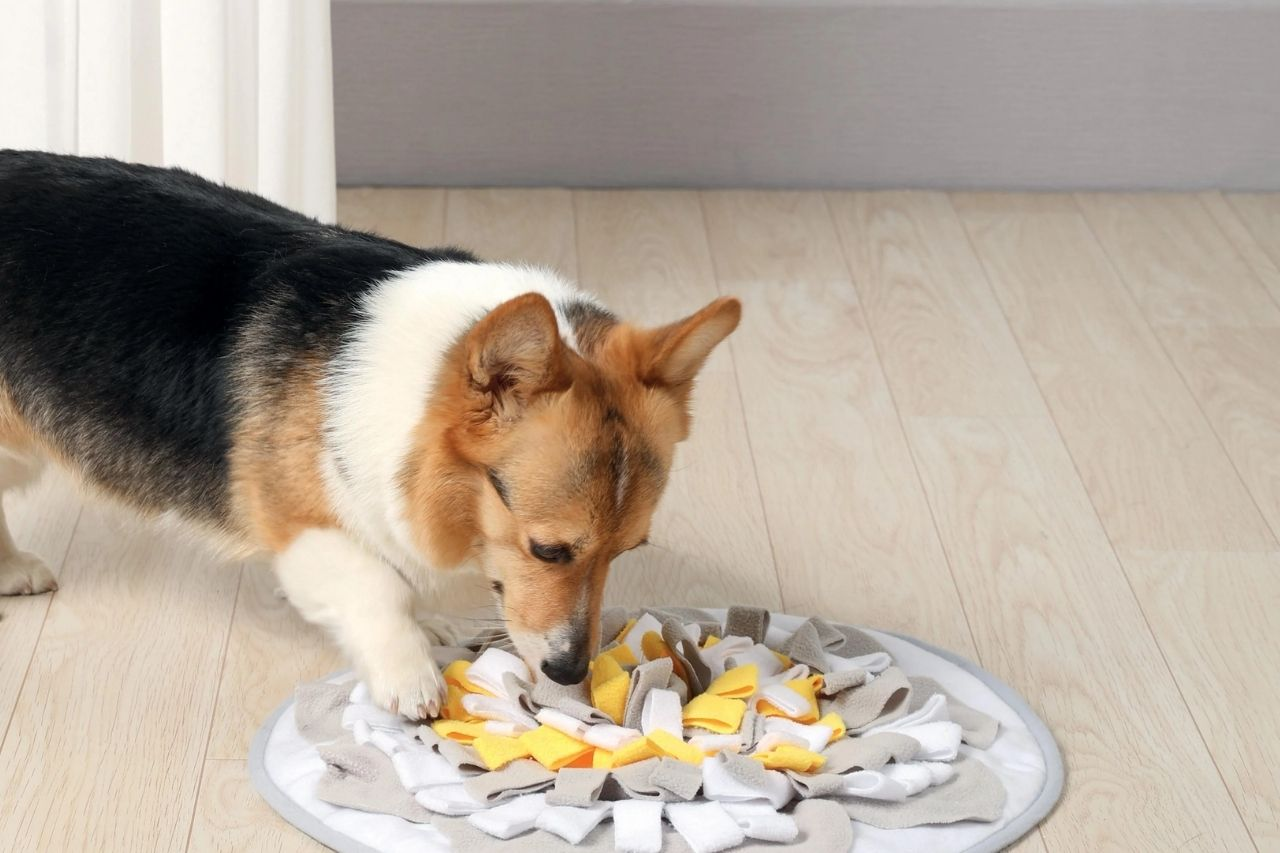
Snuffle mats are the quick win, scatter dry food or training treats through the fabric and let your dog sniff them out. For something more elaborate, try a kibble hunt around a room, hidden treats in egg boxes, or rolled-up towels with food tucked inside.
Easy DIY: grab three muffin trays, drop a treat in each cup, cover with tennis balls. Your dog has to figure out which ones have the treats and how to move the balls. 10 minutes of work, zero cost.
For more snuffle and scent-work ideas, our Best Snuffle Mats for Dogs in NZ guide goes deeper.
3. Short Training Sessions
5 minutes is plenty
Most owners think of training as something you do at puppy class. In reality, five focused minutes with a clicker and a handful of treats is one of the best indoor activities for a wet afternoon. It uses your dog's brain hard, builds your relationship, and is genuinely fun for both of you.
Pick one skill per session: a recall in a hallway, a sit-stay while you walk to the kitchen, a hand touch, a "find it" cue with hidden treats, a learn-your-name game with toys. Short and successful beats long and frustrating every time.
Trick training is another excellent winter project. Spin, roll over, paw, bow, weave through legs. Five minutes a day for a week and your dog has a new party trick. The bonus: shaping new behaviours is mentally exhausting for dogs in the best way.
4. Indoor Playtime
Yes, you can do this inside
A short burst of structured play does wonders. The trick is to make it intentional rather than just letting your dog tear around the lounge until something gets broken. Two short sessions of 5 to 10 minutes works better than one long free-for-all.
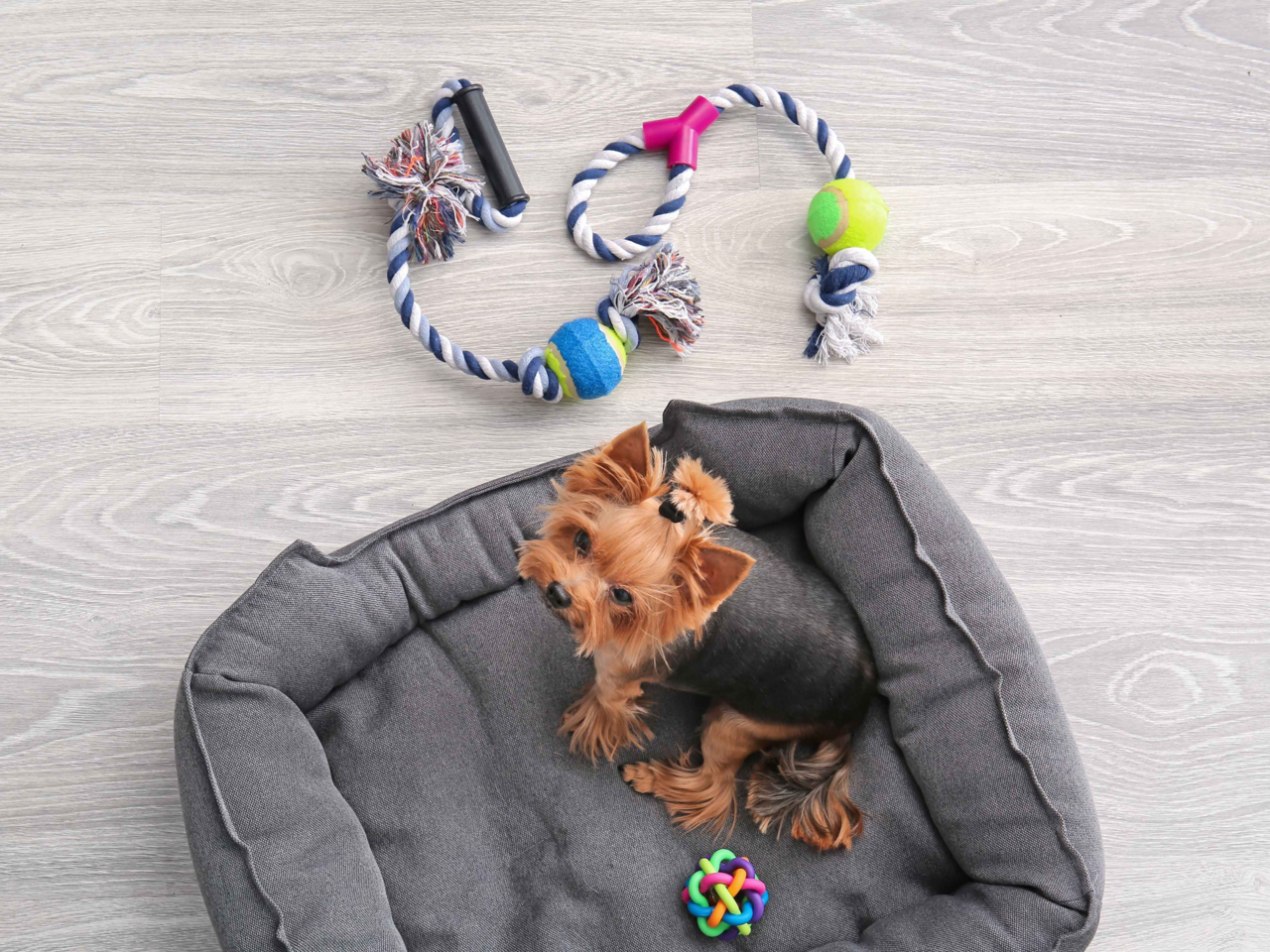
Tug is brilliant indoors because it doesn't need space. Use a proper tug toy, set a "drop it" cue between rounds, and finish on a calm note. Indoor fetch works in long hallways with a soft toy, especially with stairs added in for extra effort. KONG Wubbas and squeakers add a bit of unpredictability.
Stairs are an unsung winter weapon: if you've got them, a few minutes of throwing a soft toy up and down the stairs gets your dog working hard without leaving the house. Skip this one for puppies under 12 months and for senior dogs with joint stiffness.
5. Long-Lasting Chews
The most underrated winter tool
Chewing is genuinely calming for dogs. It releases endorphins, helps reduce stress, and gives them 20 to 60 minutes of focused, settled time. On a wet winter afternoon when you'd otherwise be fielding "what now?" looks every ten minutes, a good chew is gold.
Mix it up week to week so your dog doesn't get bored: stuffed KONGs, durable rubber chews, natural chews like pigs' ears or deer antlers, dental chews, and Benebones all give a different chewing experience.
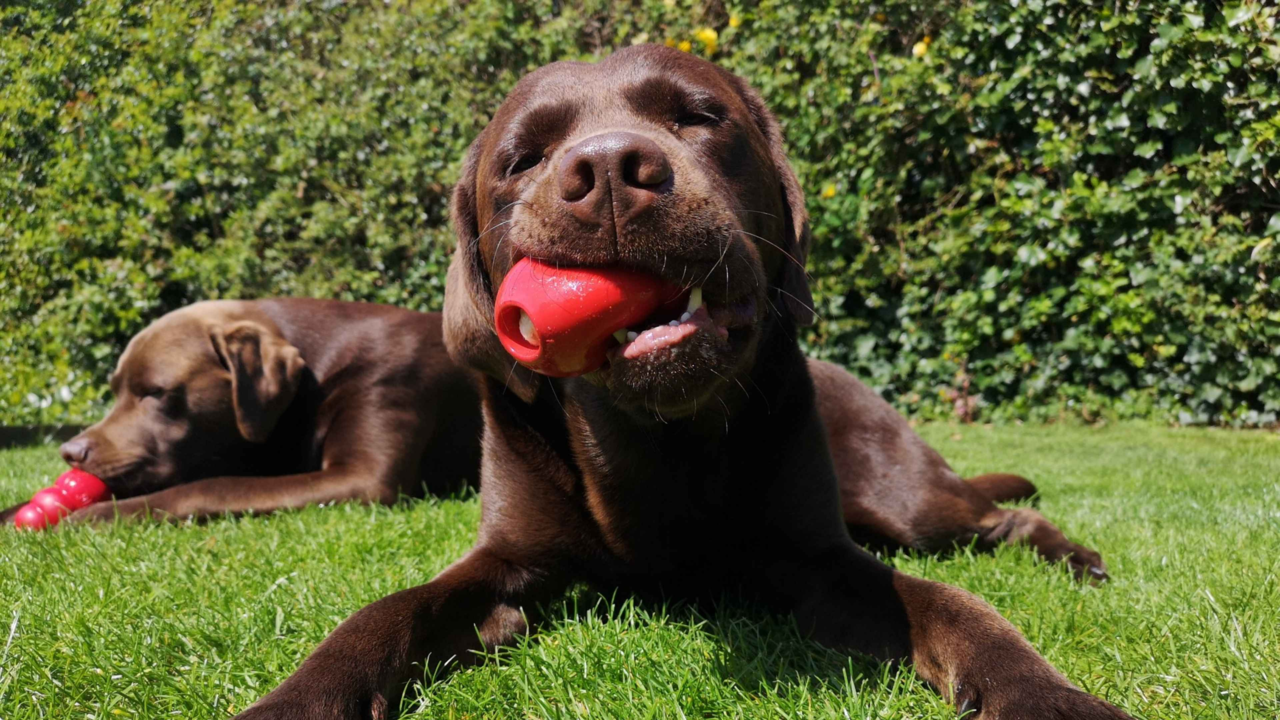
Stuffing tip: pack a KONG Classic with wet food or a kibble-and-yoghurt mix, freeze it overnight, hand it over after a play session. Most dogs will work at a frozen stuffed KONG for half an hour or more, and they end up beautifully settled afterwards.
6. Calm Companionship
Don't underestimate the boring bits
Not every indoor activity needs to involve a toy or a treat. A relaxed grooming session, a long cuddle on the couch, or just letting your dog hang out in the same room while you work all count as enrichment. Dogs are social animals and just being near you is calming.
Brushing is doubly useful in winter: it gets you hands-on with your dog (good for spotting any changes in coat or skin), it stimulates blood flow, and it tires most dogs out in a quietly comfortable way. Many dogs love it once they get used to the routine.
Sample Wet-Day Schedule
Stuck on a wet day and not sure how to space it out? Here's a routine that's worked for plenty of NZ dog owners.
Morning (15 to 20 mins)
Breakfast in a lick mat or puzzle feeder instead of the bowl. Quick 5-minute training game while it's still drizzling. Toilet break in the garden when there's a gap.
Mid-morning
Long-lasting chew (frozen stuffed KONG, antler, pigs' ear) for 20 to 30 minutes of calm settled time. You get a coffee, your dog gets a job.
Afternoon (15 to 20 mins)
Bigger enrichment session. Snuffle mat hunt, puzzle feeder challenge, or 10 minutes of tug followed by 5 minutes of trick training. Aim to tire the brain, not exhaust the body.
Evening (slow wind-down)
Dinner in a lick mat for slow eating. Calm grooming session on the couch or floor. Quiet time together while you watch something. Most dogs will settle into a deep sleep after a day like this.
Frequently Asked Questions
Is it okay if my dog doesn't get a walk every day in winter?
Most healthy adult dogs are completely fine skipping a walk on a really wet or cold day, as long as the indoor work is replacing some of what that walk would have given them. Mentally tired dogs settle just as well as physically tired ones. What you want to avoid is a string of days where neither walks nor enrichment are happening, since that's when boredom and frustration build up.
How much indoor enrichment does my dog need to replace a walk?
As a rough guide: a 30-minute walk can be replaced with two 15-minute focused enrichment sessions plus a long-lasting chew. The key word is focused, scattering toys around the lounge isn't enrichment unless your dog is actually engaging with them. The aim is mental tiredness, which is usually visible: your dog is calmer, settling sooner and sleeping deeper afterwards.
What if my dog has loads of energy and these activities barely touch it?
High-energy dogs often need indoor work that's more challenging rather than longer. Move from a beginner puzzle to a harder one, or from food scattered on a snuffle mat to food hidden under flaps. Add a 5-minute training session focused on shaping a new behaviour, which is significantly more tiring than running through known cues. And for some dogs, getting properly kitted out (jacket, harness, towel by the door) and doing a 15-minute walk in the wet anyway is the right call.
My dog destroys puzzles in 5 minutes. What's the point?
You've got a smart dog and a puzzle that's not challenging them. Try a harder level of the same puzzle, a lickimat with frozen food (the freezing makes it last much longer), or layer puzzles by starting with a puzzle inside a snuffle mat, or a lickimat tucked under a towel they have to unwrap. Difficulty is the variable. The other lever is novelty, rotate three or four puzzles week to week rather than using the same one every day.
Are these activities good for puppies too?
Yes, and arguably more important. Puppies are mental sponges and a wet day with no enrichment can mean a frustrated puppy chewing your skirting boards. Keep training sessions to 2 to 3 minutes for very young puppies, use puppy-sized puzzles, and avoid hard chews until adult teeth are settled. Lick mats, snuffle mats and treat puzzles are puppy-perfect.
What about my senior dog?
Senior dogs benefit from gentler versions of all of the above. Skip the stairs game and the high-energy tug, lean into snuffle mats, lick mats, scent games and calm training. Mental work is especially valuable for older dogs whose physical activity is naturally tapering off. Our Keeping Your Senior Dog Warm This Winter guide covers the broader senior winter routine.
How long should an enrichment session last?
For most dogs, 15 to 20 minutes per session is the sweet spot. Long enough to be genuinely tiring, short enough that you can do two or three across a day without it feeling like a chore. The exception is long-lasting chews and frozen lick mats, which are designed to give 30 to 60 minutes of self-directed time.
Can two dogs share enrichment activities?
Not usually. Puzzles, lick mats, snuffle mats and chews are best given separately, in different rooms or in crates, so each dog can focus and resource guarding doesn't kick in. Training and play are easier to do as a group if your dogs work well together. If you've got multiple dogs, double up on the basic kit.
Where do I store all this stuff?
One toy box per category works well: puzzles in one, chews in another, training kit (treats, clicker) in a third. Rotate what's out so your dog sees novelty. The basket-by-the-door approach keeps everything accessible without flooding the lounge.
Stock the Winter Indoor Kit
Lick mats, snuffle mats, puzzle feeders, long-lasting chews, training treats and tug toys, find everything you need to get through a wet NZ winter in one place. Don't forget to check out the Winter Hub for the full lineup of beds, coats and indoor essentials.
SHOP INDOOR DOG TOYS