Enrichment gives dogs safe ways to sniff, search, chew, learn, move and make choices. It does not need to mean a cupboard full of new toys or an hour-long training session. A few thoughtful activities, fitted around your normal day, can help make life more interesting and satisfying for your dog. At Petdirect, we get pets, and we know the most useful routine is one that suits the dog in front of you.
Quick answer
A balanced enrichment routine includes mental challenges, physical movement, sensory exploration and plenty of rest. Start with one or two short activities your dog enjoys, rotate them through the week and adjust the difficulty by watching your dog's body language.
What dog enrichment really means
Enrichment is any safe activity that lets a dog use natural behaviours in an appropriate way. A sniffy walk, a cardboard-box search, a two-minute training game and a frozen food toy can all count. The aim is not to keep your dog busy every minute. It is to offer suitable outlets, then allow time to settle and recover.
Different activities meet different needs, so variety matters more than complexity. A dog who has had a fast run may still enjoy a slow sniff. A dog who has worked through a tricky puzzle may need a quiet nap afterwards.
Sniff and search
Following scents, investigating a new route and searching for food let dogs gather information at their own pace.
Forage and solve
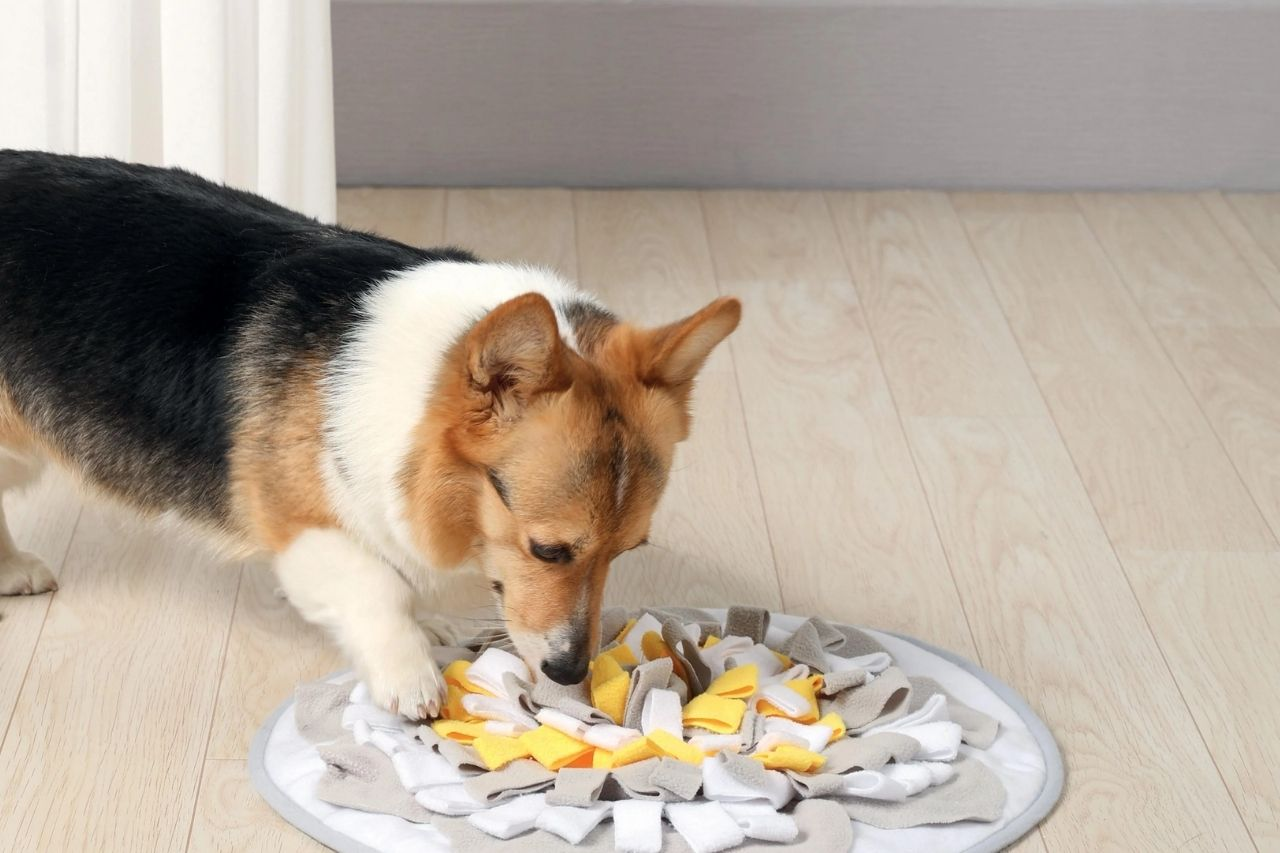
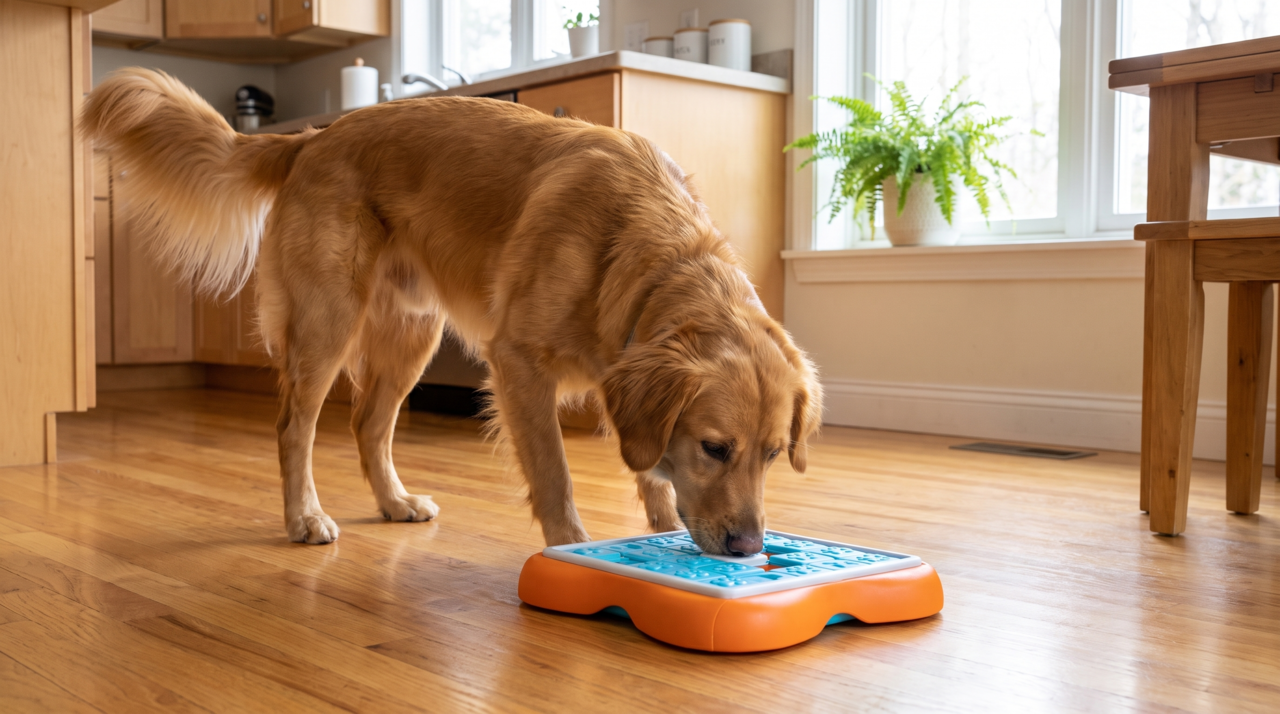
Puzzle feeders, scatter feeding and simple problem-solving games turn part of a daily food allowance into a useful activity.
Chew and lick
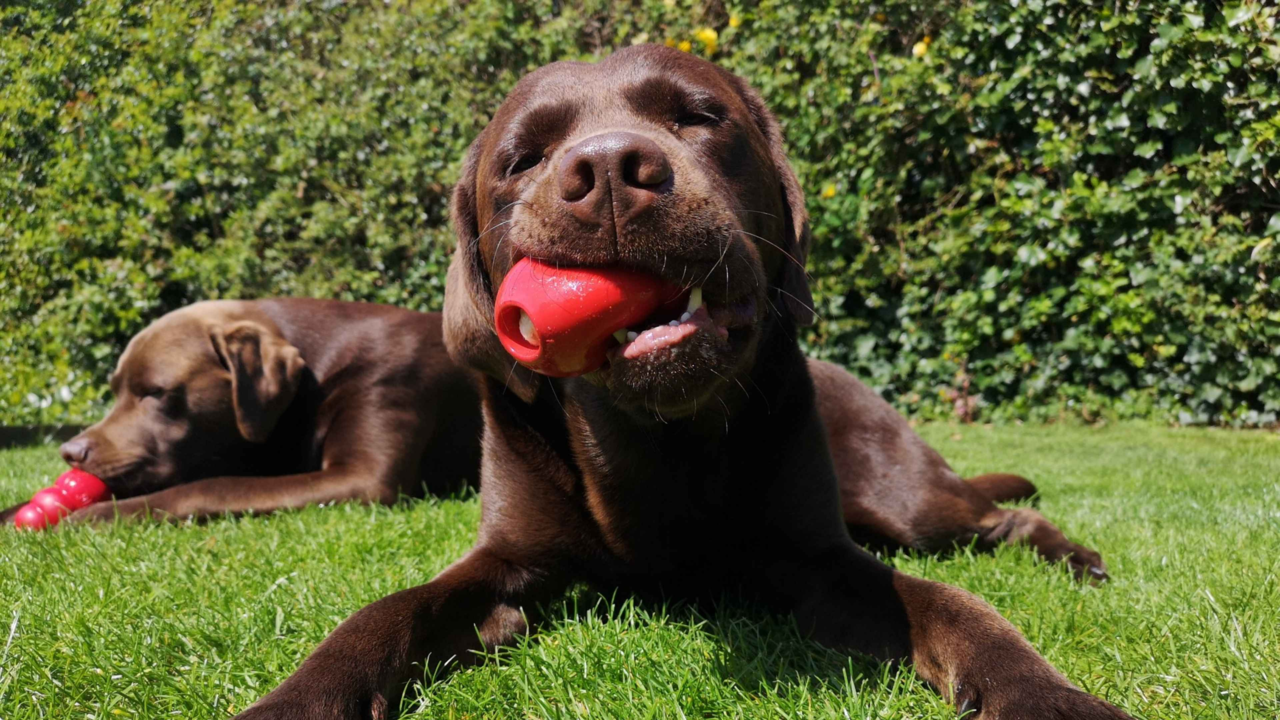
Suitable chews and lick mats can support calm, focused time when they are matched to your dog's size, chewing style and diet.
Move and learn
Walks, play, balance work and short training sessions can build confidence and help dogs practise useful skills.
A simple daily dog enrichment routine
Use this as a flexible starting point rather than a strict timetable. Your dog's age, health, breed traits and individual preferences should guide the pace.
Morning: start with the nose
Allow time for sniffing on the walk, scatter part of breakfast across a safe lawn or hide a few pieces of kibble around one room.
Midday: offer a small choice
Leave out one suitable chew, food toy or safe item from a rotating toy box. For dogs home alone, test every item under supervision first.
Afternoon: move and connect
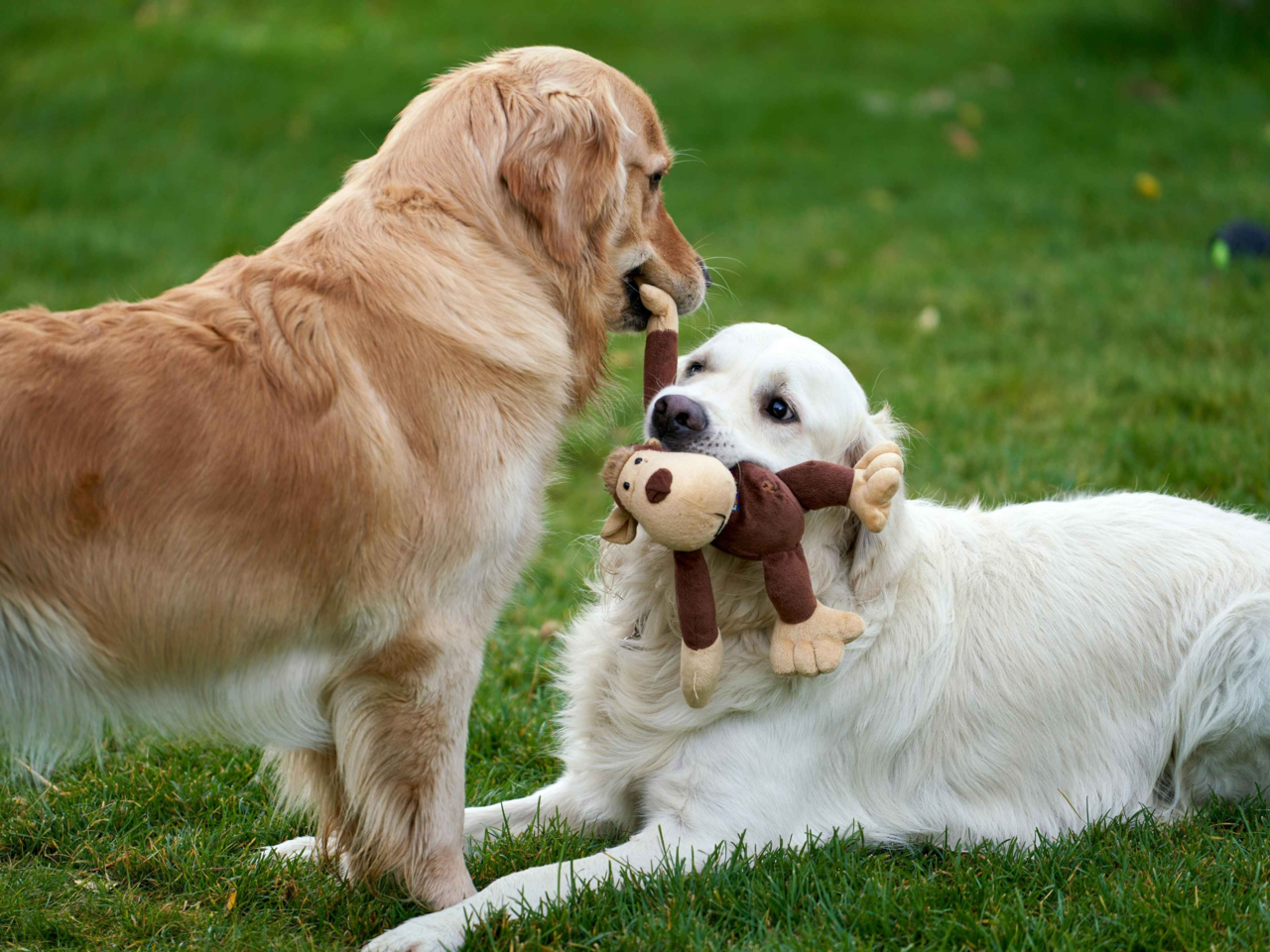
Try a walk, a controlled game of tug, a retrieve session or a few minutes practising cues your dog already understands.
Evening: lower the tempo
Finish with calm sniffing, gentle grooming, a lick mat or quiet time on their bed. Rest is part of a good enrichment routine.
Ten easy enrichment ideas to rotate
1. Make mealtimes a brain game
Use a slow feeder or food puzzle for some of your dog's usual meal. Begin with an easy setup so they can succeed, and count the food towards their daily allowance.
2. Play “find it”
Ask your dog to wait while you place a treat in an obvious spot, then release them to search. Increase the difficulty gradually by using more hiding places or another room.
3. Take a sniff-led walk
Choose a safe route and let your dog pause to investigate. A shorter walk with plenty of choice can provide a different kind of value from covering as much distance as possible.
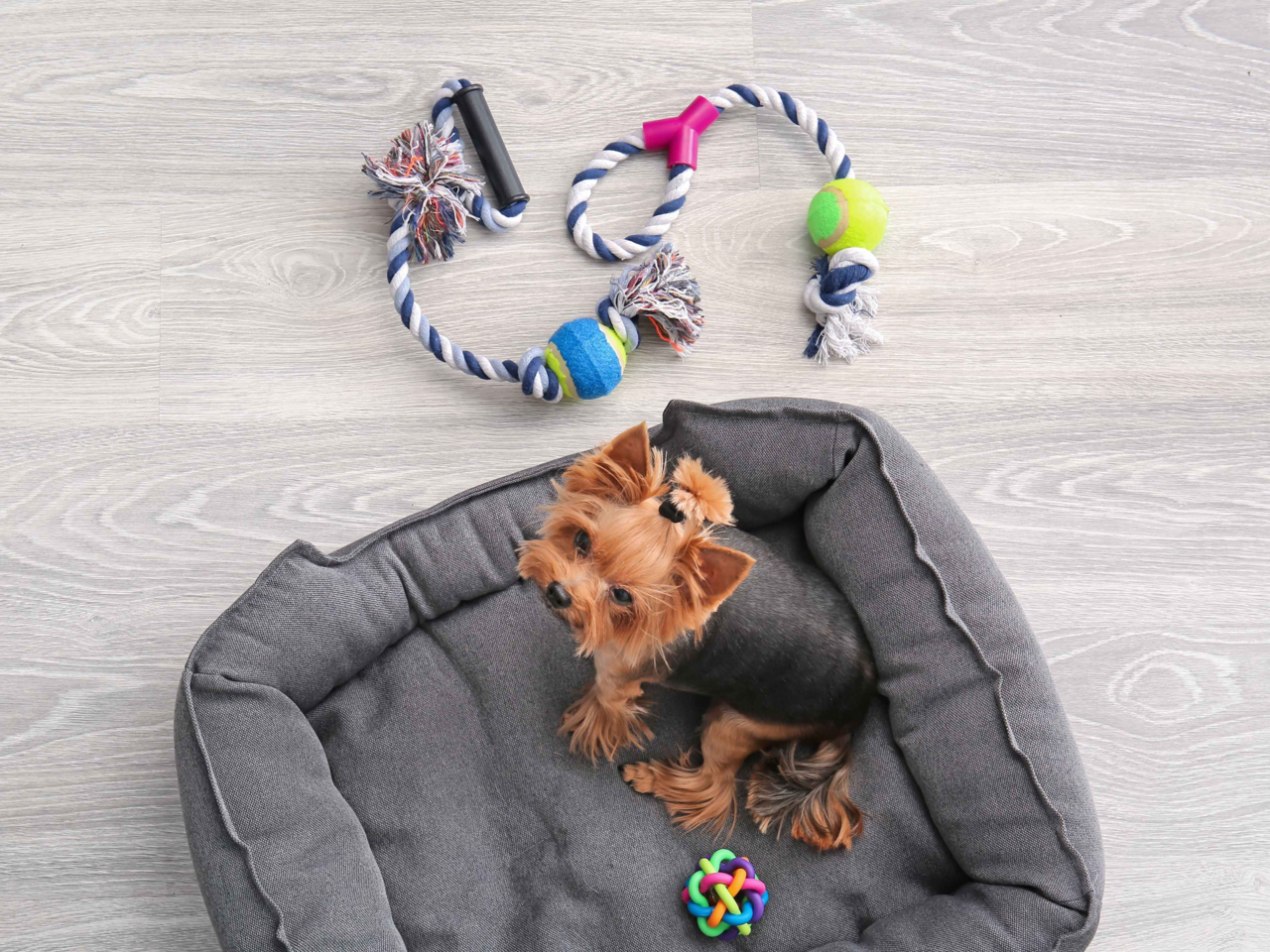
4. Rotate familiar toys
Keep a few toys available and put the rest away. Swap them every few days so familiar items feel interesting again without needing to buy something new.
5. Build a cardboard search
Place scrunched paper and a few pieces of food inside an open box, then let your dog investigate. Supervise closely and skip this idea if your dog swallows cardboard or paper.
6. Add two-minute training bursts
Practise a hand target, settle on a mat, wait at a doorway or another useful skill. Stop while your dog is still engaged and reward the behaviour you want repeated.
7. Change one thing on the walk
Walk the usual route in reverse, visit a quieter park or pause for a simple search game. New does not need to mean busy or overwhelming.
8. Offer an appropriate chew
Chewing can be a satisfying outlet. Choose an option suited to your dog's size and chewing strength, follow the product guidance and supervise use.
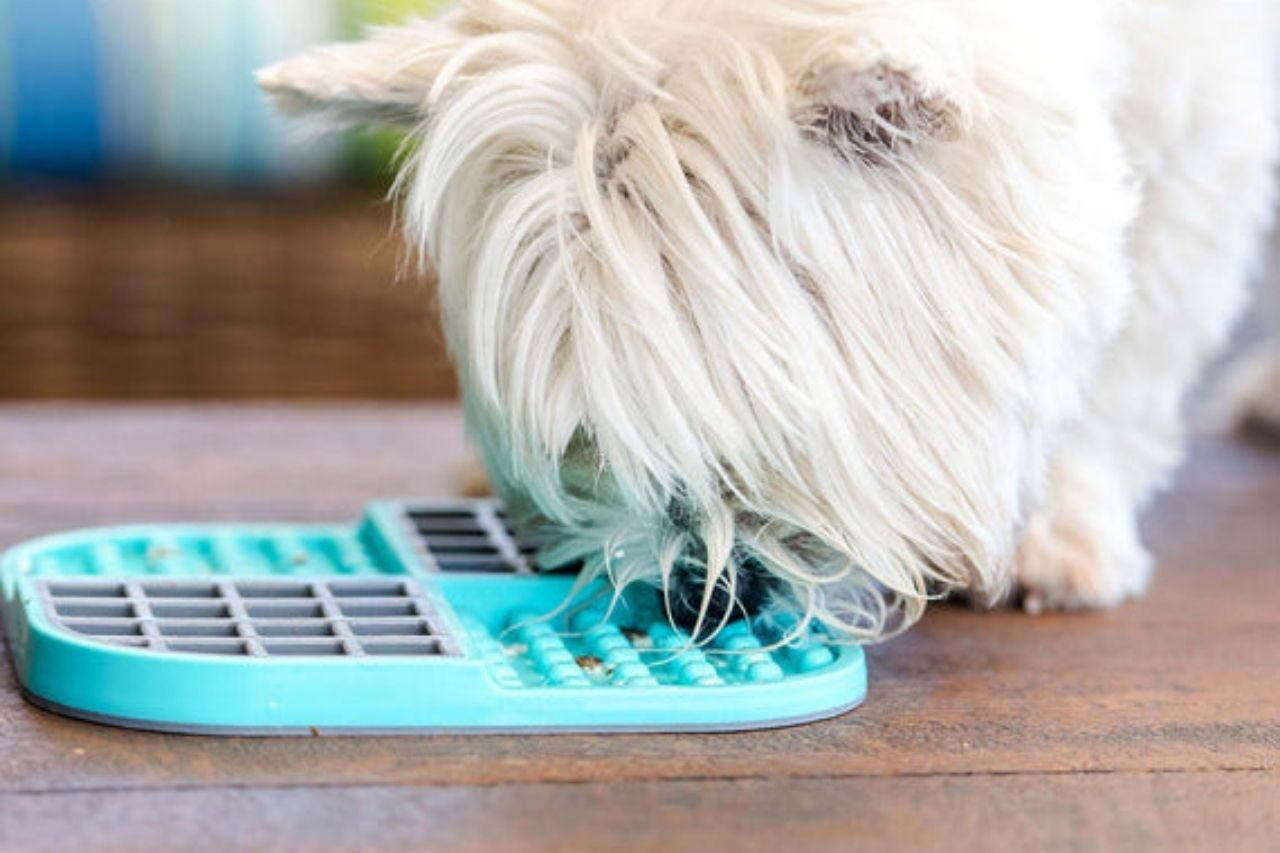
9. Try a calm lick activity
Spread a thin layer of a dog-suitable food over a lick mat. Keep portions modest, check that every ingredient suits your dog and wash the mat after use.
10. Let your dog choose
Offer two suitable toys, two walking directions or a choice between resting places. Small, safe choices can make everyday routines more engaging.
Keep food enrichment balanced
Use part of your dog's normal meal where possible. Treats, chews and lick-mat toppings all add to daily intake, so keep portions suitable for your dog's feeding plan.
Match enrichment to your dog
Puppies
Keep activities short and easy. Use safe surfaces, protect growing joints and prioritise confidence over speed or difficulty. Puppies also need plenty of sleep.
Adult dogs
Mix physical exercise with scent work, play and learning. High-energy dogs often benefit from practising calm behaviours as well as doing more vigorous activity.
Senior dogs
Choose low-impact activities, easy searches and non-slip surfaces. Raise or steady puzzles if bending is uncomfortable, and allow extra time to work things out.
Shy or easily overwhelmed dogs
Start at home with predictable activities. Give your dog space, avoid pressuring them to interact and let them move away. A quieter game they choose to join can be more useful than a busy outing.
How often should dogs do enrichment activities?
There is no universal number. One dog may enjoy several short activities across the day, while another is content with a sniffy walk and a five-minute search game. Start small, look for relaxed engagement and build a routine you can repeat.
Enrichment should not create frustration or exhaustion. If your dog walks away, becomes frantic, barks at the puzzle, guards it or starts chewing the equipment, make the task easier or stop. If an activity is solved instantly, you can add a little difficulty next time without removing the chance to succeed.
Enrichment safety basics
- Supervise new toys, chews, puzzles and homemade activities.
- Choose items that suit your dog's size, strength and play style.
- Remove damaged pieces and anything small enough to swallow.
- Avoid forcing participation or using activities that cause fear.
- Separate dogs for food activities if there is tension or guarding.
- Check ingredients and portions when food is involved.
- Include water, quiet time and uninterrupted rest.
When a behaviour change needs attention
A sudden loss of interest, unusual restlessness, repeated pacing, pain during movement, compulsive behaviour or a major change in sleep, appetite or sociability can have more behind it than boredom. Pause the activity and contact your local clinic if the change is sudden, persistent or worrying.
Optional tools for the routine
You can create excellent enrichment with household items, familiar walks and short training games. If you want to add a purpose-made option, these products can help vary mealtimes and calm activities.
Frequently asked questions
Does a walk count as enrichment?
Yes, especially when your dog can safely sniff, explore and make choices. Walks can provide physical, social and sensory enrichment, depending on the setting.
Can too much enrichment make a dog overtired?
Yes. Constant activity can make it harder for some dogs to settle. Balance games and outings with calm routines and enough sleep.
What can I do when it is raining?
Try an indoor food search, a short training session, a cardboard-box game, gentle tug or an indoor sniffari using safe household objects.
Do I need to buy new toys?
No. Rotating familiar toys, changing walking routes and using simple supervised searches can add variety at little or no cost.
Build a routine your dog enjoys
Start with one easy activity, watch how your dog responds and add variety slowly. The best enrichment is safe, repeatable and suited to the dog in front of you.
EXPLORE DOG TOYS