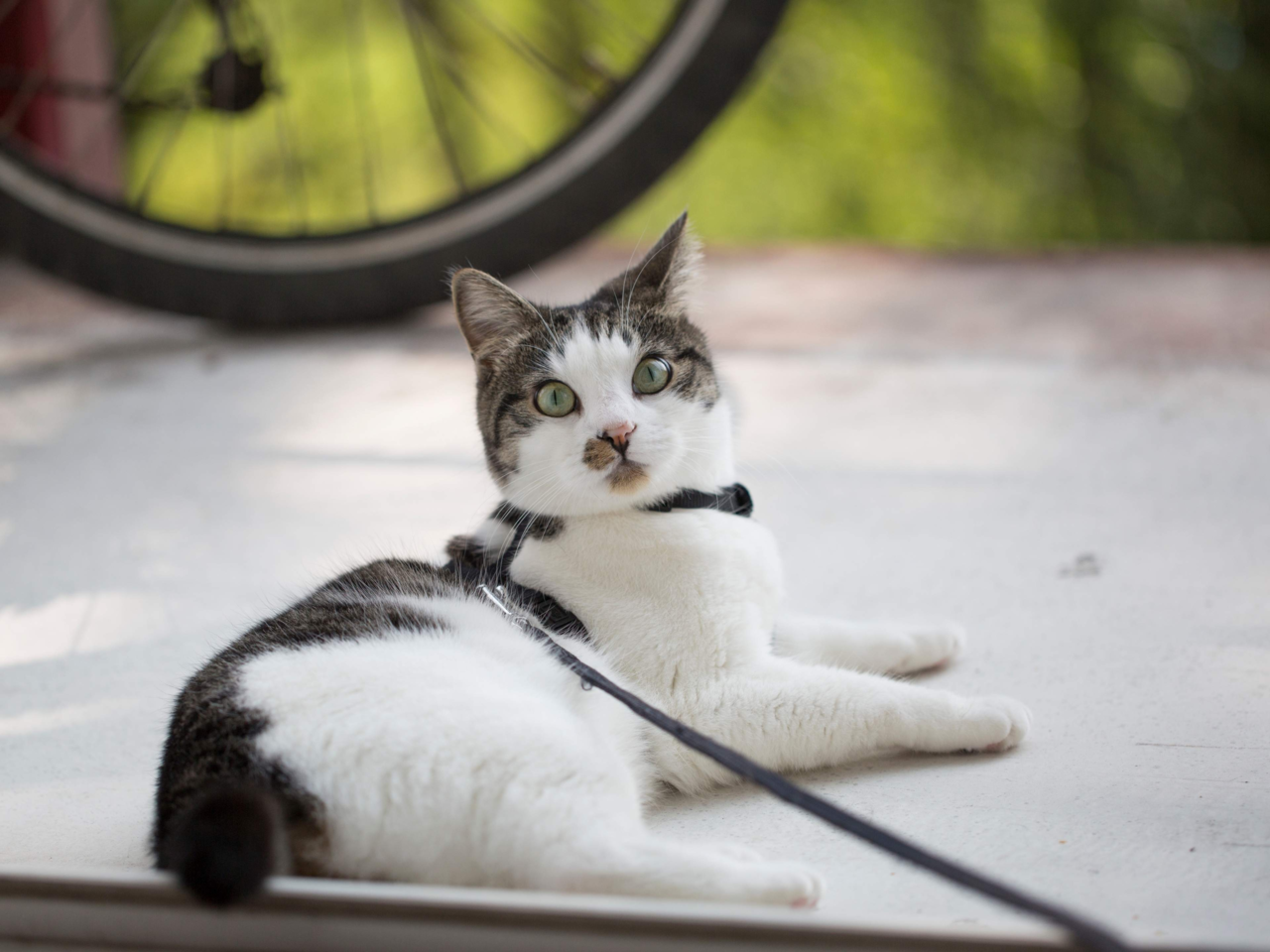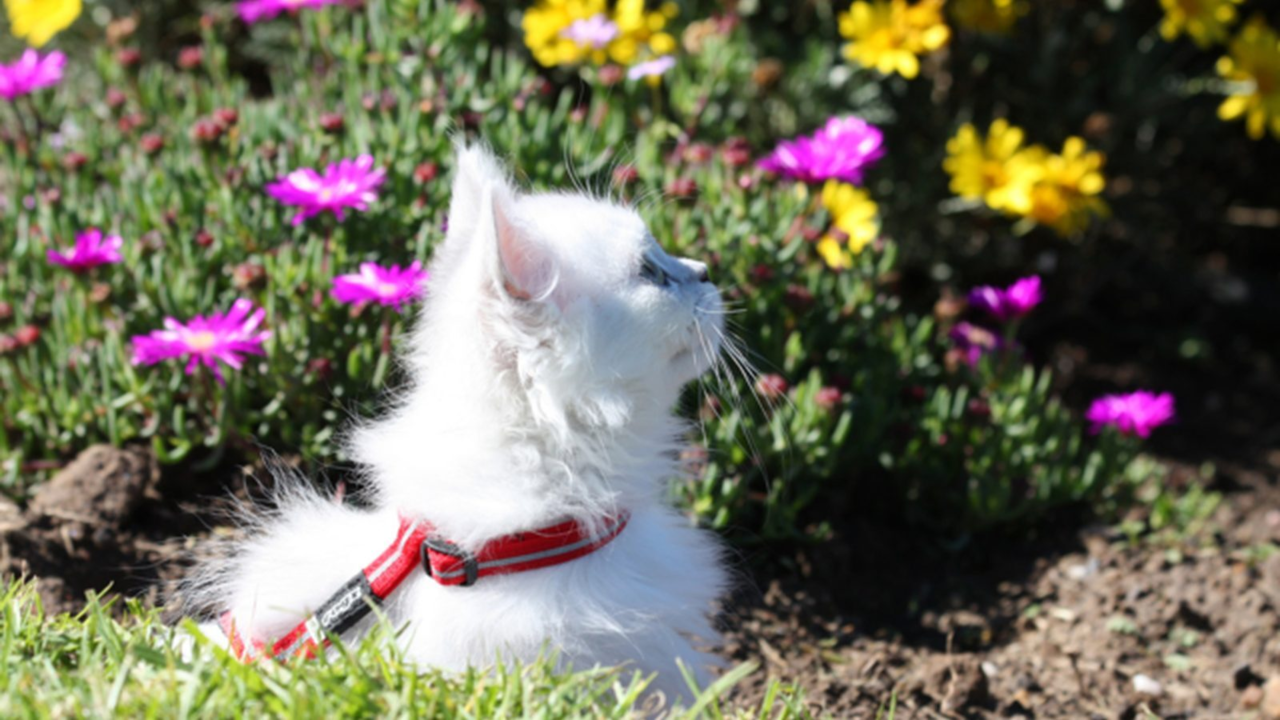
A well-fitted cat harness can make supervised outdoor time, travel and carrier transfers feel more manageable. The right one should sit securely around your cat's body without restricting their shoulders, rubbing behind the front legs or leaving gaps they can reverse through.
This guide focuses on choosing and fitting a harness rather than teaching the full walking process. If your cat is completely new to wearing one, pair these tips with our cat leash-training guide and take each stage at their pace.
Quick answer
The best cat harness is designed for cats, adjustable around the chest and body, and secure enough that your cat cannot easily back out. Soft vest-style harnesses spread contact across a wider area, while lightweight strap-style harnesses offer more freedom and adjustment. Measure your cat before buying, follow the size guide, then use the two-finger check and test the fit indoors before attaching a lead outside.
What makes a good cat harness?
Cats can twist, crouch and move backwards with surprising speed, so a cat harness needs to do more than simply fit around the chest. Look for a shape that stays in place when your cat changes direction and adjustment points that help you remove loose gaps.
A secure shape
The harness should sit around the chest and body rather than pulling on the neck. Check that the rear strap cannot slide forward over the shoulders when gentle backward pressure is applied.
Useful adjustment
Adjustable neck, chest or belly sections help you match the harness to your cat's shape. This is especially useful for kittens, slim cats and cats with a fuller coat.
Comfortable materials
Soft mesh, padding or smooth webbing can help reduce rubbing. Lightweight materials are often easier for first-time wearers, while reflective details add visibility in low light.
Which cat harness style should you choose?
Soft vest-style harnesses
A vest-style harness covers more of the chest and upper body. This can spread contact over a wider area and feel reassuring for cats who are comfortable with the extra coverage. Breathable mesh is helpful for warmer days, and soft padding may suit cats who find narrow straps distracting.
The trade-off is that some cats dislike putting their head or paws through a larger harness. Check the fastening method before buying and introduce it slowly indoors.
Lightweight strap-style harnesses
Strap-style harnesses use webbing around the neck or chest and behind the front legs. They are light, less bulky and often highly adjustable. This can suit confident cats and owners who want a simple harness for short, supervised outings.
Fit matters closely because narrow straps can shift if they are left too loose. Smooth the webbing flat, keep buckles away from sensitive areas and recheck every adjustment point before each outing.
Harness and lead sets
A matching set is a convenient starting point because the supplied lead is intended for the harness. The lead should be light enough that it does not drag the harness sideways. Avoid retractable leads while your cat is learning, as sudden tension and extra distance can make calm handling harder.
How to measure your cat for a harness
Always use the measurements in the product's size guide rather than choosing from breed, age or weight alone. Two cats of the same weight can have very different chest shapes.
- Use a soft measuring tape and ask someone to offer a treat while your cat stands naturally.
- Measure around the fullest part of the chest, just behind the front legs. Keep the tape close without pulling it tight.
- If the harness uses a separate neck measurement, measure around the lower neck where the harness will sit rather than high under the jaw.
- Compare both measurements with the size guide. If your cat sits between sizes, follow the brand's guidance and check that the chosen size has enough adjustment in both directions.
- Re-measure growing kittens regularly and check long-haired cats after grooming or seasonal coat changes.
Keep the measuring session easy
If your cat wriggles away, pause and try again later. Several calm, five-second attempts are better than holding them still and making the harness feel worrying before it even arrives.
How should a cat harness fit?
A secure harness should feel snug, not tight. You should be able to slide two fingers flat beneath the straps, but you should not be able to lift a large loop of material away from the body.
Check the position
- The chest section should sit centrally rather than twisting to one side.
- The body strap should sit behind the front legs without rubbing the armpits.
- Any neck section should stay clear of the throat and should not ride up under the jaw.
- Buckles should close fully and sit away from areas where they may pinch fur or skin.
- Your cat should be able to walk, crouch, sit and turn without the harness limiting normal shoulder movement.
Do a careful indoor escape check
With your cat standing on the floor, hold the lead close to the harness and apply very gentle pressure as they step forward, sideways and backwards. Watch for straps sliding over a shoulder, large gaps opening or the harness rotating. Stop if your cat becomes worried, then adjust the fit and try again another day.
No harness should be treated as completely escape-proof. Keep the lead in your hand, supervise every outing and make sure your cat's microchip details are current.
Cat harnesses to consider
These four available options cover both lightweight webbing and soft mesh styles. Choose according to your cat's measurements, tolerance for coverage and the level of adjustment you need.
- The Rogz Alleycat Cat Harness & Lead Set is a lightweight nylon webbing option with adjustable neck and waist sections, reflective yarn and a 1.8 metre lead.
- The Trixie Soft Cat Harness & Lead Adjustable uses breathable mesh, soft padding and reflective details. Its chest and belly area adjusts continuously, with a stomach circumference range of 24 to 42 centimetres.
- The Trouble & Trix High Street Cat Harness & Lead Set is a soft walking harness supplied with a matching 1.2 metre lead.
- The Trouble & Trix Velvet Stitched Cat Harness & Lead Set offers the same soft set format with a velvet-look finish and matching 1.2 metre lead.
Find a secure fit for your cat
Compare cat harnesses and lead sets, then check each product's measurements before choosing a size.
Shop cat harnessesHelping your cat get used to their harness
Start indoors with the harness placed near a familiar sleeping or play area. Let your cat sniff it, then reward calm interest. Once they are comfortable, briefly touch the harness to their body before trying a short, loose fitting session.
Build from seconds to minutes and let your cat move naturally around the room before attaching the lead. Some cats crouch or freeze the first time. Keep the session short rather than trying to pull them forward. Our guide to safe harness training for cats covers the gradual process in more detail.
Safe first outings in New Zealand
Begin in a quiet, enclosed place where dogs, traffic and sudden noises are unlikely. Let your cat choose the pace and stay close enough that the lead remains loose. Avoid hot paving, check the area for toxic plants or garden chemicals, and bring your cat inside if their body lowers, ears flatten or tail begins flicking sharply.
A harness works best as part of supervised outdoor time, not as permission to roam. Bring a carrier for travel and for a quick retreat if the environment becomes too busy. For other ways to balance freedom and safety, read our indoor versus outdoor cat guide.
Cat harness FAQs
What type of harness is best for a cat?
The best style is the one that fits your cat securely and that they can wear comfortably. Soft vest styles spread contact across a wider area, while strap styles are lighter and usually offer more adjustment.
How tight should a cat harness be?
It should be snug enough to prevent large gaps but loose enough for two fingers to slide flat beneath the straps. Recheck the fit when your cat changes position.
Can a cat escape from a harness?
Yes. A frightened or determined cat may reverse or twist out of a poorly fitted harness. Test the fit indoors, supervise continuously and never rely on claims that a harness is completely escape-proof.
Can I use a small dog harness on my cat?
A cat-specific harness is the safer choice because cats have different body shapes and movement patterns. A small dog harness may leave escape gaps around the shoulders even when its listed size seems correct.
Can my cat wear a harness all day?
No. Remove it after supervised use so it cannot catch on furniture, rub the skin or become uncomfortable. Check the coat and skin after each early session.
Should I attach a lead to my cat's collar?
No. Attach the lead to the harness point intended for it. A collar is useful for identification but is not designed to handle lead pressure around a cat's neck.
How old should a kitten be before wearing a harness?
A kitten can begin calm indoor introductions once they are settled and the harness fits correctly. Recheck the fit frequently as they grow, and make sure their vaccinations and parasite protection are up to date before exploring public outdoor areas.
Why does my cat flop over in a harness?
The sensation is unfamiliar and some cats respond by crouching, freezing or flopping. Remove the harness after a short calm moment, then return to gradual indoor sessions with treats or play rather than pulling them upright.