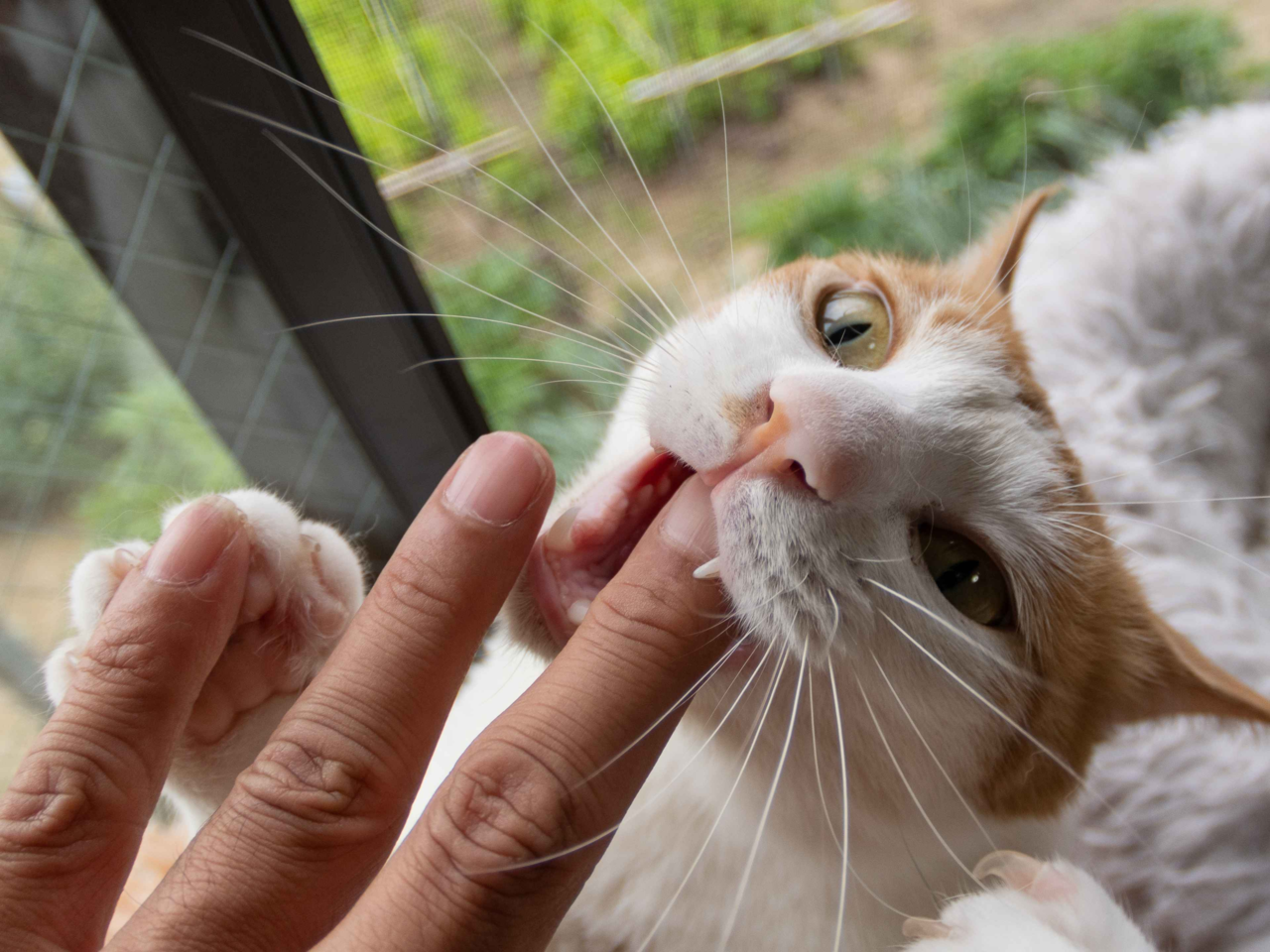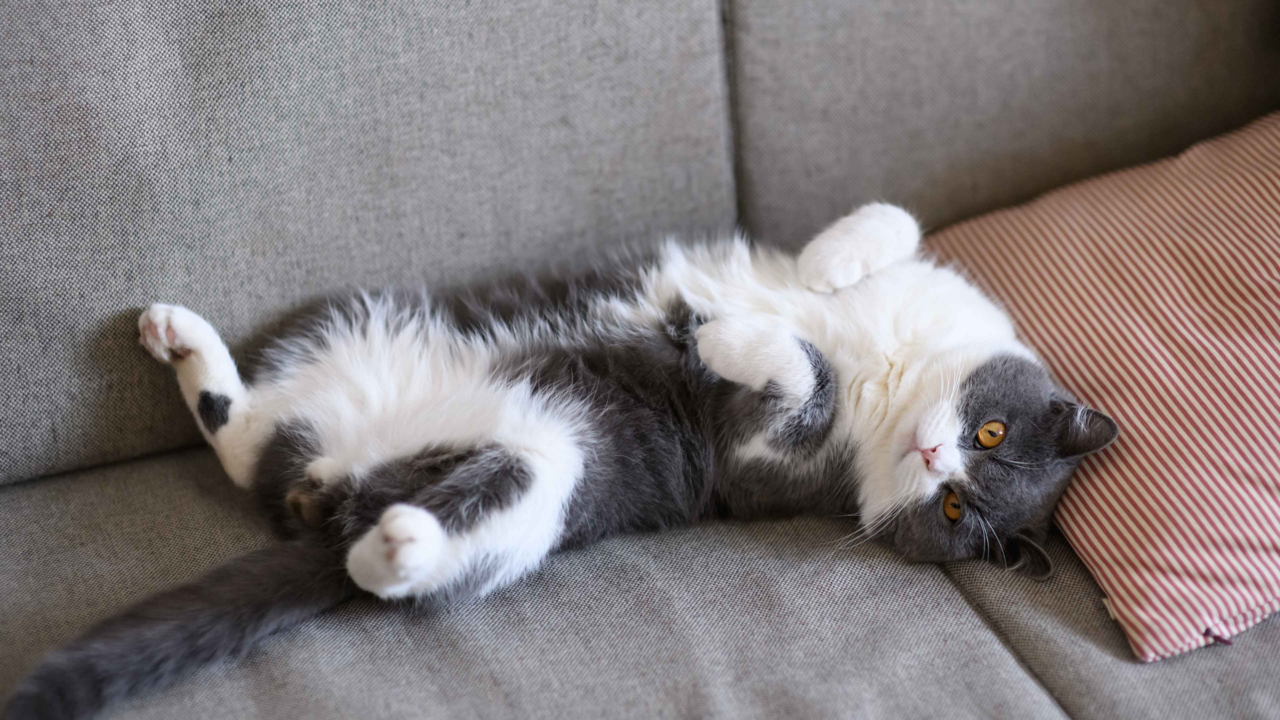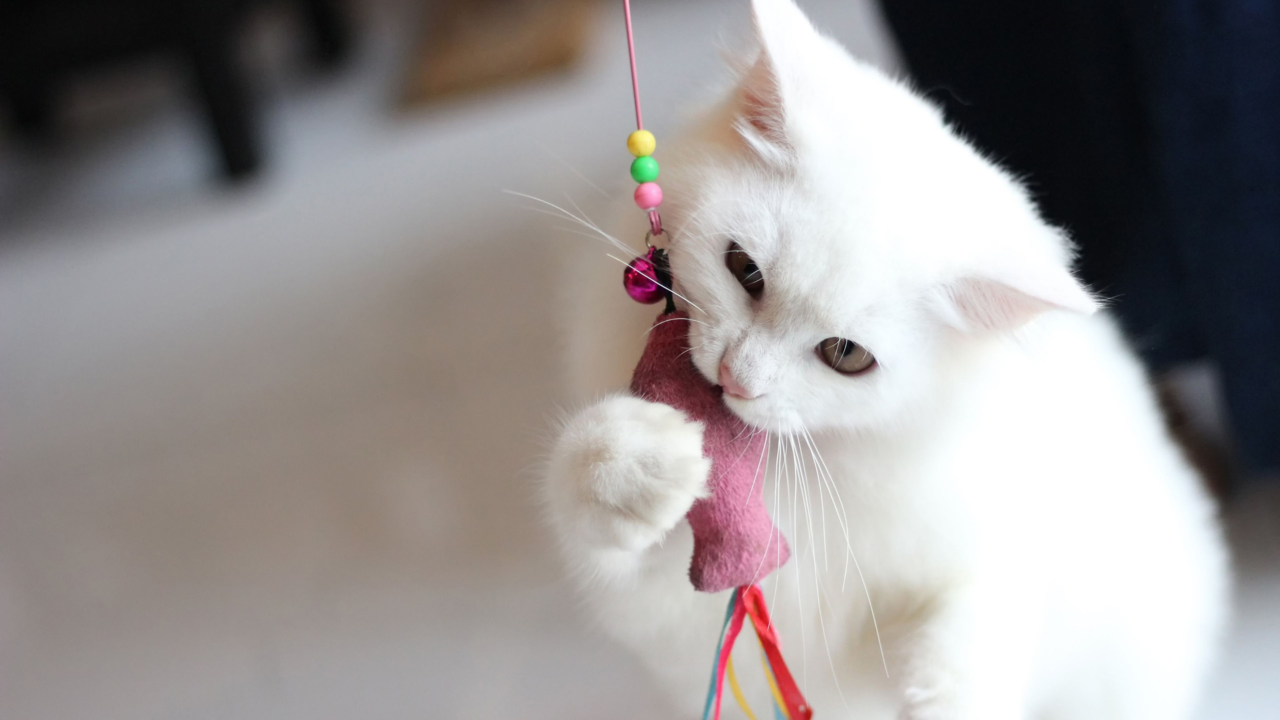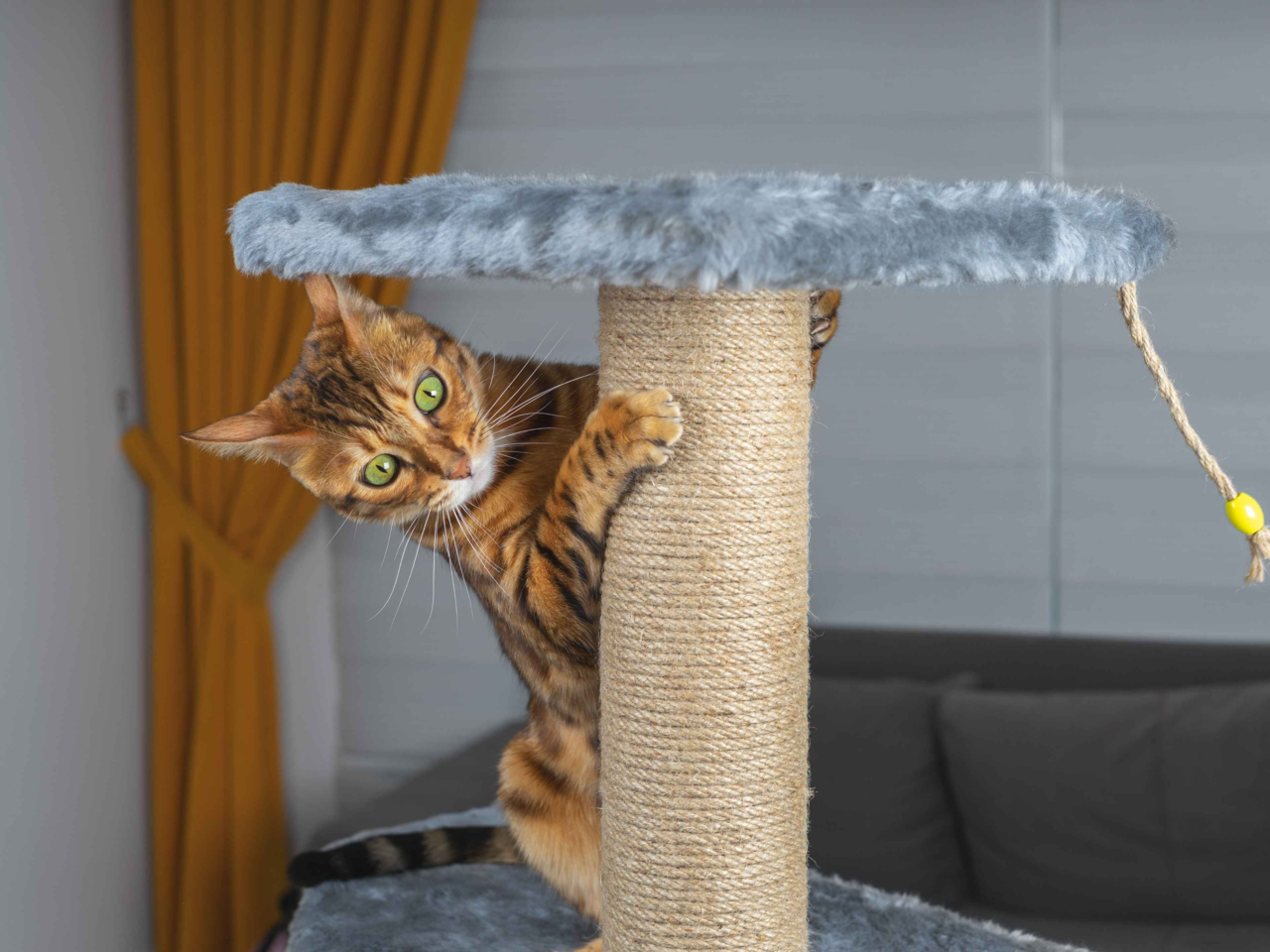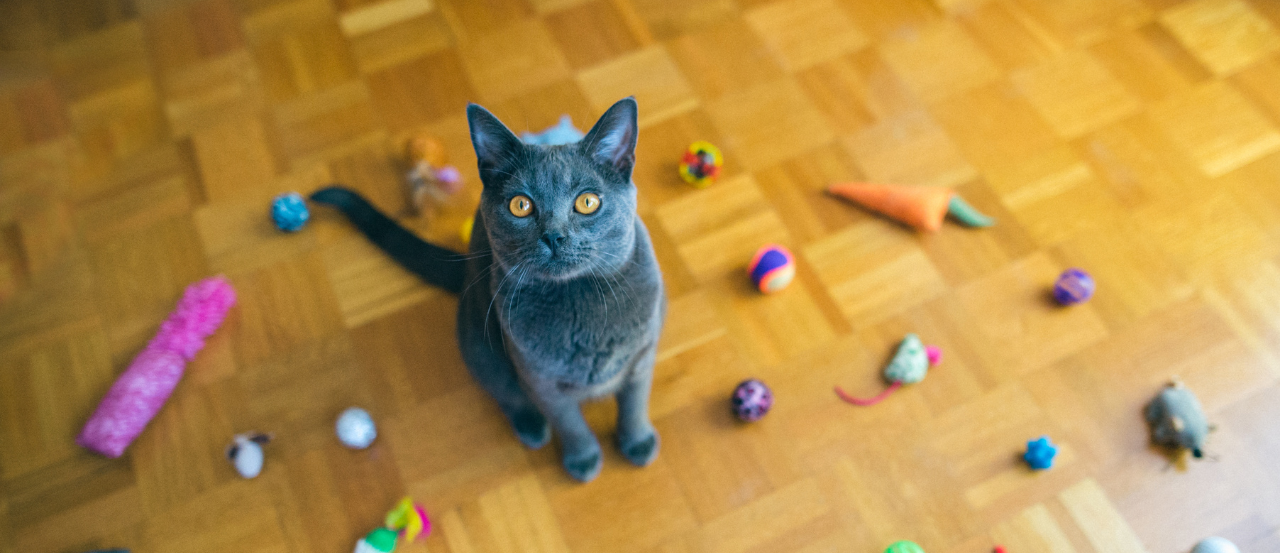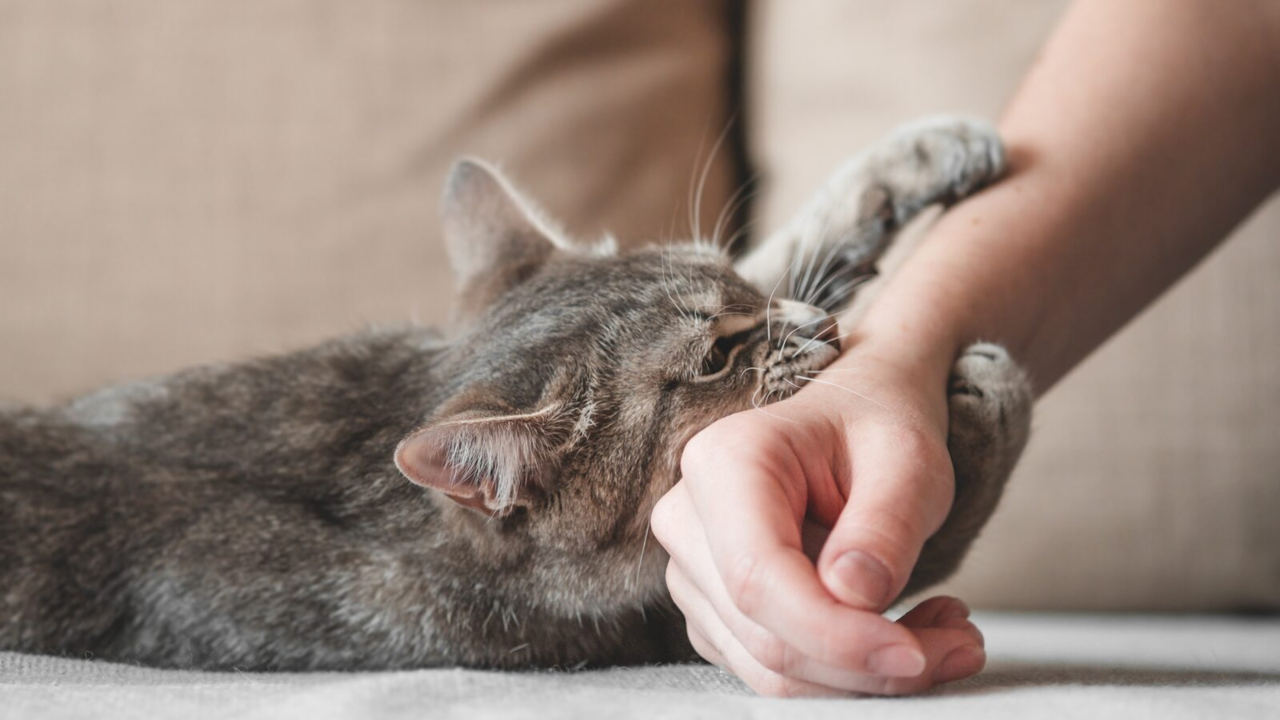
One moment your cat is enjoying a pat or chasing a toy, and the next their teeth are on your hand. A bite can feel sudden, but cats usually give clues through their body language, the situation and the strength of the bite.
Some bites are part of play, while others mean your cat is overstimulated, frightened, frustrated or uncomfortable. Understanding the difference helps you respond without turning the moment into a bigger confrontation.
Quick answer
Cats bite to communicate that play has become too exciting, petting has gone on too long, they feel threatened, or they need space. Stop the interaction calmly, avoid punishment and let your cat settle. Look at what happened just before the bite, then use toys rather than hands for future play and watch for early signals such as a twitching tail, turned-back ears or a sudden freeze.
What your cat's bite may mean
The same teeth can send different messages. Context matters: what was happening, how your cat was holding their body, and whether the bite was inhibited or forceful.
Play and hunting practice
Stalking, pouncing, grabbing and biting are normal parts of feline play. Kittens are especially likely to practise on moving hands or feet if they have learnt that people are toys.
Petting overstimulation
A cat may enjoy touch at first, then reach their limit. A quick head turn, rippling skin, tail flick or tense posture often appears before the bite.
Fear or defence
A frightened cat may bite when they feel trapped, cornered or unable to move away. Flat ears, crouching, wide eyes, hissing and puffed fur are clear requests for distance.
Redirected frustration
Your cat may become highly aroused by something they cannot reach, such as another cat outside, then direct that energy towards the nearest person or pet.
Discomfort or sensitivity
New biting can appear when touch or movement feels uncomfortable. Biting that starts suddenly or happens when one specific area is touched deserves extra care.
A request to stop
A light, controlled nip may simply mean "that's enough". Even a gentle bite is worth respecting so your cat does not need to escalate their message next time.
Read the signs before the bite
Most cats communicate discomfort before they use their teeth. Learning their personal sequence makes it easier to pause while the message is still quiet. Our cat body language guide covers these signals in more detail.
Early signs to pause
- Tail tip flicking or the whole tail swishing
- Skin twitching along the back
- Ears turning sideways or backwards
- Head turning towards your hand
- Body becoming still or tense
Signs to give space
- Crouching or trying to retreat
- Flattened ears and wide pupils
- Growling, hissing or spitting
- Puffed fur or an arched body
- Repeated swatting or lunging
If you see the early signs, stop touching or playing and allow your cat to choose what happens next. If they move away, let them go.
How to respond when your cat bites
The goal in the moment is to lower excitement and create space, not to prove a point. A calm response helps prevent fear and avoids making your hands even more exciting.
Pause rather than pulling away sharply
Hold still for a moment if it is safe to do so. Fast movement can trigger more chasing or make a puncture worse. Then calmly end the interaction and create distance.
Give your cat room to settle
Step away or place a cushion, folded blanket or other safe barrier between you. If your cat is highly aroused, avoid reaching for or picking them up.
Skip punishment and scruffing
Do not shout, smack, spray water or hold your cat by the scruff. Punishment can increase fear, damage trust and make future bites harder to predict.
Work out the trigger later
Once everyone is calm, note what happened just before the bite. Look for patterns around touch, play, visitors, noises, food, another animal or a particular part of the body.
How to reduce biting over time
Keep hands out of the game
Use wand, rolling and puzzle toys so your cat can stalk, chase and grab something that is not your skin. Avoid wiggling fingers under blankets or encouraging kittens to wrestle with hands.
Use short, predictable play sessions
Play while your cat is engaged but still able to pause. Finish before they become frantic, and let them catch the toy at intervals so the game has a satisfying outcome.
Reward calm choices
When your cat approaches without grabbing, or disengages from your hands, calmly offer attention, a toy or a small treat. This helps make gentle behaviour worthwhile.
Respect touch preferences
Many cats prefer brief strokes around the cheeks, chin and head rather than long pats down the body. Pause every few strokes and see whether your cat leans in for more or moves away.
Manage visual triggers
If outdoor cats regularly trigger agitation, block the view temporarily and give your cat quiet space to settle. Do not step between aroused cats or try to soothe them with close handling.
Take sudden changes seriously
If biting begins unexpectedly, happens only when a particular area is touched, or appears alongside hiding, reduced appetite or less movement, stop testing the sore area and arrange a professional health assessment.
Toys that help redirect biting
Choose toys that create distance between teeth and hands, give your cat an appropriate target, or channel hunting energy into independent play. Always supervise new toys and check them regularly for loose or damaged pieces.
If a bite breaks the skin
Clean it promptly
Wash the area well with soap and running water. Cat bites can become infected, especially deep punctures or bites to the hand or near a joint. Seek healthcare advice promptly for a deep wound, ongoing bleeding, increasing pain, redness, swelling, warmth, discharge or if you feel unwell.
Frequently asked questions
Why does my cat bite me while purring?
Purring does not always mean a cat wants continuous touch. Some cats purr while excited, uncertain or trying to settle themselves. Watch for tail flicks, skin twitching, tense muscles or a head turn, and pause before the bite.
Why does my cat suddenly bite me when I am petting them?
They may have reached their touch limit. Stop as soon as you notice tension, then try shorter petting sessions next time. Let your cat choose whether to return for more.
Why does my kitten bite my hands and feet?
Kittens practise hunting through play, and moving fingers and toes are tempting targets. Keep a wand or rolling toy nearby, redirect early and make sure everyone in the household follows the same no-hands play rule.
Are gentle cat bites a sign of affection?
A soft, inhibited nip can happen during a friendly interaction, but it may also be a polite request to stop. Look at the rest of your cat's body and respect the bite rather than assuming they want more contact.
Why does my cat bite me and then lick me?
Licking and biting can both be part of grooming, play or changing arousal. The sequence is less important than the pressure of the bite and your cat's posture. End the interaction if their body becomes tense.
How do I stop my cat biting during play?
Stop using hands as toys, pause play when teeth touch skin, and restart later with a wand or toss toy. Short, regular play that includes stalking, chasing and catching gives your cat a safer outlet. See our guide to why cats bite when playing for more detail.
Should I punish my cat for biting?
No. Punishment can increase fear and may make warning signals less obvious. Calmly stop the interaction, give space and adjust the situation so your cat can make a safer choice next time.
When is cat biting more than a behaviour issue?
Pay closer attention when biting starts suddenly, is much stronger than usual, happens when one area is touched, or appears with other changes such as hiding, reduced appetite or reluctance to move. Stop handling the sensitive area and arrange a professional health assessment.
Give teeth and claws a safer target
From teaser wands to puzzle toys, the right play setup can help redirect hunting energy away from hands and feet.
SHOP CAT TOYS