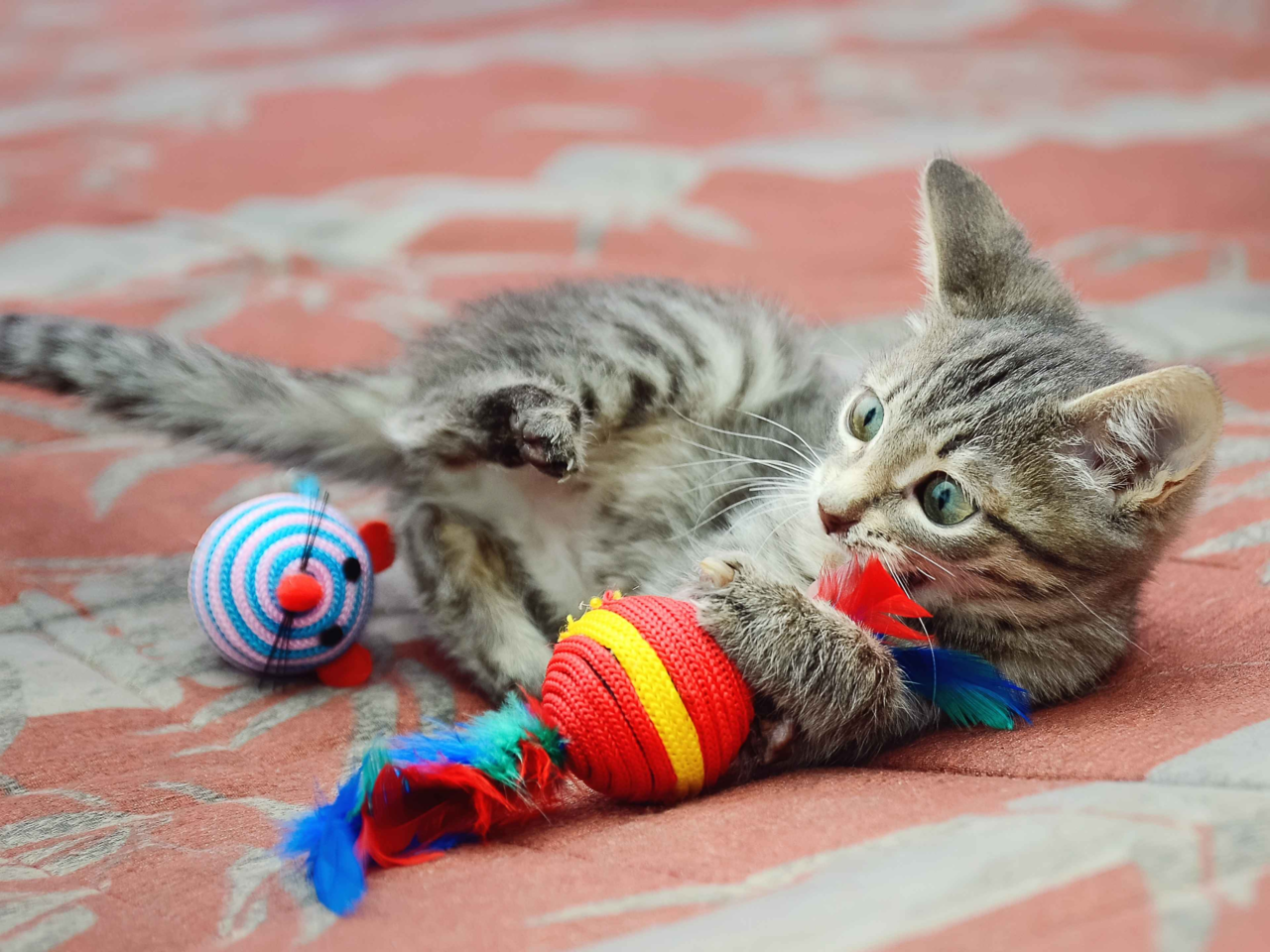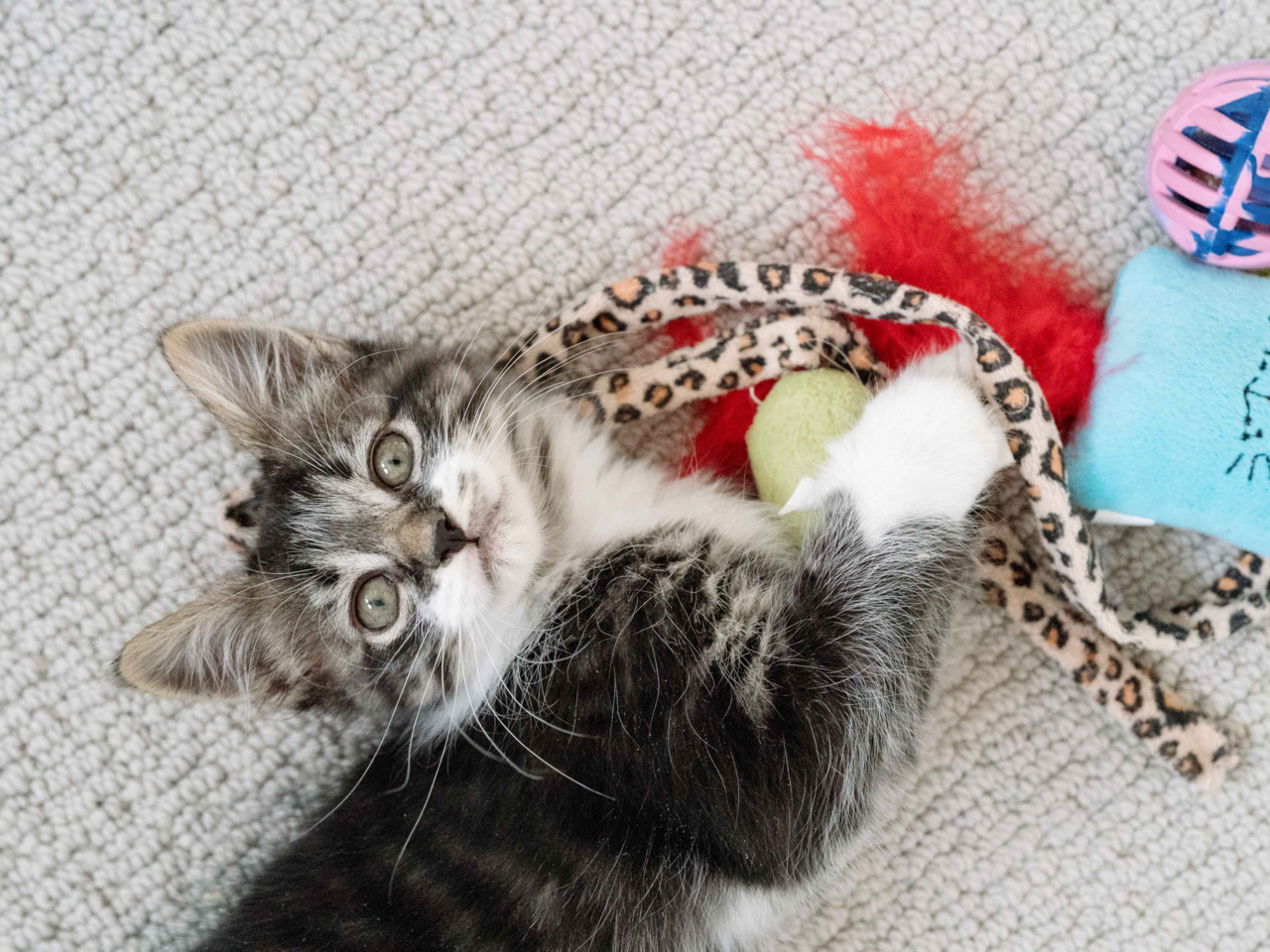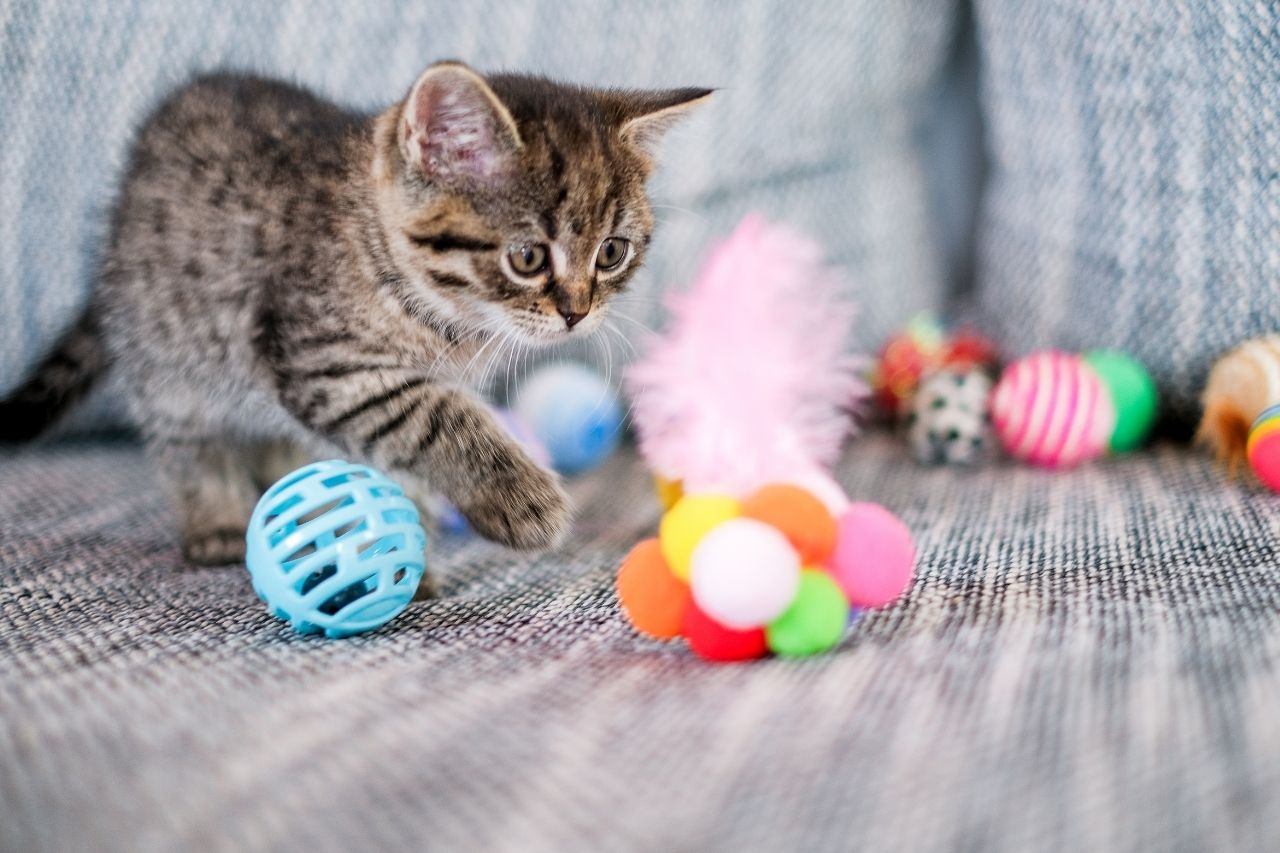
One of the joys of raising a kitten is watching that first wobbly pounce turn into full-blown zoomies around the lounge. But play does not switch on the day you bring your kitten home. It develops in stages, starting with tiny bats of a paw and building into the stalking, chasing and pouncing you will know so well. Knowing roughly when each stage arrives helps you offer the right toys at the right time and keep playtime safe.
Here is a simple, NZ-focused guide to when kittens start playing with toys, how their play develops week by week, and what to reach for at each stage.
Quick Answer
Kittens usually start showing real interest in toys at around three to four weeks of age, once their eyes are open and they can walk steadily. At this stage it is gentle batting and pawing at small, soft objects. Social and chasing play ramps up from four to eight weeks, and predatory play (stalking, pouncing, hunting toys) peaks between about nine and sixteen weeks. Start with tiny, lightweight toys, always supervise wand and string toys, and let the type of toy grow with your kitten.
How Kitten Play Develops, Week by Week
Every kitten is an individual, so treat these ages as a guide rather than a strict timetable. What matters is the order the stages arrive in, and matching the toys to what your kitten can actually do.
| Age | What is happening | Play to expect |
|---|---|---|
| 0 to 2 weeks | Eyes and ears are still closed. Kittens sleep and nurse almost constantly. | No play yet. Warmth, mum and rest are everything. |
| 2 to 3 weeks | Eyes open, ears lift, and those first wobbly steps begin. | Noticing movement and swatting at it, but not organised play. |
| 3 to 4 weeks | Steadier on their feet and curious about everything. | First real play begins: batting, pawing and clumsy little pounces on small, soft toys. |
| 4 to 8 weeks | Coordination improves fast, often alongside littermates. | Social play peaks: wrestling, chasing and pouncing. Great time for supervised wand play. |
| 9 to 16 weeks | Confident movers with sharp senses and lots of energy. | Predatory play peaks: stalking, chasing and hunting toys. Rotate toys to keep it fresh. |
| 4 months and up | Adolescence brings big energy and a need for daily outlets. | Structured play sessions, solo enrichment, and often a growing response to catnip. |
When Can Kittens Start Playing With Toys?
The short version: from around three to four weeks, when they can see clearly and move with a bit of purpose. Before that, a kitten's world is about staying warm, feeding and sleeping, so toys simply are not on the radar.
Once play does begin, keep it small and simple. A young kitten is easily overwhelmed by a big, fast toy, so start with lightweight items they can bat and carry, and build up as their confidence and coordination grow.
Start small and soft
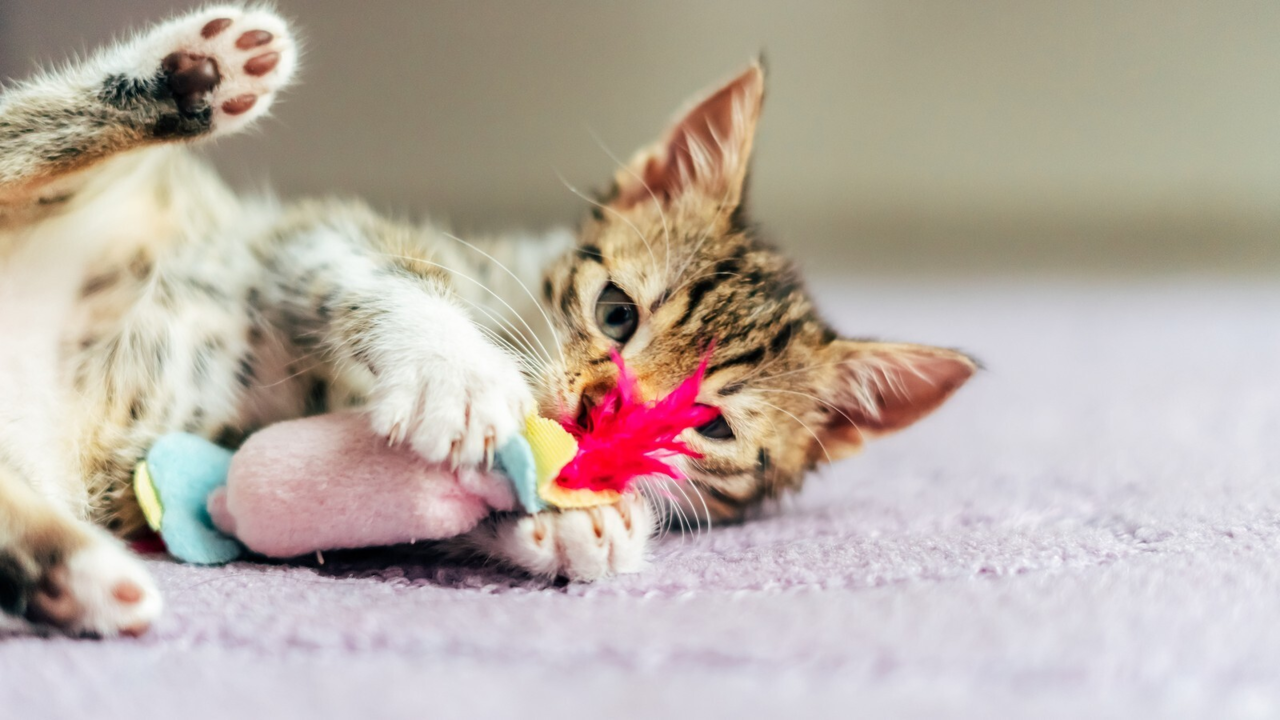
Tiny, lightweight balls and soft mice are perfect for those first bats and pounces at three to four weeks.
Add movement
From around five weeks, wand toys let you mimic prey and bring out chasing and pouncing, always with you holding the handle.
Build the hunt
By three to four months, stalking and chasing peak. Chasers, kickers and rotating toys keep that hunting drive satisfied.
First Toys for New Players (3 to 5 Weeks)
At this age, less is more. Choose small, soft, lightweight toys your kitten can bat around and mouth safely, with no small parts that could come loose.
Wand & Interactive Toys (5 to 12 Weeks)
As coordination sharpens, wand and teaser toys become brilliant for bonding and burning energy. You control the movement to mimic a bird or mouse, which brings out chasing and pouncing. Always pack wand and string toys away after play so they cannot be chewed or tangled unsupervised.
Chase & Pounce Toys (3 to 6 Months)
This is peak hunting age. Fast-moving chasers and toys your kitten can grab and bunny-kick help channel all that predatory energy into something positive.
Solo Play & Enrichment
Kittens cannot rely on you for every play session, so a few toys they can enjoy alone go a long way. Puzzle and treat balls, scratchers and catnip toys keep busy minds occupied between interactive sessions. Most kittens do not respond to catnip until around three to six months, so do not worry if it is ignored early on.
Keeping Playtime Safe
Simple safety rules
- Supervise all wand, string and feather toys, and pack them away after play.
- Avoid toys with small parts, bells or eyes that could be chewed off and swallowed.
- Match the toy size to your kitten so nothing is small enough to be a choking risk.
- Check toys regularly and replace them once they are chewed or coming apart.
- Let your kitten "win" and catch the toy sometimes, so play stays rewarding.
Play, don't punish
Never use your hands or feet as toys, as it teaches biting and scratching that is hard to unlearn. Redirect those needle-sharp claws onto a wand or kicker toy instead. For everything else in those busy first months, our Kitten Guide walks you through feeding, settling in and healthy routines.
Kitten & Cat Toys at Petdirect
From first soft mice and wand teasers to chasers, kickers and puzzle toys, find play that grows with your kitten.
SHOP CAT TOYSFrequently Asked Questions
At what age do kittens start playing with toys?
Most kittens begin batting and pawing at small, soft toys from around three to four weeks, once their eyes are open and they can walk steadily. Before that they are focused on sleeping, feeding and staying warm.
What toys are best for a very young kitten?
Small, lightweight and soft toys are ideal, such as little balls and soft mice they can bat and carry. Keep wand and string toys for supervised play once your kitten is a bit steadier on its feet.
How much should I play with my kitten each day?
Aim for several short sessions rather than one long one. A few five to fifteen minute bursts across the day suits a kitten's energy and attention span, and helps prevent boredom and over-excitement.
Why does my kitten ignore catnip?
The response to catnip is inherited and usually does not develop until around three to six months. Some cats never react to it at all, so if your kitten is not interested yet, try again as they grow or offer a different toy.
Is it safe to leave my kitten alone with toys?
Solo toys like puzzle balls and scratchers are fine for independent play. Wand, string and feather toys should only come out when you are there to supervise, and be put away afterwards to avoid tangling or chewing.
My kitten bites my hands during play. What should I do?
Avoid using your hands or feet as toys, and redirect biting onto a wand or kicker toy. Letting your kitten pounce and grab an appropriate toy satisfies the same urge without teaching them to bite skin.