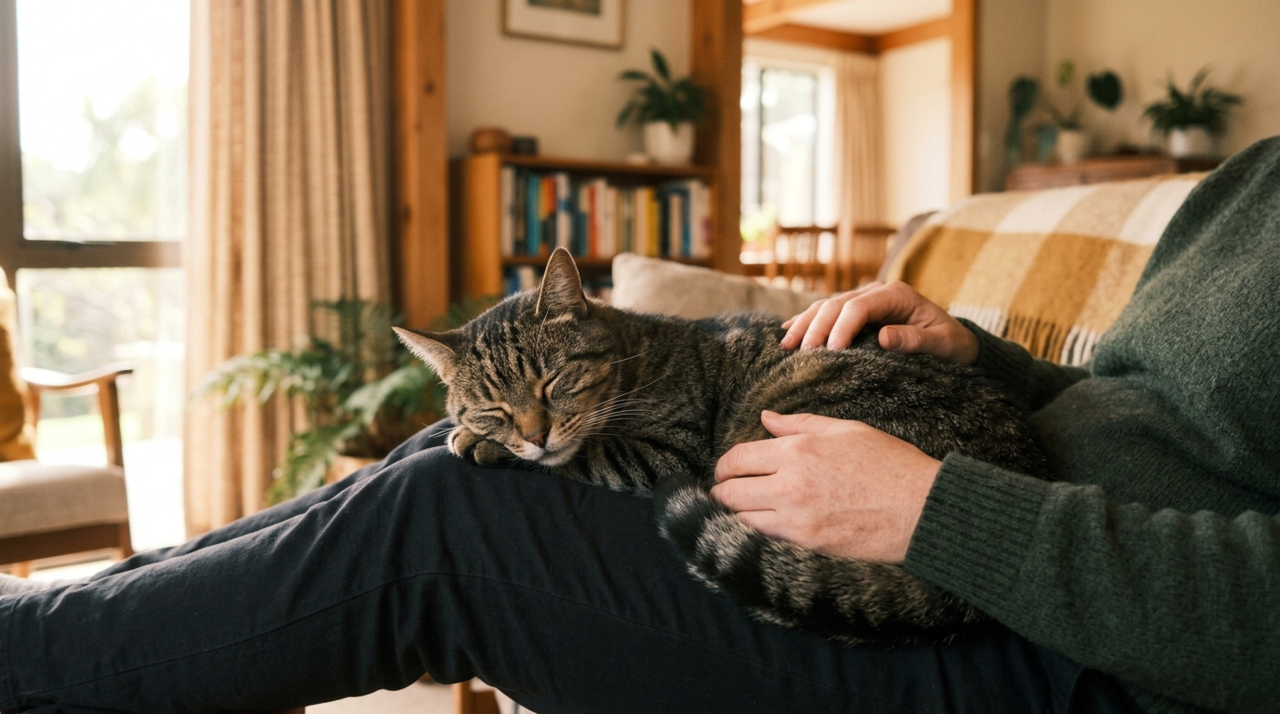
A senior cat's purr is one of the loveliest sounds in any Kiwi home. It's softer than it used to be, sometimes a little rumbly, sometimes only there when you've found exactly the right spot to scratch. Older cats don't purr less because they care less. They purr more selectively, saving it for the moments and people that feel like home.
This guide is about those moments, and the small home tweaks that bring them out more often.
Quick answer
Senior cats purr to communicate comfort, ask for attention, and self-soothe. As cats age, their purrs often become quieter or more selective, and tend to centre on warm sleep spots, gentle grooming sessions, mealtimes and quiet lap time. Setting up cosy beds, soft brushing routines, easy-to-reach food and water, and a calm home is the simplest way to bring out a contented purr every day.
Why senior cats purr
Cats purr for more reasons than contentment. They purr when they're relaxed, when they want food, when they're greeting you, and sometimes when they're feeling unsettled and need to self-soothe. With age, the pattern often shifts. Your older cat may purr more quickly when you sit down beside them, may purr in their sleep, or may save their loudest rumble for moments that have become small daily rituals.
Purring also produces gentle vibrations in the chest, somewhere between 25 and 150 Hz, which many researchers believe helps cats stay calm and may even support muscle and bone maintenance as they age. In other words, your senior cat purring on your knee is good for both of you.
The contentment purr
Slow, deep and steady. The classic "I'm exactly where I want to be" sound.
The asking purr
Higher and more insistent, often around meal times or when they want a cuddle.
The self-soothing purr
Quiet and rhythmic, used when settling in for a nap or feeling a little uncertain.
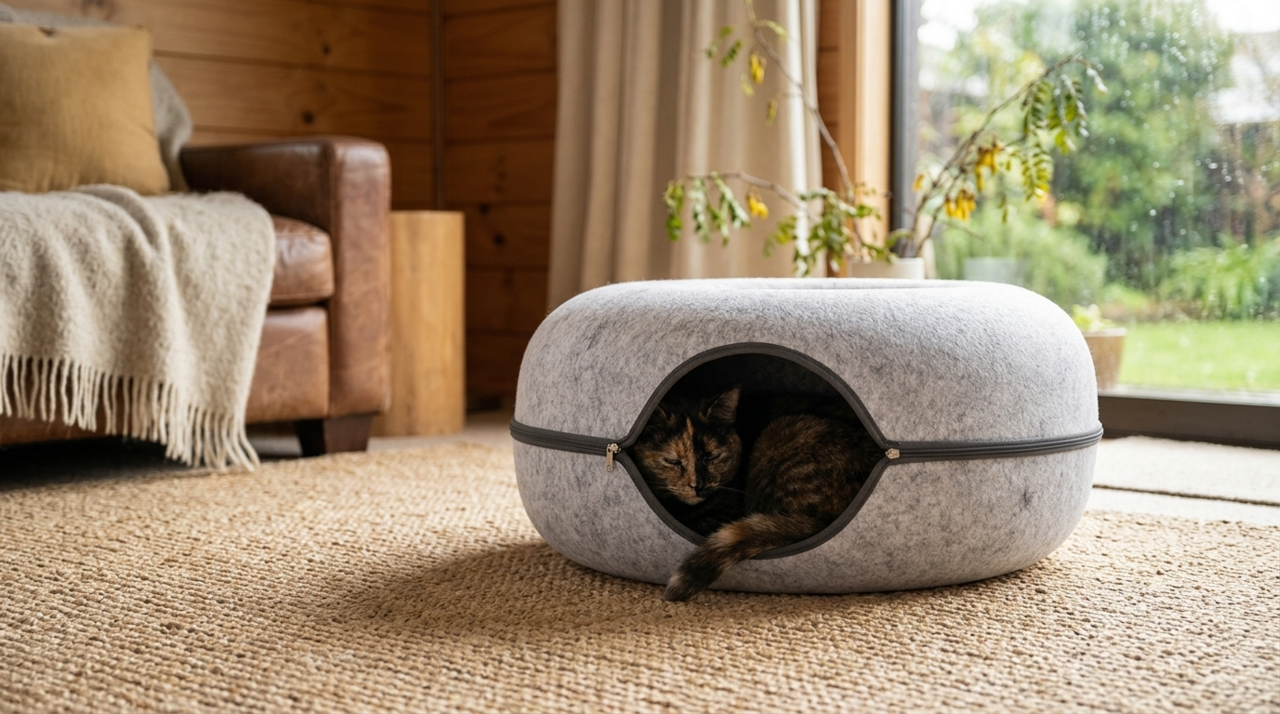
Cosy spots that bring out the purr
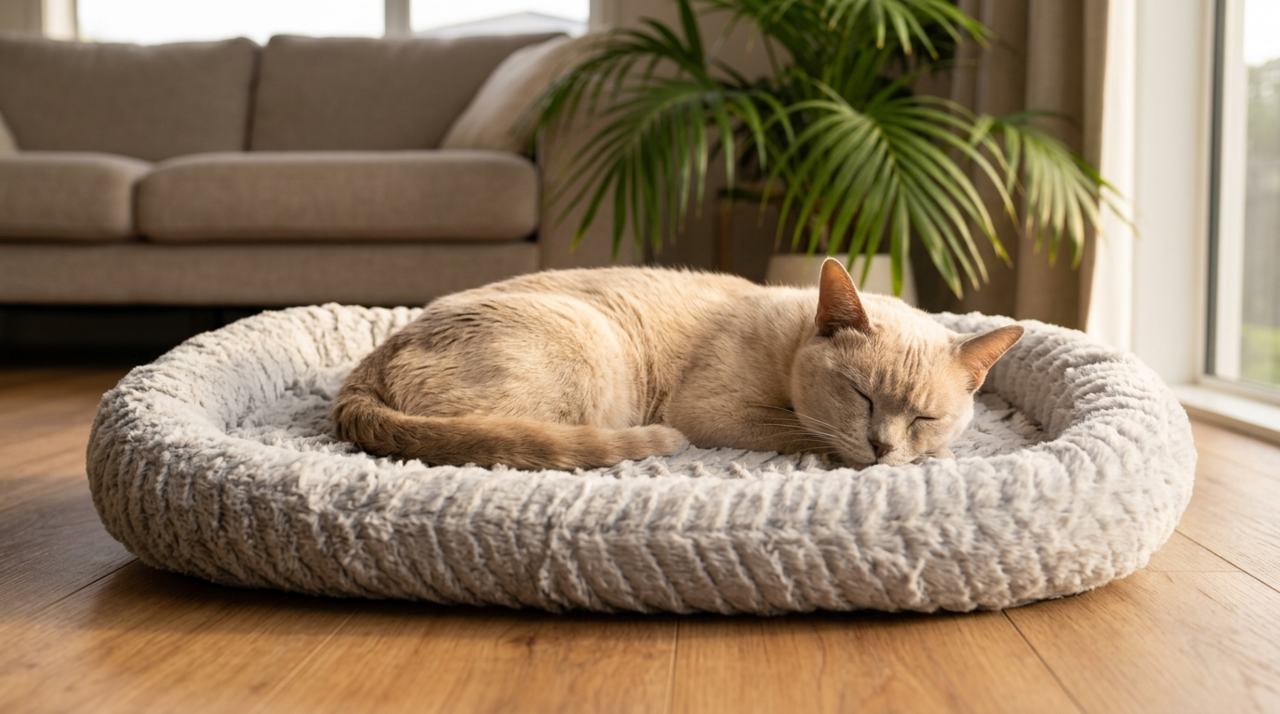
Older cats spend more time resting, and they're choosier about where they rest. A soft, supportive bed in a warm, quiet corner is usually all it takes to unlock a long, contented purr. Look for orthopaedic foam or memory-style fill, raised edges they can tuck against, and fabric that feels gentle on thinning coats.
If your cat used to nap on the windowsill but no longer hops up, move the cosiness to them. A heated mat under a soft blanket, placed near a sunny window at floor level, gives them the warmth they're seeking without the jump.
Gentle grooming: the brush-and-purr ritual
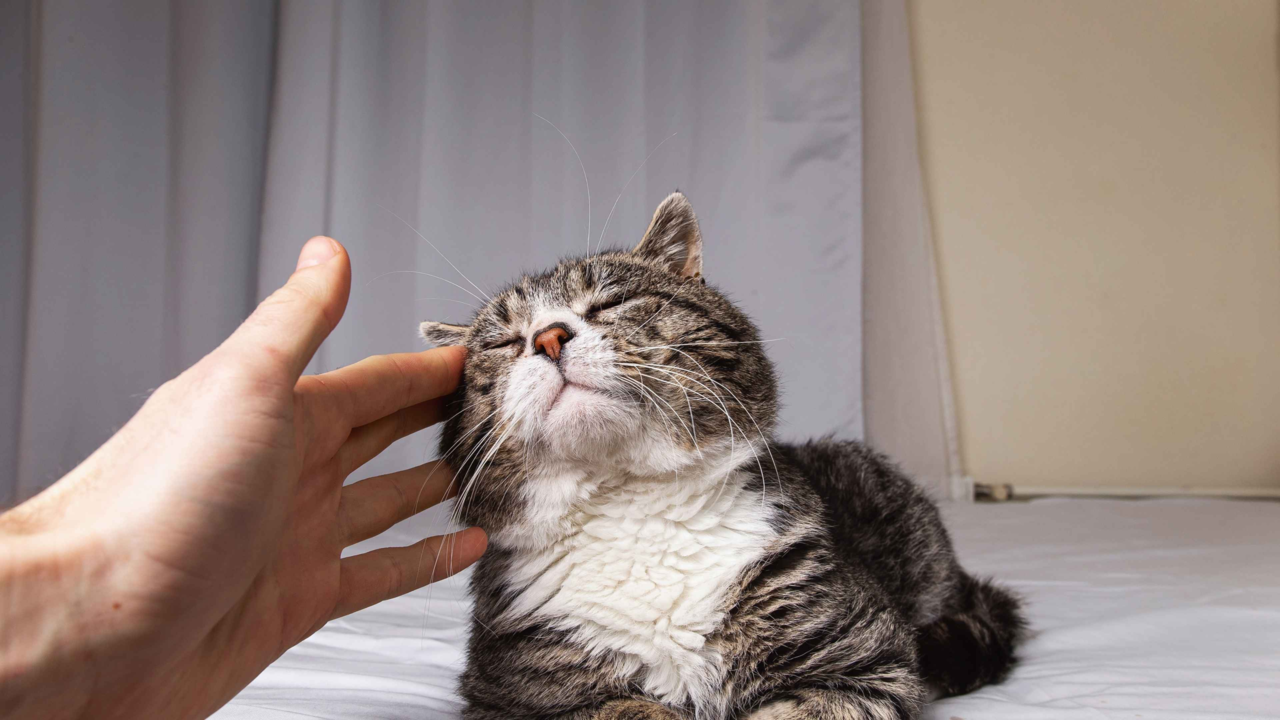
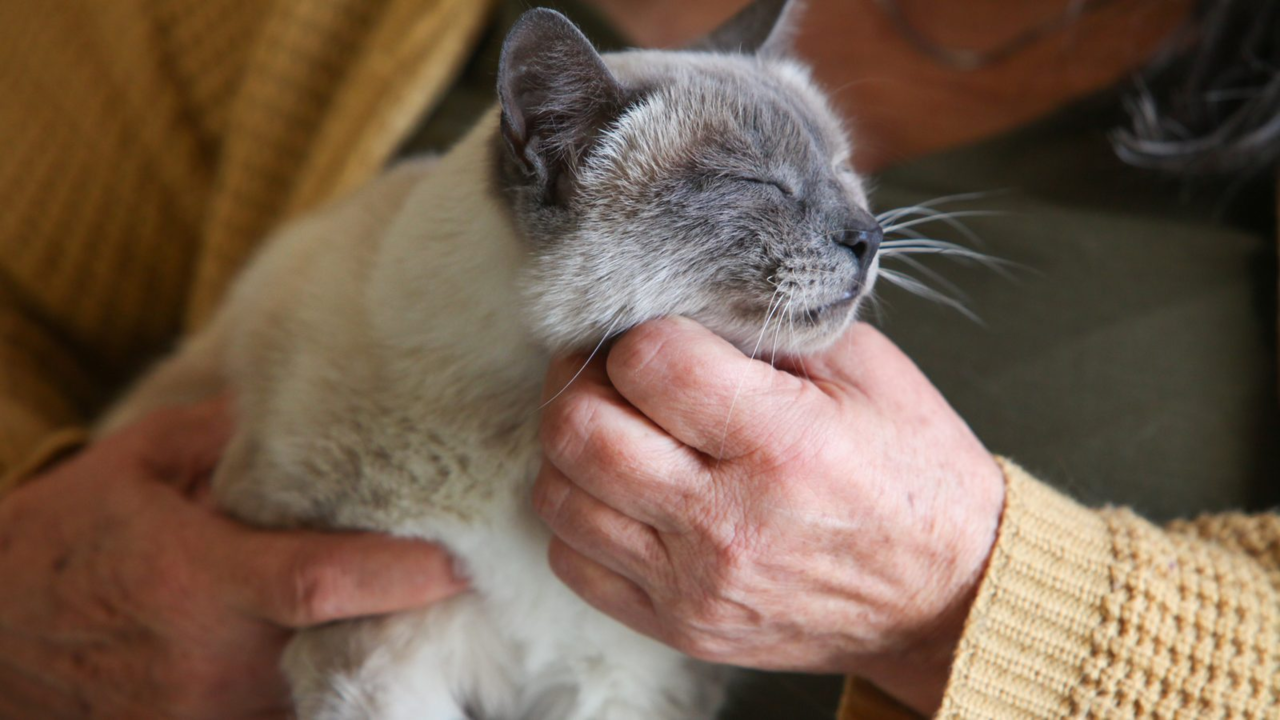
Senior cats often slow down on self-grooming. Helping them out with a short brush each day is one of the easiest ways to unlock a purr. Most older cats love the steady, predictable feel of a soft brush along their cheeks, chin and shoulders. Keep sessions short, follow their lead, and stop while they're still enjoying it.
Try brushing right before a meal. Many older cats associate the brush with the food that follows and start purring before you've even picked it up.
The after-dinner purr
Older cats often develop a strong "after dinner" purr, a sign their tummy is comfortably full and the world feels right. A senior-appropriate diet, served warm and in a quiet spot, helps make that moment happen every day. If your cat's appetite has become a little fussier, gently warmed wet food brings out the aroma and is often easier on older teeth.
Hydration: a quiet purr at the water bowl
Hydration matters more as cats age. A flowing fountain encourages reluctant drinkers, and a few extra water stations around the house mean your cat never has to walk far for a sip.
Lick mats, treats and slow-down moments
Senior cats still love a treat. A few licks of a creamy snack on a soft mat can be a lovely shared moment, slow and calm and almost always purr-worthy. Keep portions small and offer them as part of your evening wind-down.
Calm home, calmer purr
Older cats are sensitive to change. A predictable routine, a familiar nap zone, and a calm-feeling home help your cat settle into long, easy purrs more often. Pheromone diffusers can take the edge off everyday stressors like visitors, weather, or a busy household.
Listening to your cat's purr language
Once you tune in, you'll start to hear the differences. The slow, deep purr at the end of the day. The light, fluttery purr when they're curled in a sunbeam. The louder, almost questioning purr at dinner time. None of these are messages you need to fix. They're invitations to slow down, sit with your cat, and join the moment.
And if the purr is quieter than it used to be, that's okay too. Some cats simply purr more softly with age. As long as your cat is eating, drinking, grooming, and seeking out their favourite people and spots, that gentle rumble is doing exactly what it's meant to do.
Small habits that bring out the purr
- A daily "hello and hands" moment. Sit at their level, talk softly, let them come to you.
- One short brush session at the same time each day.
- A warm bed in the room you spend the most time in.
- Mealtime in a calm spot, away from busy doorways.
- A fountain or fresh bowl topped up morning and evening.
Frequently asked questions
Why does my senior cat purr more quietly than they used to?
Older cats often purr more softly as their vocal cords and muscles relax with age. As long as they're still eating, drinking and seeking out company, a quieter purr is usually just part of getting older.
Do older cats purr in their sleep?
Yes, plenty do. A sleepy purr usually means your cat feels safe and settled. It's one of the loveliest sounds to listen for.
My cat purrs at the food bowl. Is that normal?
Very. Many cats develop a strong "asking" or "anticipation" purr at mealtimes, and it often gets more obvious with age. Keep meals at the same times each day and you'll hear it like clockwork.
What's the best bed for a senior cat?
Look for soft, supportive fill with raised edges to tuck against. A bed placed in a warm, quiet spot near where you spend time is almost always a winner.
Does brushing really make cats purr?
For most cats, yes. The steady, predictable rhythm feels good, especially around the cheeks and chin. Short, gentle sessions work better than long ones.
How do I encourage my senior cat to drink more water?
A flowing fountain helps a lot, and so does having a few water stations around the house. Topping bowls up morning and evening keeps the water fresh and inviting.
Cosy essentials for your senior cat
Soft beds, gentle grooming, easy hydration and senior-appropriate food. Everything your older cat needs to settle in and start purring.
Shop senior cat essentials