Jack Russell Terriers are quick, curious and rarely short of an opinion. Their working roots gave them the drive to chase, dig, investigate and solve problems independently. That makes them brilliant training partners, but it also means repetition without purpose can lose them fast. The best Jack Russell training turns everyday obedience into a job for both body and brain.
Quick answer
Train a Jack Russell with short, reward-based sessions that mix obedience, scent work, controlled play and calm settling. Prioritise recall, leave it, loose-lead walking and a reliable settle cue. Practise for three to five minutes at a time, several times a day, and reward the behaviour you want before your terrier invents a more exciting activity.
Why are Jack Russells challenging to train?
Jack Russells are intelligent, but intelligence is not the same as automatic obedience. They were bred to notice movement, make fast decisions and keep working despite distractions. A bird, scent trail or rustle in the hedge can therefore feel more important than the cue you just gave.
A busy brain
They learn patterns quickly, including accidental ones. If barking opens a door or jumping earns attention, the behaviour can become part of their routine.
A strong chase instinct
Movement can trigger pursuit. Recall must be built gradually around controlled distractions rather than first tested when your dog is already racing away.
Independent thinking
A Jack Russell often asks, "What's in it for me?" Use food, toys, sniffing and access to fun as rewards, then vary them once the behaviour is reliable.
Start with four everyday skills
Build these skills in a quiet room before adding the garden, footpath or park. Say each cue once, give your dog a moment to respond and make the next repetition easier if they struggle.
1. Name and check-in
Say your dog's name once. The moment they turn towards you, mark the choice with a cheerful "yes" or a click, then reward. Practise when nothing is happening first. Over time, a quick check-in becomes the bridge to every other cue.
2. Recall
Begin a few steps apart indoors. Say your chosen cue, such as "come", then move backwards and reward generously when your dog reaches you. Never punish a slow return. Progress to a fenced outdoor area and a long training lead before practising around bigger distractions. Release your dog back to sniffing sometimes, so coming to you does not always end the fun.
3. Leave it and drop
For "leave it", reward your dog for turning away from a low-value item. For "drop", swap an item they already have for something equally good or better. These are different skills, and both matter for a terrier that likes to investigate with their mouth.
4. Settle on a mat
Place a mat beside you and reward any calm interest in it. Build from one paw on the mat to lying down, then quietly deliver rewards between your dog's front paws. Add the cue only when the behaviour is predictable. Keep early sessions brief and finish while your dog is still successful.
Stillness training for a dog who is always moving
A common mistake is trying to tire a Jack Russell with more and more high-speed exercise. That can create a very fit dog who still has not learned how to switch off. Calm concentration is a separate skill, and it needs practice.
Start after your dog has had a toilet break and a little movement. Ask for an easy position on a mat, reward a second of stillness, then release. Build duration in tiny steps. Later, practise while you make a cup of tea, sit on a park bench or pause during a walk. The goal is not to suppress natural energy. It is to help your dog move between activity and rest without becoming frustrated.
Keep the challenge achievable
If your dog gets up repeatedly, the step was too difficult. Shorten the duration, reduce distractions or move the mat closer to you. Progress comes from many easy wins, not from holding out for one long stay.
A simple daily training routine
You do not need one long lesson. Thread small training moments through the day and use part of your dog's normal food allowance where suitable.
Morning check-in
Practise name response, hand target and two or three recalls before breakfast.
Sniffing walk
Mix loose-lead steps with permission to sniff. Sniffing is useful mental work, not wasted walking time.
Food puzzle
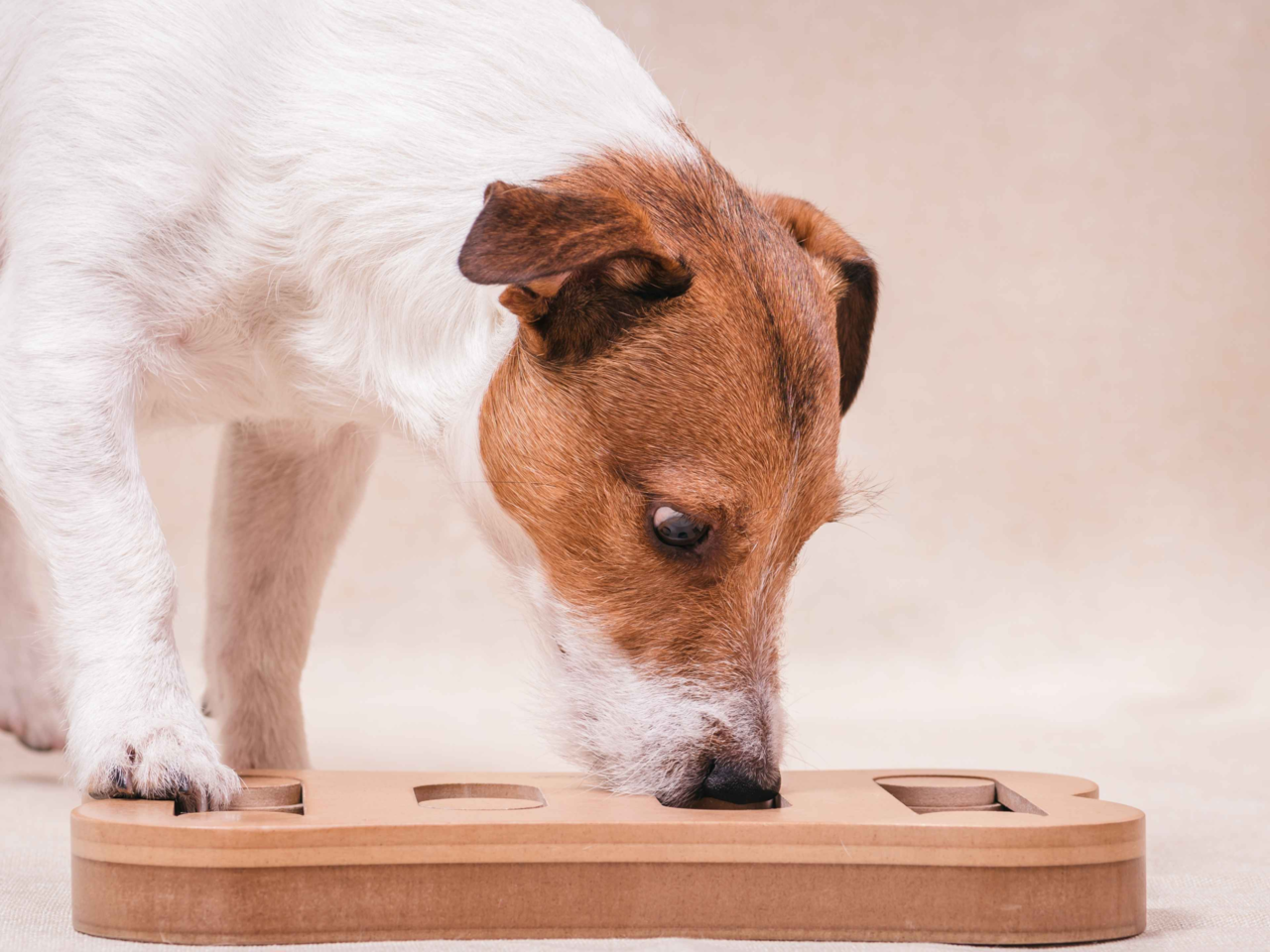
Use a puzzle feeder, scatter feed or simple cardboard search to turn part of a meal into problem-solving.
Three-minute skills
Practise one behaviour, such as leave it or mat work, rather than rushing through every cue.
Controlled play
Use fetch or tug with clear start, drop and finish cues so excitement remains connected to listening.
Evening settle
Reward relaxed behaviour on a mat while the household slows down.
Mental stimulation that suits a Jack Russell
The most useful enrichment gives your terrier a safe outlet for natural behaviours while keeping you involved.
- Scent searches: hide a few pieces of food around one room, then release your dog to find them.
- Food puzzles: start easy so your dog learns how the toy works before you increase the challenge.
- Trick training: spins, paws up, going around an object and putting toys away all build focus.
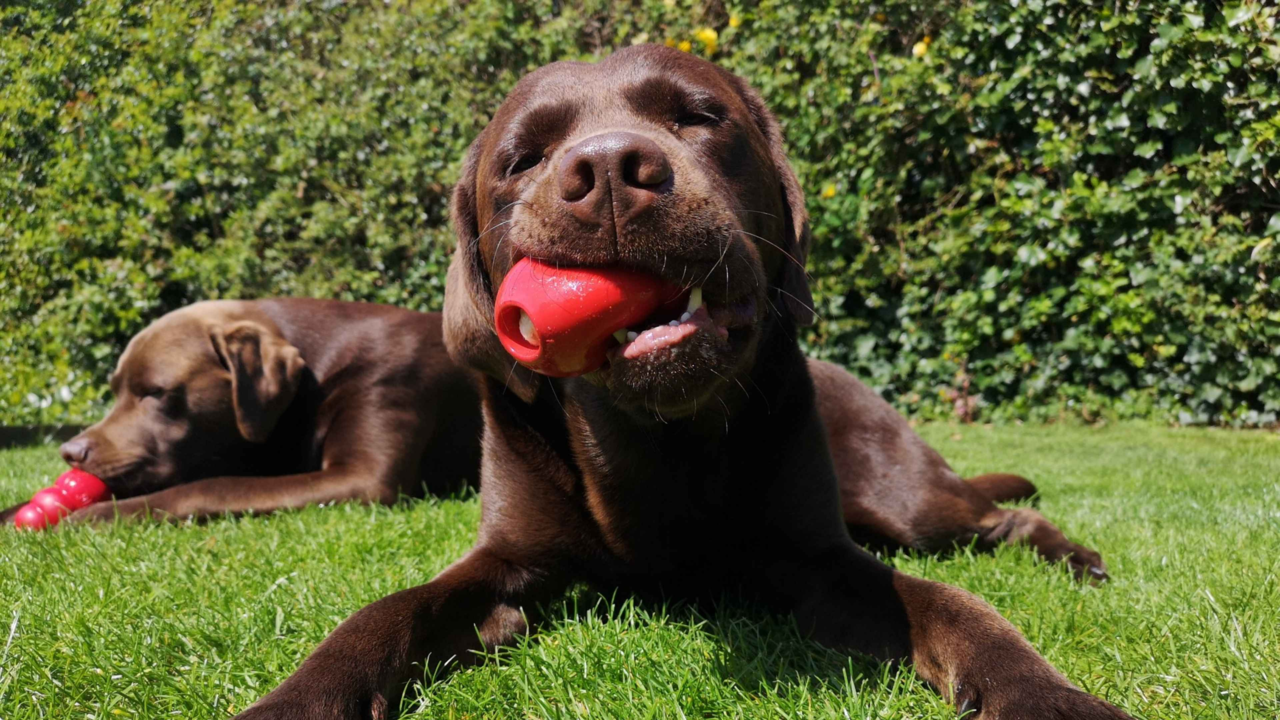
- Controlled tug: ask for a wait before the game starts and a drop before it resumes.
- Digging outlets: provide a permitted digging area and hide toys or safe treats beneath loose material.
- Novel walking routes: a new quiet street or sniffing area can be more mentally interesting than repeating the same fast loop.
Rotate activities instead of presenting everything every day. Novelty keeps familiar toys useful and reduces the pressure to keep buying new ones.
How to handle common Jack Russell behaviours
Barking for attention
Check that your dog's exercise, toilet and rest needs are met. Then reward a clear alternative, such as sitting on a mat or bringing a toy. Avoid shouting, which can sound like you are joining in. Catch and reward quiet moments before barking begins.
Digging
Block access to unsafe areas, supervise outdoors and create a legal place to dig. Bury something easy to find, show your dog where it is and praise digging in that spot. Management prevents rehearsal while the new habit develops.
Jumping up
Ask visitors to pause attention while four paws are off the floor. Reward a sit or four paws down, then greet. Practise with calm helpers before expecting success during an exciting arrival.
Ignoring recall
Do not repeat the cue from farther and farther away. Use a long training lead, reduce the distraction and reward strongly for turning back. If you are not confident your dog will return, keep the lead attached in open areas.
Chasing small animals
Prey drive cannot be trained away with one cue. Use secure fencing, a lead or long line, distance from triggers and well-rehearsed check-ins. Give chase games an appropriate outlet through fetch or tug under your control.
What is an extinction burst?
When a behaviour that used to work stops earning a result, your dog may briefly try it more intensely. A bark may become louder or a paw may tap more insistently before the behaviour starts to fade. This is called an extinction burst. Stay consistent, prevent unsafe behaviour and reward the alternative you have taught. Do not ignore behaviour caused by fear, distress or an unmet need.
Training mistakes to avoid
- Repeating cues until they become background noise.
- Moving to busy environments before the skill works at home.
- Using only physical exercise without teaching calmness.
- Calling your dog only when play or freedom is about to end.
- Expecting focus when your dog is overexcited, overtired or needs a toilet break.
- Using intimidating or painful methods that can damage trust.
Reward-based training is not permissive. Clear boundaries, good management and consistent follow-through help your dog understand which choices work. Keep rewards appropriate for your dog and count food rewards within their daily allowance.
Helpful tools for training and enrichment
Equipment cannot replace practice, but the right tools can make it easier to build focus, manage distance and give a busy terrier an appropriate job.
Frequently asked questions
Are Jack Russells easy to train?
They learn quickly when training is clear, rewarding and varied. Their independence and interest in movement can make distraction work challenging, so build skills gradually rather than expecting instant reliability outdoors.
How long should I train my Jack Russell each day?
Aim for several sessions of three to five minutes, woven into meals, walks and play. Short, successful repetitions are usually more useful than one long lesson that ends in frustration.
How much exercise does a Jack Russell need?
Needs vary with age, health and individual temperament. Most enjoy daily walks, sniffing, play and training, but exercise should not be the only outlet. Include calmness and problem-solving work, and adjust activity to the dog in front of you.
Can a Jack Russell be trusted off lead?
Some develop excellent recall, but a strong chase instinct can override training. Use secure areas and a long line while building reliability. Follow local rules and do not remove the lead where wildlife, traffic or other hazards make a mistake unsafe.
How do I stop my Jack Russell getting bored?
Rotate scent games, food puzzles, trick training, controlled tug, safe digging and new walking routes. Also schedule rest. Constant entertainment can make it harder for a dog to settle independently.
Why does my Jack Russell listen at home but not outside?
Dogs do not automatically generalise a skill to every place. Outdoors adds scent, movement, noise and distance. Return to an easier version, increase your reward value and add one distraction at a time.
When should I reduce food rewards?
Once a behaviour is fluent in that setting, begin varying the reward rather than stopping it suddenly. Use praise, toys, sniffing or access to play alongside occasional food. Increase rewards again when the environment becomes harder.
Give your busy terrier a job
Explore training and enrichment essentials for focused practice, problem-solving and controlled play.
SHOP DOG TRAINING & BEHAVIOUR