Bath time can become a bigger job as dogs age. A tub that once felt easy to step into may now be a slippery obstacle, and standing still while wet can be tiring for stiff legs. Ageing skin may also be drier or more sensitive, so a fast scrub is not always the kindest approach.
The goal is not a perfectly polished coat. It is a clean, comfortable dog who feels secure from the first step into the bathroom to the final towel dry. With the room prepared in advance and the bath broken into simple stages, many older dogs can still be washed safely at home.
Quick answer
To bathe an older dog safely, create a non-slip path, use comfortably lukewarm water, choose a gentle dog shampoo and keep the wash brief. Support their balance without forcing sore joints, rinse thoroughly, then press the coat dry with towels in a warm room. If a full bath feels like too much, clean only the areas that need attention.
Why senior dog bath time needs a gentler plan
Older dogs are not all the same, but age can change the way they move, balance and regulate comfort. A bath setup that works for a young dog may ask too much of a senior who is cautious on smooth floors or slow to change position.
Stiff joints
Stepping over a high bath edge, standing on a slope or being asked to turn quickly may be uncomfortable. Low entry and steady footing matter more than speed.
Less secure balance
Wet paws slide easily on enamel, tiles and shower trays. A mat inside the washing area and another on the exit route help your dog feel planted.
Sensitive skin
Senior skin may feel drier or more delicate. Gentle products, light fingertip pressure and thorough rinsing help reduce unnecessary friction.
Comfort check
Watch how your dog moves before deciding on a full bath. If they are having a particularly stiff or tired day, a warm cloth, waterless wash or targeted paw-and-belly clean may be the better choice.
Set up the bathroom before your dog comes in
Preparation keeps the wet stage short. Once your dog is in place, you should not need to step away to find shampoo, adjust the water or fetch another towel.
Choose their best time of day
Plan the bath when your dog is usually settled and moving comfortably, rather than straight after a long walk or when they are overtired. Give them a toilet break first so there is no rush.
Warm the room and block draughts
Close windows, prepare dry towels and make the exit route warm. Older dogs can become uncomfortable when wet, even when the room does not feel especially cold to you.
Create a non-slip path
Place secure mats from the doorway to the bath or shower, inside the washing area and where your dog will stand to be dried. Check that every mat lies flat and cannot bunch under their paws.
Put everything within reach
Open lids, prepare shampoo according to its label, lay out two or more towels and have a cup or gentle shower attachment ready. Keep treats nearby if quiet rewards help your dog stay relaxed.
Brush before adding water
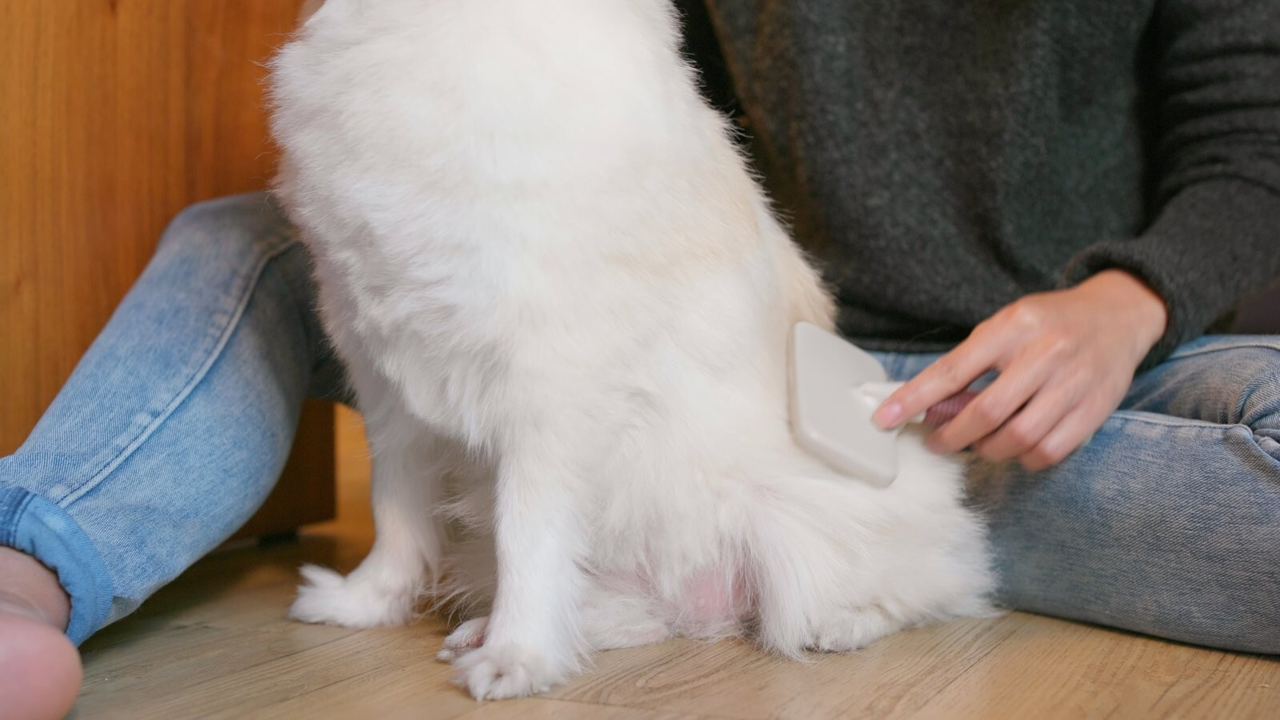
Remove loose coat and gently work through small tangles before they become tighter when wet. Do not pull at close mats or work repeatedly over sore skin.
How to bathe an older dog step by step
Move slowly, but keep the wash efficient. Use a calm voice, let your dog see what is happening and pause whenever they need to reset their feet.
Help them enter without twisting
Use the lowest safe entry point. Small dogs may be lifted with one arm supporting the chest and the other supporting the hindquarters. For a larger dog, a ramp, walk-in shower or second person may be more comfortable than lifting. Never pull them in by the collar.
Check the water on your wrist
Use comfortably lukewarm water, not hot water. Start with a low flow so the sound and pressure are predictable. Wet the body from the shoulders back, leaving the face until later.
Support, do not restrain
Keep one steady hand near the chest or hips if your dog wobbles, but allow them to adjust their stance. Avoid forcing a leg forward, lifting a paw high or asking them to balance on three legs for longer than necessary.
Wash with light pressure
Massage dog shampoo through the coat with your fingertips rather than scratching with your nails. Work in easy-to-reach sections and use a damp cloth around the face. Keep shampoo and running water away from the eyes and inside of the ears.
Rinse until the water runs clear
Leftover product can make skin feel uncomfortable. Rinse each section carefully, checking the armpits, belly, groin, chest and under the collar area where lather can hide.
Stop rather than push through
End the bath and begin drying if your dog cannot keep their footing, repeatedly tries to sit or lie down, starts shivering, becomes highly distressed or reacts as though a body area is painful. Broken skin, weeping patches, bleeding or marked swelling should not be scrubbed.
A joint-friendly drying routine
Drying is part of the bath, not an afterthought. A damp senior dog can become chilled, and an excited shake on a wet floor can undo all the careful setup.
Press, do not rub
Wrap the body in an absorbent towel and press gently to lift water from the coat. Vigorous rubbing can tangle long hair and may be uncomfortable over bony or sensitive areas.
Dry folds and paws
Use a clean corner of the towel around skin folds and between the toes. Wipe the outer ear only, without placing cotton buds or other objects into the ear canal.
Finish somewhere warm
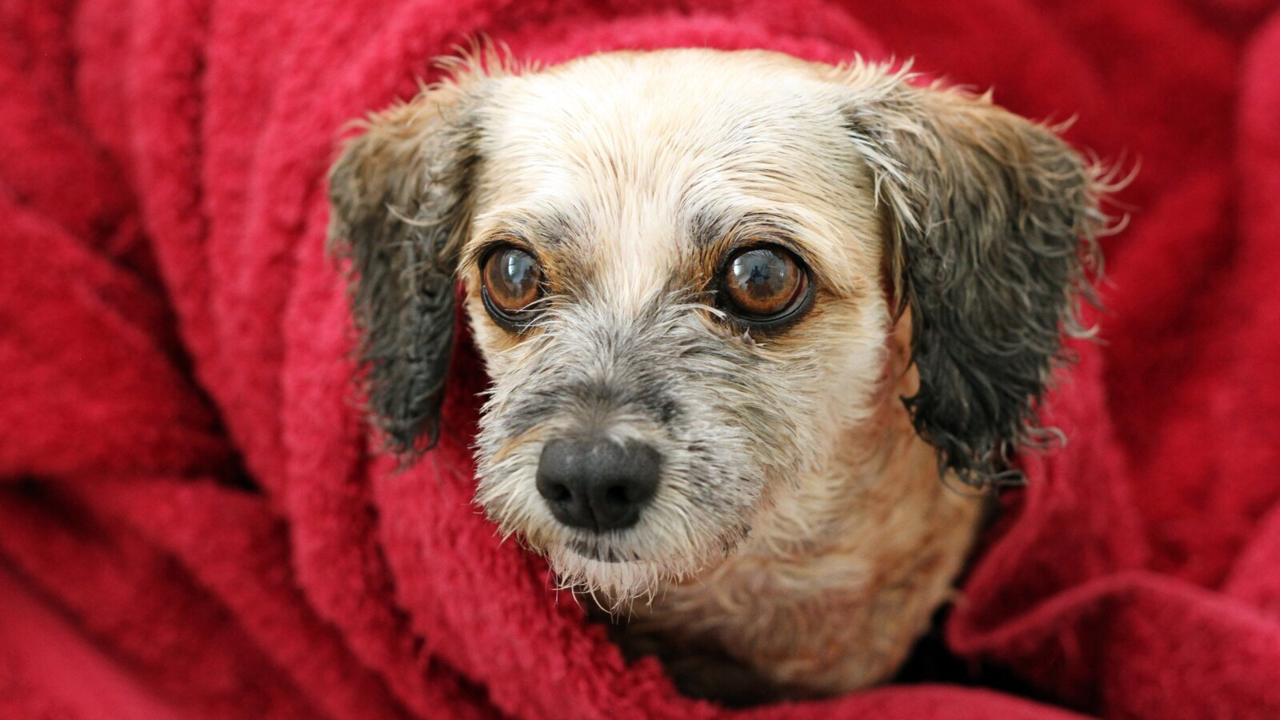
Move onto the prepared non-slip mat and add a dry towel or bathrobe. Let your dog rest away from draughts until the coat and skin are comfortably dry.
If your dog is already relaxed around a hairdryer, use the lowest comfortable heat and airflow, keep it moving and hold it well away from the skin. Skip the dryer if the sound causes stress. Towels and a warm room are a perfectly good finish.
When a full bath is not the best option
Cleanliness does not have to mean a head-to-tail wash. On lower-energy days, spot cleaning can protect your dog's comfort while still dealing with mud, food, urine or outdoor smells.
- Use a warm damp cloth for the face, chin and small marks.
- Wash muddy paws one at a time over a mat, keeping the other three feet supported.
- Use a dog-friendly waterless foam for a wider freshen-up without a full rinse.
- Use grooming wipes for suitable areas, following the label and avoiding eyes, inner ears and broken skin.
- Brush the dry coat gently to lift loose hair and surface debris.
This mix-and-match approach can stretch the time between full baths and make each clean easier for your dog.
Gentle bath-day helpers
Choose products for the job and your dog's individual coat. A mild dog shampoo, absorbent drying gear and a waterless option can help you adapt the routine from one day to the next.
Use the label as your guide
Check directions before use, especially for dilution, contact time, rinsing and suitable body areas. More product does not create a better clean and can make thorough rinsing harder.
How often should you bathe an older dog?
There is no single schedule for every senior dog. Coat type, skin comfort, indoor or outdoor lifestyle and how quickly they become dirty all matter. A short-haired indoor dog may need fewer full baths than a long-coated dog who regularly explores muddy tracks.
Bathe when a full wash is genuinely useful, then rely on brushing and targeted cleaning between baths. If your dog has an existing skin-care routine, keep following the product and care instructions already set for them rather than adding extra baths.
Frequently asked questions
Can you bathe an older dog with stiff joints?
Often, yes. Use a non-slip surface, choose a low-entry washing area, support their balance and keep the standing time short. If the movement needed for a full bath is too difficult that day, use a waterless or targeted clean instead.
Is a bath or shower better for a senior dog?
The safer option is the one your dog can enter, stand in and leave most comfortably. A walk-in shower may suit a large stiff dog, while a small dog may feel more secure in a shallow tub with a stable mat.
What temperature should the water be?
Use comfortably lukewarm water. Test it on the inside of your wrist before it reaches your dog, and recheck if the tap setting changes during the bath.
Can I use human shampoo on an older dog?
Use a shampoo made for dogs. Human products are designed for human skin and may not suit your dog's skin or coat. Follow the dog shampoo label and rinse thoroughly.
How do I wash a senior dog who cannot stand for long?
Shorten the task and clean in sections. A supported seated position may work for some dogs, provided the surface is stable and you are not forcing their joints. For light dirt, choose a damp cloth, foam or wipe instead of a full bath.
Should I brush an older dog before or after bathing?
Brush gently before the bath to remove loose hair and minor tangles. Wait until the coat is dry before doing a more complete brush, as wet hair can stretch and pull more easily.
Can I use a hairdryer on a senior dog?
Only if your dog is comfortable with it. Choose low heat and low airflow, keep the dryer moving and never hold it close to the skin. If your dog is worried by the noise, use absorbent towels and a warm room instead.
How can I keep water out of my dog's ears?
Keep the flow below the head and clean the face with a damp cloth. After the bath, dry the outer ear gently. Do not push cotton buds or other objects into the ear canal.
More comfort for your senior dog
Explore practical guides on gentle grooming, joint-friendly routines, feeding and everyday comfort in The senior scoop.
EXPLORE THE SENIOR SCOOP