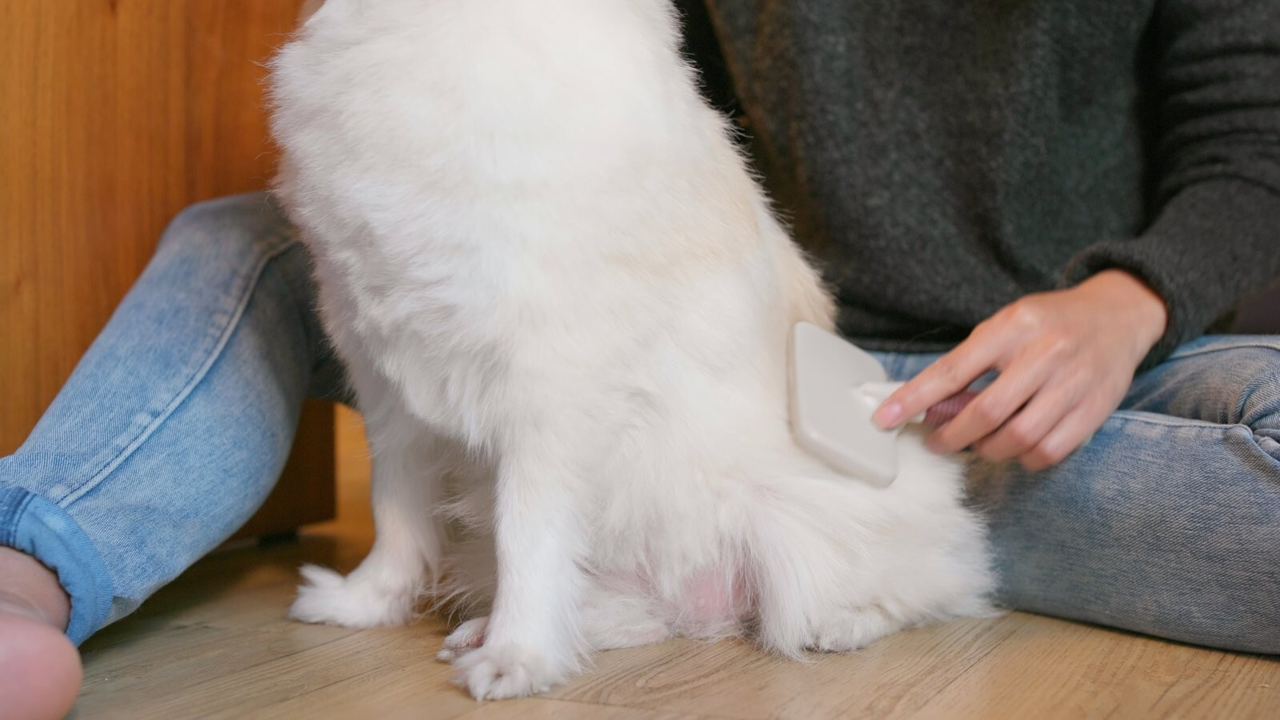
Brushing an older dog is less about chasing a perfect finish and more about comfort, connection and noticing small changes early. Ageing skin may be drier or more delicate, while stiff joints can make standing and turning harder. A short routine with a soft tool, light pressure and plenty of pauses can keep the coat comfortable without tiring your senior dog.
Quick answer
Keep senior brushing sessions short and predictable. Set up on a non-slip surface, let your dog choose a comfortable position and start with your hands before using a soft brush or grooming mitt. Brush in the direction of hair growth, work around rather than through painful areas, and stop if your dog stiffens, flinches, turns away or tries to leave.
Why senior dogs need a gentler approach
Skin and coat changes are not identical for every older dog, but many seniors become less tolerant of long grooming sessions. Skin can feel thinner or drier, muscle coverage may reduce, and old scars, skin tags or small lumps can become easier to catch with a brush. Arthritis or general stiffness may also make it uncomfortable to stand for long periods or have a leg lifted.
At the same time, older dogs may find it harder to scratch, shake or reposition themselves. Regular gentle brushing can lift loose hair, help prevent small tangles becoming tight mats and give you a calm opportunity to check the skin. The goal is not to brush harder. It is to brush more thoughtfully.
Set up for comfort before you start
- Choose a quiet, warm spot with good light so you can see the skin clearly.
- Use a non-slip mat, carpet or folded towel to help unsteady feet feel secure.
- Keep the brush, comb, wipes and rewards within reach so your dog does not need to wait.
- Groom on the floor if lifting onto a table would be difficult or risky.
- Let your dog stand, sit or lie on their side. The best position is the one they can hold comfortably.
Try the pressure test
Run the brush over the inside of your forearm before it touches your dog. It should feel smooth and controlled, not scratchy or sharp. With pin or slicker-style tools, keep your wrist loose and use shallow strokes so the tips do not press into ageing skin.
The seven-minute senior brushing routine
This routine is a starting point, not a target your dog has to complete. Pause early if they look tired or uncomfortable, then continue another day.
Minute 1: Settle
Let your dog sniff the tool. Offer calm praise and begin with a hand resting gently on the shoulder or chest.
Minute 2: Hand check
Use flat palms to feel over the neck, back, sides and hips. Note any heat, swelling, flinching, mats or new bumps.
Minutes 3 and 4: Easy areas
Brush with the coat along the shoulders, back and sides. Use short sections and lift the tool away at the end of each stroke.
Minutes 5 and 6: Tricky areas
Check behind the ears, chest, armpits, tail base and feathering. Use fingers or a wide comb for small tangles.
Minute 7: Finish
Stop on an easy area, offer a reward and make a note of anything to recheck. Clean loose hair from the tool.
Match the tool to the coat and skin
| Coat or need | Gentle starting tool | How to use it |
|---|---|---|
| Short, smooth coat | Rubber brush or grooming mitt | Use light, slow passes with the hair growth. Avoid vigorous circular rubbing on delicate skin. |
| Medium or double coat | Soft pin brush or double-sided brush | Work in small sections. Lift loose hair without repeatedly scraping the same patch. |
| Long or curly coat | Pin brush followed by a wide-tooth comb | Support the hair near the skin and tease tangles from the ends towards the root. |
| Thin or sensitive skin | Very soft bristle brush or flexible mitt | Use fewer strokes and inspect the skin after each section for redness or discomfort. |
| Dense seasonal shedding | Coat-appropriate shedding tool used sparingly | Do not keep brushing one spot just because hair is still coming out. Short sessions protect the skin. |
How to work around stiff joints
Ask for as little repositioning as possible. Instead of pulling a front leg forward to reach an armpit, gently lift loose hair with one hand and brush the accessible area with the other. For the belly and inner legs, wait until your dog naturally lies on their side rather than rolling or holding them in place.
Keep one hand on the body when changing sides so your dog is not surprised. If they have reduced hearing or vision, approach from the front, let them smell your hand and use the same verbal cue before each new area. Several three-minute sessions across the week are often more comfortable than one long session.
Use a stop and start rhythm
- Brush for three or four gentle strokes.
- Pause and take your hand away from the coat.
- Watch whether your dog stays relaxed, leans back towards you or chooses to move.
- Continue only if their body remains soft and settled.
Deal with tangles without tugging
Hold the hair between the tangle and the skin so your fingers absorb the pull. Loosen the outer edge with your fingers, then use the end teeth of a wide comb in tiny movements. A pet-safe detangling spray may add slip, but follow the product directions and avoid sore or broken skin.
Do not cut a tight mat with scissors. Older skin can be thin and may be pulled up inside the mat where it is hard to see. If a tangle sits close to the skin, covers a large area or makes your dog uncomfortable, leave it for an experienced groomer or clinic team to assess.
Gentle tools for the routine
These available picks offer different levels of softness and control. Start with the gentlest option that works for your dog's coat, rather than using every tool in one session.
What to check while you brush
Use the same route around the body each time so changes are easier to notice. Look and feel for:
- redness, flakes, scabs, moisture or an unusual smell
- new lumps, changes to existing lumps or areas that feel hot
- hair thinning, bald patches or a sudden increase in shedding
- tender spots, especially around the neck, back, hips and legs
- fleas, flea dirt or other parasites
- nails or dewclaws beginning to catch in the coat
When to pause and get advice
Stop brushing a sore area and contact your local clinic if you find broken skin, bleeding, pus, marked swelling, a rapidly changing lump or pain that is new or worsening. Sudden coat loss, intense itching or a major change in skin condition also deserves a prompt check. Do not apply human creams or essential oils unless your clinic has specifically advised them for your dog.
How often should you brush a senior dog?
Coat type sets the starting point. A short-coated dog may need one or two light sessions a week, while a long, curly or easily matted coat may need brief daily attention. During seasonal shedding, add another short session rather than pressing harder or extending one session until your dog becomes tired.
Comfort decides the final schedule. If your dog becomes restless after five minutes, plan four minutes next time. A calm routine that happens regularly is more useful than a thorough session that your dog learns to avoid.
Keep brushes clean and comfortable
Remove trapped hair after each session. Wash tools according to their care instructions and let them dry fully before putting them away. Check pin tips, rubber teeth, handles and comb edges for cracks or rough spots. Do not share tools between pets when either animal has a suspected skin infection or parasite problem.
Grooming wipes can be useful for a small surface clean between baths, but they do not replace brushing or skin care. Choose pet-specific wipes and stop using them if the skin looks irritated.
Frequently asked questions
Should I brush against the direction of the coat?
For most senior routines, start by brushing in the direction the hair grows. This is usually more comfortable. If coat-specific grooming requires lifting sections, work gently and finish by smoothing the coat back into place.
What if my senior dog will not stand for brushing?
They do not need to stand. Groom while they sit or lie on a stable surface, and work only on the areas you can reach without forcing a position. Shorten the session and build up slowly.
Can I brush over lumps and skin tags?
Brush around them rather than directly across them. Make a note of their location and protect them with your fingers while the tool passes nearby. Ask your clinic to check anything new or changing.
Is a shedding tool suitable for ageing skin?
It depends on the coat, tool and skin condition. Use a coat-appropriate tool lightly and less often, and stop if you see redness or sensitivity. A soft mitt or brush is a safer starting point when you are unsure.
How can I make brushing feel positive?
Use the same comfortable location, start with an easy body area and finish before your dog asks to leave. Calm praise and a suitable soft treat can help create a predictable end to the routine.
More support for the senior years
Explore The senior scoop for practical ways to help older pets stay comfortable, confident and connected.
EXPLORE THE SENIOR SCOOPRelated reading
Senior Dog Skin & Coat Care: A Gentle Routine

Tips to Keep Your Senior Dog More Comfortable When Grooming
How to Create a Calm Pet Grooming Routine at Home
Top 5 Dog Grooming Tools Every Kiwi Pet Parent Needs
Treats for Senior Dogs: Soft, Gentle and Practical Picks
Warming Toppers and Broths for Senior Dogs