As dogs move into their senior years, the home they have always known can quietly start to work against them. Floors feel slipperier, the jump onto the sofa becomes a calculated risk, and the water bowl across the house feels a little further away than it used to. None of it happens overnight, which is why it is easy to miss until you notice your dog hesitating where they once breezed through.
The good news is that most of the changes that make life easier for an older dog are small, inexpensive and quick to set up. This is a practical, room-by-room guide to setting your home up so your ageing dog can move, rest, eat and settle with confidence.
Quick answer
A senior-friendly home comes down to traction, easy access, comfort and routine. Add non-slip runners over hard floors, use a ramp instead of asking your dog to jump, give them a supportive bed they can step into on the ground floor, keep food and water raised and within easy reach, and keep the layout consistent so they can navigate by memory. Dogs are generally considered senior from around 7 years, sooner for large and giant breeds, so it is worth making these tweaks before your dog is really struggling rather than after.
Start with the floor
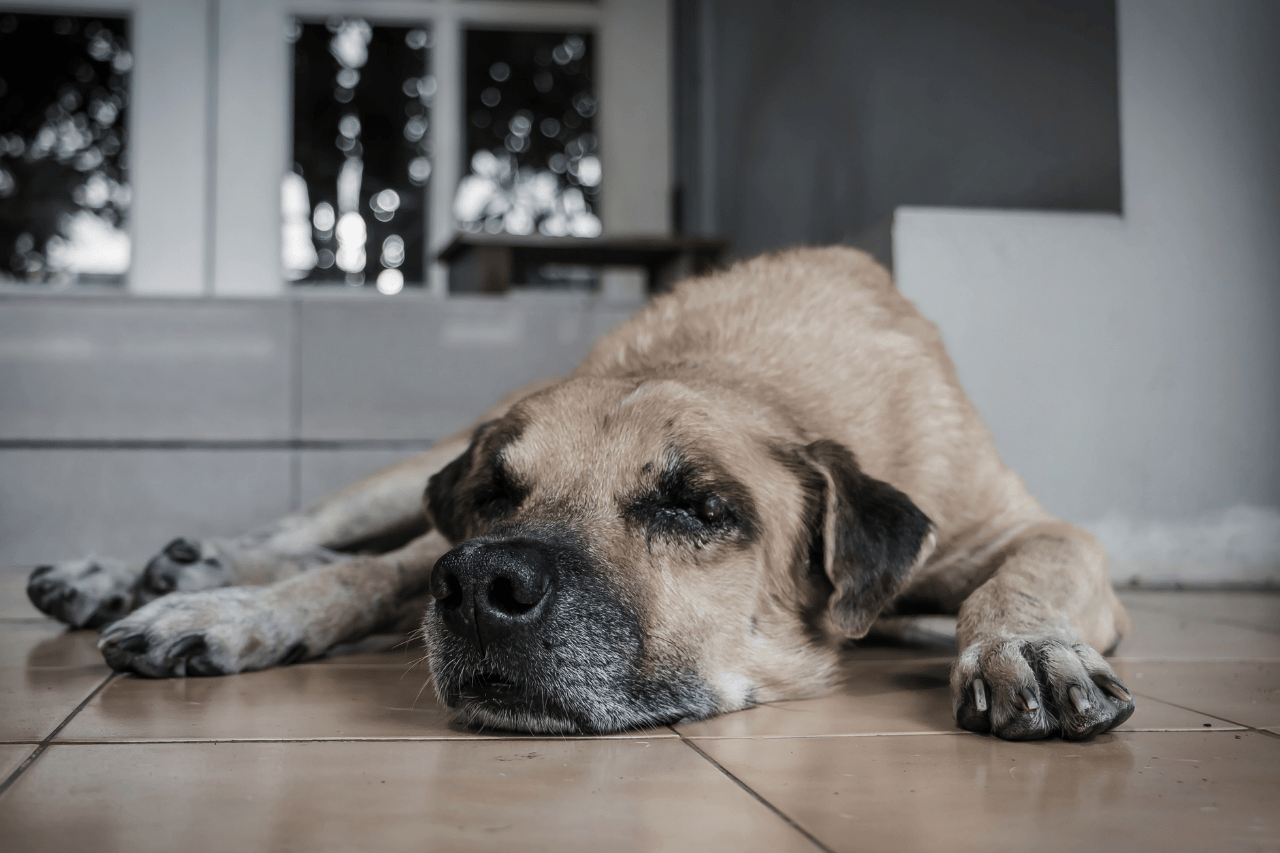
Slippery floors are one of the biggest hidden hazards for an older dog. Timber, tiles, vinyl and polished concrete give very little grip, and a dog with stiffer joints or weaker back legs can splay, scrabble and lose confidence every time they stand up or turn a corner. Over time, many dogs simply stop moving around as much because the floor feels unsafe.
Laying down traction is the single cheapest, highest-impact change you can make. Rugs, runners and washable mats along your dog's main routes, around their bed, and at the bottom of any steps give them something to push off. Focus on the paths they use most: bed to door, bed to water, and the spot where they greet you.
Map their routes
Watch where your dog walks most and lay runners along those lines first. Corners and turning points are where paws slip most, so cover those before the open stretches.
Pick grippy backing
Choose mats with a rubberised or non-slip base so they stay put. A rug that slides is more dangerous than bare floor, so add anti-slip underlay if you are using loose rugs.
Keep nails and fur trim
Long nails and tufts of fur between the pads reduce grip even further. Keeping both neat helps your dog get traction on the surfaces you cannot cover.
Easy ways up and down
Jumping onto the bed, the couch or into the boot puts a lot of force through ageing joints, and the landing is harder on the front legs than the take-off. A ramp removes that impact and lets your dog keep doing the things they love, like joining you on the sofa or coming along for a drive, without the strain or the risk of a missed jump.
Ramps suit most situations better than steps for older dogs, because there is no individual riser to misjudge. Choose one rated for your dog's weight, with a non-slip surface and a gentle gradient. The Petsafe Happy Ride Telescopic Dog Ramp Deluxe folds away and works for the car or the couch, with a larger XL version for bigger dogs.
If your dog is still confident on the level but struggles with one or two specific spots, you can also lower the obstacle itself. Pull the bed onto the floor rather than a raised frame, or set up their favourite resting place somewhere they no longer need to climb to reach.
A bed they can reach and sink into
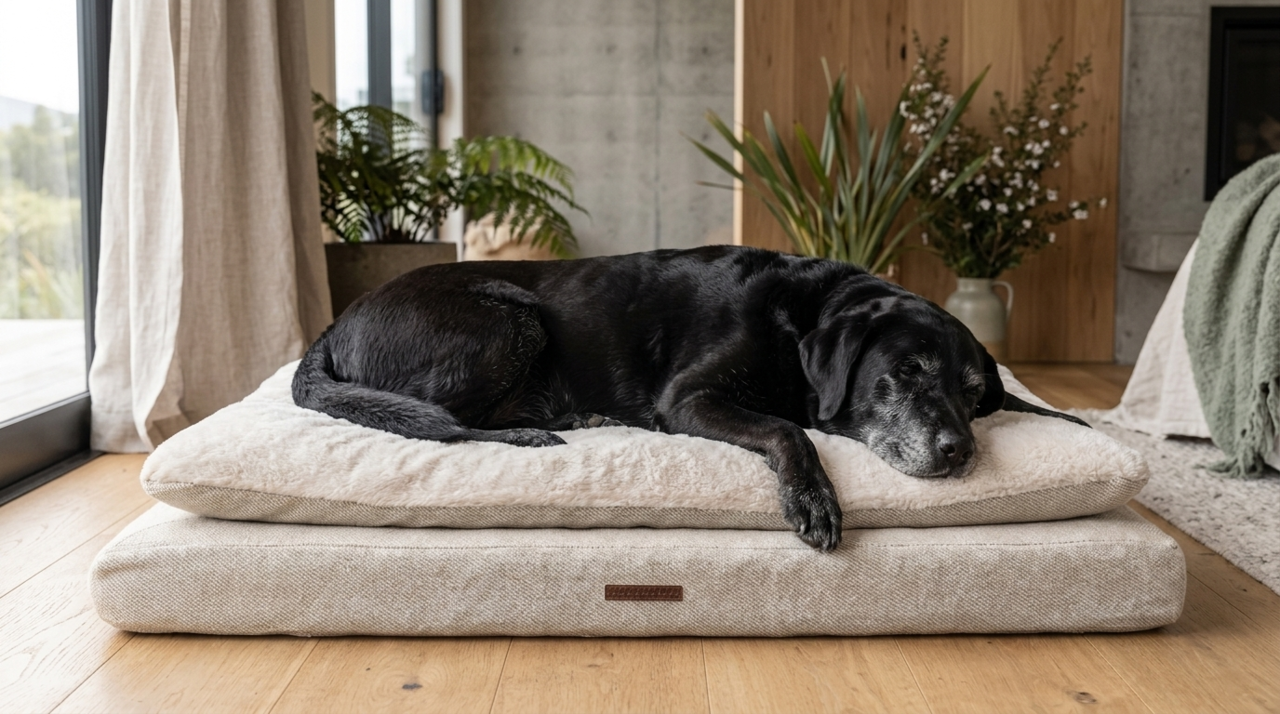
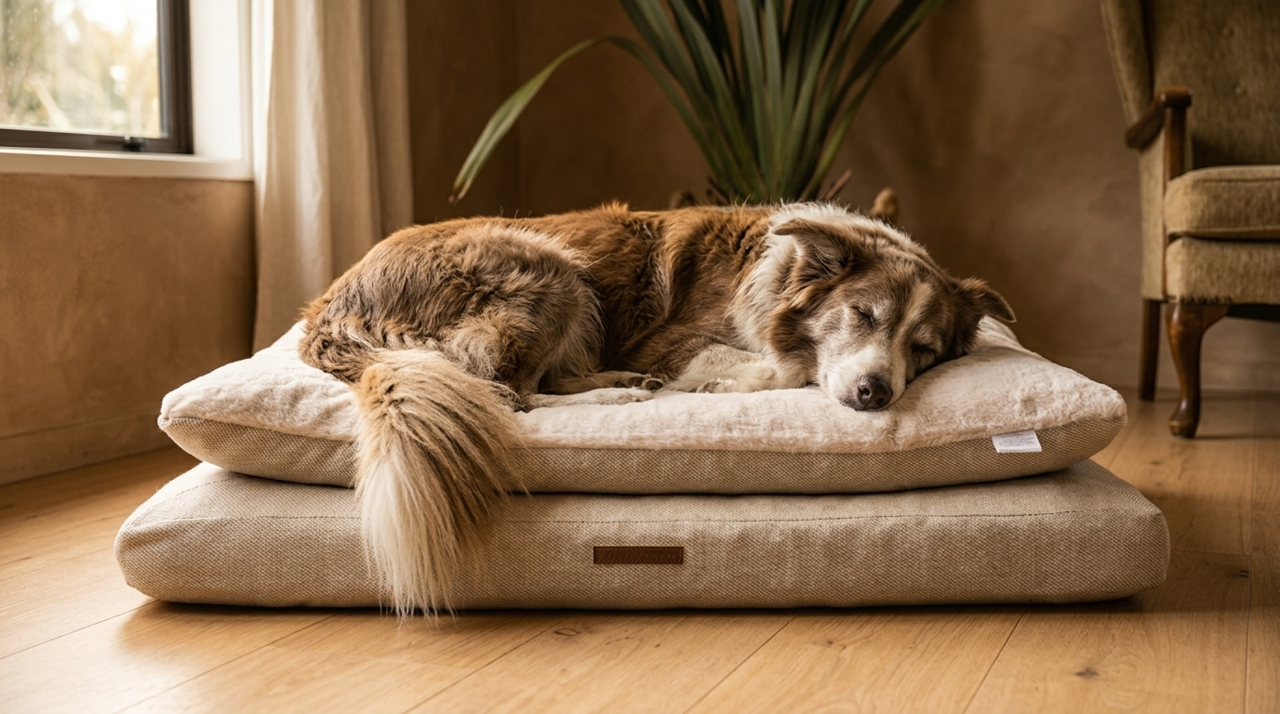
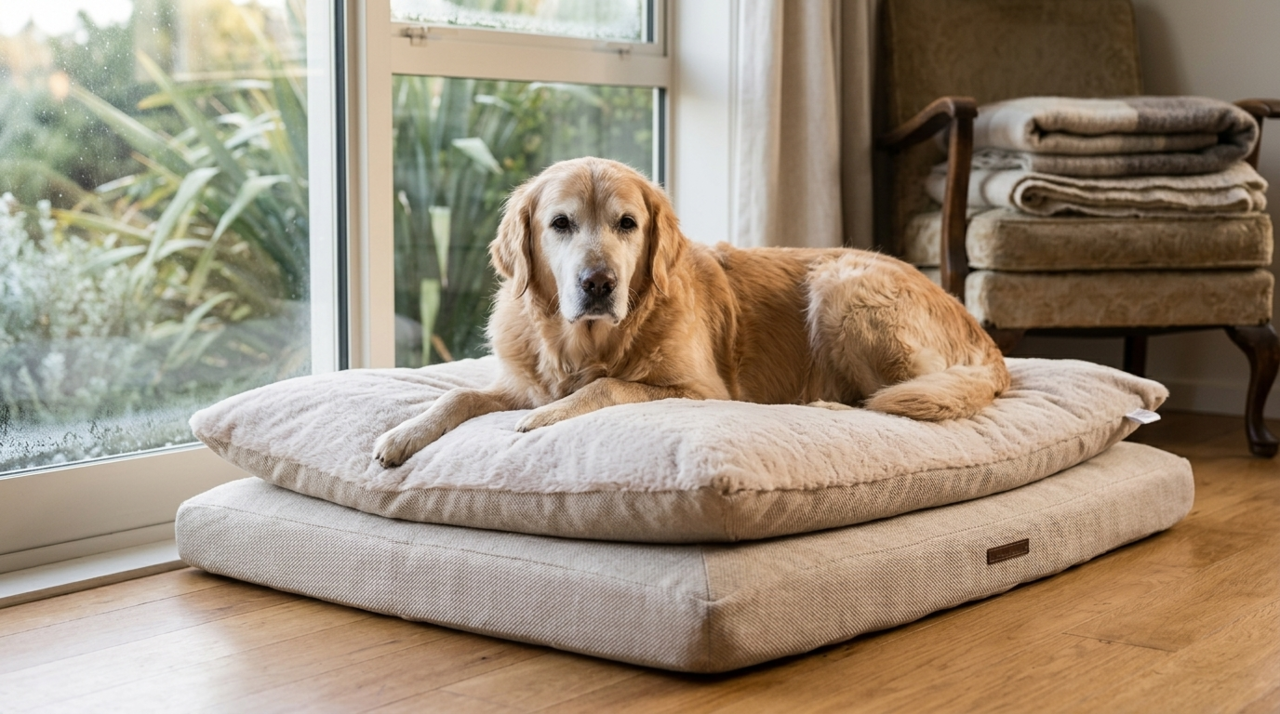
An older dog spends more of the day resting, so where and how they sleep matters more than ever. A flat, thin bed lets pressure build on hips, elbows and shoulders, while a deep memory-foam base cushions the joints and makes it easier to get up again. Look for a bed with a low entry point so your dog can step in rather than clamber, and place it on the ground floor away from draughts and foot traffic.
An orthopaedic bed like the Yours Droolly Indoor Osteo bed or the EzyDog 2 in 1 Smart Bed supports stiff joints, and a soft layer like a calming blanket adds warmth that helps older muscles stay loose on cold mornings.
If your home is on more than one level, it is worth setting up a comfortable resting spot on each floor so your dog does not have to tackle the stairs every time they want to be near you. You can read more in our guide to the best orthopaedic dog beds for senior dogs.
Food and water within easy reach
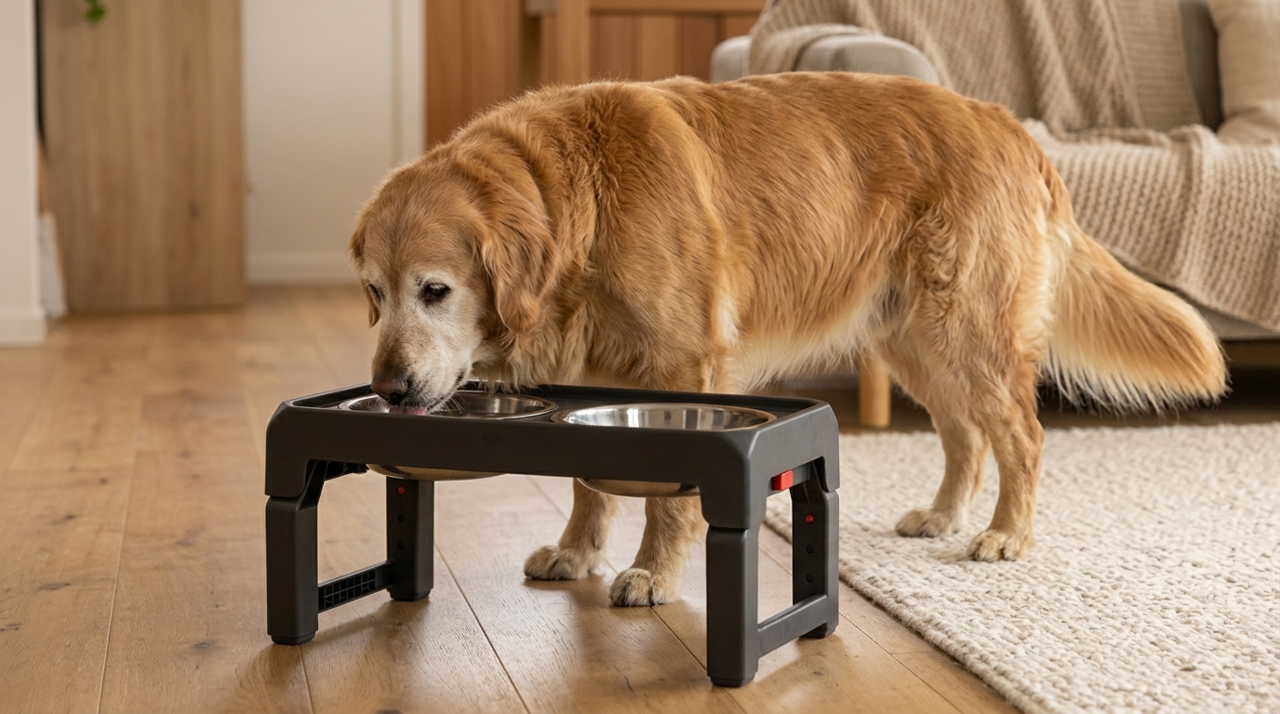
Bending down to a bowl on the floor can be uncomfortable for a dog with a stiff neck, back or shoulders. Raising the bowls to a more natural height takes the strain off, and an adjustable feeder means you can set it to suit your dog as they change. Keep the bowls in the same fixed spot so your dog always knows where to find them, which matters even more if their eyesight is starting to fade.
Hydration tends to drop in older dogs, so making water easy and appealing helps. A fountain keeps water moving and fresh, which encourages more drinking, and a portable bottle is handy for walks and trips so your dog never has to wait for a drink.
Gentle enrichment to keep them busy
A slower body does not mean a switched-off mind. Older dogs still love a job to do, and gentle enrichment is one of the best ways to keep them engaged without putting pressure on their joints. Slow feeders and lick mats turn mealtime into a calm, satisfying activity, while treat puzzles give the brain a workout from the comfort of the floor.
Swapping a high-energy fetch session for a snuffle mat or a treat puzzle lets your dog feel busy and rewarded while staying low to the ground. It is also a lovely way to settle a dog who gets a little restless as routines change.
A calm, predictable home
Consistency is a senior dog's best friend. As hearing and sight gradually change, dogs rely more on memory and smell to find their way around, so keeping furniture, beds and bowls in the same place helps them move with confidence. Try not to leave obstacles in their usual paths, and use a soft light at night so a dog who wakes can still see well enough to settle.
If your dog seems more anxious or unsettled than they used to, a calm environment makes a real difference. A pheromone diffuser such as Adaptil releases the same reassuring signal a mother gives her pups, which can help an older dog feel more secure at home, while a calming spray is useful for car trips and unfamiliar places.
A quick senior home safety sweep
Walk through your home as if you were your dog and check the basics:
- Runners or mats over every slippery stretch they use
- A ramp or low step for the car, couch or bed
- A supportive bed with a low entry on each level they spend time on
- Food and water raised, fixed in one spot and easy to reach
- Clear, obstacle-free paths and a soft night light
- Warm, draught-free resting spots away from busy doorways
Support from the inside
A well-set-up home works best alongside good day-to-day care. Many owners of older dogs add a joint supplement to help keep their dog moving comfortably, and pair it with a senior diet suited to a slower metabolism. These work gradually, so it is worth starting them while your dog is still moving well rather than waiting.
For more on what to choose and how it all fits together, see our joint health supplement guide for senior dogs and our tips on low-impact exercise for older dogs.
Keep the essentials topped up
Set the comfy bed refresh, joint chews, fountain filters and your dog's senior food to arrive on repeat with Autodeliver, and save up to 25% on your first order and 15% on every one after. Join Pet Perks for free for everyday member pricing too.
Shop senior comfortFrequently asked questions
At what age should I start adapting my home for my dog?
Dogs are generally considered senior from around 7 years, and sooner for large and giant breeds. You do not need to wait for problems to appear. Adding traction and a supportive bed early helps prevent the loss of confidence that comes with slips and missed jumps.
Are ramps or steps better for an older dog?
For most senior dogs a ramp is easier, because there is no individual step to misjudge and no impact on landing. Choose one rated for your dog's weight with a non-slip surface and a gentle slope. Steps can work for smaller, more agile dogs but ask for more coordination.
How do I stop my dog slipping on wooden or tiled floors?
Lay rugs, runners or washable mats with a non-slip backing along the routes your dog uses most, and cover corners and turning points first. Keeping nails trimmed and the fur between the pads tidy also helps your dog grip the surfaces you cannot cover.
Should I raise my dog's food and water bowls?
Raised bowls can make eating and drinking more comfortable for a dog with a stiff neck or back, and an adjustable feeder lets you set the right height. Keep them in a fixed spot so your dog always knows where to find them, which is especially helpful as eyesight changes.
My older dog seems unsettled at home. What can help?
Keep the layout consistent, leave clear paths, and add a soft night light so a dog who wakes can still find their way. A pheromone diffuser can help an anxious older dog feel more secure, and a predictable daily routine gives them something steady to rely on.