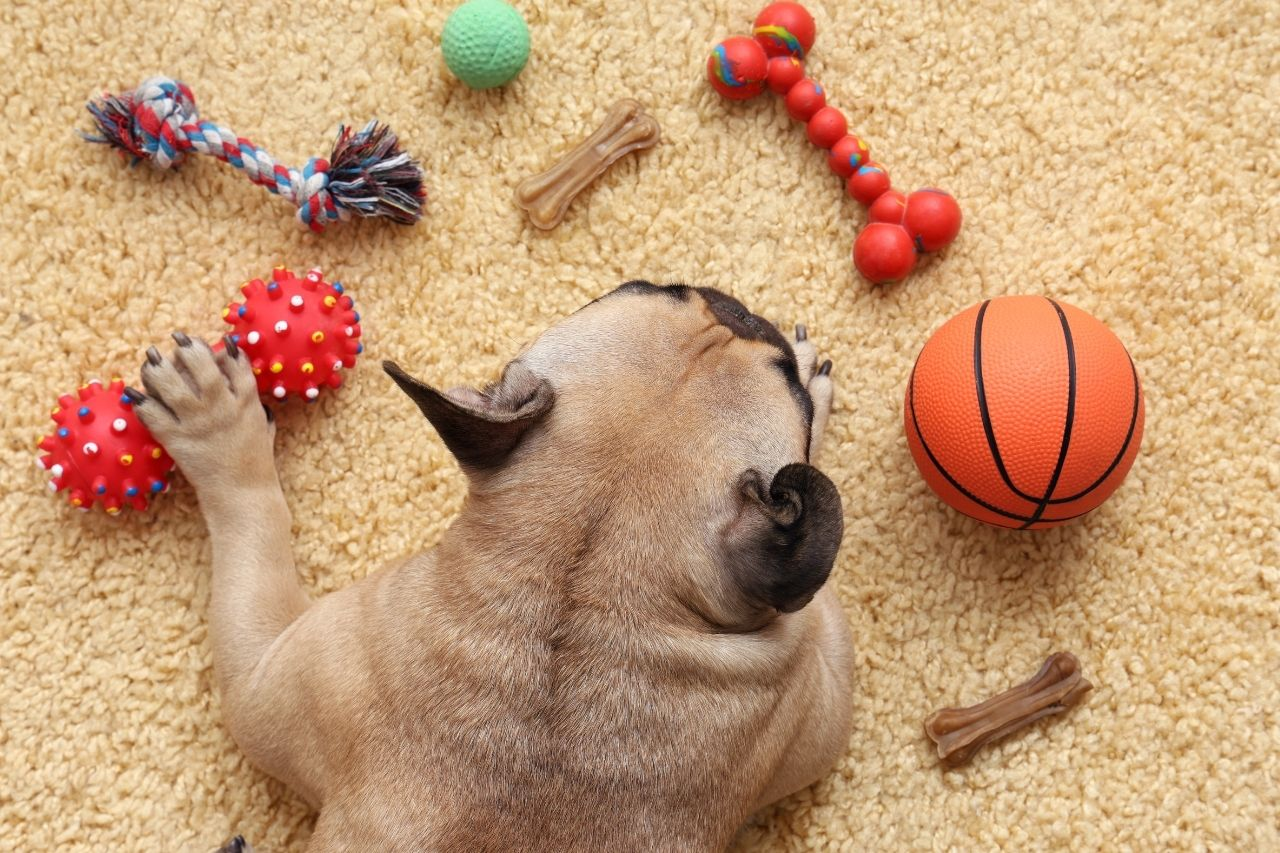
Walk into any pet store or scroll through an online shop and you will find hundreds of dog toys in every shape, size, and material imaginable. So how do you know which one is actually right for your dog?
The truth is, the "best" dog toy depends on three things: your dog's size, their age, and how they like to play. A toy that is perfect for a teething Labrador puppy is completely wrong for a senior Chihuahua, and a plush toy that one dog cuddles with will be shredded in seconds by another. This guide helps you cut through the noise and pick the right toy every time.
Why the Right Toy Matters
Safety
A toy that is too small can be a choking hazard. A toy that is too hard can crack teeth. And a toy made from the wrong material can break apart and cause intestinal blockages. Getting the size and durability right is the most important thing.
Engagement
Dogs lose interest in toys that do not match their play style. A dog who loves to chase will ignore a chew toy, and a dog who loves to gnaw will not care about a ball. Matching the toy to how your dog naturally plays keeps them engaged for longer.
Mental and Physical Health
The right toys provide mental stimulation, reduce boredom, ease anxiety, and keep your dog physically active. They are not just fun, they are an essential part of your dog's wellbeing.
Types of Dog Toys and What They Are Best For
Not all dog toys are created equal. Here is a breakdown of the main types and which dogs they suit best.
Chew Toys
Designed for dogs who love to gnaw. Made from durable rubber, nylon, or natural materials, chew toys satisfy your dog's natural urge to chew and can help clean teeth. Great for teething puppies, heavy chewers, and dogs who need something to keep them busy. Browse chew toys
Fetch Toys
Balls, frisbees, and launchers for dogs who love to chase. Fetch toys are perfect for active dogs who need to burn energy outdoors. Look for balls that are the right size for your dog's mouth and avoid tennis balls for heavy chewers (the felt wears down teeth). Browse fetch toys
Plush and Soft Toys
Cuddly toys for dogs who like to carry, comfort, and gently mouth their toys. Plush toys are ideal for puppies, senior dogs, and gentle players. Not recommended for heavy chewers who will rip them apart and potentially swallow the stuffing. Browse plush toys
Tug Toys and Rope Toys
Great for interactive play between you and your dog. Tug toys build confidence, strengthen the bond between dog and owner, and provide a good physical workout. Choose a size that matches your dog so you are not overpowering a small dog or underwhelming a large one. Browse rope & tug toys
Puzzle and Interactive Toys
Toys that make your dog work for a treat or figure out a problem. Puzzle feeders, treat-dispensing balls, and snuffle mats are brilliant for mental stimulation and slowing down fast eaters. Ideal for clever breeds, anxious dogs, and rainy days indoors. Browse interactive toys
Squeaky Toys
The squeak triggers your dog's prey drive, making these toys exciting and engaging. Some dogs love them, others become obsessed with destroying them to "kill" the squeak. If your dog is a destroyer, look for reinforced squeaky toys or ones with multiple squeakers so the fun lasts longer.
How to Choose the Right Size Toy
Size is the single most important safety factor when choosing a dog toy. A toy that is too small can be swallowed or lodged in your dog's throat. A toy that is too large will be awkward and frustrating to play with.
| Dog Size | Weight Range | Toy Size Guide | Example Breeds |
|---|---|---|---|
| Extra small / Toy | Under 5kg | XS or Small toys. Avoid anything small enough to fit entirely in their mouth. | Chihuahua, Yorkshire Terrier, Maltese, Toy Poodle |
| Small | 5 to 10kg | Small toys. Balls should be at least 4cm diameter. | Jack Russell, Cavalier King Charles, Miniature Schnauzer, Shih Tzu |
| Medium | 10 to 25kg | Medium toys. Most standard-sized toys work well. | Beagle, Border Collie, Staffy, Bulldog, Cocker Spaniel |
| Large | 25 to 45kg | Large toys. Balls should be at least 6cm diameter. | Labrador, Golden Retriever, German Shepherd, Boxer |
| Extra large / Giant | Over 45kg | XL toys. Choose heavy-duty materials designed for power chewers. | Great Dane, Rottweiler, Mastiff, Bernese Mountain Dog |
When in doubt, size up. It is always safer to give your dog a slightly larger toy than one that could be a choking risk. For more on sizing chew toys specifically, read how to choose the perfect chew toy for your dog's size.
Best Toys by Age
Puppies (under 12 months)
Puppies are teething, curious, and learning about the world through their mouths. They need toys that are soft enough for developing teeth but durable enough to withstand constant chewing. Avoid hard nylon chews until their adult teeth are fully in (around 6 to 7 months).
- Soft rubber chew toys (like KONG Puppy)
- Rope toys for gentle tugging
- Small plush toys for comfort
- Puppy-specific teething toys that can be frozen for soothing sore gums
For specific product picks, read best puppy teething toys in NZ and best puppy toys for teething, training and tugging.
Adult dogs (1 to 7 years)
Adult dogs have their full set of teeth and a well-established play style. This is where matching the toy to their personality matters most. A high-energy Border Collie needs different toys to a laid-back Bulldog.
- Chasers and retrievers: fetch toys, balls, frisbees
- Chewers: durable rubber or nylon chew toys, Benebones, KONGs
- Tuggers: rope toys, bungee tug toys
- Thinkers: puzzle feeders, treat-dispensing toys, snuffle mats
- Cuddlers: plush toys, comfort toys
For breed-specific recommendations, read best dog toys by breed.
Senior dogs (7+ years)
Older dogs often slow down, but they still need play and mental stimulation. The key is choosing toys that are gentle on ageing joints and teeth. Avoid hard chews and high-impact fetch toys. Instead, focus on soft plush toys, gentle puzzle feeders, lick mats, and low-impact enrichment.
For specific picks, read best toys for senior dogs in NZ.
Best Toys by Play Style
For heavy chewers and destroyers
If your dog shreds every toy within minutes, you need something built to last. Look for toys labelled "tough", "extreme", or "power chewer". Brands like KONG, Benebone, and Nylabone are designed specifically for aggressive chewers. Avoid plush toys, thin rubber, and anything with small parts that can be torn off. For our full guide, read best indestructible dog toys for heavy chewers in NZ.
For anxious or nervous dogs
Toys can be a powerful tool for managing anxiety. Lick mats, snuffle mats, and stuffable toys like KONGs encourage slow, repetitive behaviour that naturally calms dogs down. Comfort toys with heartbeat simulators can also help dogs who struggle with separation anxiety. Read how to use toys to help a nervous or anxious dog.
For dogs who are home alone
If your dog spends time alone during the day, they need toys that keep them occupied without supervision. Stuffable toys (freeze a KONG with peanut butter), puzzle feeders, and treat-dispensing balls are all great options. Avoid toys with small parts or squeakers that could be chewed off and swallowed. For more ideas, read top indoor dog toys to keep your pup busy.
Toy Safety Tips Every Dog Owner Should Know
When to throw a toy away
Replace any toy that is cracked, has pieces breaking off, has exposed stuffing or squeakers, or has become small enough to fit entirely in your dog's mouth. A damaged toy is a choking hazard.
- Always supervise your dog with a new toy until you know how they play with it
- Size up if you are unsure. A slightly too-large toy is always safer than a too-small one
- Rotate toys every few days to keep them feeling fresh and interesting
- Check toys regularly for wear, cracks, loose parts, and exposed stuffing
- Avoid toys with button eyes, ribbons, or small decorative parts that can be chewed off
- Never give your dog cooked bones, sticks, or rocks as toys. They can splinter, crack teeth, or cause blockages
- Wash toys regularly to prevent bacteria buildup. Read how to keep your dog toys clean
Shop Dog Toys
Find the Perfect Toy for Your Dog
Browse dog toys at Petdirect by type, size, and brand. Enjoy free shipping on orders over $79.
Shop Dog ToysFrequently Asked Questions
How many toys does a dog need?
Most dogs do well with 3 to 5 toys available at a time, rotated every few days. Having too many out at once can actually reduce interest. Keep a stash and swap them around so each toy feels new again.
Are squeaky toys safe for dogs?
Squeaky toys are safe for most dogs, but they can be a risk for dogs who destroy toys to get the squeaker out. If your dog is a shredder, choose reinforced squeaky toys or supervise play closely. If the squeaker comes loose, take the toy away immediately.
What is the safest chew toy for dogs?
The safest chew toys are made from durable, non-toxic rubber (like KONG) or tough nylon (like Benebone or Nylabone). They should be the right size for your dog and replaced when they show signs of wear. Avoid antlers, hooves, and very hard bones, which can crack teeth. Read our KONG size guide and Benebone guide for help choosing.
Can toys help with dog anxiety?
Yes. Lick mats, snuffle mats, and stuffable toys encourage slow, repetitive behaviour that naturally reduces stress. They are especially helpful for dogs with separation anxiety or noise phobias. Read how to use toys to help anxious dogs for more.
What toys are best for teething puppies?
Soft rubber toys that can be frozen (like KONG Puppy) are ideal for soothing sore gums. Avoid hard nylon chews until your puppy has their full set of adult teeth at around 6 to 7 months. Read best puppy teething toys in NZ for our top picks.
How often should I replace my dog's toys?
There is no set schedule. Inspect toys regularly and replace them as soon as they show cracks, exposed stuffing, loose parts, or have become small enough to be a choking risk. Heavy chewers may go through toys faster than gentle players.