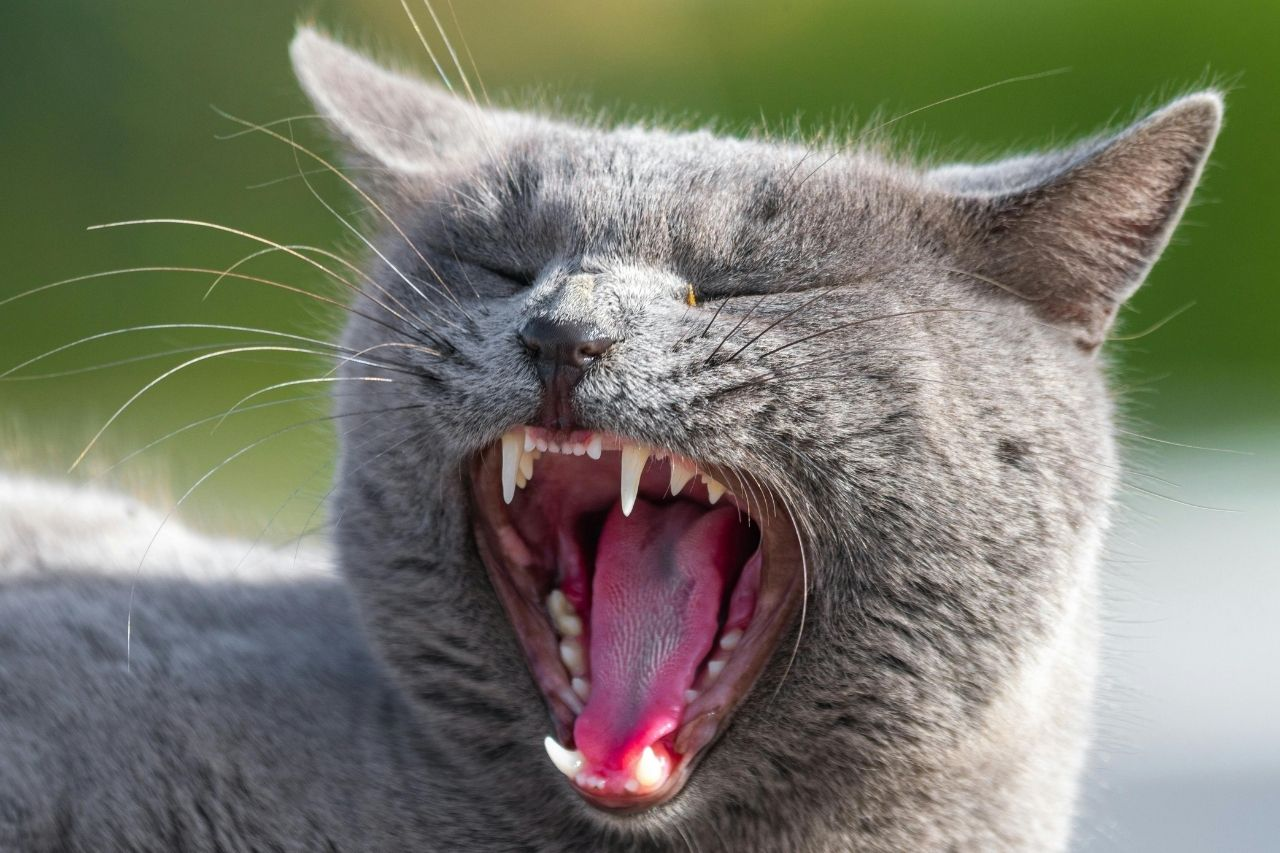
You've noticed something a little off with your older cat. Maybe there's a wet patch on the bed that wasn't there before. Maybe they're chewing a bit weirdly, or they've started leaving food behind when they never used to. These small changes are easy to miss, but for senior cats they're often the first hint that something is going on in their mouth.
This guide takes a symptom-first look at the most common dental red flags in older cats. For each one, we'll walk through what you're seeing, what it might mean, and how soon you'd want to act. If you're mid-"should I be worried?" moment, this is for you.
Symptom: Drooling
The wet chin, damp paws, or patch on the bed
If your senior cat has started drooling where they never used to, that's a change worth taking seriously. A small dribble during a purr-heavy cuddle is one thing. Constant, sticky, or strong-smelling drool is another.
What it often means
Discomfort in the mouth. Gum disease, a cracked tooth, or a sore patch can all stop a cat from swallowing saliva normally. Drool can also appear pink if the gums are bleeding.
How soon to act
If it doesn't settle within 24 to 48 hours, or you see any blood, it's worth booking a check. Ongoing drool is rarely just a quirk in an older cat.
Symptom: Pawing at the Mouth or Rubbing the Face
Repeated face-scratching, head-shaking, or furniture rubbing
Cats don't tend to paw at their face for no reason. If you're noticing your senior cat pawing at their mouth, rubbing one cheek against the couch more than usual, or shaking their head, they're trying to get relief from something.
What it often means
Something is irritating the inside of their mouth. It could be a piece of food stuck in a gap, a broken tooth, or a sore spot on the gum line.
How soon to act
If it's a one-off moment, keep watching. If it happens more than a couple of times in a day, or keeps happening over several days, get them checked.
Symptom: Dropping Food While Eating
Kibble falls out of their mouth, or they pick up food and put it back down
This one's easy to miss if your cat tidies up after themselves. Look for small piles of kibble next to the bowl, food stuck to the chin area, or a cat who starts eating eagerly and then backs off.
What it often means
Chewing has become uncomfortable. A painful tooth on one side can make a cat try to eat and then give up. Tooth resorption, a condition where teeth slowly break down, is particularly common in senior cats and causes real pain.
How soon to act
Anything more than a one-off is worth following up on. Cats who stop being able to eat comfortably can lose weight quickly.
Symptom: Chewing on Only One Side
Head tilts, sideways chewing, or food ending up on the opposite cheek
If your cat is holding their head at a slight angle while eating or seems to be doing all their chewing on one side of their mouth, something's usually hurting on the other side.
What it often means
One-sided dental pain. A broken or infected tooth, a sore gum, or resorption on one side of the mouth will make a cat favour the other.
How soon to act
Book a check. One-sided chewing is almost never a training habit in older cats.
Symptom: Breath That's Suddenly Stronger or Sourer
A new, stronger mouth smell you hadn't noticed before
Most cats have a bit of fishy breath depending on what they've been eating. What we're talking about here is a real change -- breath that's suddenly sour, sharp, or strong enough to notice across the room.
What it often means
Bacteria build-up from plaque, tartar, or gum disease. The sudden change in smell is usually the giveaway that something has shifted.
How soon to act
Not an emergency, but it's a strong reason to get their mouth looked at. Left alone, gum disease tends to get worse rather than better.
Symptom: Suddenly Preferring Wet Food
A cat who used to love their dry food now only wants pâté or gravy
A lot of older cats shift towards wet food because it's easier and more appealing, but a sudden, strong preference change is worth noting. If your cat is eating their wet food happily but leaving dry food untouched, dental pain is a likely explanation.
What it often means
Chewing hard kibble hurts. Wet food doesn't need much chewing, so a cat with a sore mouth will often go for the easier option.
How soon to act
Get their mouth checked in the coming days. In the meantime, keep them on wet food so they're still eating well.
Symptom: Less Grooming or a Scruffy Coat
A well-groomed cat who's starting to look a bit unkempt
Grooming takes effort with the mouth. A cat whose coat has started to look oily, matted, or patchy may be avoiding grooming because it's uncomfortable.
What it often means
Sore gums or teeth can make the tongue movement of grooming unpleasant. When you add that to the general slowing-down of a senior cat, grooming often drops off.
How soon to act
This is usually a cumulative sign rather than an urgent one. Combined with any of the other signs above, it's another reason to get their mouth checked.
Symptom: Weight Loss You Can't Quite Explain
A senior cat slowly getting lighter without a diet change
Weight loss in an older cat has plenty of possible causes, and dental pain is one of the most common. If eating is uncomfortable, cats eat less. Over weeks or months, that can add up to noticeable weight loss.
What it often means
Eating hurts, so they're eating less than they need. Often paired with food dropping, one-sided chewing, or preferring wet food.
How soon to act
Weight loss in senior cats always warrants a check, whether dental is involved or not. The sooner the cause is found, the sooner your cat feels better.
When to act quickly
Most dental issues don't need an emergency visit, but a few signs warrant prompt attention. If your cat has visible swelling around the jaw, bleeding from the mouth, refuses food entirely for more than 24 hours, or is clearly in distress, don't wait -- get them looked at that day.
What You Can Do Between Meals
While you're figuring out the cause and settling any immediate issue, there are simple everyday things that make life easier for a senior cat with a sore mouth. These aren't replacements for professional care, but they help keep things comfortable day to day.
Water additives go straight in the bowl with no fuss, dental powders can be sprinkled over meals, and soft dental treats are a low-effort way to support healthy teeth going forward. Once any immediate issue is sorted, these everyday habits help reduce the chance of it coming back.
Frequently Asked Questions
Why has my older cat suddenly started drooling?
Sudden drooling in a senior cat is usually a sign of mouth discomfort. Common reasons are gum disease, a broken tooth, or tooth resorption. Drooling can also occasionally point to nausea or a foreign object stuck in the mouth. If it doesn't settle within a day or two, it's worth a check.
Why is my senior cat dropping kibble while eating?
Dropping food almost always points to chewing being uncomfortable. Tooth pain, a loose tooth, or a sore area of gum can all make cats pick food up and then put it back down. It's one of the clearest dental red flags in older cats.
Can dental pain cause weight loss in cats?
Yes, and it's more common than many owners realise. When eating becomes uncomfortable, cats eat less. Over time, that can lead to noticeable weight loss, especially in senior cats who are already eating smaller meals.
My cat has bad breath. Is it always a dental problem?
Not always, but dental issues are the most common cause. Kidney issues and digestive problems can also affect breath. A sudden change in breath smell in an older cat is a strong reason to get their mouth looked at, even if nothing else seems wrong.
What's tooth resorption in cats?
Tooth resorption is where a tooth slowly starts to break down, usually from the inside. It's very common in older cats and can be painful even when the tooth looks normal from the outside. Symptoms include dropping food, one-sided chewing, drooling, and pawing at the mouth.
Should I try to look inside my cat's mouth?
Gently lifting the lip to check gum colour and look for build-up is fine for most cats if they tolerate it. Don't try to pry the mouth open or poke around inside. A weekly peek is a great way to spot changes early, but leave the detailed check-ups to a professional.
Support Your Senior Cat's Dental Health
The right everyday products make staying on top of dental care easier for both of you. Save on essentials with Autodeliver and enjoy everyday member pricing with Pet Perks.
SHOP CAT DENTAL CARERelated Reading
Dental Care for Senior Cats: Prevention, Products and Tips
Bad Breath in Cats: Causes, Treatment and How to Prevent It
Best Food for Senior Cats in New Zealand
How a Senior Cat's Nutritional Needs Differ From an Adult Cat's
6 Subtle Signs Your Cat Is Entering Their Senior Years
7 Key Signs Your Senior Cat May Need a New Diet