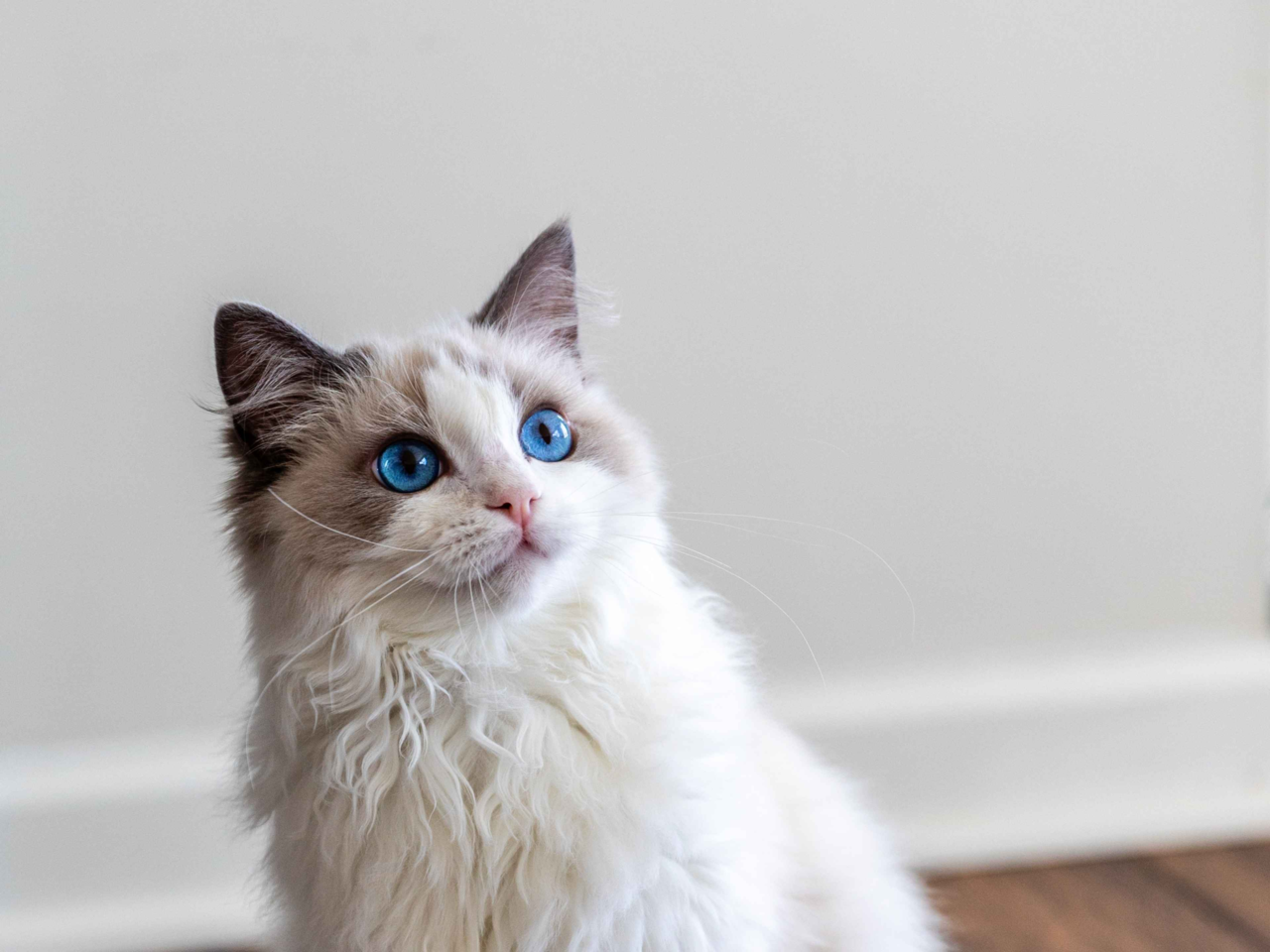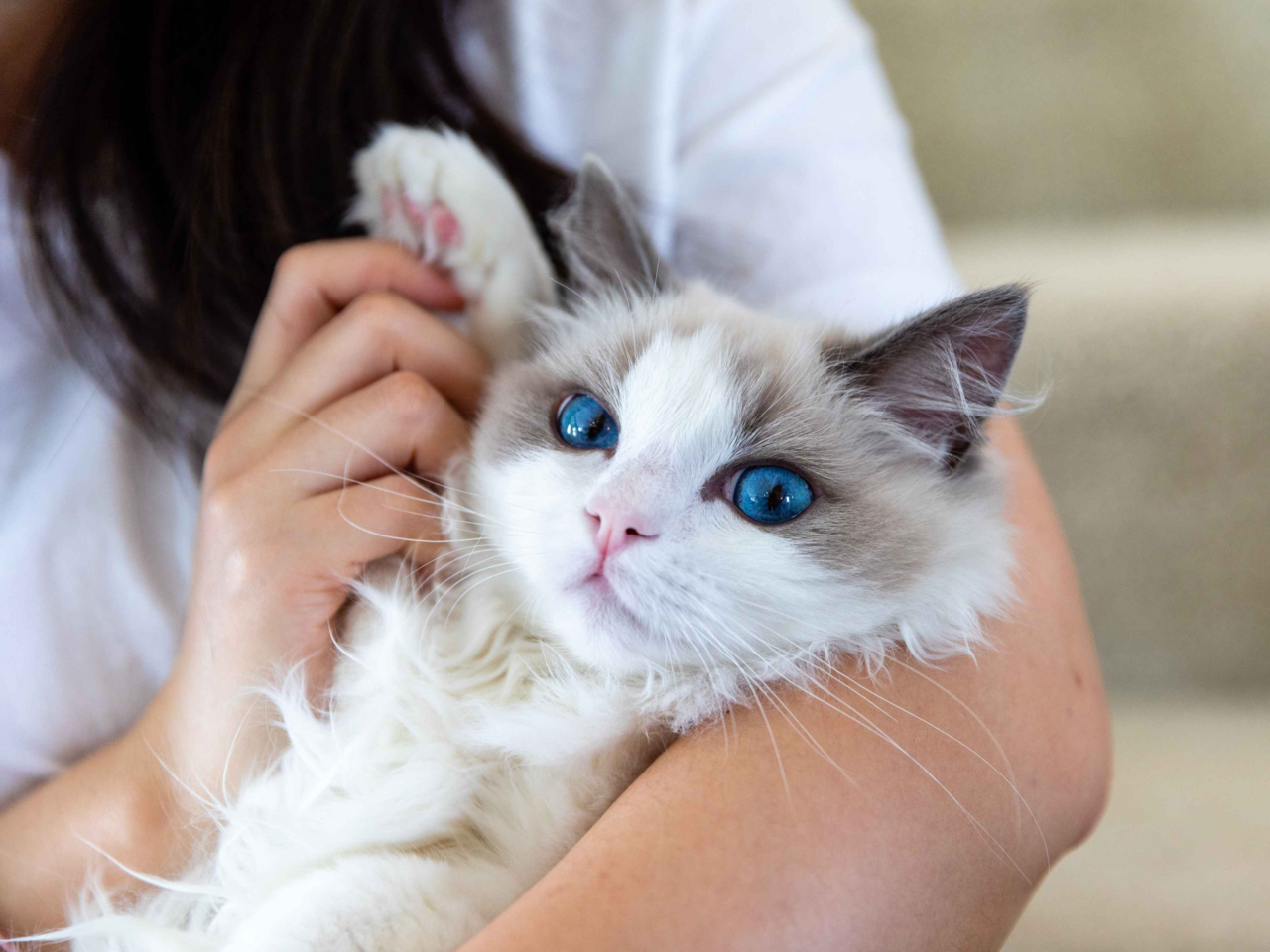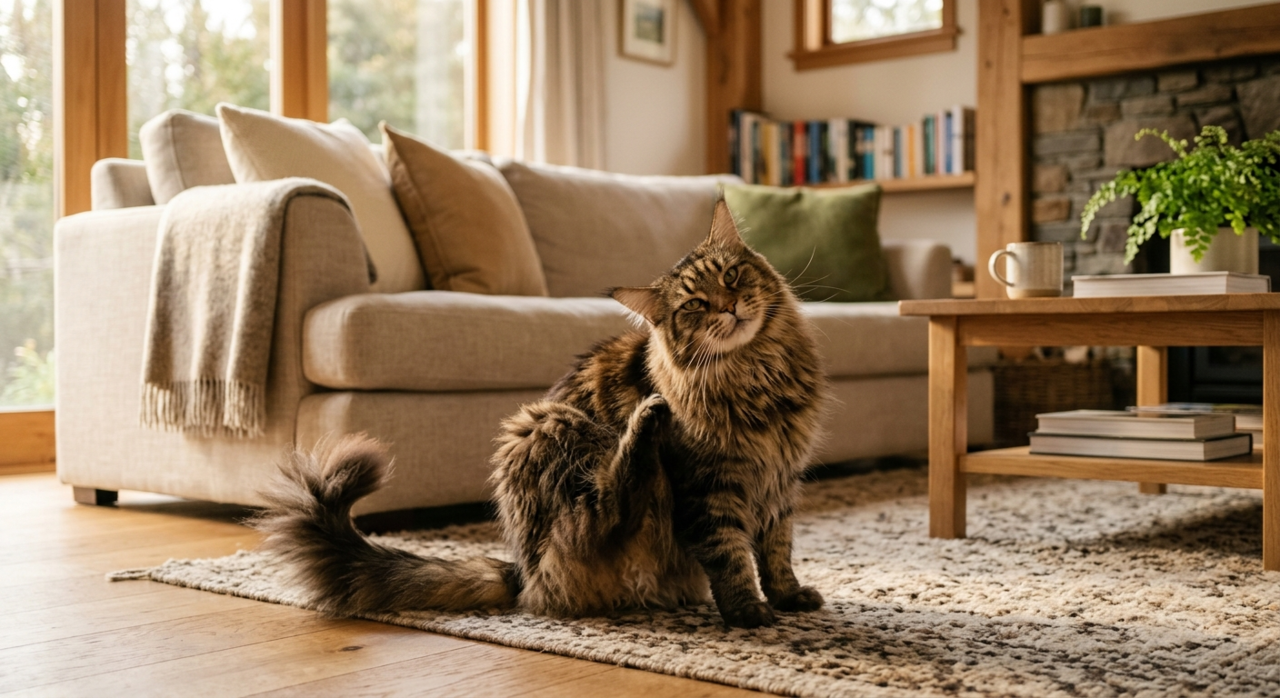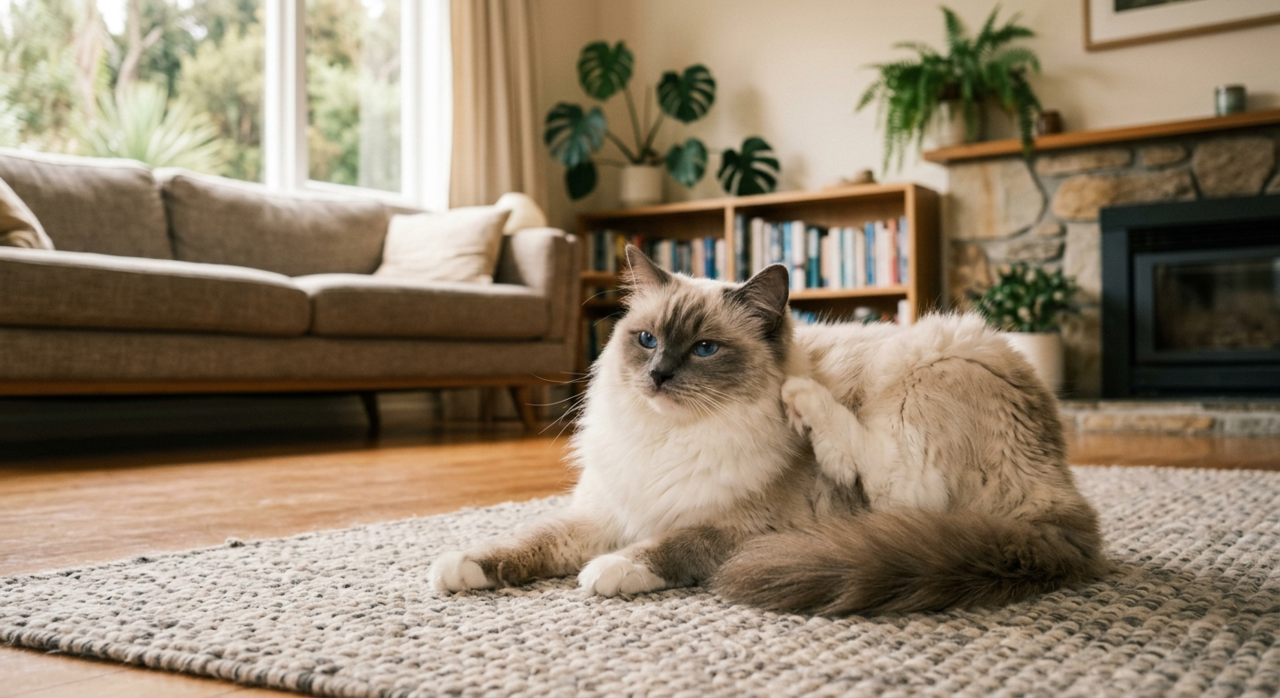
Ragdolls are gentle, affectionate, and famously chill. They're the kind of cat that goes limp when you pick them up, follows you from room to room, and tolerates almost anything you throw at them. But that gentle nature works against them when something irritates the skin. Ragdolls scratch quietly and steadily rather than dramatically, which means owners can miss it for weeks before they realise something's not right. If yours has been scratching more than usual, pulling at one spot, or showing little patches in the soft coat, you're not imagining it.
Here's a friendly NZ guide to why Ragdoll cats can become itchy, what's worth trying at home, and when something needs a closer look. We're not a clinic, so anything getting worse, looking raw, or coming with a behaviour change is worth a chat with your local clinic.
Quick answer
Ragdolls scratch for breed-specific reasons that look quite different to other long-coats: most Ragdolls are indoor-only, so the household is the entire allergy environment. Laundry detergents, scented home products, dust mites, perfumes, even a new sofa fabric can trigger reactions in this breed's sensitive skin. Add a known higher rate of food sensitivities (chicken protein especially), the soft coat that mats subtly in the armpits and breeches, and a temperament that over-grooms when stressed, and you've got the four most common Ragdoll itch stories. A regular grooming routine, a switch to fragrance-free home products, a sensitive-skin food trial and a calm routine settle most mild cases. Anything raw, weeping or spreading needs the clinic.
Why Ragdoll Itch Is Different
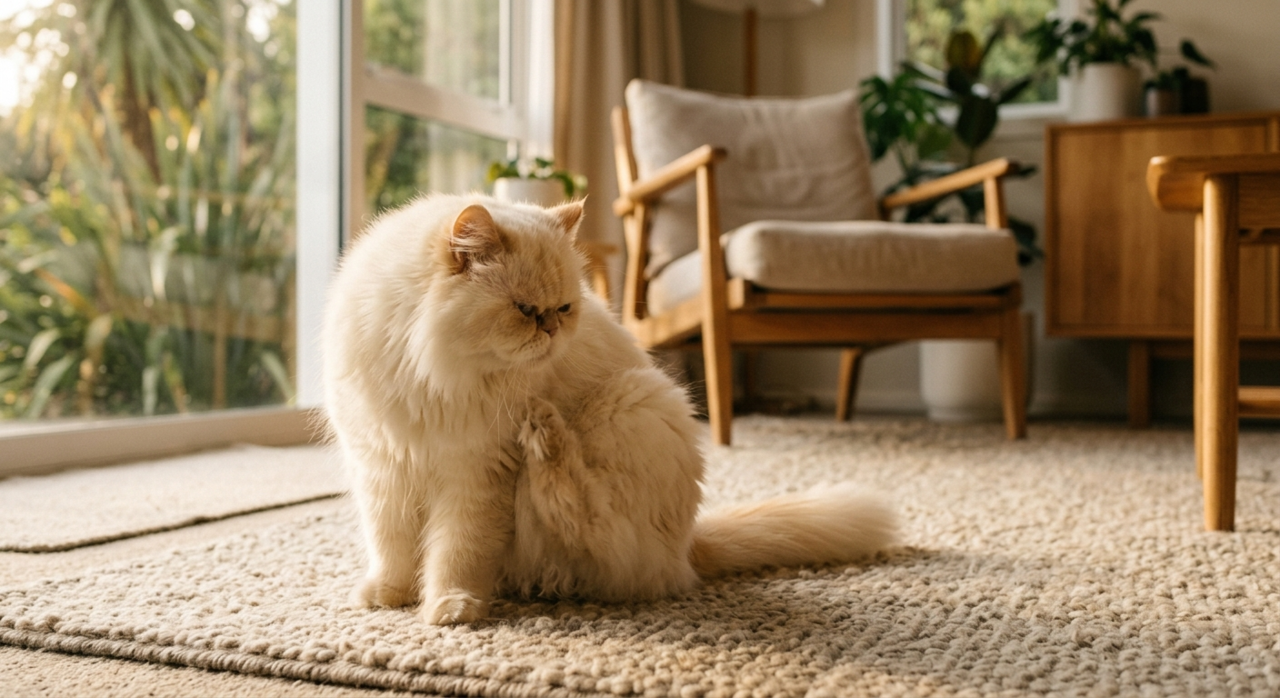
Ragdolls aren't just "long-haired cats". The breed's lifestyle, temperament and coat type combine to create a fairly specific itch profile that doesn't always match what works for a Persian or a Maine Coon.
The home is the whole environment
Most Ragdolls are indoor-only by design, since they're trusting, easily picked up, and tend to be unsafe outside. That means whatever's in your home is the entire trigger pool: laundry detergent, fabric softener, scented candles, plug-ins, perfume, cleaning sprays, dust mites in bedding. Outdoor cats spread their exposure; Ragdolls don't.
The coat is softer, less dense
Less undercoat than a Persian or Maine Coon means less dramatic matting, but the soft single-layer coat shows damage faster. A small over-grooming patch on a Ragdoll is visible within a week or two; on a Maine Coon it might hide for months.
Stress can drive over-grooming
Ragdolls bond intensely with their people. A house move, a new pet, a builder coming and going, a fortnight-long holiday with a new feeder. Any of these can tip a sensitive Ragdoll into stress-grooming, and the licking and pulling looks identical to itchy skin.
Food sensitivities are common
Ragdolls are one of the breeds where food allergies show up regularly, and chicken-based proteins are a frequent trigger. Year-round itch + occasional gut upset + face/belly grooming pattern often points here before anything else.
The Most Common Causes of Ragdoll Cat Scratching
1. Indoor environmental allergens
The single most common reason for itchy indoor Ragdolls. Laundry detergent residue on bedding, fabric softener, scented candles, plug-in air fresheners, perfume, cleaning sprays, and dust mites in soft furnishings. The signs are usually generalised itch, often around the head and ears, paired with the occasional sneeze or watery eye, and worse after laundry day or after using a strongly-scented product.
What helps: swap laundry detergent for a fragrance-free option, retire scented candles and plug-ins from rooms your cat uses, vacuum and wash bedding weekly. Most Ragdolls show improvement within 2 to 3 weeks of these changes.
2. Food sensitivities (often chicken)
Ragdolls are one of the breeds where food allergies show up regularly. Chicken protein is the common offender, but fish and grains can also trigger. Food itch is typically year-round (not seasonal), often shows up around the face and belly, and may pair with occasional loose stools or gut upsets.
What helps: a sensitive-skin or limited-ingredient cat food, given strictly for 6 to 8 weeks before judging. No other treats or table scraps in the trial period. Many Ragdolls do well on novel-protein options like duck, lamb or fish-based foods.
3. Stress-driven over-grooming
Ragdolls bond strongly with their humans and can become anxious when routine breaks. The grooming itself is a self-soothing behaviour, but it shows up as a worn or thin patch in the coat, often on the front legs, the belly, or one flank. The patch is usually a clue this is over-grooming rather than a skin reaction.
What helps: reinforce the routine, set up a quiet retreat space, and add a calming diffuser to the rooms your cat uses most. A sensitive Ragdoll often calms within 2 to 4 weeks once the routine settles.
4. Mats in the soft trouble spots
Ragdoll coat doesn't mat as dramatically as a Persian or Maine Coon, but the soft, fine fur does tangle in three predictable spots: the armpits, the breeches (the long fur on the back legs), and along the belly. A small mat there is uncomfortable rather than agonising, and the cat will scratch and pull at the spot intermittently.
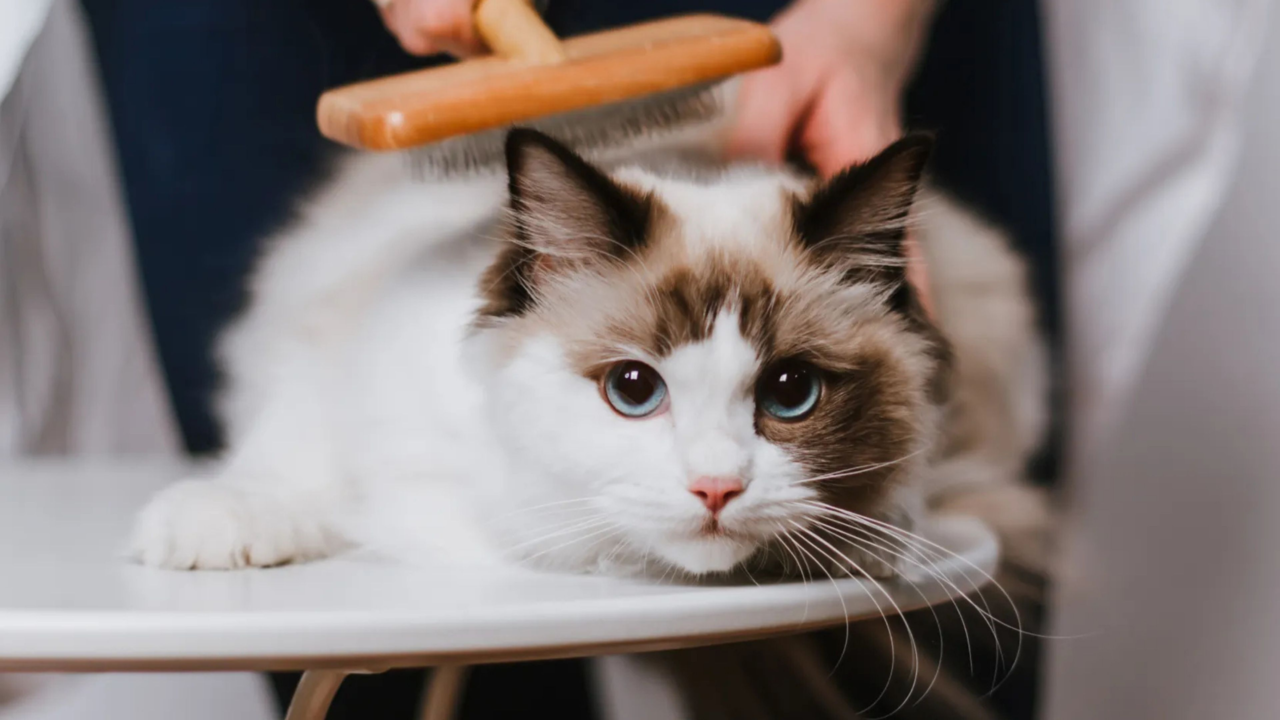
What helps: a slicker brush worked gently through the trouble spots twice a week. Don't try to cut a mat out close to the skin; the loose Ragdoll skin lifts more than you'd expect.
5. Fleas (yes, even on indoor Ragdolls)
Indoor-only is not flea-proof. Fleas hitchhike in on people, on other pets, and through open doors and windows. The soft Ragdoll coat hides them well, and a small infestation can be running for weeks before scratching becomes obvious. Look for scratching mostly around the base of the tail, the back end, and the back of the neck.
What helps: a current monthly preventive, and a fine-toothed flea comb run through the back of the neck and base of the tail to verify. A flea comb pulls up tiny dark "flea dirt" specks even when the fleas themselves are hard to spot.
6. Dry skin (especially in winter heating)
NZ winters are gentle but home heating dries the air, and the soft Ragdoll coat shows dryness sooner than denser coats. Dry skin itches generally rather than in one spot, often gets worse from May through August, and the coat can lose some of its lustre before flakes appear.
What helps: a daily omega-3 supplement, a gentle conditioner if you bath, and dialling back the heating intensity in spaces where your cat sleeps. Most cats need 4 to 6 weeks of supplementation before you'd notice the change.
7. New household products or fabrics
Indoor-only Ragdolls react to changes in their environment more obviously than outdoor cats. A new sofa fabric, a new rug, a recently shampooed carpet, even a new brand of vacuum bag can trigger a sensitive Ragdoll. The give-away is timing: itch starts within a week or two of the change.
What helps: if you can pinpoint a recent home change, try removing or covering the source. Wash a new fabric a couple of times before your cat sleeps on it. Air new furniture out for a few days where possible.
8. Hairball-related grooming overdrive
Long-coated cats swallow more loose fur than short-coats just because there's more of it. If your Ragdoll is over-grooming because they're trying to bring up a hairball, the constant licking and pulling looks identical to itchiness. Ragdolls often hide rather than vomit hairballs in the open, so it can be missed.
What helps: more frequent brushing so less loose fur ends up in the stomach, plus a hairball-control food or supplement. Our guide How to Prevent Hairballs in Longhaired Cats covers this.
Grooming Tools That Genuinely Help a Ragdoll
Ragdolls are easy to groom (genuinely, most of them enjoy it), so a regular short routine is more effective than the occasional long session. The slicker brush is the workhorse for this breed, with a flea comb as backup.
For an itchy Ragdoll: slicker brush twice a week through the trouble spots (armpits, breeches, belly), deshedding tool weekly, flea comb every fortnight through the back of the neck and base of the tail. Most Ragdolls genuinely enjoy it.
Cat-Safe Washes for Itchy or Reactive Skin
Ragdolls don't need bathing as often as Persians, but a gentle bath every 8 to 12 weeks during a reactive period can help. Use a cat-safe oatmeal-based shampoo and follow with a conditioner so the soft coat doesn't tangle straight back.
Foods Worth Considering for Sensitive Ragdolls
If the itch is generalised, year-round, around the face and belly, or paired with occasional gut upsets, food is the lever to pull. Sensitive-skin or limited-ingredient options are the usual starting point, with chicken-free novel-protein foods often helping where a chicken sensitivity is the trigger.
Give a new food at least 6 to 8 weeks of strict feeding (no other treats or table scraps in the trial period) before judging. Most of these are available on Autodeliver for ongoing savings.
Calm, Skin Support and Flea Cover
Three quiet ongoing supports work well together for sensitive Ragdolls: a calming diffuser to reduce stress-grooming, an omega-3 supplement to support the skin barrier, and a current flea preventive even if your Ragdoll is indoor-only.
Supplements work best given consistently every day. Most cats need 4 to 6 weeks before you'd notice the coat improving.
When to Get It Checked
Most mild Ragdoll itch settles within a couple of weeks of a better routine, fragrance-free home products, sensitive-skin food and an omega supplement. If any of these apply, it's worth booking your local clinic:
- The skin is broken, raw, weeping or has a smell
- Hair is coming out in patches, or there are bald spots
- Your cat is licking or scratching one specific spot constantly
- Eating, drinking, toilet habits or behaviour have shifted alongside the scratching
- The over-grooming pattern is widening (started on one leg, now both, then the belly)
- You've worked through the basics for 4 weeks and the itch isn't easing
- Stress-grooming is still happening 4 to 6 weeks after the trigger has gone
Frequently Asked Questions
Why does my Ragdoll scratch more than my other cats?
Indoor-only lifestyle concentrates allergen exposure to whatever's in the home, the breed has a higher rate of food sensitivity (especially to chicken), the soft coat shows over-grooming damage faster than denser coats, and Ragdolls bond strongly enough that stress can tip into self-grooming. All four together mean Ragdolls itch for slightly different reasons than other long-coats. The good news is most are fixable with home environment changes, a sensitive-skin food trial, and a calmer routine.
Could it be the laundry detergent?
Yes, and this is one of the most underrated triggers for indoor Ragdolls. Detergent residue on bedding, blankets and your own clothes can transfer to your cat as they sleep on or against you. Switching to a fragrance-free, sensitive-skin detergent for a few weeks is one of the easiest experiments to run, and it sorts a surprising number of mild cases.
Is it stress-grooming or itch?
The pattern usually tells you. Stress-grooming creates a clear, defined patch, often on the front legs, belly or one flank, and tends to keep happening in the same spot. Itch is more generalised, comes with scratching as well as licking, and tends to spread or shift around. Ragdolls who bond strongly are more prone to stress-grooming than the average cat.
How often should I brush my Ragdoll?
Twice a week is the sweet spot for most Ragdolls. Use a slicker brush worked gently through the soft trouble spots (armpits, breeches, belly), then a deshedding tool through the body. Most Ragdolls genuinely enjoy grooming, so even short sessions done consistently work better than the occasional long one.
Can my indoor Ragdoll really get fleas?
Yes. Fleas hitchhike in on people, on other pets, and through open doors and windows. The soft Ragdoll coat hides them well, and a small infestation can be running for weeks before scratching becomes obvious. A monthly preventive plus a periodic flea-comb check is the easiest way to rule fleas in or out.
Could my Ragdoll be allergic to chicken?
It's possible. Chicken is one of the more common food triggers in Ragdolls. Year-round itch (not seasonal), often around the face and belly, sometimes paired with occasional loose stools, is the typical pattern. A 6 to 8 week trial on a chicken-free novel-protein food (duck, lamb, fish or salmon-based) is the usual way to find out.
My Ragdoll has a thin patch on the inside of one front leg, what is that?
That's the classic stress-grooming pattern in this breed. A defined patch where your cat licks the same spot over and over, often on the inner front leg, the belly, or one flank. The hair thins, the skin is usually intact underneath. Look for a recent change in routine or environment, support with a calming diffuser, and reinforce predictable feeding times. If the patch isn't recovering within 4 to 6 weeks of a calmer routine, get it checked.
Should I bath my Ragdoll to help with itching?
You can. Ragdolls tolerate baths better than most cats. Use a cat-safe oatmeal shampoo, follow with a conditioner so the coat doesn't tangle, and don't bath more often than every 8 to 12 weeks during an itchy stretch (less when the skin is comfortable). Our Ragdoll Grooming and Bathing Guide covers it in more detail.
Ragdoll Grooming and Skin Support Essentials
Find slicker brushes, gentle shampoos, sensitive-skin food, omega supplements and calming diffusers in one place. Save with Autodeliver on food, supplements and flea treatments, and enjoy everyday member pricing as part of Pet Perks.
SHOP CAT GROOMING