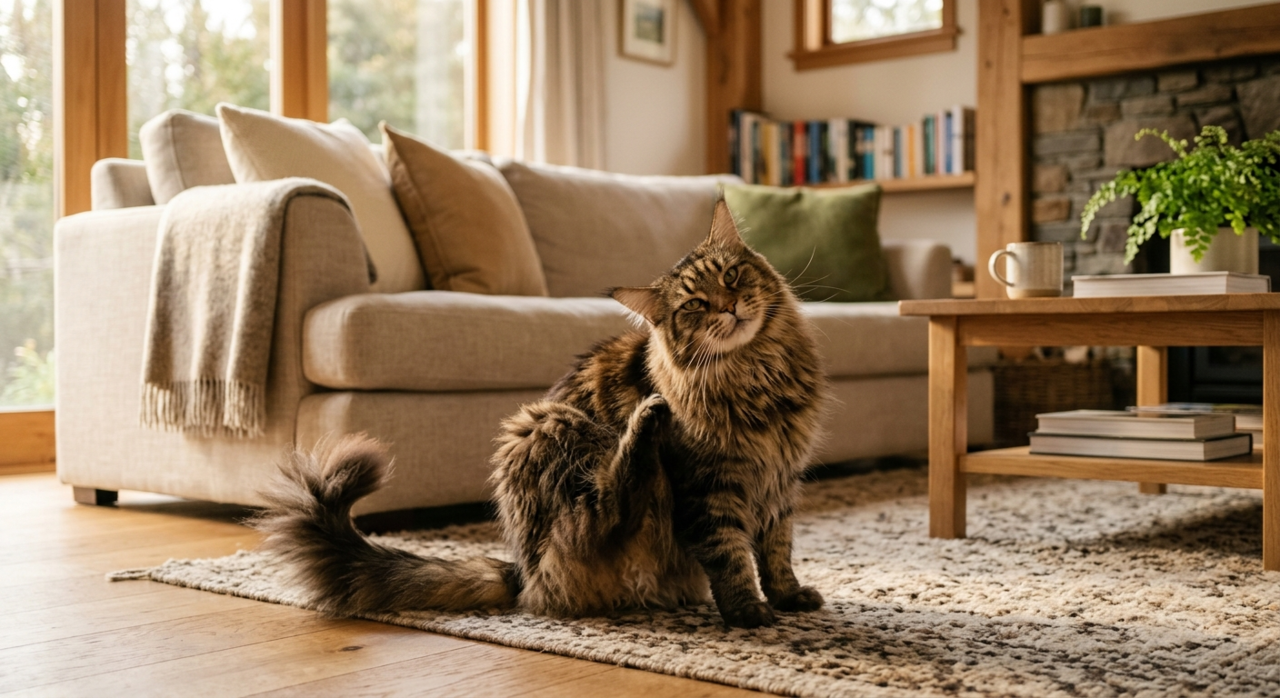
Maine Coons are big, friendly and impossible to miss. They're also wearing a heavy double coat across a much bigger body than most cats, and that combo creates its own particular set of itch problems. If you've noticed your Maine Coon scratching more than usual, dragging more on their groomer, or pulling at one spot in particular, you're not seeing things. There are a handful of breed-specific reasons Maine Coons get itchy, and most are very fixable once you know what's going on.
Here's a friendly NZ guide to why Maine Coons can become scratchy, what's worth trying at home, and when something needs a closer look. We're not a clinic, so anything that's getting worse, looks raw, or comes with a behaviour change is worth a chat with your local clinic.
Quick answer
Maine Coons scratch more than the average cat for breed-specific reasons: their dense double coat traps allergens close to the skin, the heavy undercoat sheds in big seasonal pushes that can mat against the body, and many Maine Coons spend time outdoors where they pick up pollens, fleas and plant material the average indoor cat doesn't see. The most common culprits are seasonal undercoat shedding, mats forming in the armpits and behind the ears, fleas, allergies (food and environmental), and ear-tuft wax build-up. A weekly deshedding routine, a current flea treatment, sensitive-skin food and an omega-3 supplement together fix the majority of mild cases. Anything raw, weeping or coming with a behaviour change needs a clinic visit.
Why Maine Coon Itch Is Different
The Maine Coon coat is built for a Maine winter. It's designed to be a self-managing all-weather jacket, which mostly works brilliantly. But on a cat that's the size of a small dog, in a climate that swings from cold-wet to warm-humid through the year, the coat needs more help than most cat owners expect.
The double coat sheds in big pushes
Maine Coons "blow" their undercoat seasonally, especially heading into spring and again into autumn. If the loose undercoat doesn't get out, it mats against the skin and pulls every time your cat moves. Suddenly itchy + lots of loose fur in the lounge = often a coat-blow rather than a real allergy.
The body is big, the trouble spots are hidden
Behind the ears, in the armpits, between the back legs and along the belly. These are the Maine Coon mat zones, and you can't see them from above. Tangles here pull at the skin all day and look identical to itchiness from the outside.
Many Maine Coons go outside
Unlike most Persians, plenty of Maine Coons are part-time or full-time outdoor cats. That means more contact with grass, pollen, dust, plants, fleas, and the various bits of garden Kiwi cats love to roll in. The dense coat carries all of that home with them.
Tufted ears trap more than they need to
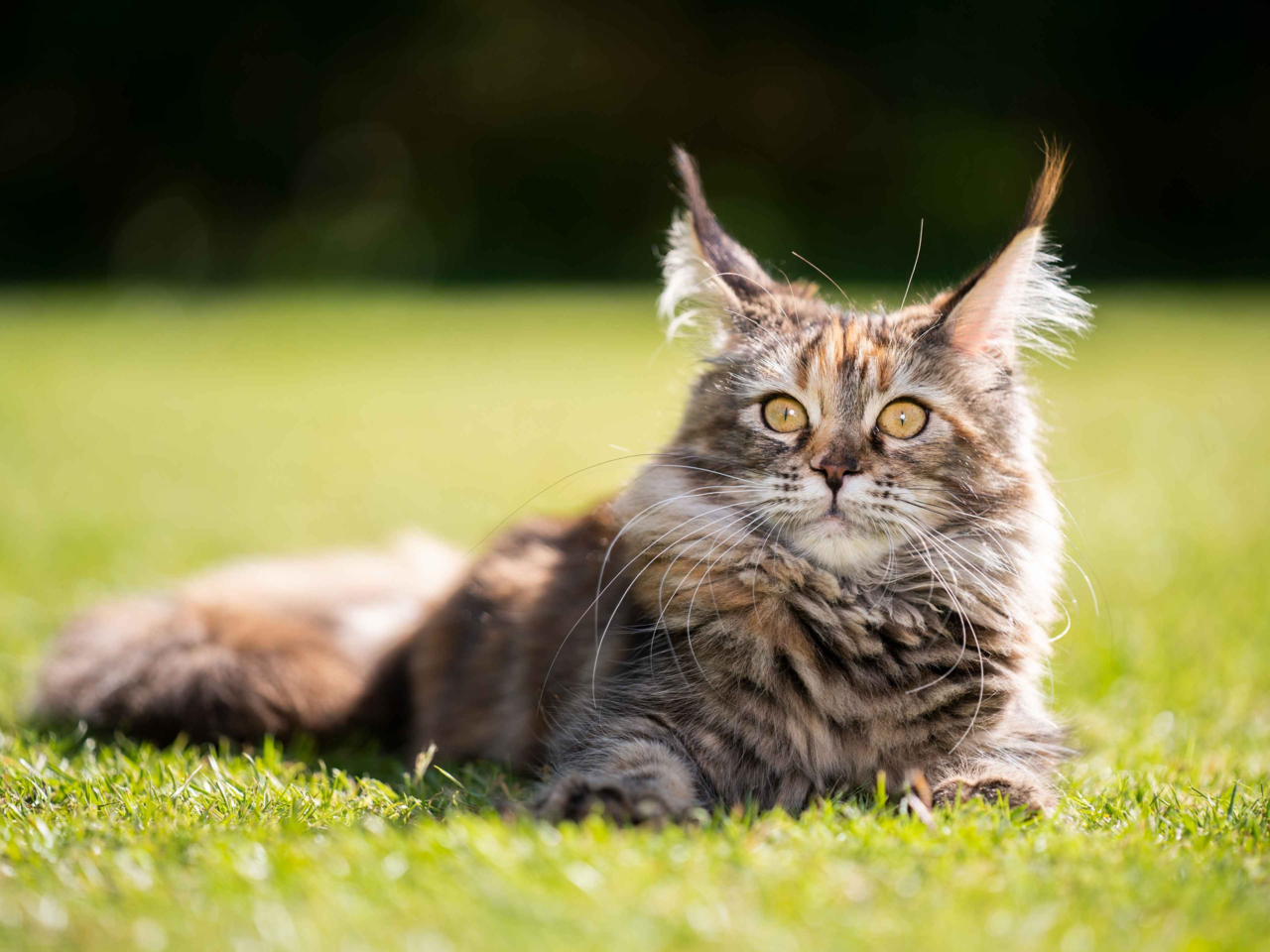
Those gorgeous ear tufts are part of the breed's signature look, but they also catch and hold dust, wax and the occasional grass seed. Maine Coons can get an itchy ear from a build-up that an upright-eared shorthair would never notice.
The Most Common Causes of Maine Coon Scratching
1. Seasonal undercoat shedding (the "coat blow")
Maine Coons have two big shedding pushes a year, in spring and autumn. If the loose undercoat doesn't get brushed out, it traps against the skin underneath the topcoat and starts to mat. Mats pull at the skin every time your cat moves, and suddenly your cat is "itchy" when really they're uncomfortable in their own coat.
What helps: a deshedding tool used weekly through the year and 2 to 3 times a week through the seasonal change. The result usually shows in 1 to 2 weeks of consistent grooming.
2. Mats in the hidden zones
Behind the ears, under the armpits, between the back legs, along the lower belly. These are where Maine Coon mats hide, and they're easy to miss in a quick brush over the back. A small mat behind the ear is pulling on that skin every time your cat turns its head.
What helps: a slicker brush worked gently through the trouble spots once a week. Never try to cut a mat out close to the skin, the skin lifts much more than you'd expect.
3. Fleas (especially in outdoor Maine Coons)
The dense double coat is a perfect flea hideout, and outdoor Maine Coons are exposed to more of them than indoor-only cats. The classic giveaway is scratching mostly around the base of the tail, the back end and the back of the neck, plus little dark "flea dirt" specks if you part the fur.
What helps: a current monthly flea treatment, and a fine-toothed flea comb to verify. Outdoor Maine Coons benefit most from a year-round preventive routine, not just summer-only.
4. Environmental allergies
Pollens, dust, mould, household cleaning sprays. Outdoor Maine Coons get a hefty dose of pollen on the coat in spring, then carry it inside and onto the bed. Allergic itch is usually generalised, often worst around the head and ears, and follows a seasonal pattern.
What helps: brush more often during high-pollen weeks to lift the load out of the coat, vacuum bedding more regularly, and switch to fragrance-free home products. A gentle hypoallergenic wash through the coat helps too.
5. Food sensitivities
Maine Coons are one of the breeds where food sensitivities show up regularly. Common triggers are chicken, fish or grains, and food-related itch is typically year-round (not seasonal). It often shows around the face, ears and belly, plus more grooming over the same spots.
What helps: a sensitive-skin or limited-ingredient cat food, given strictly for 6 to 8 weeks before judging. No other treats or table scraps in the trial period.
6. Ear tuft wax and debris
Those distinctive ear tufts trap wax, dust and the occasional bit of garden material. The ear underneath can become irritated without obvious external signs, and your cat ends up scratching at one ear repeatedly. Outdoor Maine Coons in summer also pick up the odd grass seed, which is worth ruling out.
What helps: a gentle weekly check inside the ear, a wipe through the entrance with a cat-safe ear wipe, and tidying the ear tufts as part of regular grooming.
7. Dry skin (often winter heating)
NZ winters are gentle but indoor heating dries cat skin out faster than people realise, and on a Maine Coon the coat hides dryness for weeks before you'd see flakes. Dry skin itches generally rather than in one spot, and often gets worse from May through August.
What helps: an omega-3 supplement daily, a gentle conditioner if you bath, and dialling back the heating intensity in spaces where your cat sleeps. Most cats need 4 to 6 weeks of supplementation before you'd notice the change in coat.
8. Hairball-related grooming overdrive
Long-coated cats swallow more loose fur than short-coated cats just because they have more of it. If your Maine Coon is over-grooming because they're trying to bring up a hairball, the constant licking and pulling looks identical to itchiness.
What helps: more frequent brushing so less loose fur ends up in the stomach, plus a hairball-control food or supplement. Our guide How to Prevent Hairballs in Longhaired Cats covers this in more detail.
Grooming Tools That Genuinely Help a Maine Coon
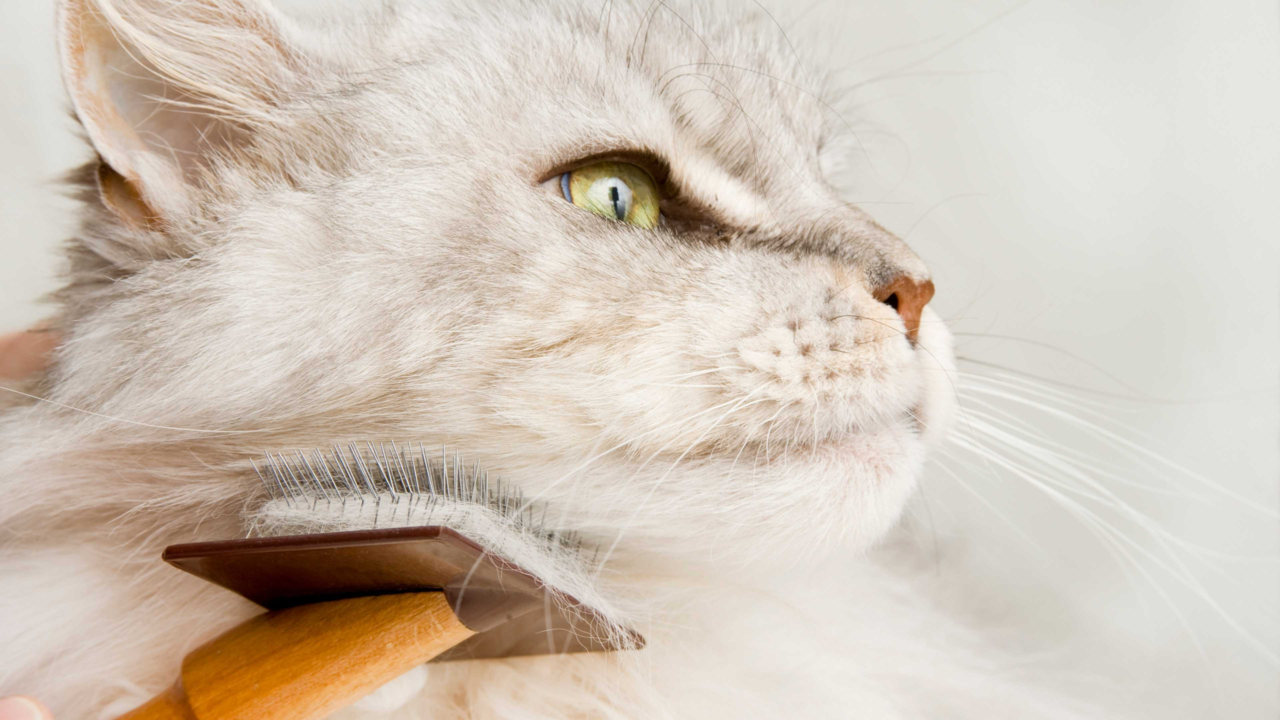
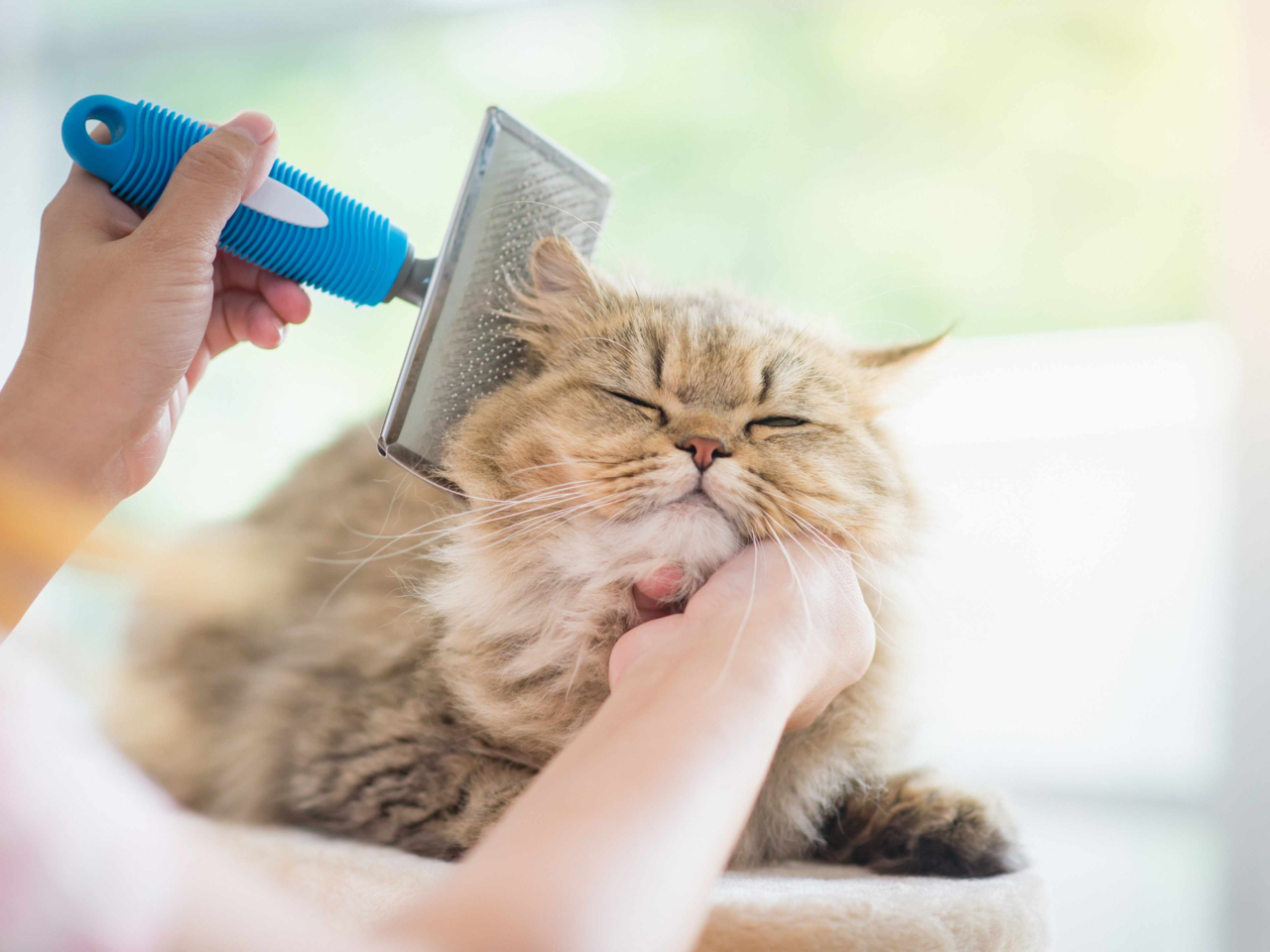
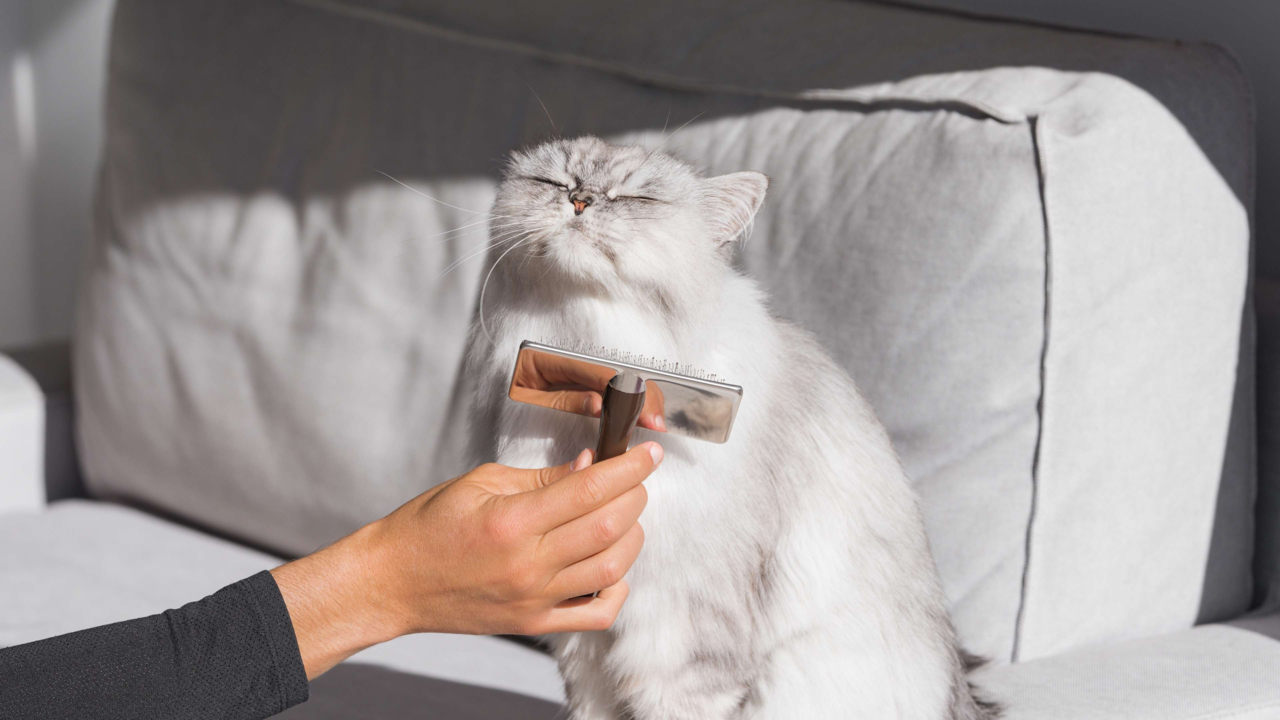
For a Maine Coon, the deshedding tool is the single most useful piece of kit. It lifts the undercoat that the topcoat hides and prevents most coat-related itch before it starts. A flea comb backs it up by giving you an early read on parasites.
For an itchy Maine Coon: deshed weekly (more often through spring and autumn), slicker brush through the hidden mat zones once a week, run a flea comb through the back of the neck and base of the tail every fortnight, and a quick eye/ear wipe as needed.
Cat-Safe Washes for Itchy Skin
Maine Coons are easier to bath than most cats (some genuinely enjoy water), so a wash every 6 to 8 weeks during itchy periods can help. Use a cat-safe oatmeal-based shampoo and follow with a conditioner so the coat doesn't tangle straight back into mats. A waterless option is handy for the days a wet bath isn't realistic.
Flea Treatments That Cover Outdoor Maine Coons Year-Round
Outdoor Maine Coons benefit most from a year-round flea routine rather than seasonal-only protection. The dense coat hides fleas effectively and they can build up before the scratching becomes obvious.
Foods Worth Considering for Sensitive Maine Coons
If the itch is generalised, year-round, or shows around the face and belly, food is one of the levers worth pulling. A sensitive-skin formula or a hairball-control food can both help, depending on the pattern.
Give a new food at least 6 to 8 weeks of strict feeding (no other treats or table scraps in the trial period) before judging whether it's helping. Most of these are available on Autodeliver for ongoing savings.
Skin and Hairball Support From the Inside
A daily omega-3 helps build skin and coat health from the inside, which makes a real difference on a coat the size of a Maine Coon's. A hairball supplement helps the swallowed undercoat pass through rather than triggering more grooming.
Supplements work best given consistently every day. Most cats need 4 to 6 weeks before you'd notice the coat improving.
When to Get It Checked
Most mild Maine Coon itch settles within a couple of weeks of a better grooming routine, a sensitive-skin food and an omega supplement. If any of these apply, it's worth booking your local clinic:
- The skin is broken, raw, weeping or has a smell
- Hair is coming out in patches or there are bald spots
- Your cat is licking or scratching one specific spot constantly
- One ear is being scratched repeatedly or held lower than the other
- Eating, drinking, toilet habits or behaviour have shifted alongside the scratching
- You've worked through the basics for 4 weeks and there's no improvement
- The scratching is keeping them, or you, awake at night
Frequently Asked Questions
Why does my Maine Coon scratch so much more than my other cats?
The dense double coat traps allergens against the skin, mats hide in zones you can't see from above (armpits, belly, behind the ears), outdoor Maine Coons pick up more environmental triggers, and the breed has a higher rate of food sensitivities than average. All of those compound. The good news is most are fixable with a deshedding routine, current flea cover, sensitive-skin food and an omega supplement.
How often should I brush my Maine Coon to stop them itching?
Twice a week through most of the year, and 2 to 3 times a week through spring and autumn when the undercoat blows. A quick deshed plus a slicker through the hidden mat zones (behind ears, armpits, belly, between back legs) covers most of the work. Even 5 to 10 minutes done consistently is more useful than a 30-minute session once a fortnight.
Can I bath my Maine Coon to help with itching?
Yes, and Maine Coons are easier to bath than most cats. Use a cat-safe oatmeal shampoo, follow with a conditioner so the coat doesn't re-tangle, and don't bath more often than every 6 to 8 weeks during an itchy stretch (less when the skin is comfortable). A waterless cat shampoo is a useful in-between option for refreshing the coat without a full wet bath.
My Maine Coon is indoors only, can it still be fleas?
Indoor-only cats can still get fleas. Fleas hitchhike in on people, on other pets, and through open doors and windows. The dense Maine Coon coat is a particularly good hiding spot. A monthly preventive plus a periodic flea-comb check is the easiest way to rule fleas in or out.
Is the scratching face-only, body-only, or all over?
This is one of the most useful details to track. Face-only scratching is more often ear-related (tuft build-up, mites, infection). Around-the-tail and back-end is most often fleas. Generalised all-over scratching points more towards allergies (environmental or food). Belly and armpit usually means a mat or skin reaction. Telling your clinic which area is the worst saves a lot of guessing.
Could it be food allergies?
Yes, and Maine Coons are one of the breeds where food sensitivities show up more often. Year-round itch (not seasonal), often around the face, ears and belly, with more grooming over the same spots, is the typical pattern. A sensitive-skin or limited-ingredient food, given strictly for 6 to 8 weeks, is the usual way to find out.
Does an omega-3 supplement actually help?
For dry-skin itch, often yes. Omega-3 supports the skin barrier and the coat's natural oils, which makes a noticeable difference on a coat as dense as a Maine Coon's. Give it consistently every day for 4 to 6 weeks before judging. It pairs well with a sensitive-skin food rather than replacing it.
Should I get my Maine Coon's coat trimmed short?
A "lion clip" or shorter cut is sometimes used for Maine Coons whose coat has become genuinely unmanageable, who can't tolerate brushing, or who have heavy matting that can't be brushed out. It's a reasonable option in those cases but not the first answer. Most Maine Coon itch is solvable with better grooming gear and a regular routine, without changing the coat.
How long should I try home steps before going to the clinic?
If you've improved the grooming routine, started monthly flea prevention, switched to a sensitive-skin food and the itch isn't easing in 2 to 4 weeks, get it checked. Sooner if the skin is breaking, smells off, or there are bald spots. Skin issues in long-coated cats can develop faster than expected because the coat hides early signs.
Maine Coon Grooming and Skin Support Essentials
Find deshedding tools, slicker brushes, gentle shampoos, sensitive-skin food and flea prevention in one place. Save with Autodeliver on food, supplements and flea treatments, and enjoy everyday member pricing as part of Pet Perks.
SHOP CAT GROOMING