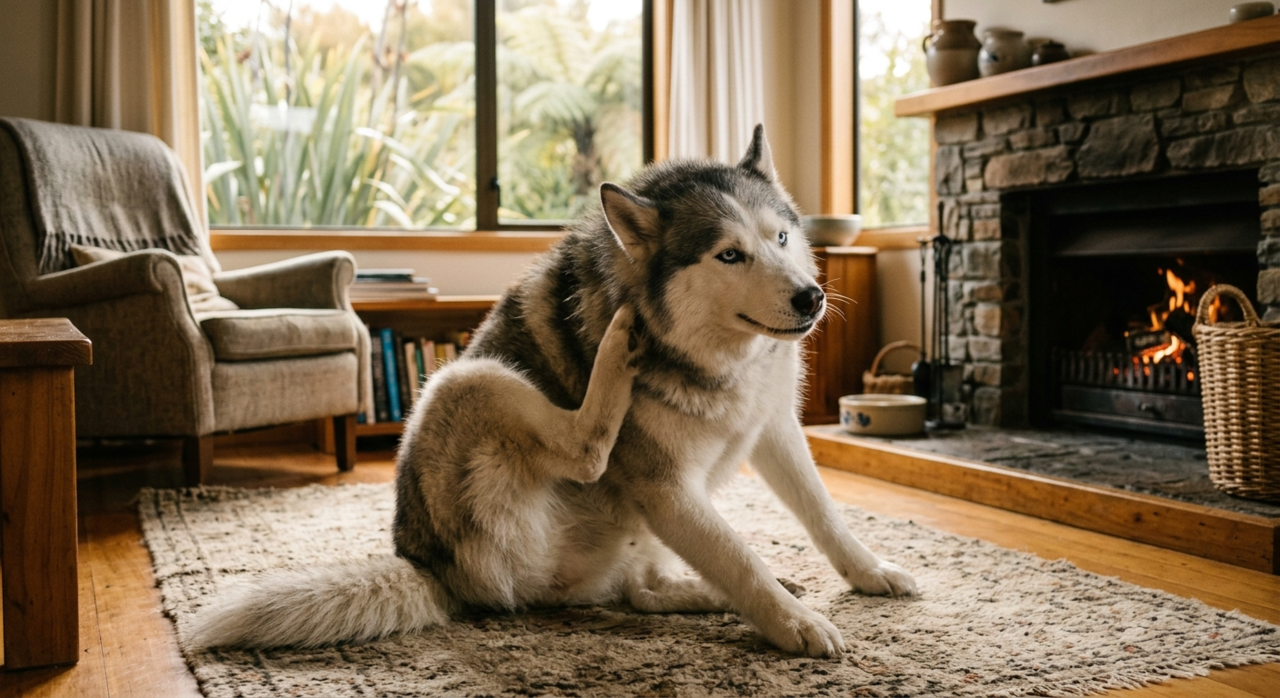
Huskies are built for the Arctic. That gorgeous double coat that keeps them warm in snowy mountains is the same coat that, in a NZ summer, can make them itch, scratch and shed in clouds. Siberian Huskies are also more prone to a few specific skin sensitivities than your average breed. So if you're watching your Husky scratch more than seems normal, you're not imagining it, and there are some breed-specific reasons worth knowing about.
Here's a friendly NZ-focused look at why your Husky might be scratching, what's worth checking at home first, and when it's worth getting a closer look from a clinic.
Quick answer
The most common reasons Huskies scratch in NZ are coat-related (trapped undercoat from missed brushing, especially when they're "blowing coat"), environmental allergies (grass, pollen, dust), food sensitivities, and parasites like fleas. Huskies are also genetically prone to a couple of skin conditions including zinc-responsive issues and a higher rate of immune-related skin reactions. The first three things to try at home: a thorough deshedding brush-out, a gentle skin-supporting shampoo, and an up-to-date flea treatment. If scratching is heavy, focused on one spot, or pairs with redness, hair loss or sores, get it checked at your clinic.
The Husky Coat: Why It's a Bigger Factor Than for Other Breeds
Most Husky scratching starts with the coat itself. They have a thick double coat: a soft, dense undercoat for insulation, and a longer, coarser top coat for waterproofing. That coat does two things that other breeds' coats don't do as dramatically.
They "blow coat" twice a year
Huskies shed their undercoat in big seasonal sheds, usually in spring and autumn. Loose dead hair gets trapped against the skin, mats up close to the body, and feels itchy. A Husky who's blowing coat without enough brushing will scratch.
The coat traps moisture
That thick undercoat holds onto water, sand, grass seeds and irritants from outdoor adventures. NZ humidity makes this worse, damp coat against skin can lead to hot spots and infections, especially over summer.
They overheat in NZ summers
Huskies are built for cold. A hot, sweaty Husky scratches more than a cool one. If your dog is hotter than usual and scratching, that's part of the picture, not a separate issue.
Don't shave a Husky
The double coat actually insulates them from heat as well as cold. Shaving removes that protection, can damage the coat regrowth, and doesn't fix the itch. A thorough deshedding instead lets air through to the skin.
Common Reasons Huskies Scratch
1. Trapped undercoat
The most common reason. Dead undercoat that hasn't been brushed out feels itchy and traps moisture. Especially common during seasonal coat blow.
Try first: a thorough deshedding session with a slicker brush and undercoat tool. You'll be amazed how much hair comes out, and the scratching often eases within a day or two.
2. Environmental allergies
Grass, pollen, dust mites, mould. Huskies are more prone to atopic skin reactions than many breeds, and NZ has plenty of allergens to react to year-round.
Try first: wipe paws and belly down after walks, vacuum bedding regularly, and try a gentle oatmeal shampoo for a soak-and-rinse bath.
3. Food sensitivity
Some Huskies react to common protein sources or grains in their food, with the reaction showing as itchy skin, paw chewing or red ears.
Try first: a sensitive-skin or limited-ingredient food, given for at least 6-8 weeks before judging if it's helping. Don't switch back and forth quickly.
4. Fleas (even when you can't see them)
Flea allergy is one of the most underdiagnosed itch causes. A single bite can set off a Husky's whole body itching, and you often won't see live fleas.
Try first: get the flea treatment up to date, and treat the house too. NZ flea seasons run longer than people expect.
5. Hot spots
Damp coat plus humidity plus a small irritation can flare into a hot spot fast, a red, raw, oozing patch the dog won't leave alone. Common after swimming or wet walks.
Try first: dry the coat thoroughly after wet walks, and clip the area around any small sore so air can get to it. Hot spots that grow or weep need a clinic check.
6. Zinc-responsive skin issues
Huskies are one of the breeds genetically more prone to zinc-related skin reactions. It can show up as crusty patches around the eyes, mouth, paws or pressure points.
Try first: if you're seeing crusty patches in those specific spots, that's a clinic conversation rather than a home fix.
7. Dry skin
Indoor heating in winter, lots of bathing, or low-quality food can leave skin dry and itchy underneath all that coat. Often shows as flakes when you brush them.
Try first: add an omega-3 supplement (fish oil is the easy way) and bathe less often. Once a month is plenty for a Husky most of the year.
8. Stress or boredom
Huskies are high-energy dogs. An under-exercised, under-stimulated Husky sometimes channels that into licking and scratching. Looks like a skin issue, behaves like a skin issue, but the root is mental.
Try first: add a daily enrichment session. Our Husky training guide covers the activity side.
The First Three Things to Try at Home
1. A thorough brush-out
Use a slicker brush plus an undercoat deshedding tool. Work through the whole coat, paying special attention to the back end, behind the ears and the chest. Do this in a place you don't mind clouds of hair settling. For a Husky during coat blow, this might take 30-45 minutes the first time.
2. A gentle, soak-and-rinse bath
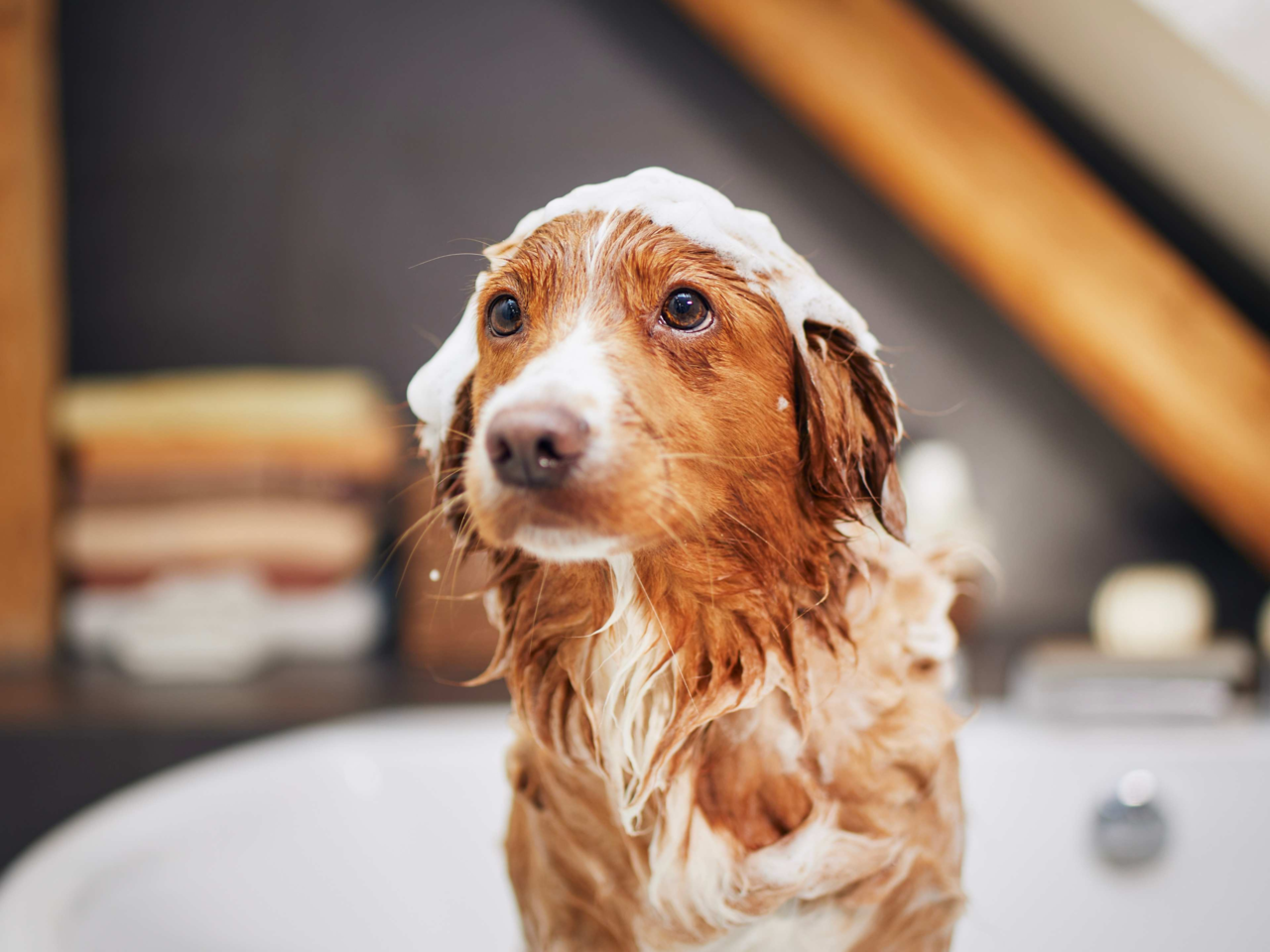
Use a sensitive-skin or oatmeal shampoo. Lather, leave for 5-10 minutes (the soak matters), then rinse really thoroughly. Huskies can hold soap residue in their undercoat, which causes more itch. Towel dry properly afterwards.
3. Make sure the flea treatment is current
Flea allergy is a huge cause of unexplained itch. Whatever flea treatment your dog is on, double-check the date and re-apply if it's overdue.
Many Huskies improve significantly with just these three. If you've done them properly and the itch hasn't eased in a week or two, it's time to look at the deeper causes.
Brushing and Bathing Gear
Sensitive Skin Foods Worth Considering
If you suspect a food connection, switching to a sensitive-skin formula and giving it 6-8 weeks of consistent feeding is the home-friendly first step. The blog Best Diets for Pets with Skin and Coat Issues goes deeper.
Skin and Coat Supplements
Daily omega-3s and skin-supporting supplements work best when given consistently for 4-6 weeks. They're not a quick fix but they tend to show up in coat condition over time.
Flea and Worm Coverage
Even if you don't see fleas, an up-to-date flea treatment rules out one of the biggest causes of unexplained itch.
When to Get It Checked
Worth a clinic conversation
- Heavy, constant scratching that doesn't ease with the home-care basics
- Hair loss in patches, especially around the back end, ears or paws
- Red, raw skin or sores that grow or weep
- Crusty patches around the eyes, mouth, paws or pressure points (possible zinc-related issue)
- Constant ear scratching, head shaking, or strong smell from the ears
- Scratching alongside changes in appetite, energy, or weight
- Itch that's only on one side of the body or focused on one spot
Your clinic can help work through what's most likely and whether anything needs adding to your dog's routine. The blog How to Keep Your Dog's Skin Healthy Year Round covers the wider context.
Frequently Asked Questions
How often should I brush my Husky?
For most of the year, two or three times a week is plenty. During the seasonal coat blow (spring and autumn), daily brushing for a couple of weeks until the undercoat is out keeps them comfortable. Don't be alarmed at how much hair comes out, that's the goal.
Can I shave my Husky to stop them itching in summer?
It's almost always a bad idea. The double coat actually insulates them from heat as well as cold, and shaving doesn't fix the underlying itch. The coat regrowth can also come back patchy or different in texture. Deshed, don't shave.
How often should I bathe my Husky?
Once a month is generally plenty, more often if they get muddy or smelly. Over-bathing strips the coat's natural oils and can actually make itching worse. Use a gentle shampoo, lather, leave it to soak, and rinse really thoroughly.
What does "blowing coat" mean?
It's the seasonal big shed when Huskies drop their undercoat, usually twice a year. Loose dead hair lifts away in clumps and tufts, and a thorough brush-out fills a bag in one session. It's normal and lasts a few weeks each time.
Are Huskies more prone to skin issues than other breeds?
Yes, slightly. They have a higher rate of zinc-related skin reactions and atopic (allergy-driven) skin reactions than the average breed. That doesn't mean every Husky has issues, but it does mean if your Husky is itchy, the breed itself is part of the picture.
Can a food change really fix scratching?
For some dogs, yes. Food sensitivity is one of the more common causes of itchy skin in NZ dogs. The catch is patience: any food trial needs 6-8 consistent weeks before you can tell if it's helping, and switching back and forth makes it impossible to know what's working.
How do I know if it's allergies vs fleas vs food?
Honestly, sometimes you can't tell at home, and your clinic is the right place to work through it. Some general patterns: flea allergy often shows as itch focused on the back half and tail base; food allergy often involves paws, ears and the back end together; environmental allergy often gets worse seasonally and involves face-rubbing.
What's the single biggest thing I can do for a scratchy Husky?
A thorough deshedding brush-out, especially during coat blow. For most NZ Husky owners, this single change makes the biggest day-to-day difference. Pair it with up-to-date flea coverage and you've ruled out the two most common causes.
Husky Coat and Skin Care Essentials
Find deshedding tools, gentle shampoos, sensitive-skin foods, omega-3 supplements and flea coverage in one place. Save with Autodeliver on food, supplements and flea treatments, and enjoy everyday member pricing as part of Pet Perks.
SHOP DOG ESSENTIALS