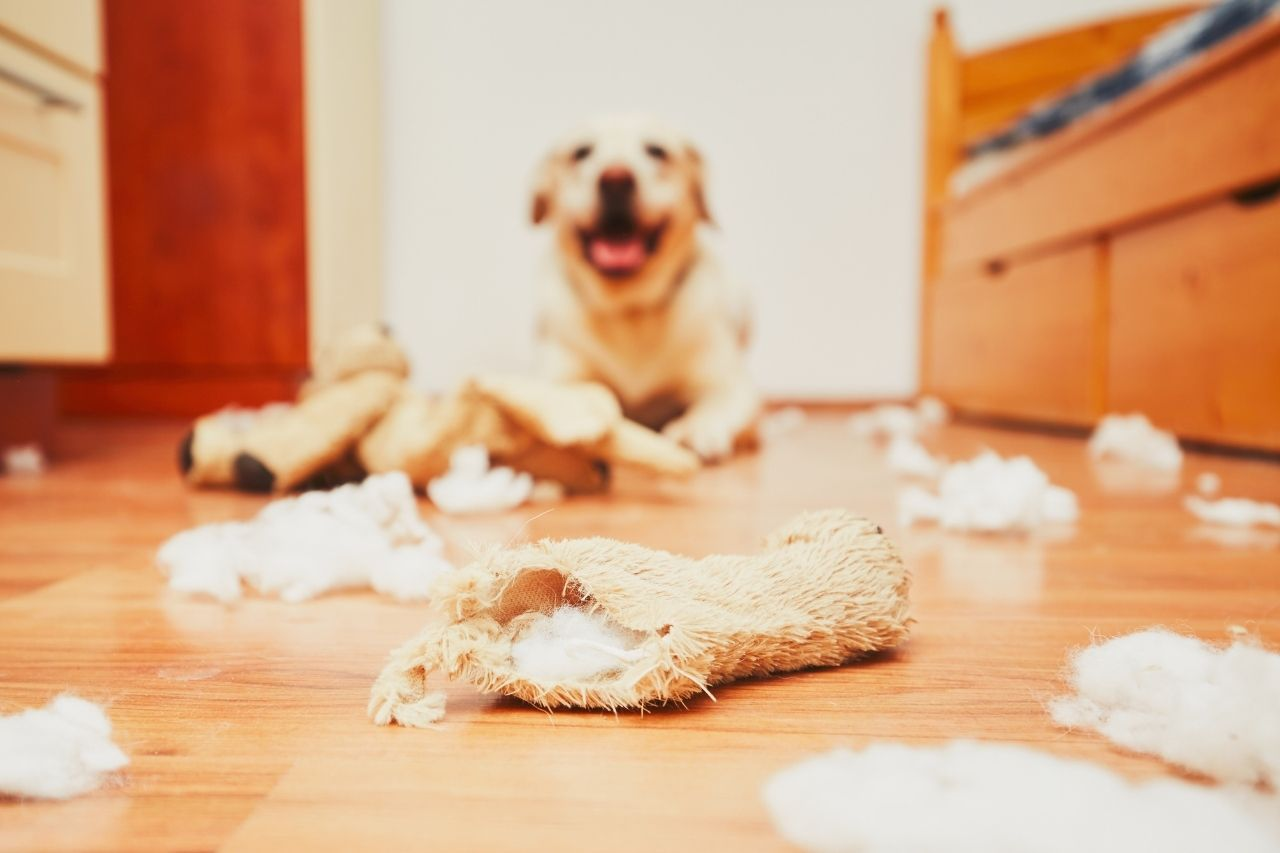
You buy a brand new squeaky toy on Saturday. Your dog locks eyes on you, takes it gently in their mouth, gives you a look of pure delight, and disappears off to the dog bed with it. By Sunday afternoon, you're standing over a small explosion of fluff and one orphan squeaker, wondering how long that just took. If this sounds familiar, you're not alone, and your dog isn't being naughty.
Here's a friendly guide to why some dogs go through squeaky toys at speed, what's actually going on when they do, and how to pick a toy that suits the way your dog plays.
Quick answer
If your dog goes straight for the squeaker and won't stop until they've found it, that's normal. Most dogs are wired to chase and play with anything that makes a high-pitched noise, and it taps into their natural play instinct. Some dogs are gentle squeaker-players who can enjoy them for ages. Others are squeaker-hunters who'll work through one quickly. Knowing which kind your dog is helps you pick a toy that lasts a bit longer and suits the way they actually play.
Why Squeakers Are So Compelling
It's a play instinct, not bad behaviour
High-pitched noises trigger a play response in most dogs. The squeak is exciting, novel, and lights up the same part of their brain that loves chasing a tennis ball or a fast-moving toy. Going for the squeaker is your dog's idea of a great game.
The sound rewards them every time
Every squeak is feedback that they're winning the game. The toy keeps responding, so they keep playing. Some dogs play with the squeak as the sound, and some keep going until they've worked out where the noise is coming from.
Different dogs play different ways
Some dogs are gentle nibblers who can play with the same squeaky toy for months. Others are determined investigators who'll work through it in an afternoon. Same toy, very different play styles. Neither is right or wrong.
Breeds with a strong play drive often dig in harder
Working breeds (Border Collies, Heelers, Spaniels), bull breeds (Staffies, Bulldogs, Boxers) and big confident chewers (Labradors, Goldens, Rotties) often play with more focus and stamina than gentler-mouthed breeds. Worth knowing what you've got.
Which Kind of Player Is Your Dog?
The gentle squeaker-player
Your dog plays with the squeak, carries the toy around, cuddles it on the couch, gives it the occasional gentle squeeze. The toy lasts for months. Squeaky plush, soft fabric, ring toys, and small soft balls all suit this dog. Most squeaky toys in our range are made for this play style.
The enthusiastic squeaker-player
Your dog loves the squeak, plays fetch with it, brings it back, plays a quick bit of tug, then settles down to chew gently. The toy lasts a few weeks to a few months. Reinforced squeaky toys, tougher plush, and squeaky rubber balls work well. Rotating toys keeps each one feeling fresh.
The determined squeaker-hunter
Your dog is laser-focused on the squeaker. They'll find it, work on it, and the soft toy comes apart in the process. The toy might last an afternoon. This dog isn't a "bad" toy-player, they just have a strong play drive that suits a different kind of toy. The good news is the toys that suit them are also the ones that last the longest, which is brilliant value over time.
What Suits the Determined Squeaker-Hunter
Tough rubber chews and stuffable toys
Toys with no squeaker, no stuffing, and a thick rubber wall give your dog the same satisfying jaw workout without the play-and-destroy cycle. The KONG Classic and KONG Extreme are the classics for a reason. Stuffed with their dinner or a frozen treat, they'll happily work on one for 30 minutes.
Nylon power chews and bone-shape chews
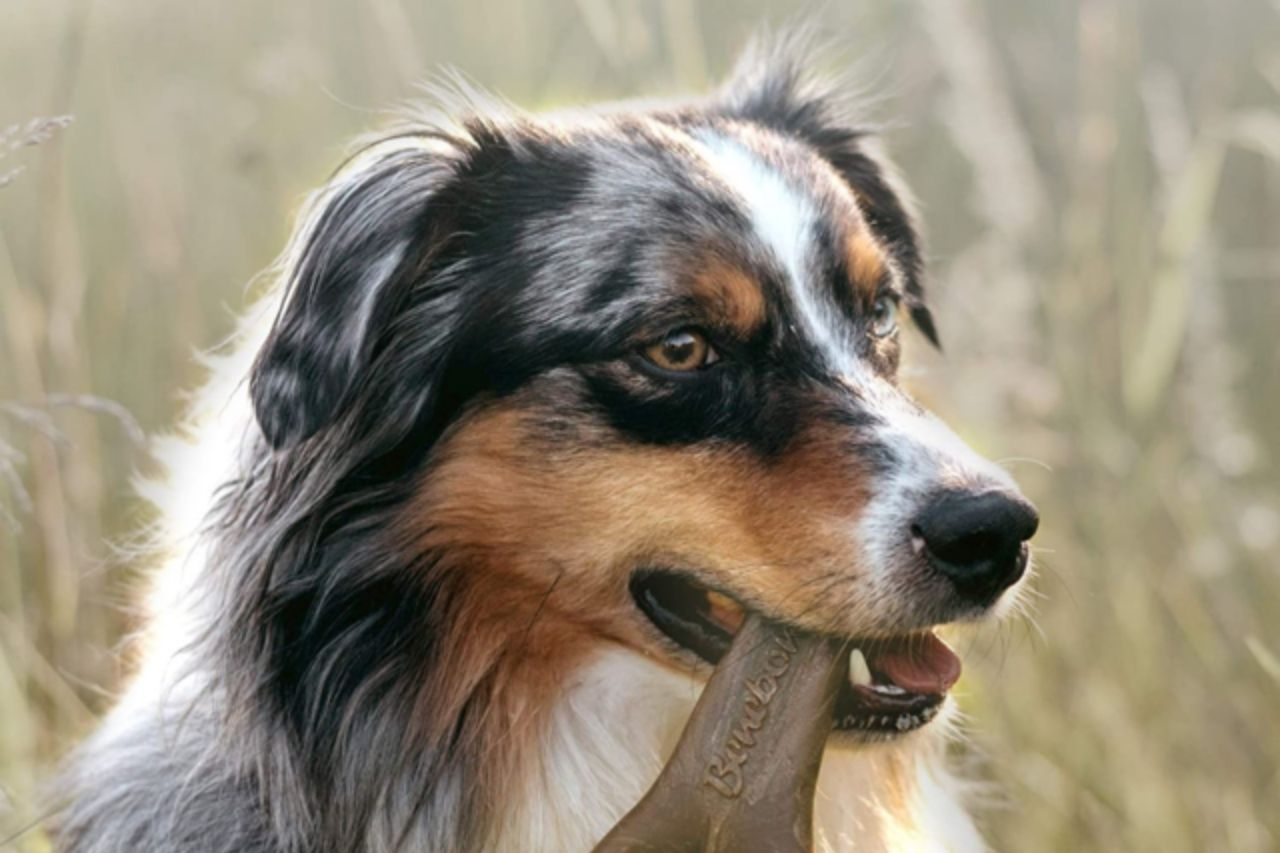
Nylabone Power Chew and Benebone are built specifically for dogs with a strong chew drive. They're flavoured to stay interesting, made of a tough nylon material, and last for weeks of regular chewing.
Foraging and slow-feed enrichment
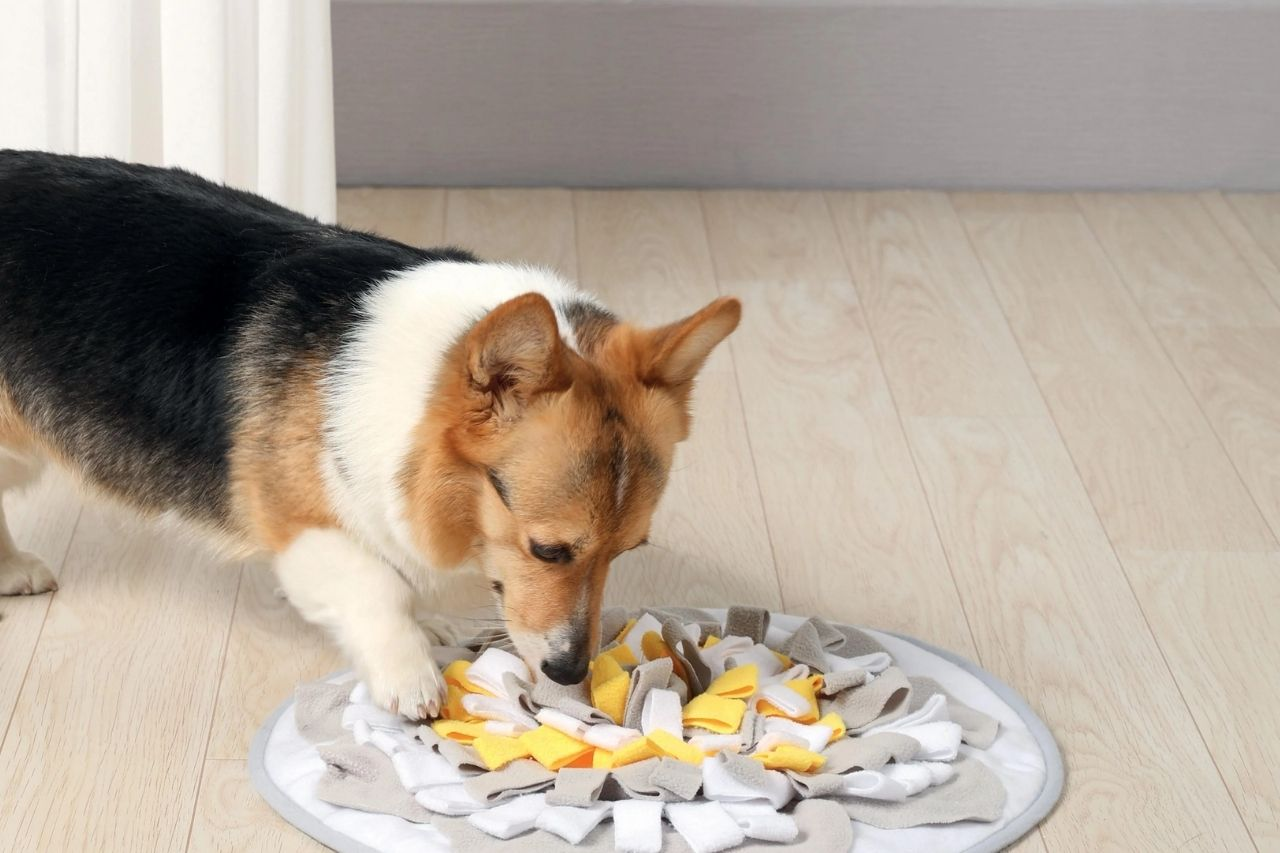
The same instinct that drives a dog toward the squeaker also drives them toward "hunting" for food. A snuffle mat scattered with treats, a slow-feed lick mat with their dinner spread across it, or a puzzle feeder all redirect that drive into something satisfying that doesn't end with stuffing on the floor.
Solid-rubber fetch and tug toys
For dogs who love fetch and don't need a squeak to enjoy it, solid-rubber balls and rope tug toys give the same chase-and-catch satisfaction with a much longer working life.
Squeaky Toys Still Have a Place
Just because some dogs go through squeaky toys quickly doesn't mean squeaky toys are out. They're fantastic for the right dog, and even determined-hunter dogs can enjoy them as a supervised play toy rather than an all-day chew toy. A few ways to make squeaky toys work for any play style:
Getting the most out of squeaky toys
- Use them for play, not for solo chewing. A 10-minute supervised fetch or tug session, then put the toy away. Both of you enjoy it more.
- Rotate toys weekly. Three toys in and out of a cupboard feel like nine toys to your dog.
- Match toy size to dog size. A toy too small to be safe with a big dog will come apart faster, and the same toy is perfect for a small dog.
- Choose reinforced squeaky toys for stronger players. Some squeaky toys are built tougher than others, with double-stitched seams and reinforced shells. They'll outlast a basic plush by weeks.
- Save plush squeakies for gentler dogs. Toy breeds, gentle adults, and senior dogs often love a soft squeaky toy for years.
Matching Toys to Your Dog: A Quick Checklist
Pick the right toy in 30 seconds
- Are they a gentle player? Squeaky plush, soft fabric, ring toys, small rubber balls. The whole squeaky range works well.
- Are they enthusiastic but careful? Reinforced squeaky toys, durable squeaky rubber balls, fetch toys. Rotate to keep novelty.
- Are they determined and focused? Tough rubber chews (KONG Extreme, Benebone), nylon power chews (Nylabone), slow-feed and foraging toys (snuffle mat, LickiMat, Nina Ottosson puzzles).
- Are they into fetch? Solid rubber balls (Chuckit Ultra Ball), durable fetch toys, rope tugs.
- Do they have separation anxiety or boredom-related chewing? Stuffable toys (KONG Classic with frozen filling) and slow-feed enrichment work brilliantly to redirect the drive.
Safety First, Whatever the Toy
Supervise enthusiastic players
Any toy can fail at some point, and a destroyed toy can become a swallowing risk. Supervise dogs who play hard, especially with new toys, and pop the toy away if it's coming apart.
Size the toy correctly
A toy small enough to be swallowed isn't safe, no matter how tough it is. Choose toys that are noticeably bigger than your dog's jaw. The packaging usually gives a size guide.
Check toys regularly
Once a week, give the toys a quick look. Loose seams, hanging stuffing, exposed squeaker, sharp edges. Anything coming apart is worth retiring before it becomes an issue.
Pick up the squeaker if it pops out
A loose squeaker is a swallowing risk, especially for a determined dog. If the squeaker comes free, put it (and the toy) somewhere your dog can't reach until you can replace it.
Frequently Asked Questions
Why does my dog go straight for the squeaker?
It's a normal play response. High-pitched noises trigger a play drive in most dogs, and the squeaker is the most exciting bit of the toy. Some dogs play with the sound, others focus on the source of the sound. Both are completely normal.
Are squeaky toys bad for dogs?
Not at all. Most dogs love them and play with them safely for years. The only consideration is matching the toy to the dog: gentler players can have squeaky toys around all the time, and more determined players are usually happier with a toy designed for harder play.
What's the longest-lasting toy for a determined chewer?
The KONG Extreme, Nylabone Power Chew range, and Benebone bone-shape chews are all built for dogs with a strong chew drive. Stuffed and frozen, a KONG Extreme can keep a determined dog occupied for 30 minutes or more.
Should I take away my dog's squeaky toy?
Not unless they're trying to swallow pieces of it. For determined players, switch to supervised play sessions rather than free-access, and put the toy away when you're not playing. That way you both enjoy the squeaky toy without the destruction worry.
Why does my dog destroy soft toys but not hard ones?
Soft toys give them something to grip and shake, which is part of the natural play response. Hard rubber and nylon chews are harder to grip in the same way, so they tend to last much longer with strong-mouthed dogs.
What if my dog's chewing is destructive around the house?
If your dog is chewing furniture, shoes, skirting boards or things they shouldn't, that's usually a sign they need more enrichment, more exercise, or a better-suited chew toy. Tough chews, foraging mats and puzzle feeders are brilliant at redirecting the drive into something positive.
Are some breeds more squeaker-hunters than others?
Working and bull breeds often play with more focus and stamina, so they tend to work through soft toys faster. Toy breeds, senior dogs and gentler-mouthed adults often play with squeaky toys for years. It's a general guide, not a rule. Every dog is different.
Toys to Match Your Dog's Play Style
Browse durable chews, squeaky toys, fetch balls, snuffle mats and puzzle feeders to find the toy that suits the way your dog actually plays. Save with Autodeliver on everyday items, and enjoy everyday member pricing as part of Pet Perks.
SHOP DOG TOYSRelated Reading

Note: the destroyed toy featured in the cover image at the top of this article isn't one we stock at Petdirect.