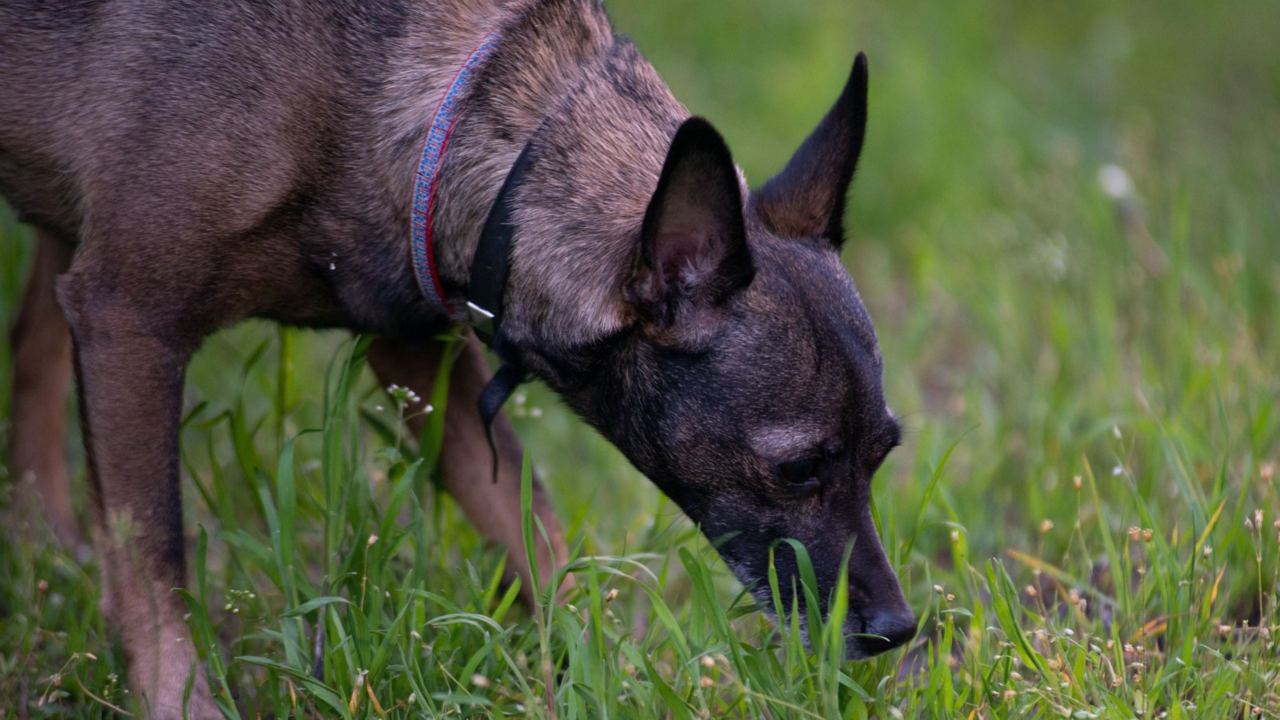
Grass-eating can look odd, especially when your dog suddenly heads for the nearest patch during a walk. In many cases it is simply part of normal dog behaviour. Dogs may enjoy the taste or texture, use grazing as a way to explore their surroundings, or eat grass when they feel unsettled.
The important part is looking at the whole picture: how often it happens, what else your dog is eating, and whether there are other changes in their behaviour or health.
Quick answer
Occasional grass-eating is often harmless, particularly when your dog is otherwise bright, eating normally and passing normal stools. Offer a balanced diet, keep walks calm and supervised, and avoid grass treated with chemicals. Speak with your vet if grass-eating comes with repeated vomiting, breathing difficulty, marked tiredness, pain, diarrhoea, appetite changes or other symptoms that concern you.
Common reasons dogs eat grass
Exploring with their mouth
Dogs investigate the world through smell, taste and texture. Fresh grass can be interesting, especially for puppies and dogs who enjoy foraging.
Enjoying the texture
Some dogs simply like chewing blades of grass. If your dog grazes occasionally and remains well, it may be a harmless preference.
Looking for enrichment
A dog who is bored or under-stimulated may spend more time sniffing, chewing and searching on walks. Grass-eating can be part of that wider pattern.
Could grass-eating mean your dog has an upset stomach?
It can be difficult to tell whether grass-eating comes before or after stomach discomfort. Some dogs vomit after eating grass, while others graze without becoming sick. Avoid assuming that grass is a reliable way for a dog to settle their stomach.
Instead, monitor the pattern. Note what your dog ate, when the grass-eating happened, whether they vomited, and how they behaved afterwards. If vomiting is repeated, your dog cannot keep water down, or they seem painful or unusually quiet, contact your vet promptly.
How to make grass-eating safer
Choose familiar walking areas
Use places where you know the grass is not recently treated with weed killer, fertiliser or other garden chemicals.
Supervise grazing
Keep an eye on what your dog is eating. Interrupt gently if they start swallowing large amounts, chewing unknown plants or eating rubbish alongside the grass.
Support calm, rewarding walks
Use sniffing, simple training games and short play sessions to give your dog other ways to explore. Reward them for checking in with you rather than pulling towards every patch.
Products that can support calmer routines
Products cannot diagnose or fix a stomach problem, but they may help you build a more engaging routine or reward alternative behaviours.
Use small food rewards for check-ins and calm behaviour. Awesome Pawsome Super Pumpkin Recipe Dog Treats are one option to consider.
If you are considering a supplement, discuss it with your vet first, especially if your dog has ongoing digestive symptoms. Fourflax Flax Seed Flake Digestive Health Supplement for Dogs is available to browse.
A clicker can help reinforce a cheerful response when your dog leaves grass or checks back in. Coachi Whizzclick Dog Clicker and Whistle is designed for training.
EzyDog Command Dog Clicker is another simple tool for marking the behaviour you want to repeat.
When to contact your vet
Grass-eating deserves more attention when it is sudden, frequent or accompanied by other changes. Contact your vet if your dog has persistent or repeated vomiting, breathing difficulty, severe or ongoing diarrhoea, a painful or swollen abdomen, marked lethargy, loss of appetite, blood in vomit or stools, or any symptom that feels out of character.
Frequently asked questions
Is it normal for dogs to eat grass?
Occasional grass-eating can be normal. Look at your dog's overall behaviour and watch for symptoms that suggest a separate problem.
Why does my dog eat grass and then vomit?
Grass may irritate the stomach, or your dog may already feel unwell. Repeated vomiting should be discussed with your vet.
Should I stop my dog eating grass?
Gently redirect your dog if the grass may be contaminated, if they are swallowing a lot, or if they are eating unknown plants.
Can puppies eat grass?
Puppies often explore with their mouths. Supervise them closely and avoid areas treated with chemicals.
Does grass-eating mean my dog needs a supplement?
Not necessarily. Avoid adding supplements without checking with your vet, particularly when symptoms are ongoing.
How can I redirect my dog from grass?
Practise a cheerful check-in cue at home, then reward it on walks. Sniffing games and short training sessions can also provide enrichment.
Can grass treated with weed killer make dogs sick?
It can pose a risk. Keep your dog away from treated areas and follow the product label's re-entry guidance.