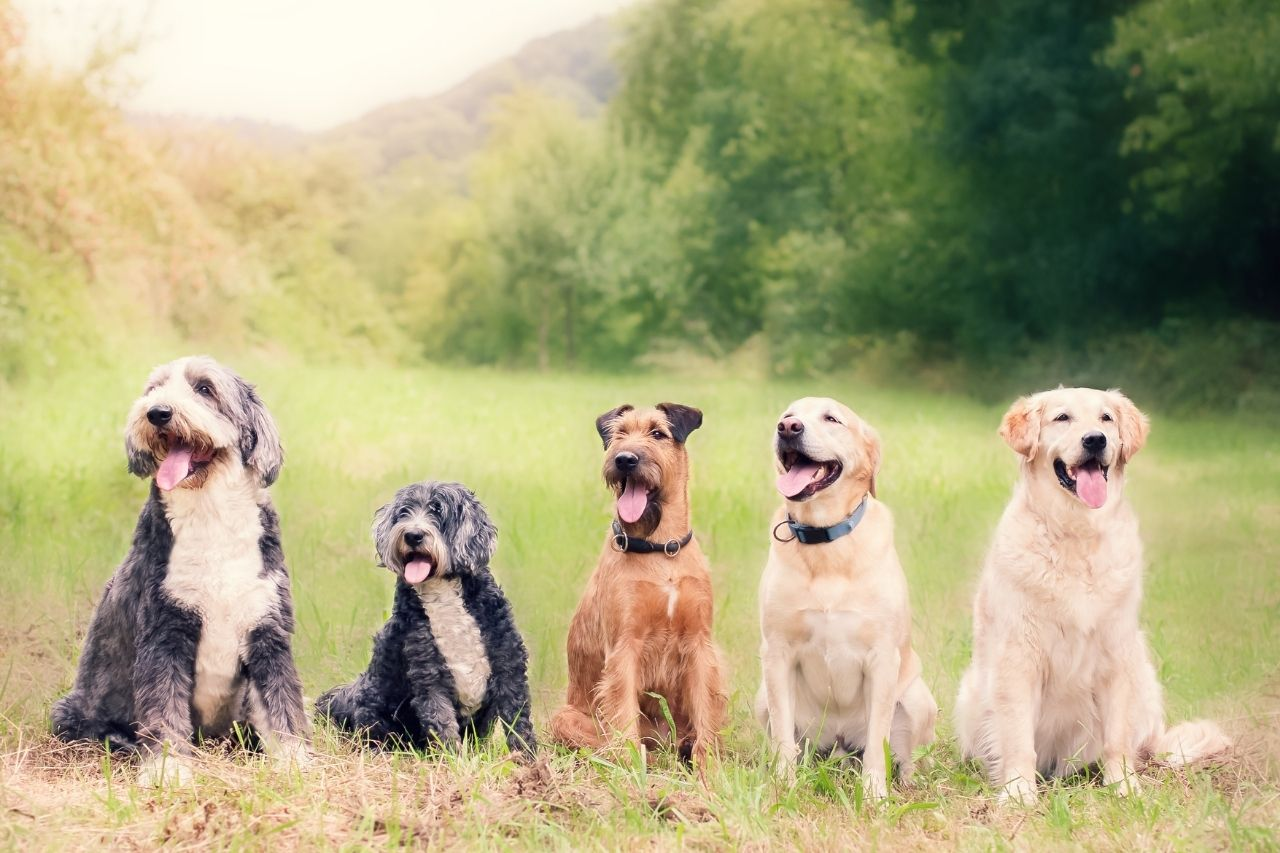
Dogs age at different rates depending on their breed and size, and knowing when your dog enters their senior years helps you give them the right care at the right time. While "senior" labelling on dog food can vary from brand to brand, understanding canine life stages makes it easier to spot changes early, adjust their diet, and keep them comfortable as they get older.
This guide breaks down when dogs of different sizes are considered senior, what each life stage looks like, the signs of ageing to watch for, and how to support your dog through their golden years.
When Is a Dog Considered Senior?
Unlike cats, where the senior threshold is a consistent 7 years, dogs vary significantly depending on their size. Larger breeds age faster and have shorter lifespans, so they reach their senior years earlier than smaller breeds.
e.g. Chihuahua, Maltese, Miniature Dachshund, Toy Poodle
e.g. Beagle, Border Collie, Cocker Spaniel, Staffordshire Bull Terrier
e.g. Labrador, Golden Retriever, German Shepherd, Rottweiler
e.g. Great Dane, Mastiff, St. Bernard, Irish Wolfhound
This is why you will see different age labels on senior dog food. Hill's Science Diet labels their large breed formula from 6+, while their standard and small breed formulas start at 7+. Royal Canin uses 5+ for Maxi (large), 7+ for Medium, and 8+ for Mini (small) breeds, with late-senior options at 10+ and 12+.
The Three Canine Life Stages
For everyday care we group dogs into three simple life stages: puppy, adult and senior. The exact ages shift depending on breed size, but the overall pattern is the same for all dogs.
| Life Stage | Small Breed (under 10kg) | Medium Breed (10 to 25kg) | Large & Giant Breed (25kg+) | What to Expect |
|---|---|---|---|---|
| Puppy | 0 to 10 months | 0 to 12 months | 0 to 18 months (up to 24 months for giant breeds) | Rapid growth, socialisation, house training, vaccinations |
| Adult | 10 months to 8 years | 1 to 7 years | 18 months to 6 years (from 2 years for giant breeds) | Physically mature, established routine, maintenance nutrition |
| Senior | 8 years+ | 7 years+ | 6 years+ (from 5 years for giant breeds) | Nutritional needs shift, with joint, weight and wellness support becoming more important |
Why does dog food labelling vary so much?
You might see "Adult 5+" on one bag, "Senior 7+" on another, and "Ageing 8+" on a third. This is because brands formulate for different breed sizes. A "Large Breed 5+" formula targets dogs whose bodies are already showing age-related changes at five, while a "Mini 8+" formula targets smaller dogs who reach that same stage later. The key is to match the formula to your dog's size, not just their age.
Dog Years in Human Terms
The old "multiply by seven" rule is a rough guide at best. Modern research shows that dogs age more rapidly in their first two years, then the rate varies by size. Here is a general comparison:
| Dog Age | Small Breed (Human Equivalent) | Medium Breed (Human Equivalent) | Large Breed (Human Equivalent) |
|---|---|---|---|
| 1 year | ~15 | ~15 | ~14 |
| 2 years | ~24 | ~24 | ~22 |
| 5 years | ~36 | ~38 | ~42 |
| 7 years | ~44 | ~50 | ~56 |
| 10 years | ~56 | ~64 | ~76 |
| 13 years | ~68 | ~78 | ~96 |
| 15 years | ~76 | ~88 | ~110+ |
As you can see, a 7-year-old Labrador is roughly equivalent to a 56-year-old human, while a 7-year-old Maltese is closer to 44 in human terms. This is exactly why large and giant breeds need senior nutrition much earlier.
8 Signs Your Dog Is Entering Their Senior Years
Dogs do not suddenly become "old" overnight. The transition is gradual, and some of these signs can be easy to miss. Here is what to look for:
Slowing Down on Walks
They may lag behind, take more breaks, or seem less enthusiastic about longer outings. Stiffness after rest is common, especially in cooler weather.
Greying Around the Muzzle
Grey or white fur typically appears around the muzzle and eyes first. Some breeds grey earlier than others, but a noticeable change often lines up with the mature-to-senior transition.
Weight Changes
Some senior dogs gain weight as their metabolism slows, while others lose weight as muscle mass declines. Both warrant a closer look at their diet.
Difficulty Getting Up or Climbing
Hesitating before jumping onto the couch, struggling with stairs, or being slow to rise after lying down can indicate joint stiffness or early arthritis.
Changes in Sleep Patterns
Senior dogs often sleep more during the day. Some may also become restless at night, pacing or changing position frequently.
Cloudy Eyes or Reduced Vision
A bluish-grey haze over the eyes (nuclear sclerosis) is common in older dogs and is different from cataracts. Both are worth mentioning at your next vet visit.
Dental Issues
Bad breath, discoloured teeth, reluctance to chew hard food, or dropping food can all signal dental disease, which becomes more prevalent with age.
Behavioural Changes
Increased anxiety, confusion, reduced interest in play, or house soiling in a previously house-trained dog can all be signs of cognitive decline.
If you notice several of these signs, it is a good time to book a senior health check with your vet and review your dog's diet.
What Changes Inside a Senior Dog's Body
The visible signs above are driven by internal changes that happen gradually:
Metabolism
A senior dog's metabolic rate drops, meaning they burn fewer calories at rest. Without dietary adjustment, this leads to weight gain, which puts extra pressure on already ageing joints.
Joints and Mobility
Cartilage wears down over time, and the synovial fluid that cushions joints becomes less effective. Large and giant breeds are particularly prone to osteoarthritis. Glucosamine, chondroitin, and omega-3 fatty acids can help support joint health.
Digestive System
The gut becomes less efficient at absorbing nutrients. Senior dogs benefit from highly digestible proteins and added prebiotics or probiotics to support gut health.
Immune System
The immune response weakens with age. Antioxidants such as vitamins E and C, beta-carotene, and selenium help support immune function.
Kidney and Heart Function
Kidney function gradually declines, and controlled phosphorus levels in senior diets help reduce the workload on the kidneys. Heart health can also benefit from taurine and L-carnitine, found in many senior formulas.
Cognitive Function
Cognitive decline (sometimes called canine cognitive dysfunction) affects a significant number of dogs over 10. Medium-chain triglycerides (MCTs), DHA, and botanical antioxidants have shown promise in supporting brain health. Pro Plan Adult 7+ Bright Mind is specifically formulated with enhanced botanical oils to support cognitive function.
How to Support Your Senior Dog
Switch to a Senior Diet
Senior-specific formulas are designed with adjusted protein, fat, and calorie levels, plus added joint support and antioxidants. Match the formula to your dog's size for the best results. See our product picks below or read our guide to the best senior dog food in NZ.
Keep Them Moving
Gentle, consistent exercise helps maintain muscle mass and joint flexibility. Shorter, more frequent walks are better than one long outing. Swimming is excellent low-impact exercise for dogs with joint issues. Read more in our low-impact exercise guide.
Schedule Regular Vet Checks
Twice-yearly vet visits are recommended for senior dogs. Blood panels can catch kidney, liver, and thyroid changes early, giving you more time to manage them effectively.
Support Their Joints
Consider a joint supplement alongside their senior food, especially for large and giant breeds. Look for formulas with glucosamine, chondroitin, omega-3s, or green-lipped mussel extract. See our joint support guide.
Stimulate Their Mind
Puzzle feeders, scent games, and short training sessions help keep an ageing brain active. Mental enrichment is just as important as physical exercise for senior dogs. Read our mental enrichment tips.
Look After Their Teeth
Dental disease can cause pain and affect appetite. Regular brushing, dental chews, and professional cleans help keep teeth healthy. See our senior dental care guide.
When to Switch to Senior Food
A common question is whether you need to switch to senior food the moment your dog hits the "senior" age for their size. The answer depends on your individual dog. If they are healthy, active, and maintaining a good weight on their adult food, there is no rush. But if you are noticing signs of slowing down, weight gain, or joint stiffness, switching to a senior formula can make a real difference.
As a general guide:
- Giant breeds (45+ kg): Consider switching from age 5
- Large breeds (25-45 kg): Consider switching from age 6
- Medium breeds (10-25 kg): Consider switching from age 7
- Small breeds (under 10 kg): Consider switching from age 8-10
Always transition gradually over 7 to 10 days, mixing increasing amounts of the new food with decreasing amounts of the old. This helps avoid digestive upset.
Senior Dog Food Picks by Size
Small and Mini Breeds
Medium Breeds
Large and Giant Breeds
More Top Picks
Senior Wet Food Options
Wet food is a great option for senior dogs. The higher moisture content supports hydration, the softer texture is easier on ageing teeth, and many dogs find it more palatable as their sense of smell declines. You can feed it as a complete meal or use it as a topper on dry food.
Supplements to Support Senior Dogs
While a good senior diet covers many nutritional needs, targeted supplements can provide extra support for joints, mobility, and overall vitality, especially for larger breeds or dogs with existing issues.
Frequently Asked Questions
At what age is a dog considered senior?
It depends on size. Small breeds (under 10kg) are generally senior from around 8 years, medium breeds (10 to 25kg) from 7 years, large breeds (25 to 45kg) from 6 years, and giant breeds (45kg+) from as early as 5 years. Larger dogs age faster, so they reach their senior years sooner.
Do all dogs need senior food?
Not necessarily. If your dog is healthy, active, and maintaining a good body condition on their adult food, you may not need to switch immediately. However, most dogs benefit from a senior formula once they start showing signs of slowing down or weight changes.
Why do some brands label food from 5+ and others from 8+?
Different brands target different breed sizes. A "5+" label is typically for large or giant breeds that age earlier, while "8+" is usually for small breeds that reach their senior years later. Always check whether the formula is designed for your dog's size.
What is the difference between "mature" and "senior" dog food?
Some brands use "mature" for earlier ageing (e.g. 5-7 years) and "senior" for later ageing (e.g. 8-10+). Others use the terms interchangeably. The key difference is in the nutrient profile: later-stage formulas tend to have more joint support, lower calories, and adjusted phosphorus levels.
How do I know if my dog needs a joint supplement?
Signs include stiffness after rest, reluctance to jump or climb stairs, slowing down on walks, or limping. If you notice any of these, talk to your vet and consider adding a joint supplement alongside a senior diet.
Can I mix wet and dry food for my senior dog?
Yes, and many pet owners do. Mixing wet and dry food can increase palatability, boost hydration, and make mealtimes more appealing, especially for senior dogs with reduced appetite or dental issues.
How often should a senior dog visit the vet?
Twice-yearly check-ups are recommended for senior dogs, compared to once a year for healthy adult dogs. Regular blood work helps catch age-related changes in kidney, liver, and thyroid function early.
Related Reading
Shop Senior Dog Food
Browse our full range of senior dog food, from trusted brands like Hill's Science Diet, Royal Canin, and Pro Plan. All available with Autodeliver savings and free delivery over $79.
Shop Senior Dog Food