Summer Grooming Tips for Pets: Keep Your Dog or Cat Cool, Comfy & Clean
Summer brings sandy paws, dusty walks and extra opportunities for a muddy roll. A simple grooming routine helps you deal with the mess and notice changes in your dog or cat’s coat without turning every clean-up into a major event.
The aim is comfort and cleanliness, not the shortest possible haircut. Match the tools and routine to your pet’s coat, skin and tolerance, and treat shade, fresh water and sensible activity as separate summer essentials.
Quick answer
Summer grooming should suit your pet’s coat and skin. Brush gently to remove loose fur and find tangles, bathe only when needed with a species-appropriate product, and avoid close shaving as a DIY cooling shortcut. Grooming does not prevent heatstroke: keep shade, fresh water and cooler outings in the plan.
Start with your pet’s coat, not the calendar
A short, smooth coat needs different handling from a long coat, dense undercoat or curly coat. Look at how easily the fur tangles, where dirt collects and how your pet responds to touch. There is no single summer haircut or bathing timetable that suits every dog and cat.
Choose a cool, quiet spot with a non-slip surface. Let your pet investigate the brush, work in short sessions and pause while they are still comfortable. If they turn away, tense up or try to leave, make the next session easier rather than holding them in place to finish.
Brush gently and check the places that tangle
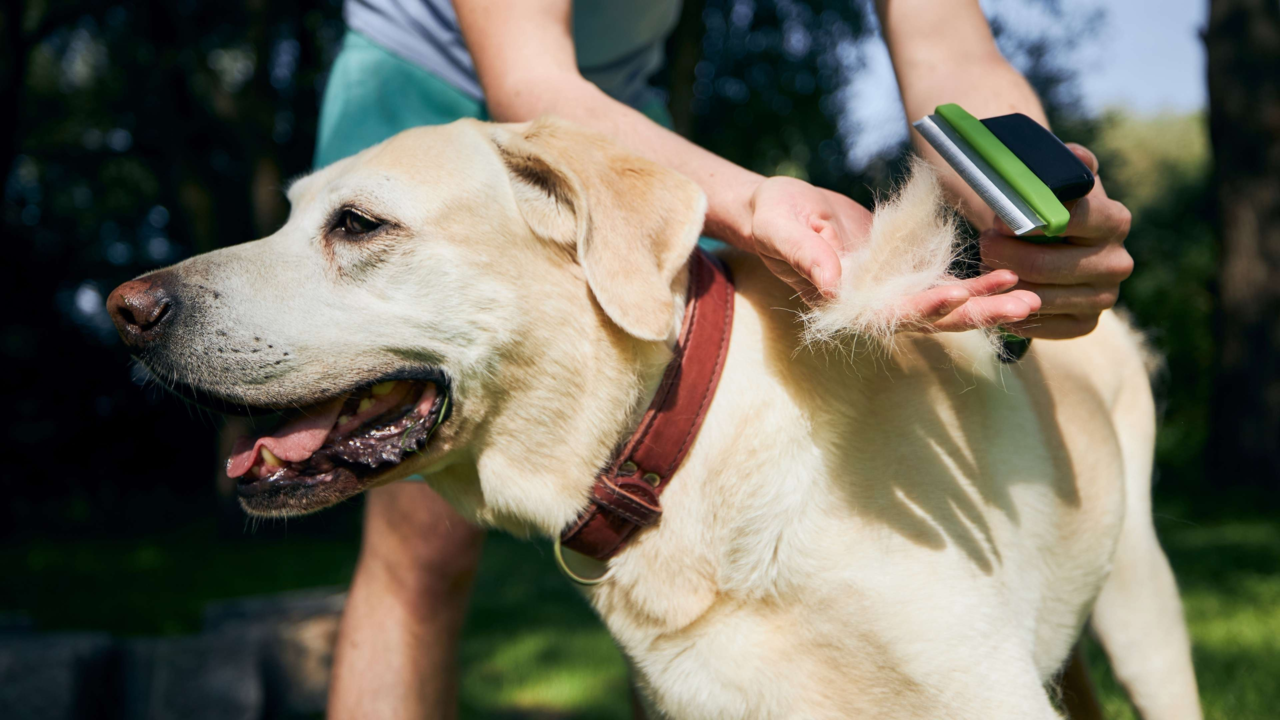
Work with the direction of the coat and use light pressure. Check behind the ears, under the collar or harness, around the armpits and along longer leg or belly fur. Separate small loose tangles gently; do not pull a brush through a tight mat.
The M-PETS range includes the M-PETS Bamboo Cat and Dog Double-Sided Pin Brush and M-PETS Bamboo Cat and Dog Slicker Brush. Check the tool suits your pet’s coat, use it gently and stop if the skin looks irritated. Neither tool is a reason to force out a painful knot.
Tight mats sit close to the skin and are not a safe scissors job. Ask a groomer to help with difficult matting. If the skin underneath is sore, bleeding or inflamed, contact your vet rather than continuing to brush.
For cats, follow their lead and focus on comfortable handling. Many manage much of their own coat care, but long coats and difficult-to-reach areas may need your help. A change in grooming habits deserves attention, especially if it comes with pain or skin changes.
Keep clipping decisions coat-specific
Do not use close shaving as a quick fix for hot weather. Coat type, existing matting and the skin underneath all affect what is appropriate. Discuss a suitable trim with a groomer who understands your pet’s coat rather than asking for the shortest cut possible.
Keep scissors away from tight mats, ears, skin folds and moving paws. If hair around the feet needs attention, have someone experienced show you an appropriate technique or book a grooming appointment.
A neat coat still does not make a hot day suitable for a long walk. Keep cooling and exercise decisions separate from grooming decisions.
Bathe when needed, with the right product
Let dirt, odour, coat needs and any existing skin-care instructions guide bathing rather than automatically washing every week or month. Many cats do not need routine baths. If your pet has a prescribed skin-care plan, follow it instead of adding a new summer shampoo.
Use lukewarm water, a non-slip surface and a product labelled for your pet’s species and life stage. Keep water and shampoo away from eyes and ears, rinse thoroughly and dry gently. Avoid human shampoo and strongly scented household cleaning products.
For dogs, the M-PETS Perfect Care No.1 2-in-1 Dog Shampoo and Conditioner is one wash-and-condition option. It is a dog product, not a cat shampoo. Check the label and your dog’s skin needs before use; stop if irritation occurs.
For a small patch of ordinary dirt, a damp cloth may be enough. Wipe or rinse sandy paws and dry between the toes. Do not scrub irritated skin, and keep cleaning products away from eyes and inside the ears.
Do a gentle head-to-paw check
- Look at the skin as you brush for redness, sores, new lumps or areas your pet keeps licking.
- Check between toes and around paws after outdoor time for sand, grass seeds or small debris.
- Look at the outside of the ears without pushing tools or cotton buds into the ear canal.
- Keep nails at a comfortable length using a method your pet tolerates, or ask a groomer for help.
If a grass seed appears embedded, a paw is swollen or your pet is limping, contact your vet rather than digging at it. Persistent itching, a bad-smelling ear or broken skin also needs assessment, not another cosmetic product.
Keep flea and other parasite care on the appropriate year-round schedule for your pet. Grooming can help you notice a problem, but it does not replace a correctly selected treatment. Never use a permethrin-containing dog flea product on a cat.
Keep sun and heat precautions separate
Groom in a cool area and offer fresh water. On hot days, choose cooler activity times and let your pet rest in shade or indoors. Do not rely on brushing, a haircut or a bath to prevent overheating.
For areas with sparse fur or pale skin, prioritise shade and limiting exposure. If you are considering sunscreen, choose a product explicitly suitable for that species and follow its directions; do not assume a dog-labelled product suits a cat.
Never leave a pet in a parked car. If your pet has breathing difficulty, collapses or appears severely overheated, begin cooling with water cooler than their body and seek urgent veterinary help. Do not cover them with a wet towel.
Make the next session easier
Store brushes clean and dry, rinse reusable tools as their instructions allow and remove trapped fur after use. Keep a towel and grooming kit together so a quick tidy-up does not become a hunt through the house.
Notice what worked: a different surface, less pressure, a quieter time or a shorter session. A routine your dog or cat accepts is more useful than an ambitious checklist they dread.
Frequently asked questions
Does a shorter coat keep every pet cooler?
No single haircut suits every coat. Avoid close shaving as a home cooling shortcut and discuss coat-appropriate trimming with a groomer. Shade, fresh water and sensible activity still matter.
Can I use the same shampoo on my dog and cat?
Only if the label explicitly says it is suitable for both species and their life stage. A dog-only shampoo should not be used on a cat.
What should I do with a tight mat?
Do not pull it out or cut close to the skin with scissors. Ask a groomer to remove it safely. Sore, bleeding or inflamed skin needs your vet’s attention.
Is a bath necessary after every beach visit?
Not automatically. Rinse off salt or sand with fresh water as needed, check the paws and dry gently. Use shampoo only when it is needed and appropriate for the skin and coat.
What if my cat dislikes brushing?
Start with a brief, gentle session in a quiet place and stop before they become upset. Try an appropriate tool and an easier-to-reach area; do not restrain them to complete a full groom.
Should I keep brushing over a sore patch?
No. Avoid the sore area and contact your vet if there is persistent redness, pain, broken skin or repeated licking. A grooming tool or cosmetic shampoo is not a substitute for assessment.
Build a grooming kit that suits their coat
Choose items that suit your pet, check sizing and follow each product’s directions.
Explore grooming essentials