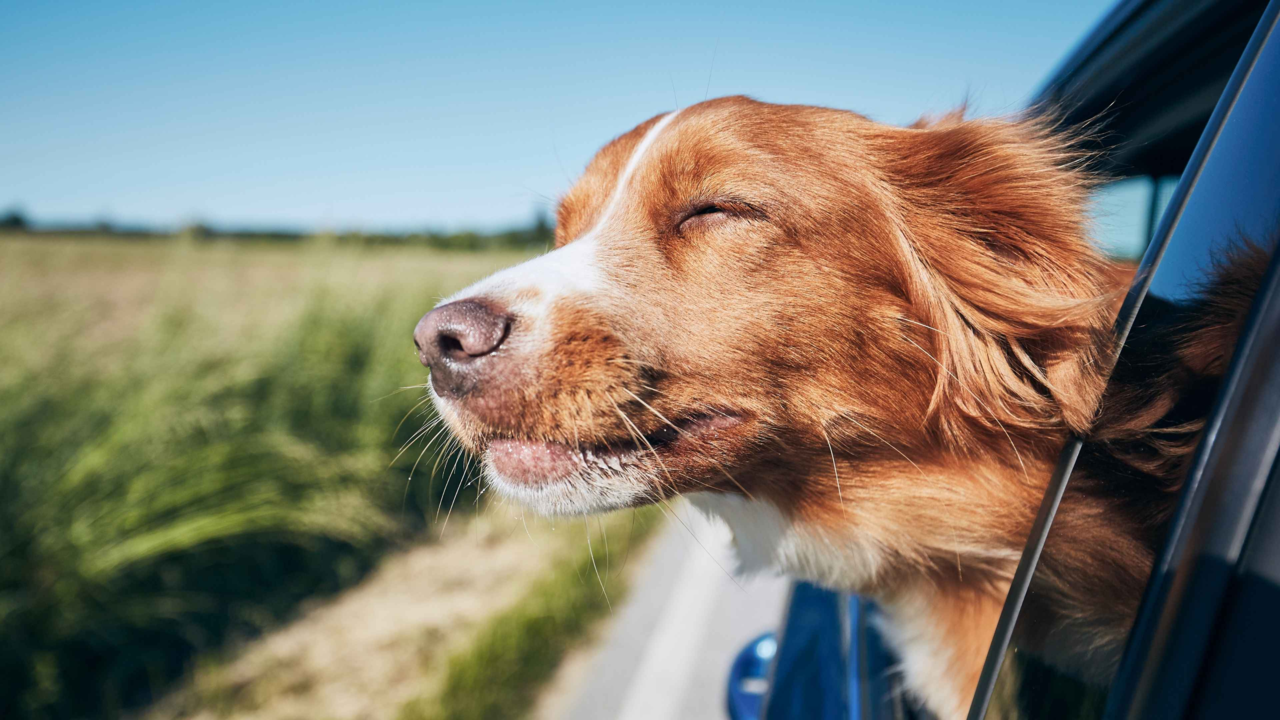
The Ultimate NZ Holiday Travel Guide For Pets
A holiday with your dog or cat starts well before the boot is packed. The most useful preparations are often the least glamorous: confirming the accommodation rules, checking the carrier fits and knowing where your pet can take a quiet break.
This NZ pet travel guide brings the whole trip together, from choosing whether your pet should come along to settling in at your destination. Keep their everyday routine at the centre of the plan, then add the gear that makes it easier.
Quick answer
For pet travel in NZ, confirm your accommodation and transport rules before booking. Secure your dog with a suitable restraint or your cat in an appropriately secured carrier, pack familiar food and fresh water, and plan breaks around their needs. Never leave a pet in a parked car. Check airline and ferry requirements directly before travelling.
Decide whether the trip suits your pet
Not every dog or cat enjoys a change of scene. Think about the journey, the sleeping arrangements and what the days will actually involve. If most activities exclude pets, or your cat finds unfamiliar places overwhelming, a trusted sitter or suitable boarding arrangement may be a better fit.
Ask accommodation providers about species, size limits, fencing, sleeping areas, cleaning requirements and whether pets may be left alone. “Pet-friendly” does not automatically mean every room, beach or walking track welcomes them. Have a back-up plan if your itinerary changes.
Prepare the practical details before departure
- Check your pet’s identification tag and microchip contact details are current. Save a recent photo and the contact details for a nearby clinic at your destination.
- Pack enough of their usual food, any prescribed medicine and their normal measuring scoop. Keep medicine in its labelled packaging and follow the existing instructions.
- If your accommodation or transport operator requires vaccination records, obtain them in advance rather than assuming a booking confirmation is enough.
- Keep parasite care on your pet’s established schedule. Check that any treatment suits their species, age and weight; do not add an extra dose just because you are travelling.
Give unfamiliar equipment a trial run at home. A carrier with familiar bedding, an easy lift into the car and a few short, positive journeys are more helpful than introducing everything on departure day.
Set up for a secure car journey
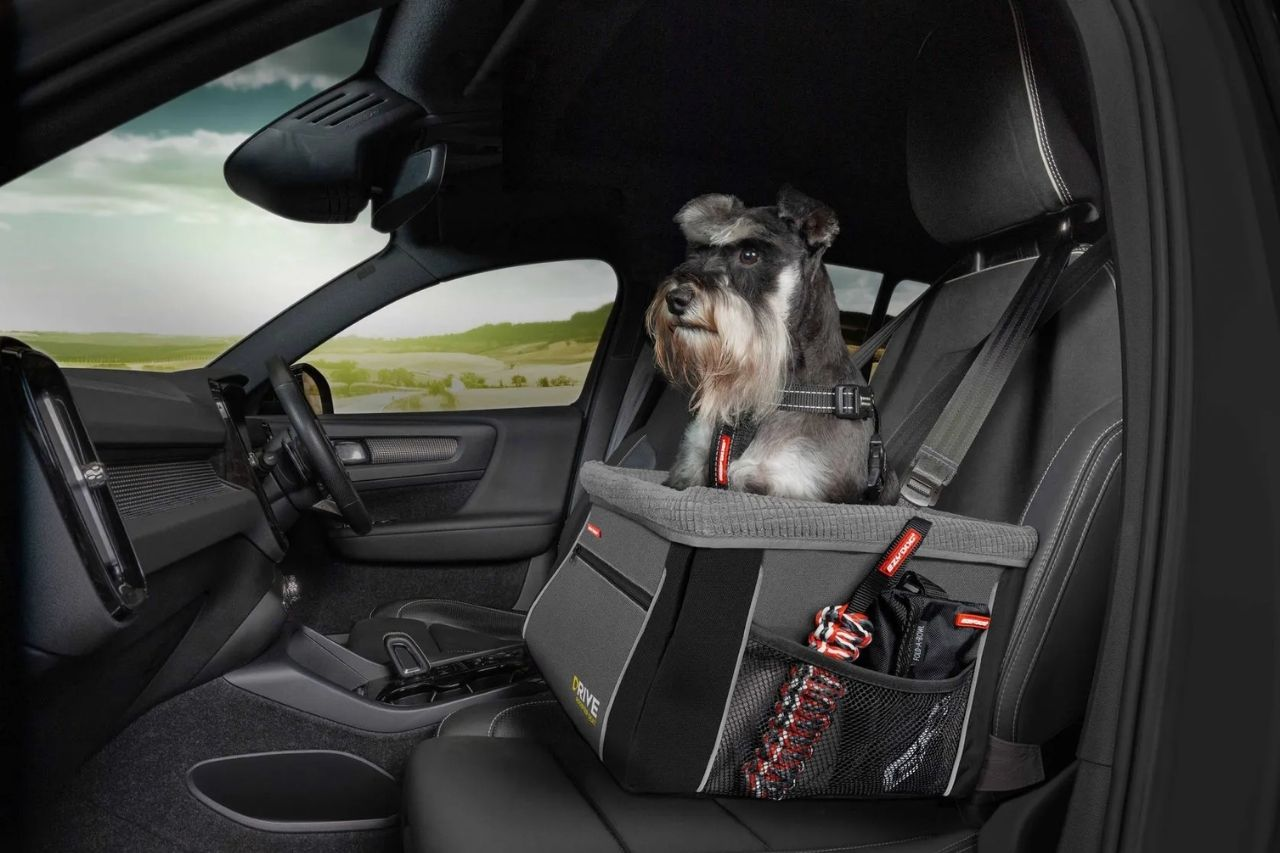
Dogs should travel with a suitable car restraint or an appropriately secured crate or carrier, following the equipment and vehicle instructions. Do not attach a travel restraint to a collar or let a dog travel on someone’s lap. Keep heads inside the vehicle.
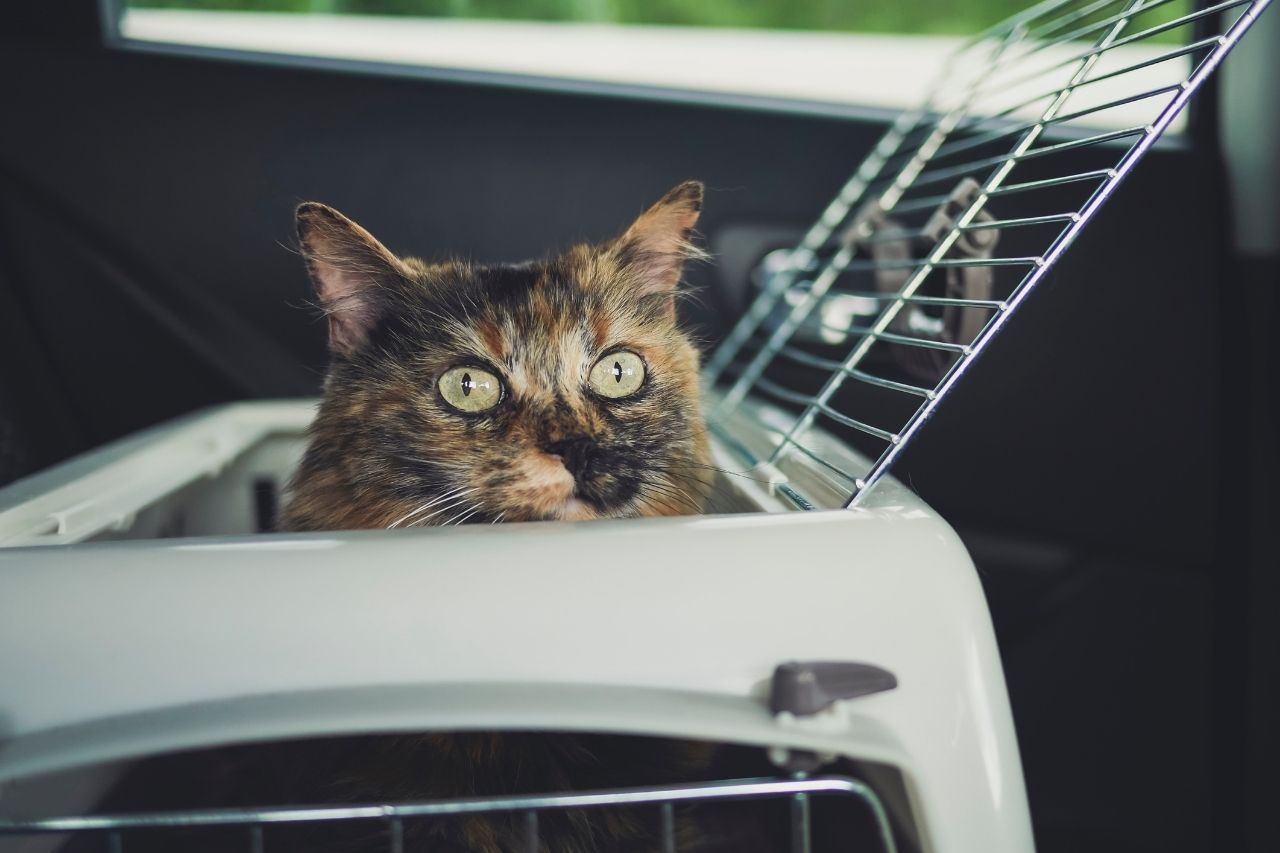
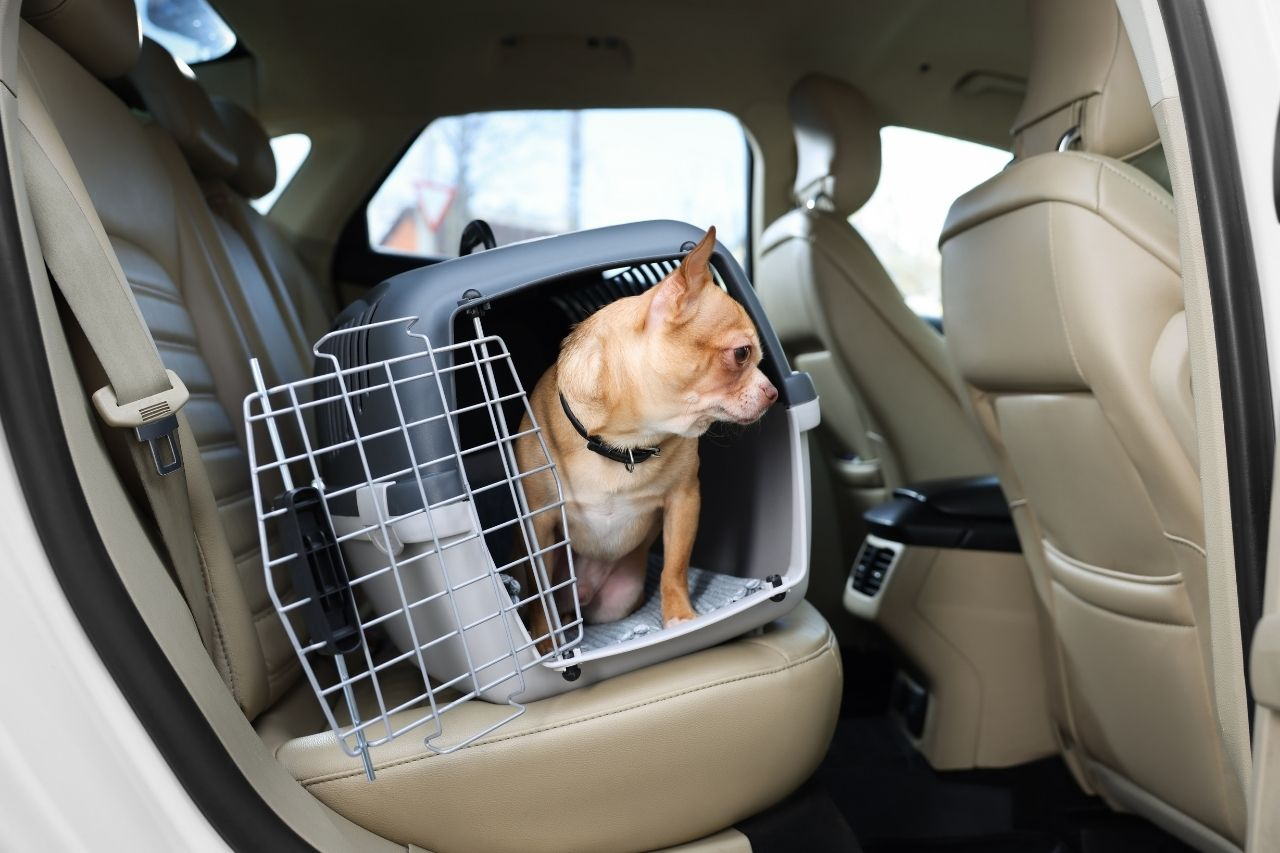
Cats should remain inside a sturdy, ventilated carrier. Secure it as the manufacturer directs, keep ventilation clear and check the door latches before setting off. A roomy carrier is not automatically a suitable car restraint, so check how your chosen model is meant to be secured.
For carrier options, browse M-PETS. The M-PETS Viaggio Cat and Dog Carrier comes in different sizes; measure your pet and check the model’s securing instructions rather than choosing by breed alone. Check transport-specific requirements before choosing it for your journey.
Stop where you can safely manage doors, leads and traffic. Have a dog’s lead attached before opening the car. Keep a cat’s carrier shut at roadside stops; offer water and check them only in a secure, enclosed space. Plan extra time rather than trying to push through a distressed journey.
Pack a small, useful travel kit
- Food, bowls and fresh drinking water, plus a way to offer it during stops.
- A lead, harness where appropriate, waste bags and familiar bedding.
- A cat’s usual litter, tray and cleaning supplies if they are coming along.
- Towels, spare bedding and pet-appropriate wipes for muddy arrivals.
- Any required travel documents, prescribed medicine and emergency contact details.
A portable drinking option such as the ThirstyDog Original Smart Dog Water Bottle can simplify dog-walking stops. Explore ThirstyDog if you need a bottle designed for dogs, and carry enough fresh water to refill it.
The M-PETS Bamboo Extra Large Cat & Dog Cleaning Wipes are labelled for dogs and cats and can be useful for small clean-ups. Follow the pack directions and keep wipes away from eyes and other sensitive areas; they do not replace bathing when it is needed.
Check ferry and flight rules directly
For a ferry journey, confirm where your pet will stay, what access you will have during the crossing and whether you need to book a pet space. Do not assume you can return to your vehicle whenever you like.
For domestic flights, contact the airline before booking. Acceptance, route restrictions, carrier construction, measurements and paperwork depend on the operator and your pet. Air New Zealand carries eligible pets on domestic services, but a carrier sold for everyday travel is not automatically accepted for flying. Check the current requirements for the exact model and journey.
If your pet has breathing difficulties, repeated travel-related vomiting or severe distress, speak to your vet before committing to the journey. Do not use sedatives or human travel medicine unless your vet specifically prescribes them.
Make arrival quieter than departure
Check the destination before letting your pet explore. Look for gaps in fencing, open gates, accessible bait, unfamiliar plants and places where a cat could hide or escape. Establish a quiet area with water, familiar bedding and, for cats, a litter tray before opening the carrier.
Keep dogs on lead while you learn the surroundings. For cats, use a secure indoor base rather than assuming they will navigate a temporary home safely. Keep meals and rest as familiar as the trip allows.
Check local dog-access signs, seasonal beach restrictions and wildlife rules. A GPS device, if you use one, is a back-up tool rather than a replacement for containment, identification and supervision.
Plan for summer conditions
Choose cooler times for walks, take fresh water and offer shaded rest. Adjust the outing to your pet, not just the distance on a map. Never leave a dog or cat in a parked car, even for a quick stop.
Keep water activities supervised and avoid unfamiliar water with warning signs, suspected toxic algae or other hazards. A holiday does not need a full schedule: a short sniffing walk and a settled afternoon may suit your pet better than another excursion.
If your pet collapses, struggles to breathe or appears severely overheated, start cooling with water cooler than their body, keep water away from the face and seek urgent veterinary help. Do not drape a wet towel over them.
Frequently asked questions
What should I check before booking pet-friendly accommodation?
Confirm which pets are accepted, fencing, sleeping arrangements, extra fees and whether your pet can be left alone. Ask about the exact property rather than relying only on a pet-friendly search filter.
Can I open my cat’s carrier during a roadside break?
Not in an open car park or beside a road. Keep the carrier closed until you are in a secure, enclosed space where your cat cannot slip through an open door.
How do I choose the right carrier size?
Measure your pet and compare those measurements with the manufacturer’s guide. They need room to stand, turn around and lie comfortably. For flying, the airline’s current requirements also apply.
Should I change my pet’s food for a holiday?
Pack their usual food and keep meals familiar. A holiday is not a useful reason to make a sudden diet change, especially when travel already alters their routine.
Can I take my dog to every NZ beach?
No. Dog-access rules vary by location and may change seasonally. Check council information and signs at the destination, including wildlife protection and on-lead areas.
What if my pet cannot join our day trips?
Arrange a suitable sitter, boarding option or activity they can comfortably join. Do not leave them in a car, and check accommodation rules before leaving them alone at the property.
Pack for your next pet-friendly trip
Choose items that suit your pet, check sizing and follow each product’s directions.
Explore pet travel essentials