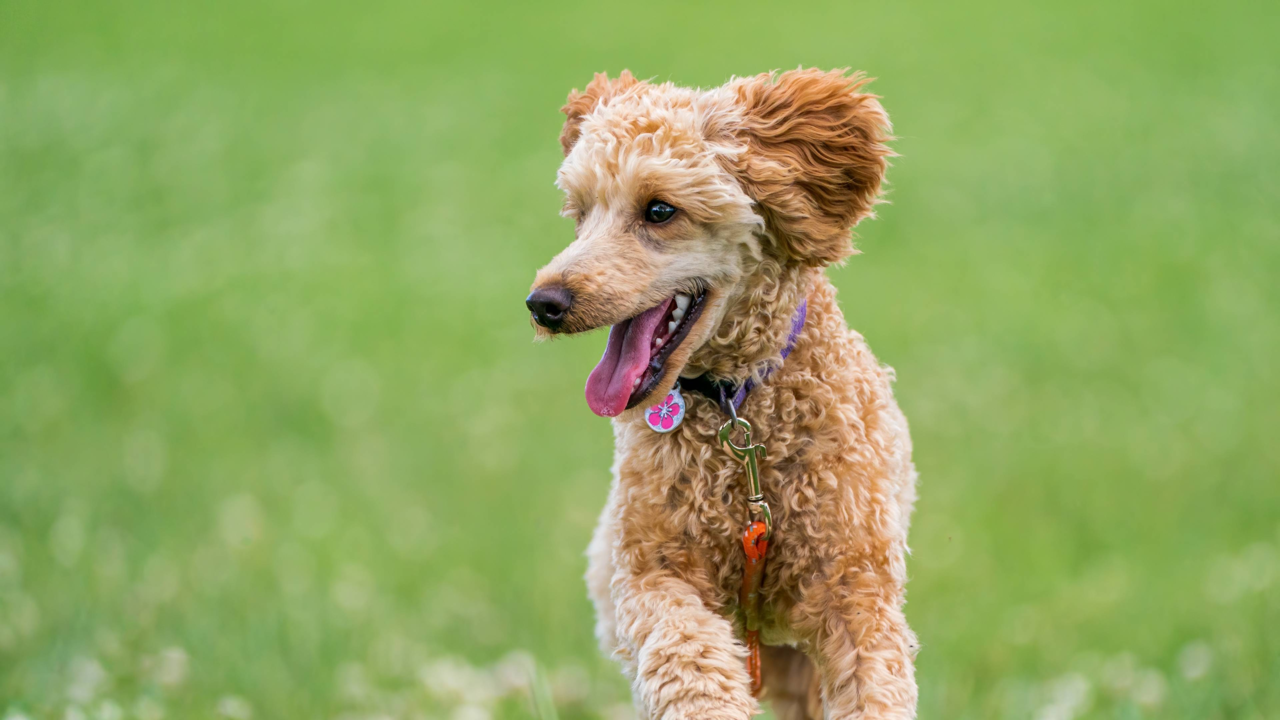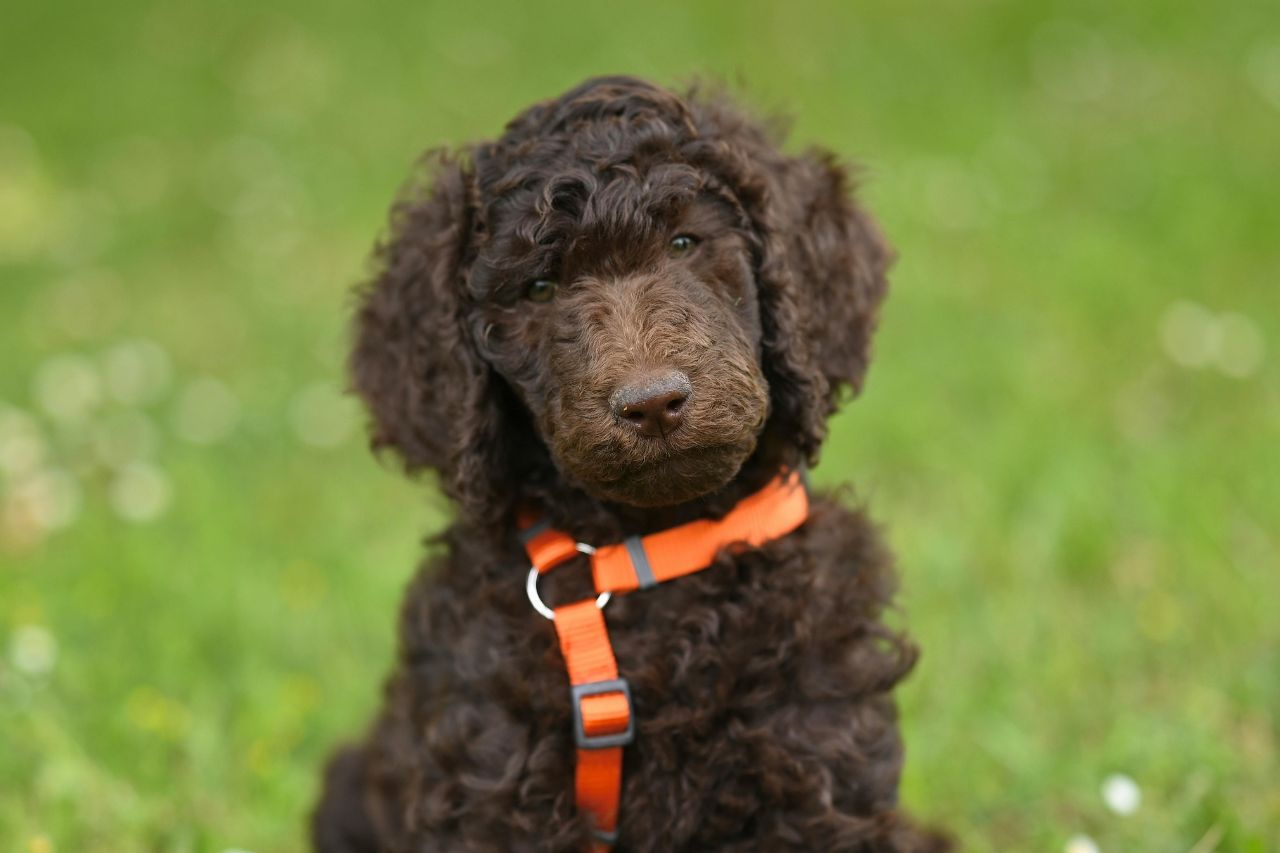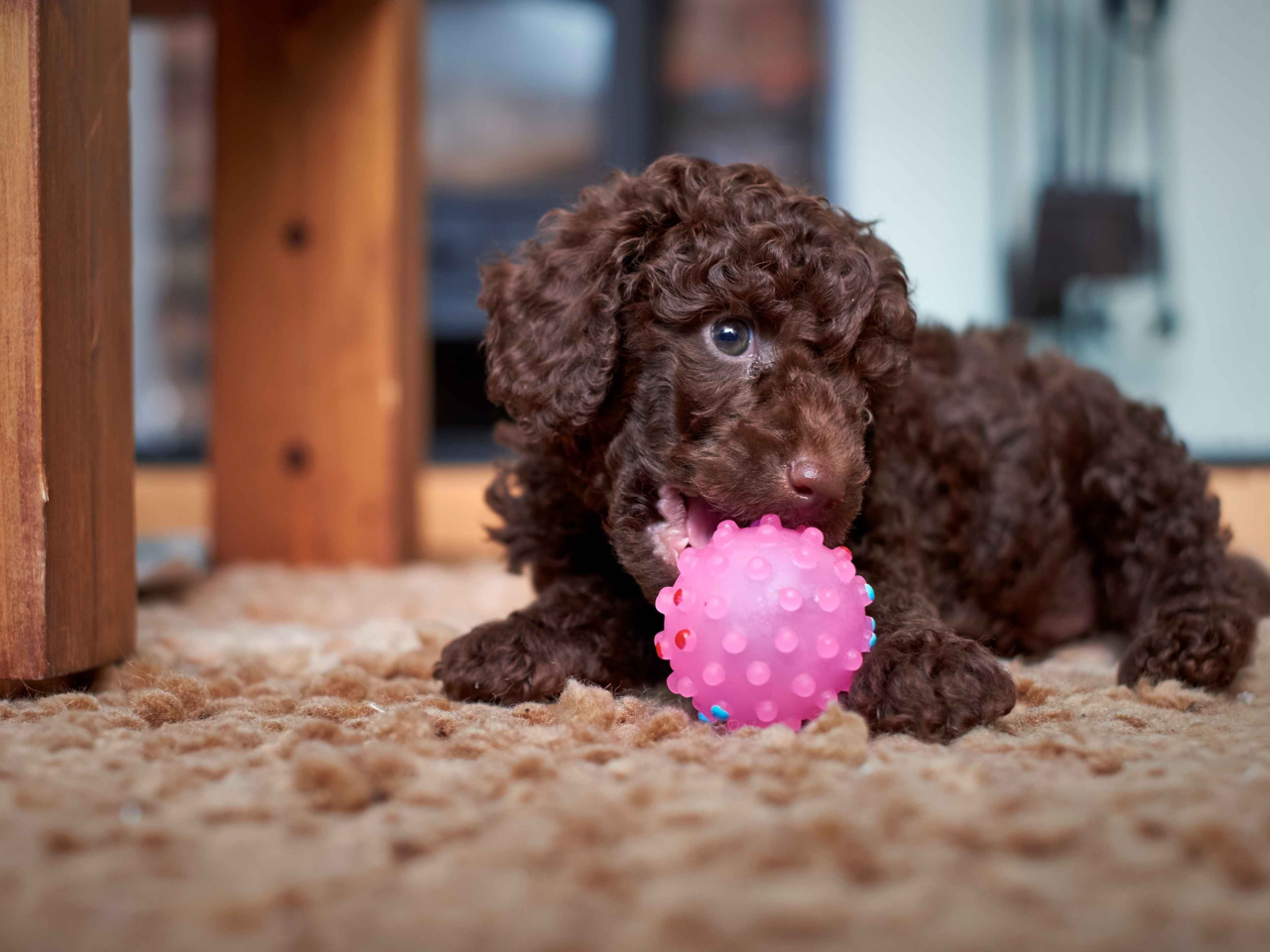
Few breeds are as rewarding to train as a Poodle. Behind the show-ring haircut sits one of the most intelligent dogs you can own, a working water retriever that learns fast, reads your mood, and genuinely enjoys the back-and-forth of a training session. Toy, Miniature or Standard, the brain is the same: quick, sensitive, and always looking for the next puzzle to solve.
That cleverness is a gift and a catch. A Poodle who is given a job and clear, kind rules becomes a delight to live with. A Poodle who is bored or handled harshly invents their own entertainment, and it is rarely the kind you want. Here is a practical, NZ-focused guide to training a Poodle at home, built around the way they actually think.
Quick Answer
Poodles are highly intelligent, sensitive and eager to please, which makes them very trainable as long as sessions stay short, positive and mentally interesting. Use reward-based training with a clicker or marker word and tiny high-value treats, keep sessions to 5 to 10 minutes, and lean heavily into mental enrichment (puzzle feeders, snuffle mats, trick training) because a Poodle bored is a Poodle in trouble. Start with name recognition and "sit" in week one, build to recall and loose-lead walking over the first couple of months, and avoid harsh corrections, they shut a sensitive Poodle down fast.
Understanding the Poodle Brain
Poodles were bred as water retrievers, dogs that worked closely with people, took direction at a distance, and thought on their feet. That heritage shows up in the living room. They watch you constantly, they pick up routines (and loopholes) quickly, and they thrive when training feels like a shared game rather than a list of orders.
Exceptionally intelligent
Poodles are consistently rated among the most trainable breeds. They learn new cues in very few repetitions, which means good habits and bad ones both stick fast.
Sensitive to your tone
Poodles read body language and voice closely. Calm, upbeat handling gets the best from them, while harsh corrections cause them to worry and switch off.
Easily bored
A clever dog with nothing to do finds a job. Bored Poodles bark, dig, chew, or invent attention-seeking games. Mental work is not optional for this breed.
Strongly people-focused
Most Poodles want to be with their person and aim to please. That bond is your single biggest training advantage, so make yourself the source of all the good stuff.
Sometimes a little anxious
The same sensitivity that makes them trainable can tip into nervousness around new people, noises or being left alone. Early, gentle exposure pays off for life.
Athletic and quick
Standards especially are real athletes, and even Toys are nimble and fast. Channel that energy into recall games, trick work and scent activities rather than letting it bubble over.
Set Up for Training Success
A few simple things make Poodle training easier before you teach a single cue.
Get the right treats
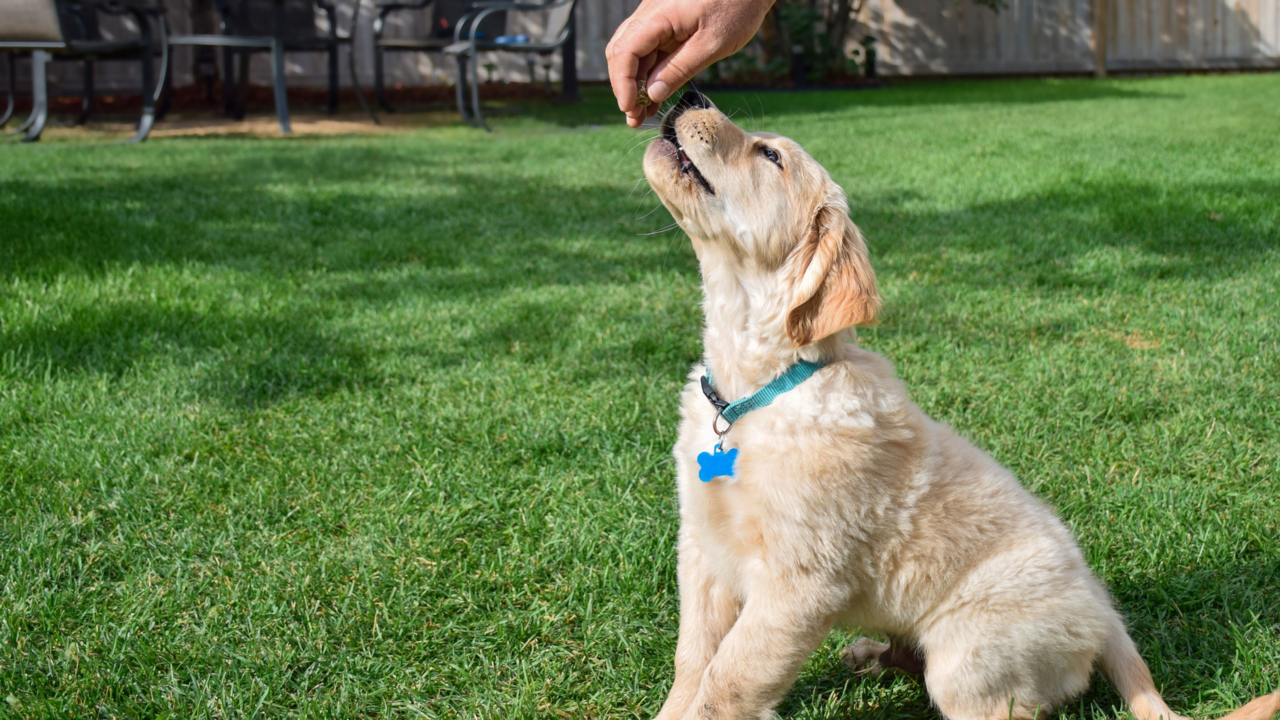
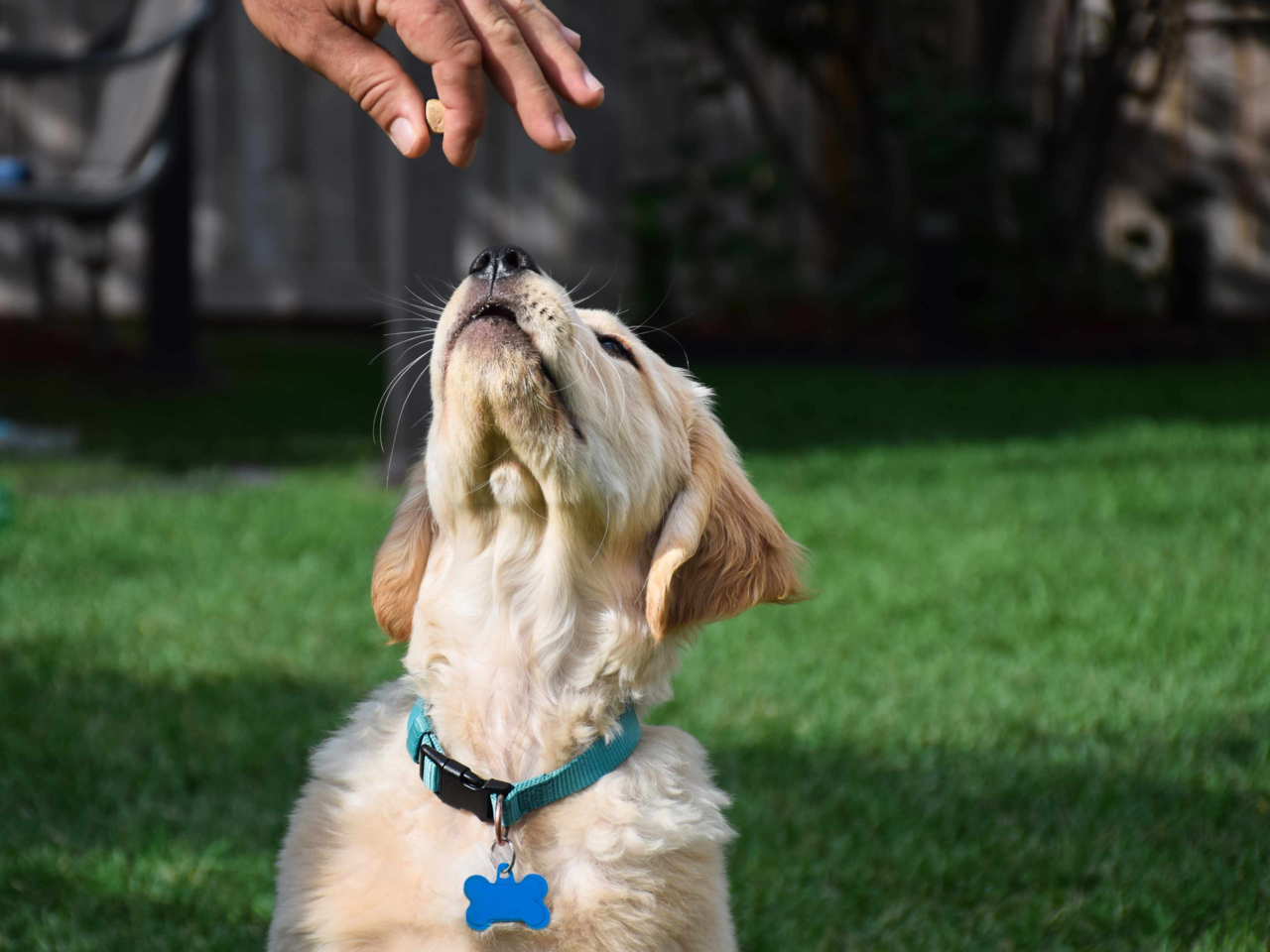
Tiny, soft and high-value is the goal. A Poodle treat should be about the size of a pea so you can reward often without overfeeding. Air-dried liver, freeze-dried meat, and purpose-made training bites are ideal, and they break up small for fast-paced sessions.
Use a clicker or marker word
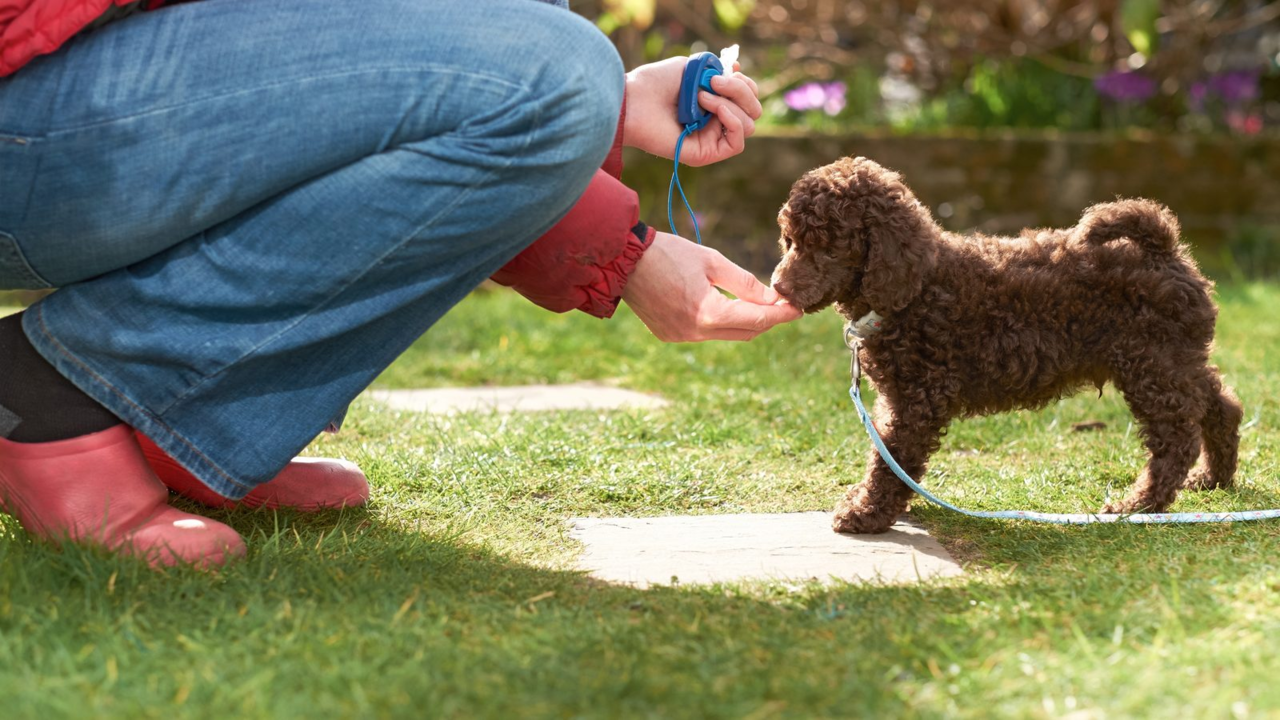
A clicker, or a clear marker word like "yes", tells your Poodle the precise instant they earned the reward. This breed picks up the click-treat pattern almost immediately, and that clarity speeds up everything else you teach. A target stick is handy too for shaping movement and trick work.
Keep treats handy and rewards portable
A treat pouch on your belt is not just for puppy class. Catching and rewarding good behaviour in ordinary life (settling on a mat, staying calm when the doorbell goes) teaches faster than any structured session. A long training line gives you safe control while you build recall.
The First Six Weeks: A Step-by-Step Plan
Poodles do best with short, frequent sessions rather than long ones. Aim for 5 to 10 minutes, two or three times a day, and always finish on a win while they are still keen.
Week 1: Name and "sit"
Spend the whole first week getting your Poodle to look at you when you say their name, and to sit on cue. Tiny treat for every name response, tiny treat for every voluntary sit. You are building the habit of paying attention to you, which everything else relies on.
Week 2: "Look" and "wait"
"Look" (or "watch me") brings their focus to you on cue, which is gold for a clever, easily distracted breed. "Wait" at doorways, food bowls and before getting out of the car teaches impulse control without it ever feeling like a battle.
Week 3: Loose-lead walking
Start in the house, then the garden, then short trips outside. Reward your Poodle for staying near you with a loose lead. Stop walking the moment they pull, move off again when the lead softens, and repeat. Consistency here saves years of pulling.
Week 4: Recall
Begin indoors on a long line in a quiet room. Say their name plus "come", reward generously the instant they arrive, and never call them to something they dislike. A reliable recall is what lets you give an athletic Poodle proper off-lead freedom in safe spaces.
Week 5: Trick training and shaping
This is where Poodles shine. Spin, paw, roll over, weave through your legs, anything that uses their brain. Tricks are not just for show, they build focus, drain mental energy, and deepen the bond. Use your clicker and target stick to shape each new movement.
Week 6: Settle
"Settle" or "place" teaches your Poodle to lie calmly on a mat or bed while life carries on around them. For a busy, watchful breed this is one of the most valuable cues you can teach, because a dog who can switch off is a calmer companion in every setting.
Mental Enrichment Is Non-Negotiable
With a breed this clever, mental work matters as much as physical exercise. A Poodle who gets to use their brain every day is far easier to live with than one running on physical exercise alone. Puzzle feeders, snuffle mats and stuffable toys turn mealtimes into problem-solving and take the edge off that busy mind.
Scatter their kibble through a snuffle mat, smear a little wet food into a puzzle, or freeze a stuffed toy for a longer challenge. Ten minutes of sniffing and problem-solving tires a Poodle more than another lap of the block.
Toilet Training and House Manners
Poodles are clean, quick-learning dogs, so toilet training usually goes smoothly with a consistent routine. Take them out frequently (after every meal, nap and play session), reward heavily the moment they go in the right spot, and clean any accidents with an enzyme cleaner so the scent does not draw them back. Toy and Miniature Poodles have smaller bladders, so they need more frequent trips early on.
Socialisation and Confidence
Because Poodles can lean toward nervousness, calm and positive early experiences are some of the most important training you will ever do. Introduce your Poodle gently to different people, friendly dogs, household noises, car trips and handling, always keeping it below the level that worries them and pairing each new thing with treats and praise. A well-socialised Poodle grows into a confident, easygoing adult.
A note on separation
Poodles bond closely and can struggle with being left alone. Build alone-time gradually from the start, leave them with a stuffed toy or puzzle, and keep arrivals and departures low-key so coming and going feels unremarkable rather than dramatic.
What to Avoid
- Harsh corrections. Poodles are sensitive and shut down or grow anxious with rough handling. Stay calm and positive, ignore mistakes, and reward the wins.
- Boredom. An under-stimulated Poodle invents jobs, and they are usually noisy or destructive ones. Build daily mental enrichment into the routine.
- Long, repetitive sessions. A clever dog gets bored of drilling the same cue. Keep sessions short, varied and fun, and stop while they are still keen.
- Inconsistency between family members. Poodles spot loopholes fast. If one person allows jumping up and another does not, the dog learns nothing useful. Agree the rules and stick to them.
- Skipping socialisation. A poorly socialised Poodle can become nervous or reactive. Calm, controlled exposure from puppyhood is one of the best investments you can make.
- Reinforcing anxious attention-seeking. Rewarding clinginess or whining with fuss teaches them to do more of it. Reward calm, settled behaviour instead.
Frequently Asked Questions
Are Poodles easy to train?
Yes, Poodles are among the easiest breeds to train thanks to their intelligence and desire to please. The main thing to manage is their need for mental stimulation and variety, a bored Poodle learns bad habits as quickly as good ones. Keep sessions short, positive and interesting and you will see fast progress.
At what age should I start training my Poodle?
The day they come home. Basics like name recognition, "sit", "look" and toilet training can start at 8 to 10 weeks. Poodle puppies learn quickly but have short attention spans, so think 2 to 3 minutes per session and several short sessions a day.
Is training a Toy or Miniature Poodle different from a Standard?
The brain and the methods are the same across all three sizes, the difference is mostly logistics. Smaller Poodles have smaller bladders so need more frequent toilet trips, and they can be easier to accidentally "spoil" with small-dog rules. Standards have more physical energy and need more exercise alongside the mental work.
How do I stop my Poodle barking for attention?
Barking is often a clever dog asking for engagement. Make sure their mental and physical needs are genuinely being met, then avoid rewarding the barking with attention (even telling them off is attention). Reward the quiet, calm moments instead, and redirect to a known cue like "settle" before the barking ramps up.
How much exercise does a Poodle need?
It depends on size. Standards need a good hour or more of activity a day, while Toys and Miniatures do well on shorter walks plus play. Across all sizes, mental enrichment is just as important as physical exercise, so build in puzzle feeders, trick training and scent games every day.
Why is my Poodle anxious or clingy?
Poodles are sensitive, people-focused dogs, so some attachment is normal, but it can tip into separation anxiety if alone-time was never built up gradually. Practise short, low-key departures, leave them with a puzzle or stuffed toy, and reward calm independence. If anxiety is severe or ongoing, a clinic check or qualified behaviourist can help rule out other causes and set a plan.
How long does it take to train a Poodle?
Basic obedience usually comes together over 6 to 8 weeks of short daily sessions, and Poodles often learn faster than that. Reliable recall in distracting places takes months, and a genuinely well-mannered adult dog is a 12 to 18 month project. The early weeks set the tone, so make them positive.
Poodle Training Essentials at Petdirect
From training treats, clickers and treat pouches to puzzle feeders, snuffle mats and long training lines, find everything you need to set your Poodle up to succeed. Save with Autodeliver on the treats and food, and enjoy everyday member pricing as part of Pet Perks.
SHOP TRAINING ESSENTIALS