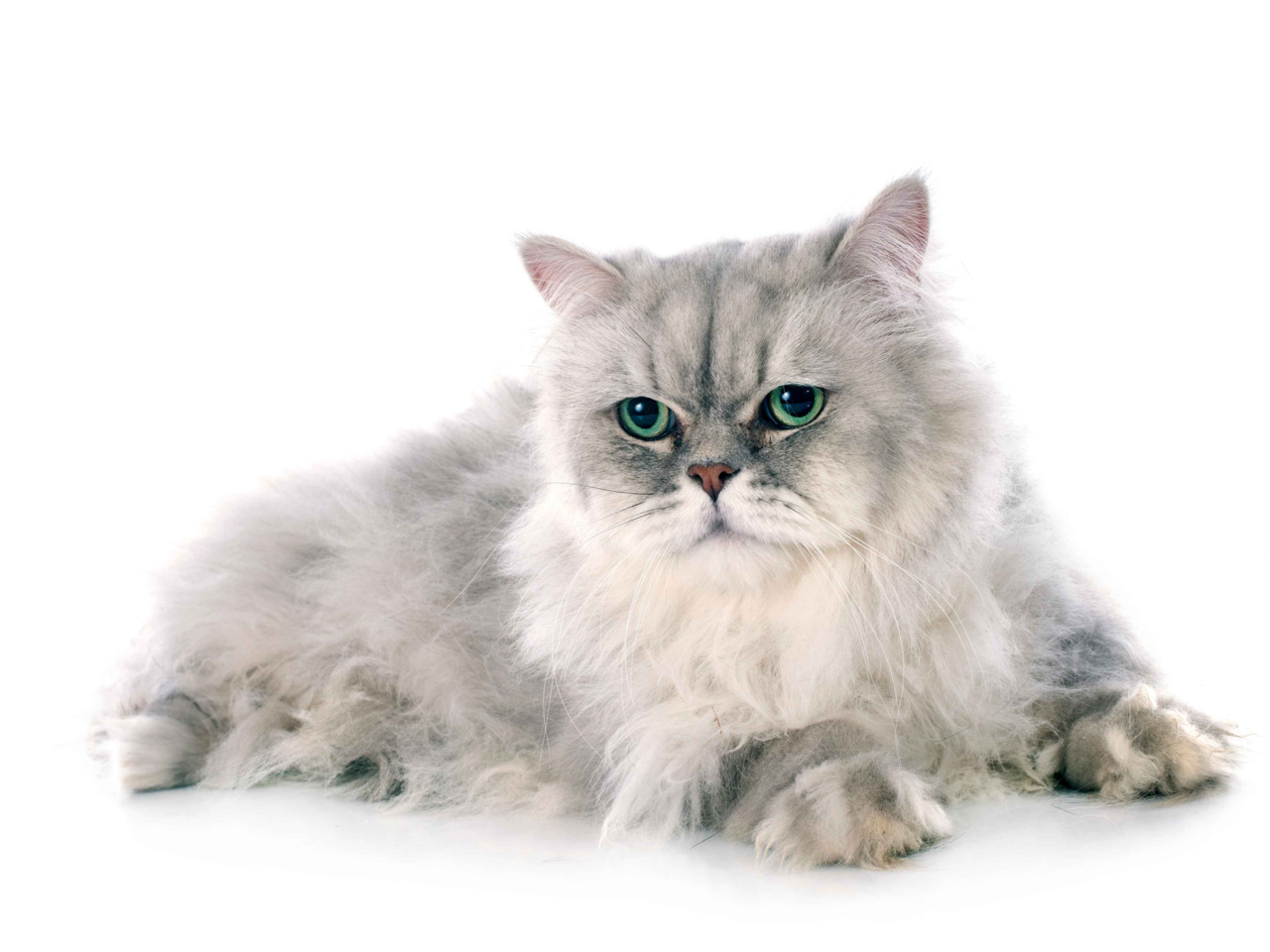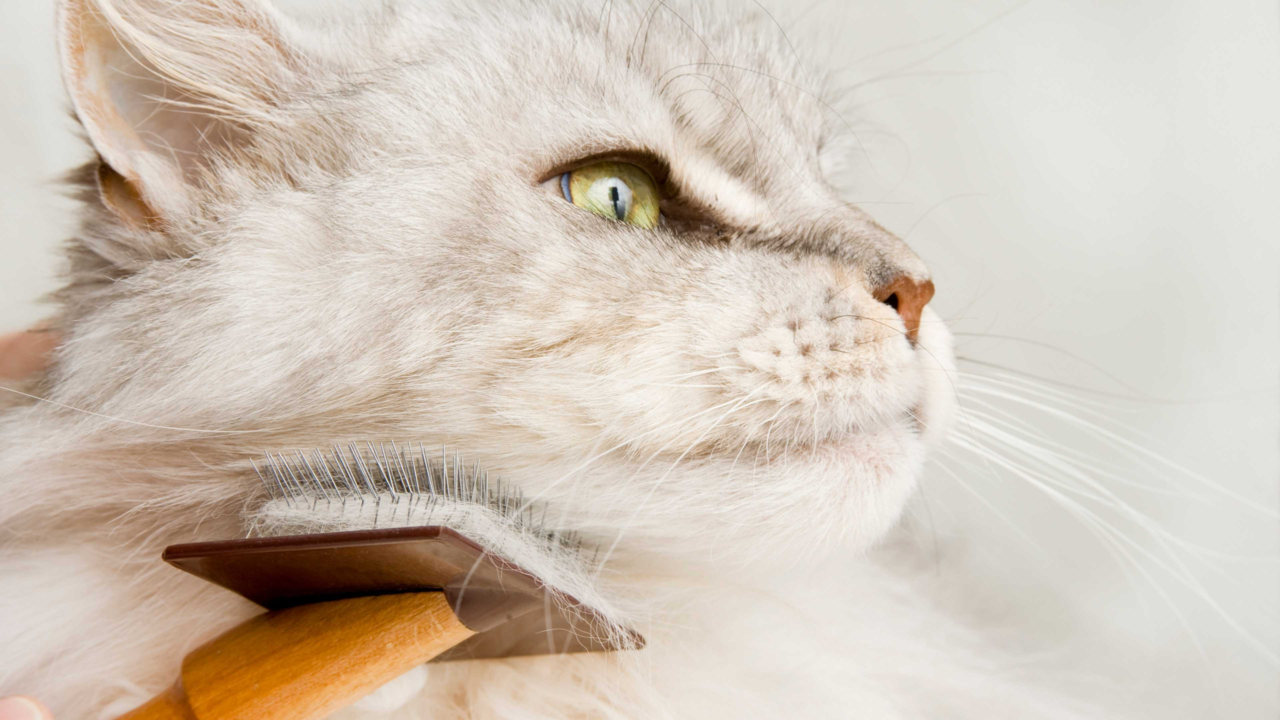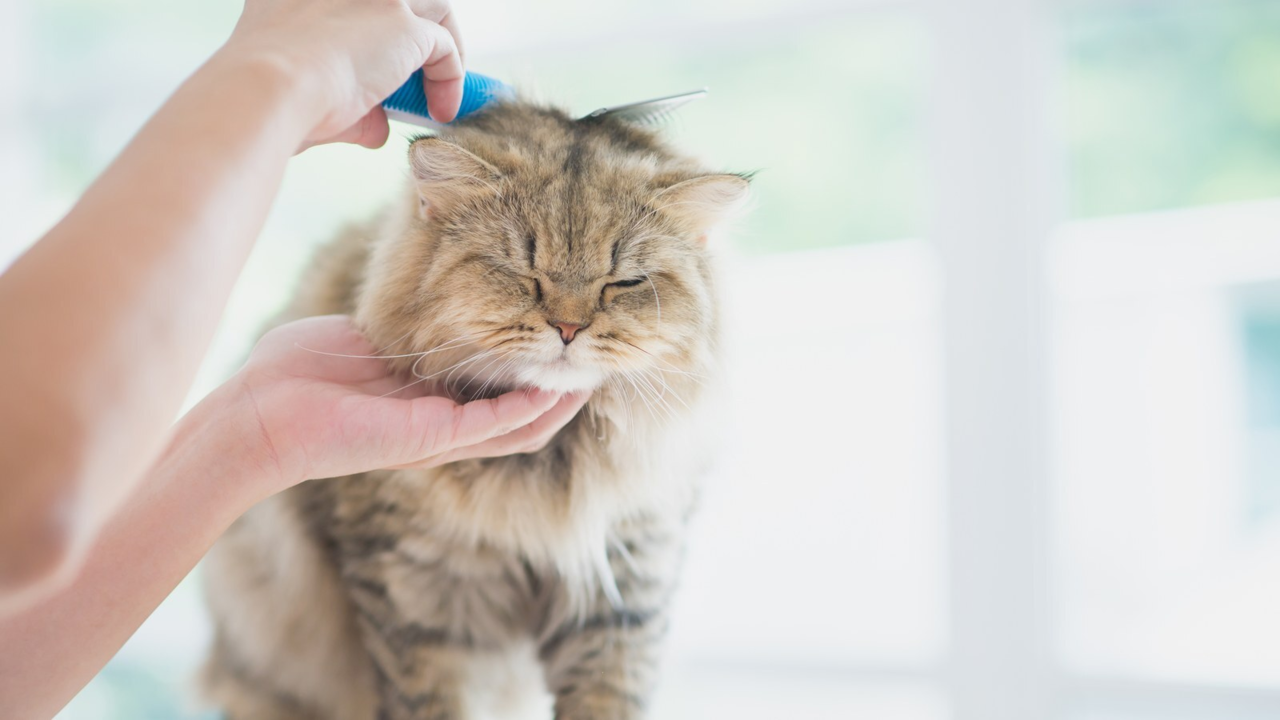
A Persian cat's long, dense coat looks wonderfully plush, but it can tangle faster than many short coats. Fine undercoat collects loose hair, while movement creates friction behind the ears, under the legs and around the chest. Waiting until the coat looks untidy can leave you with tight mats that are uncomfortable to remove.
A short daily routine is usually easier for both of you than one long weekly session. The aim is to work through the full coat gently, keep the face clean and notice small knots before they tighten close to the skin.
Quick answer
Groom a Persian cat every day with a gentle brush and a metal comb that can check through to the skin. Work in small sections, support the coat above any knot and give extra attention to the armpits, belly, chest and behind the ears. Clean the flat face daily with a soft damp pad, and never use scissors to cut out a mat.
Why Persian coats need daily attention
Persian cats have a long topcoat and a thick undercoat. Loose hair does not always fall away on its own, so it can stay trapped and twist around neighbouring strands. A mat may begin as a tiny snag, then become denser whenever the cat moves or grooms.
Dense undercoat
Fine, fluffy hair can pack together beneath the visible topcoat. A surface brush may make the coat look smooth while leaving hidden tangles underneath.
High-friction areas
Behind the ears, under the front legs, between the back legs, around the chest and under the collar area are common places for knots to form.
Flat-face care
A Persian's face shape can allow moisture and debris to gather near the eyes and in facial folds, so gentle daily cleaning is part of coat care.
A five-minute check counts
If your cat will not settle for a full groom, check one part of the body at a time. A small session in the morning and another in the evening can be more successful than asking for perfect patience all at once.
Grooming tools that suit a Persian coat
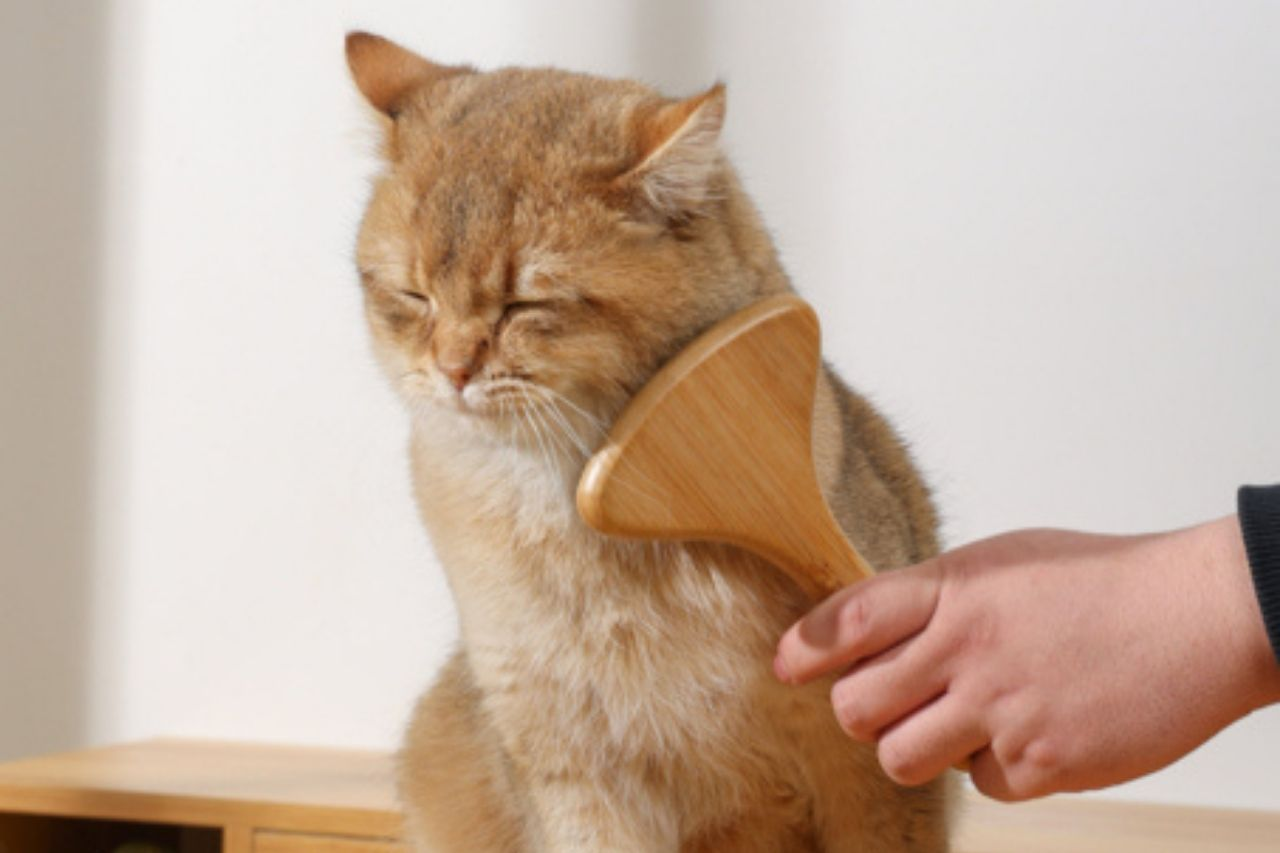
One tool rarely does every job. A pin or slicker brush helps lift loose hair and separate the outer coat, while a metal comb checks whether you have reached through the dense layers. The comb is the final test: if it moves smoothly from the skin outwards, that section is clear.
A rotating-tooth rake can help with loose undercoat when used lightly and in the direction of hair growth. Detangling spray may add slip to a small knot, but it should not be used to force a tool through a tight mat.
How to groom a Persian cat step by step
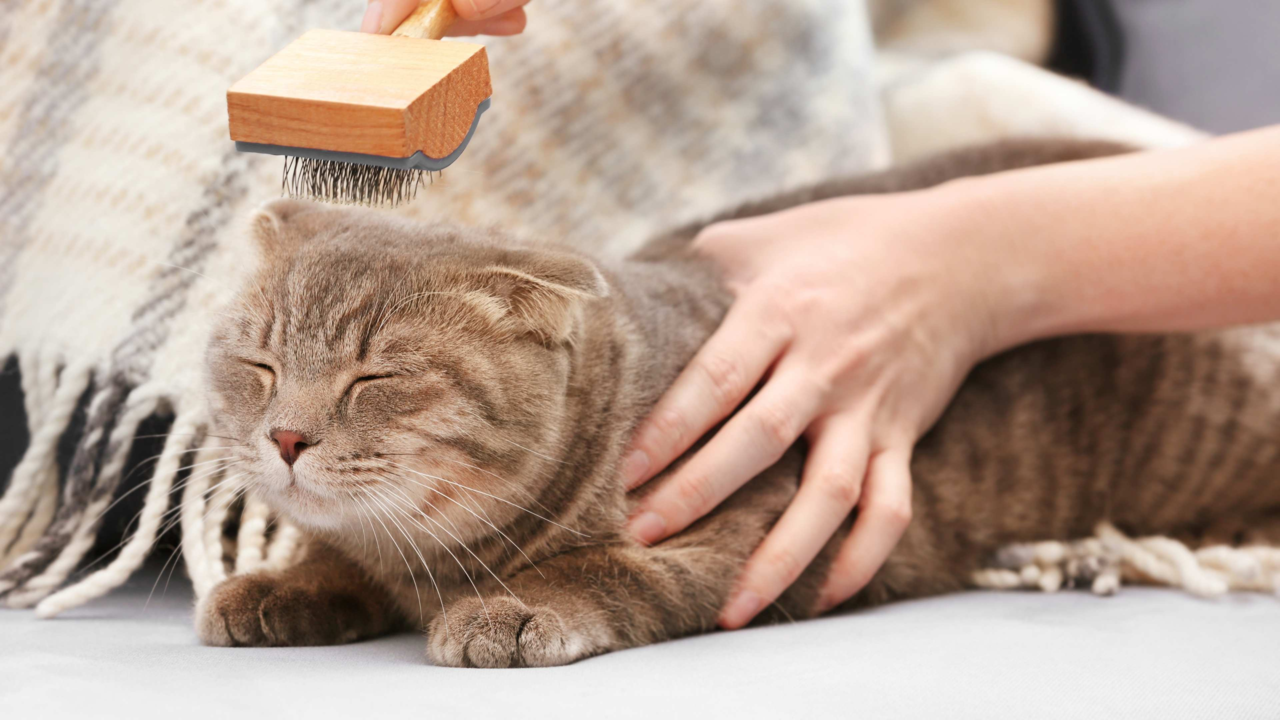
Choose a quiet place with good light and a non-slip surface. Keep the session calm, work with the direction of the coat and stop before your cat becomes wriggly or frustrated.
Let your cat settle
Start when your cat is relaxed rather than playful. Offer a familiar mat or towel, let them sniff the tools and begin with a few strokes in a favourite area.
Use your hands first
Run your fingers through the coat to find bumps or areas where the hair feels thick. This gives you a map of the places that need extra care before a brush touches them.
Brush the easy areas
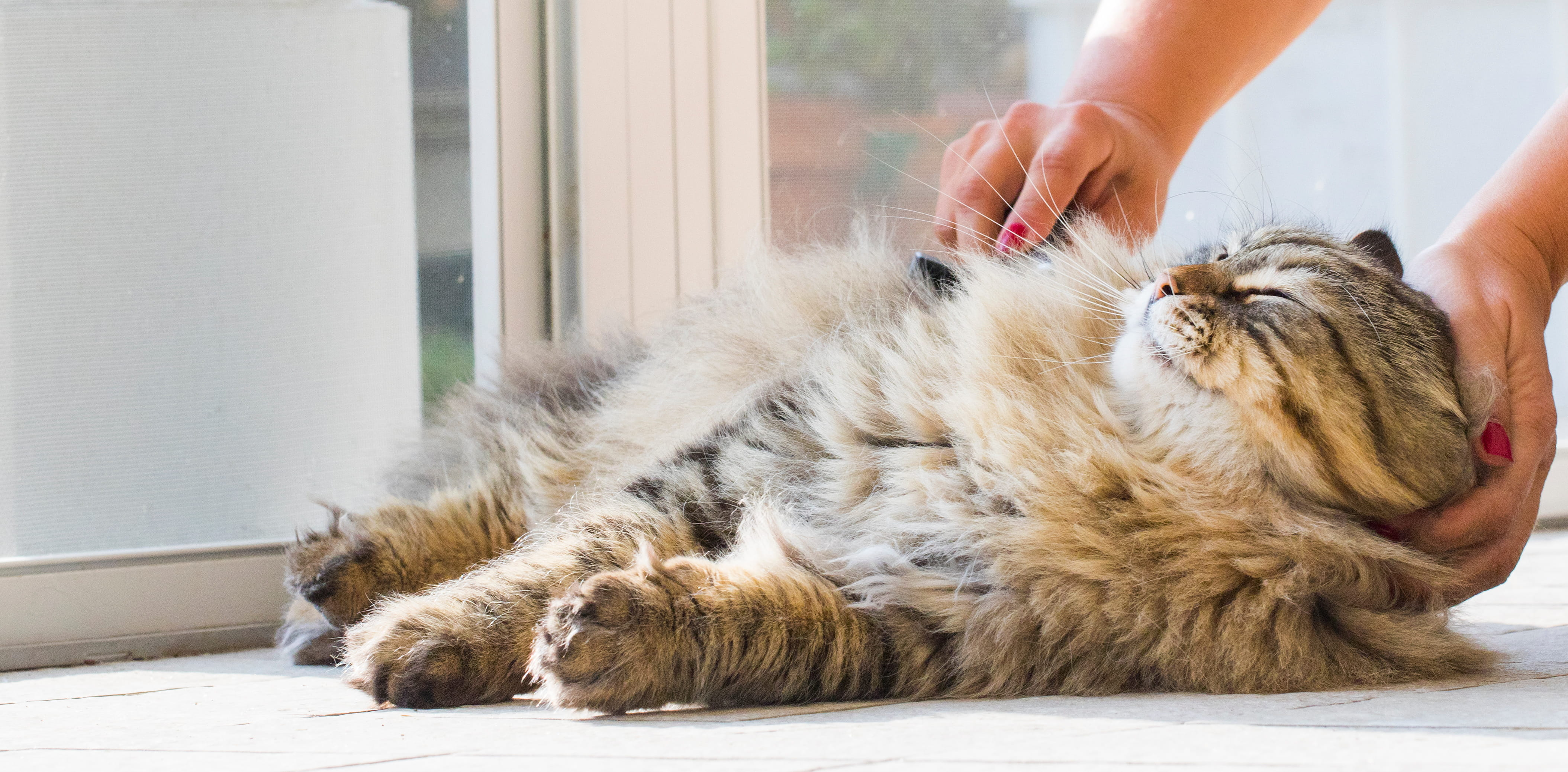
Begin along the back and sides with short, light strokes. Brush in the direction the hair grows and avoid repeatedly scraping the same patch of skin.
Work in small sections
Part the long coat so you can see where the hair meets the skin. Brush a narrow section, then check it with the comb before moving to the next.
Check the hidden spots
Gently inspect behind the ears, beneath the chin, under the front legs, across the belly and around the back legs. Do not pull a limb into an awkward position to reach underneath.
Comb from skin to tip
Use a metal comb to check each area. If it catches, return to a softer brush or separate the snag with your fingers rather than tugging the comb through.
Finish on a good note
End with an easy area, calm praise and a small reward. A predictable finish helps make tomorrow's grooming session easier.
How to loosen small knots without pulling
For a loose knot, hold the hair close to the skin so your fingers absorb the tension. Start at the outer end of the knot and tease apart a few hairs at a time with your fingers or the end teeth of a comb. Work towards the skin only as the knot loosens.
If the knot is dry, a small amount of cat-suitable detangling spray may help. Apply it away from the face, follow the label directions and give it time to spread through the hair before trying again. Stop if the skin moves with the mat, your cat reacts sharply or the knot will not separate easily.
Never cut a mat with scissors
Cat skin is thin and can be pulled up inside a mat, where it is difficult to see. Scissors can cut skin even when the blades appear to be safely above the body. Tight, large or skin-level mats should be clipped out by an experienced professional groomer using suitable equipment.
Daily face cleaning for flat-faced Persians
A Persian's shortened face can make watery marks and damp facial folds more noticeable. Check the area around the eyes and nose every day, even when the rest of the coat looks clean.
- Wash your hands before you begin.
- Use a separate soft pad or cloth for each eye.
- Dampen the pad with clean lukewarm water and wipe from the inner corner outwards.
- Wipe facial folds gently, then pat the area dry so moisture is not left sitting against the skin.
- Do not put grooming sprays, shampoos or general cleaning wipes directly into the eyes.
Keep the motion light and never pick at dried material. Holding a damp pad over the area for a few seconds can soften it before you wipe.
Bathing and drying a Persian coat
Brushing is the foundation of Persian coat care, so a bath should not replace detangling. Water can tighten existing mats and make them harder to remove. Comb the coat first, then use a cat-suitable shampoo only when your cat genuinely needs a full wash.
Use lukewarm water, keep the face out of the direct flow and rinse until the coat feels completely free of product. Press water from the coat with a soft towel instead of rubbing. Keep your cat warm and continue gentle combing as the coat dries, provided they remain comfortable.
If a full bath is unnecessary, a soft damp cloth or suitable grooming wipe can freshen small areas of the coat. Avoid using human shampoo, heavily scented household wipes or products that are not labelled for cats.
When to pause the grooming session
Grooming should not become a wrestling match. Pause if your cat flattens their ears, lashes their tail, turns repeatedly towards the tool, tries to escape or becomes tense. Shorter sessions, a different tool or a softer touch may be needed next time.
Also stop if you find broken skin, swelling, a strong smell, discharge, bleeding, a painful lump or a mat that is pulling tightly at the skin. Do not keep brushing over a sore area or try to solve a skin-level mat at home.
Frequently asked questions
How often should I groom my Persian cat?
Persian cats usually need a brief grooming check every day. Daily attention removes loose hair and catches small knots before they become tight mats.
What brush is suitable for a Persian cat?
A gentle pin or slicker brush can separate the long coat, followed by a metal comb to check through the undercoat. Use light pressure and choose a tool your cat accepts calmly.
Can I cut a mat out of my Persian cat's coat?
No. Never use scissors on a cat mat because thin skin may be pulled up inside it. Ask an experienced professional groomer to clip out a tight or skin-level mat safely.
Should I brush a Persian cat before or after a bath?
Brush and comb before the bath. Water can tighten existing tangles. Once the coat is clean, gentle combing during drying can help the hair dry smoothly.
How do I clean my Persian cat's face?
Use clean lukewarm water and a soft pad, with a separate pad for each eye. Wipe from the inner corner outwards, clean facial folds gently and pat the area dry.
Why does my Persian cat keep getting mats?
The dense undercoat traps loose hair, while movement creates friction in areas such as the armpits, chest and behind the ears. Daily section-by-section combing helps prevent this build-up.
What if my Persian cat hates being brushed?
Reduce the session to a few calm strokes, begin in an area they enjoy and finish before they become frustrated. Build the routine slowly and reward relaxed behaviour.
Can I use human detangler or shampoo on my Persian cat?
No. Use grooming products labelled as suitable for cats and follow the directions carefully. Human products may contain fragrances or ingredients that are not appropriate for feline skin and grooming habits.
Build a gentle Persian grooming kit
Choose a brush for everyday loose hair, a comb for the final coat check and cat-suitable care products for the occasional tidy-up. Keeping the tools together makes a short daily routine easier to repeat.
SHOP CAT GROOMING