A Cocker Spaniel's flowing ears, feathered legs and medium-length double coat give the breed its distinctive look. Those same features can collect seeds, burrs and moisture, while soft feathering can tangle where the legs, collar and harness rub.
A practical home routine does not need to be complicated. Regular brushing, careful combing, weekly ear checks and a calm bath routine can keep the coat manageable between professional trims. This guide focuses on what Cocker Spaniel owners can safely do at home.
Quick answer
Brush your Cocker Spaniel thoroughly at least once a week, then follow with a comb to find hidden tangles. Check the ears weekly, especially after swimming, and arrange monthly trimming around the feet, face, neck, ears and tail. A bath about once a month may suit many Cockers, with extra rinsing after muddy or salty adventures. Work in small sections, use gentle tools and stop if grooming causes pain.
What makes a Cocker Spaniel coat different?
Cocker Spaniels have a long, medium-length double coat. The body coat can lie relatively flat, while the ears, chest, belly and legs carry softer feathering. This mix means one quick brush over the back is not enough. Tangles often sit close to the skin under the ears, behind the front legs, around the groin and beneath collars or harness straps.
Weekly full groom
Brush the whole coat in sections, then comb through it. Add brief touch-ups after wet walks or whenever the feathering has picked up debris.
Weekly ear check
Look around the outer ear and entrance for wax, redness, moisture, unusual odour or discharge. Do not push tools or cotton buds into the ear canal.
Monthly maintenance
Plan for a bath and nail trim around monthly, adjusting for your dog's activity and coat. Tidy the feet, face, neck, ears and tail as needed.
Which grooming tools work well for a Cocker Spaniel?
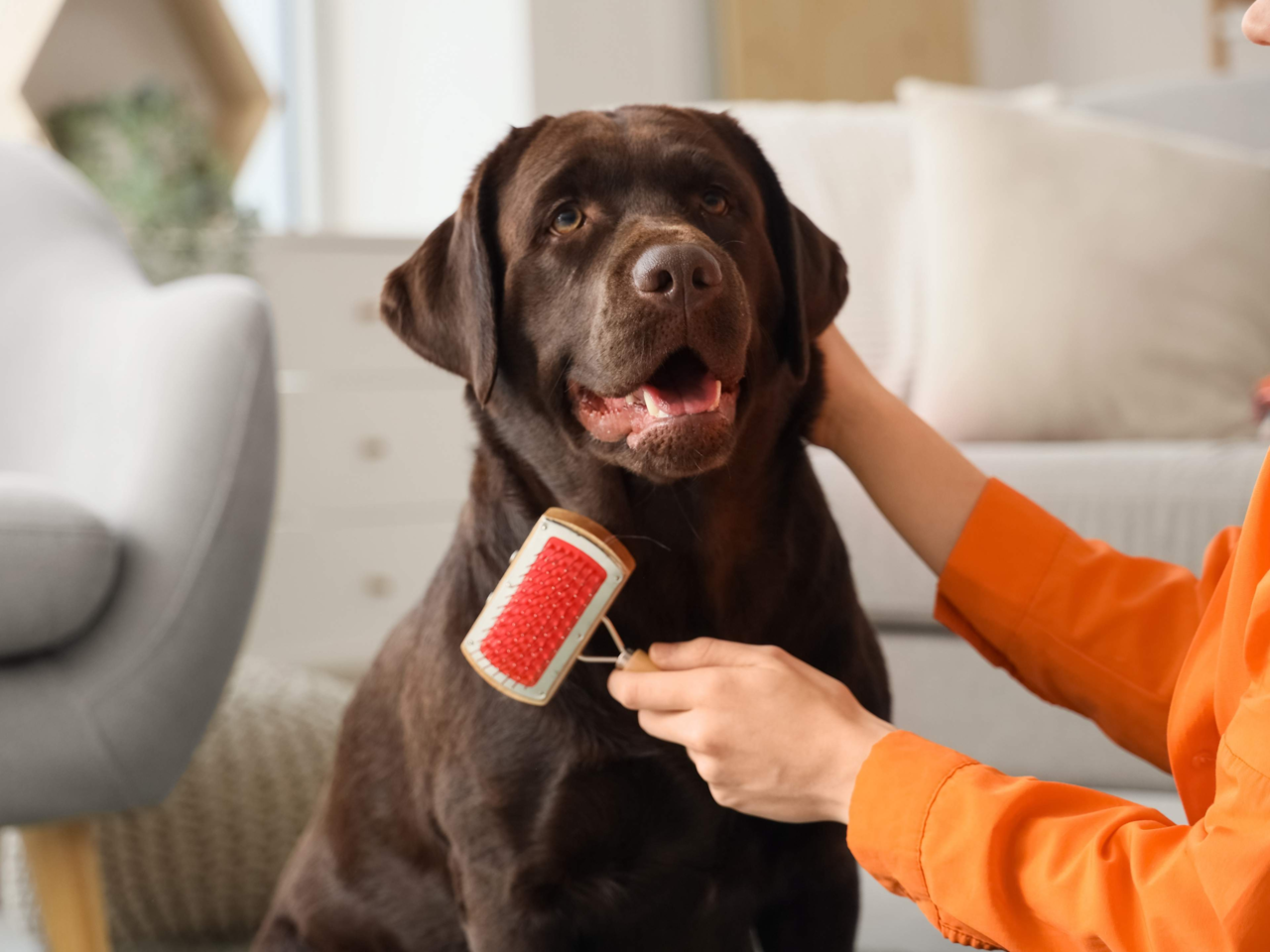
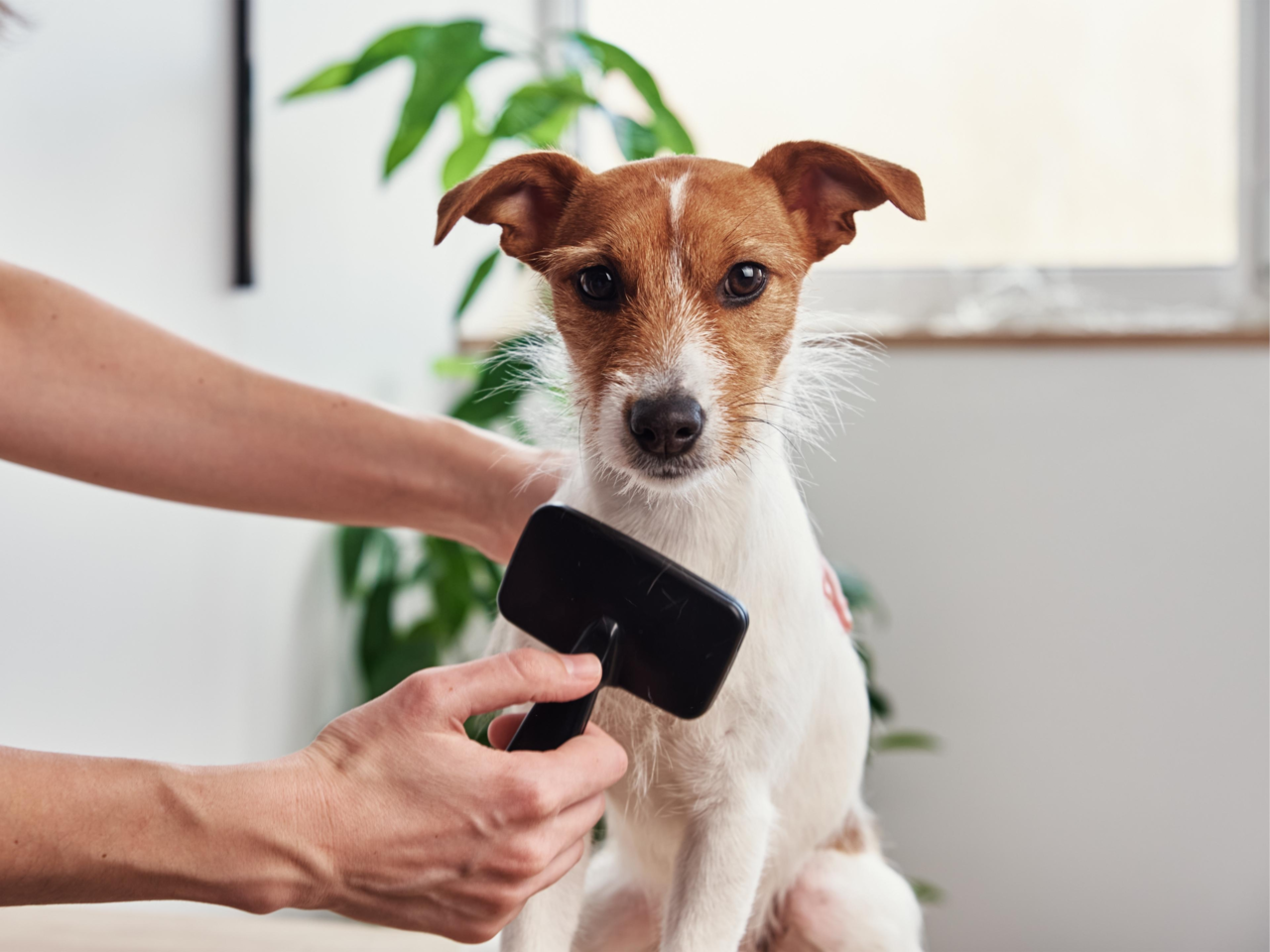
A small toolkit is more useful than one aggressive all-purpose tool. A slicker brush lifts loose coat and starts on light tangles. A pin brush can work through longer feathering and smooth the finish. A fine comb checks whether the brush has reached down through the coat.
The M-PETS Bamboo Cat and Dog Slicker Brush has fine rotating stainless-steel bristles in medium and large sizes. For longer areas, the M-PETS Bamboo Cat and Dog Double-Sided Pin Brush pairs rotating pins with finishing bristles. The Wahl 2-in-1 Dog Flea & Finishing Comb can be used as a finishing check for small knots and loose coat.
Check the skin as you go
Part the coat with your fingers and look for redness, sore patches, grass seeds or lumps. Do not drag a brush through a tight mat or brush repeatedly over irritated skin. A close mat, sudden painful area or embedded seed needs professional help rather than force.
How do you brush a Cocker Spaniel step by step?
Set up a calm space
Choose a non-slip surface with good light. Keep sessions short at first and reward stillness, gentle handling and breaks.
Inspect before brushing
Use your hands to feel behind the ears, under the front legs, along the belly and around harness contact points. Remove loose debris first.
Work in small sections
Lift a layer of coat and brush from near the skin towards the ends with light strokes. Support longer feathering with your free hand.
Ease tangles apart
Hold the hair above a knot to reduce pulling. Loosen the outer edges gradually. A detangling conditioner can help during the bath routine.
Follow with a comb
Pass a comb gently through the brushed section. If it catches, return to the brush rather than pulling the comb through resistance.
Finish on an easy win
Check paws and ears, then reward your dog. If they become restless, finish another section later instead of turning grooming into a struggle.
How should you care for a Cocker Spaniel's ears?
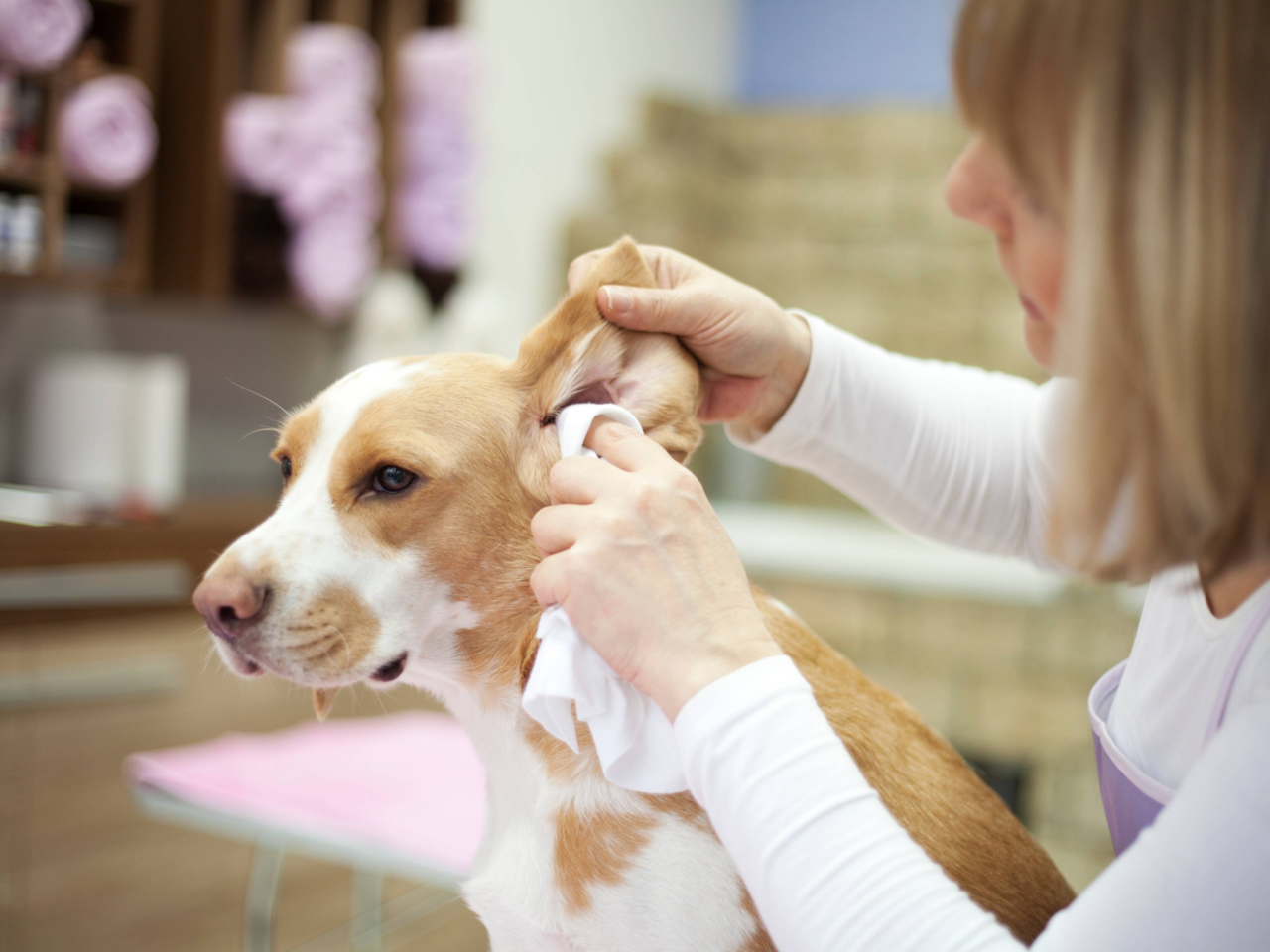
Long, hanging ears can hold warmth and moisture, so weekly checks are an important part of Cocker Spaniel grooming. Lift each ear flap gently and look at the visible outer area and canal entrance. The ear should not be scrubbed internally or explored with cotton buds.
If the ear looks clean and comfortable, leave it alone. If there is visible surface wax or your dog has been swimming, use a dog-specific cleaner according to its directions. The PAW Dog Gentle Ear Cleaner is a low-irritant, alcohol-free option intended for weekly use, after swimming or as directed by your veterinarian.
Stop home cleaning and contact your vet if you notice persistent head shaking, repeated scratching, pain, swelling, redness, strong odour or discharge. These signs need assessment rather than repeated cleaning.
How often should you bathe and trim a Cocker Spaniel?
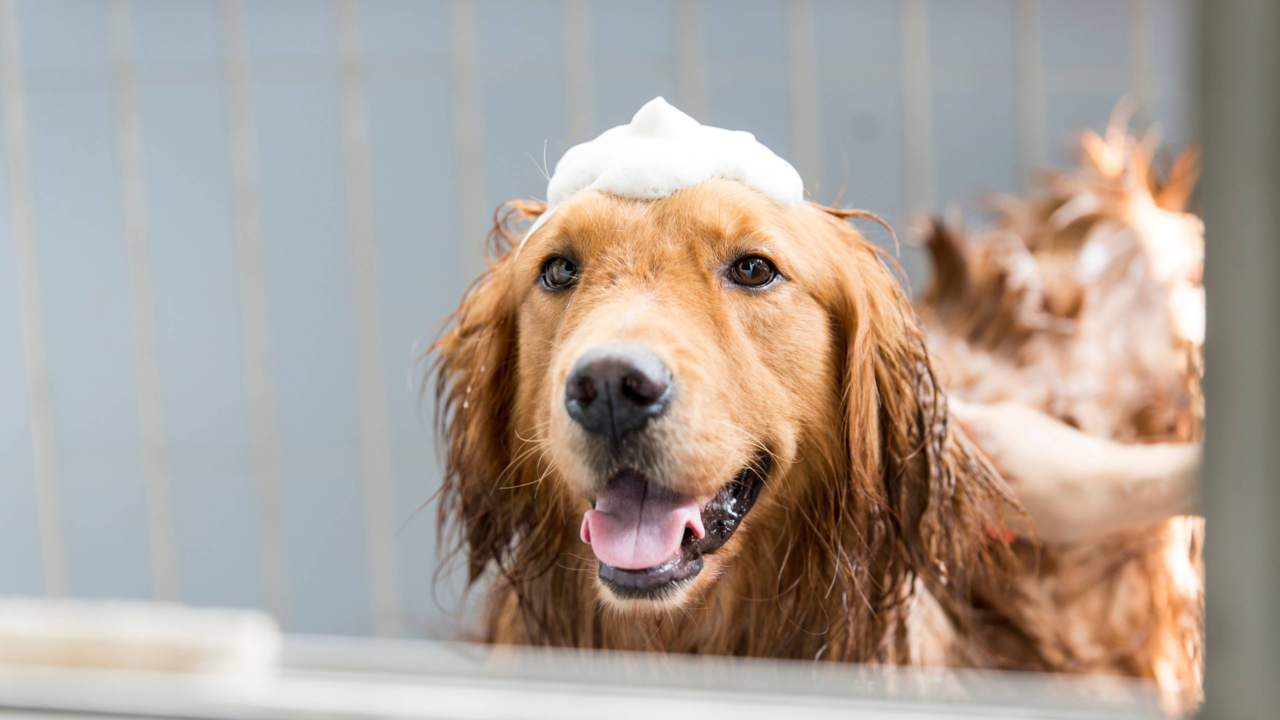
A bath around once a month may suit a typical Cocker Spaniel, but activity and coat condition matter. Rinse sooner after muddy, sandy or salty outings. Brush before bathing because water can tighten existing knots, and use lukewarm water with a dog shampoo.
Hartz Groomers Best Soothing Oatmeal Dog Shampoo is pH-balanced and designed for dogs. After shampooing, Yours Droolly Dog Detangling Conditioner can help soften stubborn knots and tangles. Rinse thoroughly, towel dry and keep the ears and skin folds dry without rubbing the coat into new tangles.
Monthly trimming around the feet, face, neck, ears and tail helps maintain a practical outline. Unless you are confident with coat clipping, leave close work, heavy mat removal and styling to a groomer. Check nail length at the same time, and make tooth brushing part of the wider care routine.
What common Cocker Spaniel grooming mistakes should you avoid?
- Brushing only the top coat while leaving tangles hidden near the skin.
- Pulling through knots instead of supporting the hair and working from the ends.
- Bathing a matted coat before the tangles have been assessed.
- Leaving damp feathering or ears wet after swimming and bathing.
- Putting cotton buds or grooming tools into the ear canal.
- Using human shampoo or heavily perfumed products made for people.
- Trying to cut a close mat with scissors next to delicate skin.
Short, regular sessions are easier on the coat and the dog than waiting for a major tangle problem. Handle paws, ears and the brush calmly between full grooms so the routine stays familiar.
Useful grooming products for Cocker Spaniels
Choose brush size and firmness for your individual dog's coat and comfort. These products support brushing, combing, bathing and outer-ear care, but they do not replace a groomer or vet when the coat or skin is painful.
Build a practical home grooming kit for brushing, bathing and regular coat care.
Shop dog groomingFrequently asked questions
How often should I brush my Cocker Spaniel?
Give the whole coat a thorough brush at least weekly and follow with a comb. Brief extra sessions may be needed for the ears, chest, legs and belly after wet walks or outdoor adventures.
Can I groom my Cocker Spaniel at home?
Yes. Brushing, combing, surface ear care, bathing and nail checks can all form part of a home routine. Professional grooming is useful for shaping, clipping, heavy mat removal and any task you are not confident doing safely.
Why does my Cocker Spaniel mat behind the ears?
Soft ear feathering moves and rubs against the neck, collar and surrounding coat. Moisture can add to tangling. Check this area frequently, use gentle section-by-section brushing and keep it dry after baths or swimming.
Should I clean my Cocker Spaniel's ears every week?
Check them weekly, but only clean when needed and according to the cleaner's directions. A clean, comfortable ear does not need unnecessary handling. Redness, odour, discharge, pain or repeated head shaking calls for your vet.
How often should a Cocker Spaniel be bathed?
About once a month may suit many Cockers. Bathe sooner when the coat is muddy or salty, and adjust the timing for your dog's skin, activity and grooming plan. Brush before the bath and dry the coat carefully.
What brush is best for a Cocker Spaniel?
A slicker brush, pin brush and finishing comb make a useful combination. The slicker starts on loose coat and light tangles, the pin brush works through feathering, and the comb checks for anything the brush missed.
Can I cut mats out with scissors?
Avoid cutting close mats with scissors because folded skin can be hidden inside them. Loosen only small, comfortable tangles at home. Ask a groomer or vet for help with tight, widespread or painful matting.