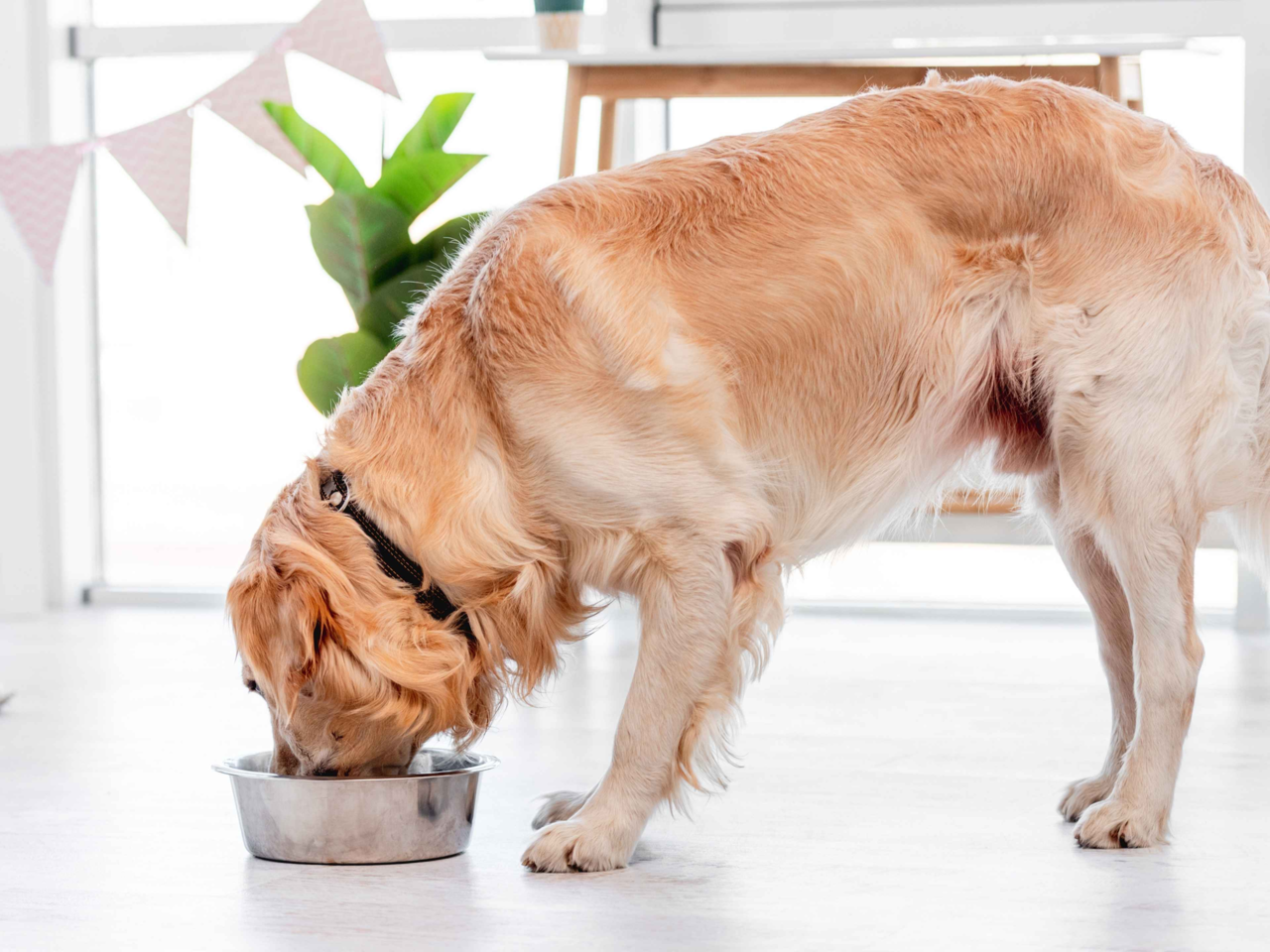
"How much should I be feeding my dog?" is one of the most common questions we hear, and the honest answer is "it depends". A 5kg Maltese and a 35kg Labrador have wildly different needs, and a couch potato and a working farm dog do too. The good news is once you understand the few variables that matter, you can land on the right portion pretty quickly.
This guide walks you through how to read a feeding chart, how to use your dog's weight and activity level to set a starting portion, and how to fine-tune from there. It's a starting point, not a clinic plan. If your dog has a specific condition, your clinic will set portions to match.
Quick answer
For most healthy adult dogs in NZ, feed twice a day using your food bag's chart as the starting point. Match the portion to your dog's ideal weight (not current weight), adjust by activity level, and check their body condition every couple of weeks. Move up or down by about 10% at a time until you land at a steady, lean weight.
The three things that decide portion size
1. Body weight
Use your dog's ideal weight, not their current one. If they need to lose a kilo or two, feed for the goal weight, not the today weight.
2. Activity level
A working dog, an active family dog, and a senior who potters around the section all sit in different brackets. Most food charts show three: low, moderate, high.
3. Life stage
Puppies, adults and seniors burn energy differently. Always feed a food formulated for the right life stage and follow that food's chart.
A starting-point feeding chart
The table below is a general daily dry-food guide for healthy adult dogs on a standard NZ premium kibble. Always cross-check with the chart on the back of your specific food bag, because calorie density varies between brands.
| Ideal weight | Low activity | Moderate activity | High activity |
|---|---|---|---|
| 2 – 5 kg | 35 – 80 g | 45 – 95 g | 55 – 115 g |
| 5 – 10 kg | 80 – 140 g | 95 – 170 g | 115 – 200 g |
| 10 – 20 kg | 140 – 230 g | 170 – 280 g | 200 – 330 g |
| 20 – 30 kg | 230 – 310 g | 280 – 380 g | 330 – 445 g |
| 30 – 40 kg | 310 – 390 g | 380 – 470 g | 445 – 555 g |
| 40 – 55 kg | 390 – 490 g | 470 – 590 g | 555 – 695 g |
Use a kitchen scale
Cup measures vary wildly. A "scoop" of one kibble can be 60g, another 110g. For accuracy, weigh the food once and mark a line on your scoop with a permanent marker.
Quality adult foods to build a portion around
Calorie density and nutrient profile vary, so the portion that suits one food won't suit another. These are well-trusted NZ adult dry foods to anchor your daily feed around.
Once, twice or three times a day?
Most adult dogs do best on two meals a day, spaced 8 to 12 hours apart. Two meals stabilise blood sugar, reduce the risk of bloat in deep-chested breeds, and give you two natural training and bonding moments. Puppies under six months usually need three meals; seniors with smaller appetites sometimes prefer three smaller meals too.
Puppies
3 meals/day until around 6 months, then drop to 2. Use a puppy-stage food and follow the bag's chart by age and expected adult weight.
Adults
2 meals/day suits most dogs. Free-feeding (leaving food out all day) often leads to weight gain and makes it harder to spot appetite changes.
Seniors
2 meals/day is still the sweet spot, but smaller, slightly more frequent meals can help dogs who eat slowly or struggle with bigger portions.
Body Condition Score: the most useful check
Scales lie a little. The Body Condition Score (BCS) is a quick hands-on check that tells you whether your dog is at a healthy weight regardless of the number on the scale.
- Ribs: You should be able to feel them easily with light pressure, like running your fingers over the back of your hand. If you can see them clearly, your dog is underweight. If you have to press hard to find them, they're overweight.
- Waist: Looking down from above, you should see a gentle hourglass shape behind the ribs.
- Tummy tuck: Looking from the side, the belly should slope up from the ribcage to the back legs, not sag.
Adjust by 10%, then wait
If your dog needs to lose or gain a little, move the portion by about 10% and hold there for 2 weeks before re-checking. Big sudden changes upset digestion and don't actually speed up results.
Treats, scraps and the hidden calories
Treats and table scraps can quickly add up to 20% or more of a dog's daily intake. A good rule of thumb is to keep treats to under 10% of daily calories and subtract them from the main meal if you're using a lot for training.
Use a portion of dinner
For training sessions, scoop out part of the day's kibble and use it as rewards. It costs no extra calories.
Skip the human food
Even small bits of toast, cheese and leftovers stack up fast on a small dog. Stick to dog-safe treats and known-quantities.
Mind the chews
Dental chews and long-lasting natural chews are great but aren't calorie-free. Factor them into the daily total.
Slow feeders for fast eaters
If your dog inhales their dinner, a slow feeder bowl or lick mat turns a 90-second meal into 5 to 10 minutes of mental engagement. Useful for digestion, bloat-risk breeds, and giving puzzle-lovers something to do.
Frequently Asked Questions
How do I know if I'm feeding too much?
Run a body condition check weekly. If ribs are getting harder to feel, the waist is disappearing, or the tummy is dropping rather than tucking up, drop the portion by about 10% and re-check in two weeks.
Should I feed by cups or grams?
Grams. Cups vary by kibble size and how you scoop them. Weigh the food once, then mark your scoop so future meals are accurate without the scale.
Can I mix wet and dry food?
Yes, lots of dogs enjoy a wet-and-dry combo. Just remember the daily calorie target is shared between both. Most brands print a combined-feeding guide on the wet food too.
What if my dog is always hungry?
Some dogs (looking at you, Labradors) are food-driven regardless of how much they've had. Try splitting the daily portion into more meals, adding bulk with a spoonful of pumpkin or green beans, or moving to a higher-fibre food formulated to keep them feeling fuller.
How much does activity level really matter?
A lot. A working dog can need 50% more food than a couch dog of the same size. Be honest about activity level: a 30-minute lead walk a day is "moderate", not "high".
Do small breeds and large breeds eat differently?
Yes. Small breeds have faster metabolisms and burn calories quicker per kilo of body weight. Large breeds eat more in total but proportionally less per kilo. Breed-specific or size-specific formulas account for this.
How long does it take to see results from a portion change?
Two to four weeks is normal. Healthy weight loss for dogs is about 1 to 2% of body weight per week. Anything faster usually means you're trimming too aggressively.
Find a food that suits your dog
Browse our full range of dog food by life stage, brand and dietary need. Set up Autodeliver so the bag arrives before you run out, and earn Pet Perks on every order.
SHOP DOG FOOD