German Shepherds are famous for their hardworking nature and their equally hardworking coats. Whether your dog has a classic stock coat or a longer outer coat, regular grooming keeps loose undercoat under control, helps distribute natural oils and gives you a chance to check their skin, paws and ears.
A good routine does not need to mean constant bathing. The biggest difference comes from brushing right down through the double coat, using gentle tools and increasing the frequency when your dog starts their seasonal shed. For an overview of the breed's care needs, visit our German Shepherd breed guide.
Quick answer
Brush a German Shepherd three to four times a week, moving to daily brushing during heavy spring and autumn shedding. Bathe around every six to eight weeks, or when genuinely dirty, with lukewarm water and dog shampoo. Rinse and dry the dense undercoat thoroughly. Do not shave a healthy double coat, because it protects the skin and helps the dog cope with changing weather.
Understanding the German Shepherd double coat
Most German Shepherds have two distinct layers. The visible outer coat is made from firmer guard hairs that help repel dirt and light moisture. Beneath it sits a soft, dense undercoat that provides insulation. Long-coated dogs have more length and feathering, but the same layered structure still needs careful brushing.
| Coat layer | What it does | Grooming focus |
|---|---|---|
| Outer coat | Shields the skin from dirt, light moisture and everyday wear | Brush in the direction of growth and avoid harsh, repeated passes |
| Undercoat | Adds insulation through hot and cool weather | Lift loose fluff with a rake or deshedding tool without scraping the skin |
| Feathering | Adds longer hair around the neck, legs and tail in long-coated dogs | Check for small tangles behind the ears, on the trousers and under the tail |
Do not shave the double coat
Shaving does not stop shedding. It removes the protective outer layer, exposes the skin and can leave the regrowth uneven. Unless there is a specific professional reason, manage heat with shade, water and sensible exercise, and manage loose hair with regular brushing.
How often should you brush a German Shepherd?
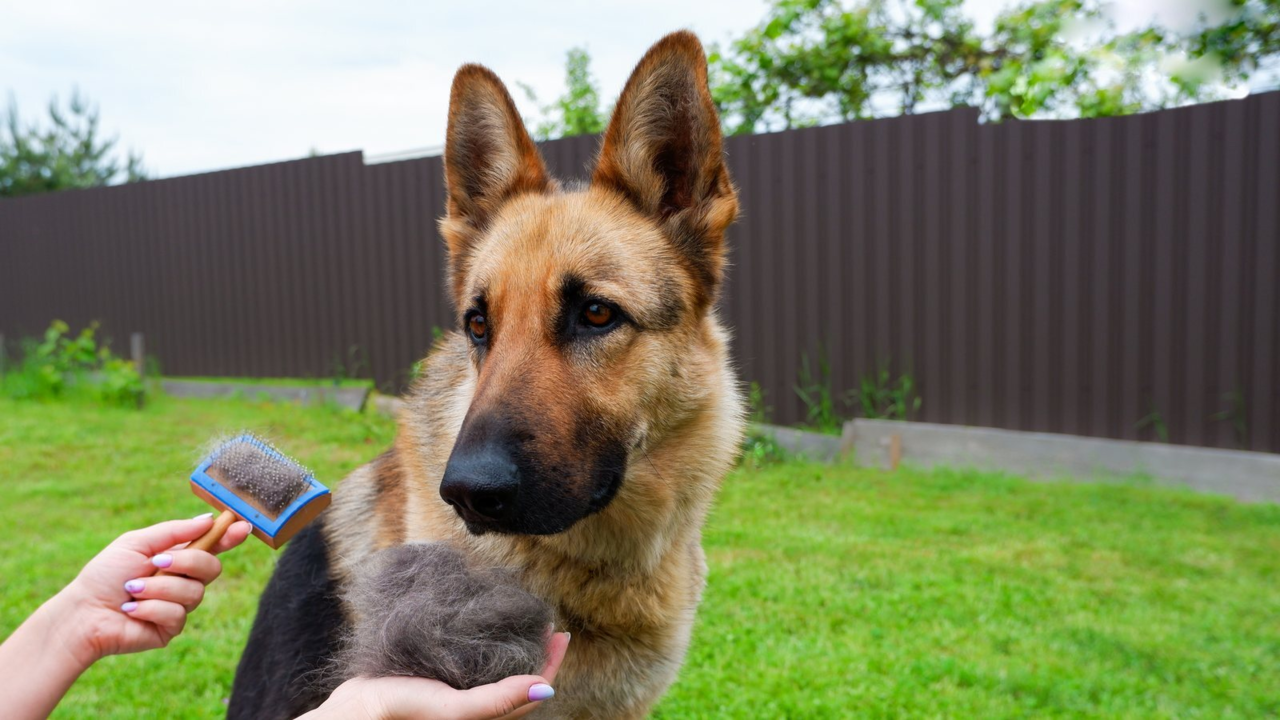
Aim for three to four sessions each week during normal shedding. In spring and autumn, when the undercoat loosens in larger tufts, a short daily session is usually easier on both you and your dog than one long weekly groom. Long-coated German Shepherds may need extra attention around the ears, chest, legs and tail.
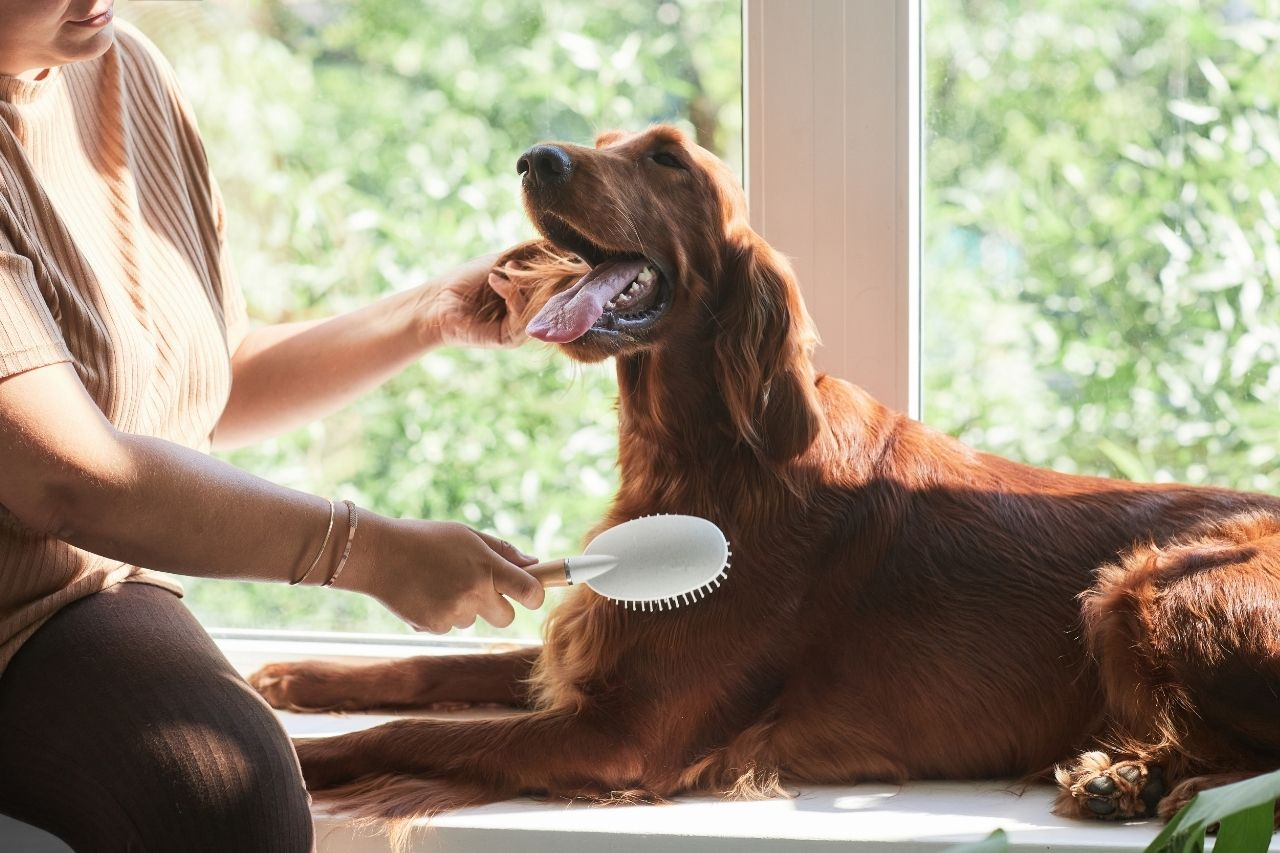
Choose tools that reach the layer you are working on. The M-PETS Bamboo Cat and Dog Double-Sided Pin Brush can smooth the outer coat, while the M-PETS Bamboo Cat and Dog Rake Comb with Rotating Teeth helps lift loose undercoat. During a heavy shed, the M-PETS Stylus Cat and Dog Deshedding Brush offers small, medium and large options for a comfortable fit.
How to brush the coat without pulling
Start with a check
Run your hands over the coat and look for damp areas, grass seeds, tangles or tender spots. Begin only when the fur is dry.
Work in sections
Part the coat with one hand and brush a small section at a time, following the direction of hair growth.
Use light pressure
Let the tool do the work. Repeated scraping over one spot can irritate skin and damage healthy guard hairs.
Finish with the outer coat
Once loose undercoat is removed, smooth the coat from neck to tail and reward calm standing.
Keep early sessions to a few minutes and stop before your dog becomes restless. Calm, frequent practice makes grooming easier than holding them in place for a long session.
Managing German Shepherd shedding at home
German Shepherds shed throughout the year, with a noticeable coat change as the seasons shift. In New Zealand, the heaviest periods often arrive around spring and autumn, although indoor heating, daylight and individual coat type can make the timing less predictable.
Brush before vacuuming
A five-minute outdoor groom can collect loose fur before it reaches the sofa, car and carpet.
Wash bedding regularly
Use washable covers and shake them outdoors first so hair does not build up in the machine.
Keep the routine steady
More force is not the answer during a coat blow. Gentle daily passes remove fur as it naturally releases.
How often should you bathe a German Shepherd?
For most German Shepherds, bathing every six to eight weeks is a useful starting point. Bathe sooner if your dog has rolled in something unpleasant, collected mud or been swimming in dirty water. Frequent shampooing without a reason can strip natural oils and leave the skin and coat feeling dry.
- Brush out loose undercoat and small tangles before the coat gets wet.
- Use lukewarm water and wet the coat slowly, keeping water out of the ears and eyes.
- Massage dog shampoo through the coat without scrubbing in circles that create tangles.
- Rinse for longer than you think you need to, because the dense undercoat can hold product.
- Press out water with towels rather than rubbing the coat roughly.
- Dry right through to the skin in a warm, draught-free space.
The Hartz Groomers Best Soothing Oatmeal Dog Shampoo is a gentle everyday wash, while the smithandburton Cat and Dog Detangler Spray & Leave-in Conditioner can help with longer areas after washing. Between baths, keep nails at a practical length with a correctly sized tool such as the M-PETS Hairdo Dog Nail Clipper.
Drying a dense coat properly
A German Shepherd can feel dry on top while the undercoat remains damp. After towel drying, separate the fur with your fingers and check near the skin, especially around the neck, chest, armpits and back legs. If your dog is comfortable with a dryer, use a cool or low-warm setting, keep it moving and never aim concentrated heat at one place.
Brush lightly once the coat is nearly dry. Avoid vigorous brushing when the fur is soaking wet, because wet hair stretches and breaks more easily. Make sure the coat is fully dry before your dog settles onto bedding.
Nails, ears, teeth and paws
Coat care is only one part of a complete German Shepherd grooming routine. Check nails every two to four weeks and trim only a small amount at a time. Inspect paws after walks for cracked pads, grass seeds and debris between the toes. Wipe the visible outer ear gently when needed, but do not push cotton buds into the ear canal.
Dental care also belongs in the weekly plan. Daily brushing with dog-safe toothpaste is ideal, but building the habit gradually is more important than trying to do everything at once. Pair handling with treats and calm praise so your dog learns that having their paws, mouth and ears checked is normal.
German Shepherd grooming FAQs
Why is my German Shepherd shedding so much?
Year-round shedding is normal, and spring or autumn coat changes can release large amounts of undercoat. Sudden patchy loss, very sore skin or a major change from your dog's usual pattern is different from a normal seasonal shed.
Can I use a human shampoo?
No. Human shampoo is made for a different skin balance and can leave a dog's skin dry or irritated. Choose a shampoo formulated for dogs and rinse it out thoroughly.
Should I cut a German Shepherd's coat in summer?
No. A healthy double coat should not be clipped short for summer. Remove loose undercoat, provide cool resting places and plan activity for cooler parts of the day instead.
What if my German Shepherd hates being brushed?
Return to very short sessions. Let your dog investigate the tool, reward one gentle pass and finish while they are still relaxed. Build duration slowly on an easy area such as the shoulder before moving to sensitive spots.
How long does a full groom take?
A maintenance brush may take 10 to 15 minutes. A bath, complete dry and thorough seasonal brush-out can take much longer, especially for a large or long-coated dog. Splitting the work into calm stages is often more comfortable.
Build your German Shepherd grooming kit
Choose brushes, coat care and nail tools that suit a large double-coated dog, then keep the routine short, gentle and regular.
Shop dog grooming